
Q&A: A Place to Bury Strangers Invite Imperfection in New Rarities Release
INTERVIEW
INTERVIEW
☆ BY KYLEE WIENS☆
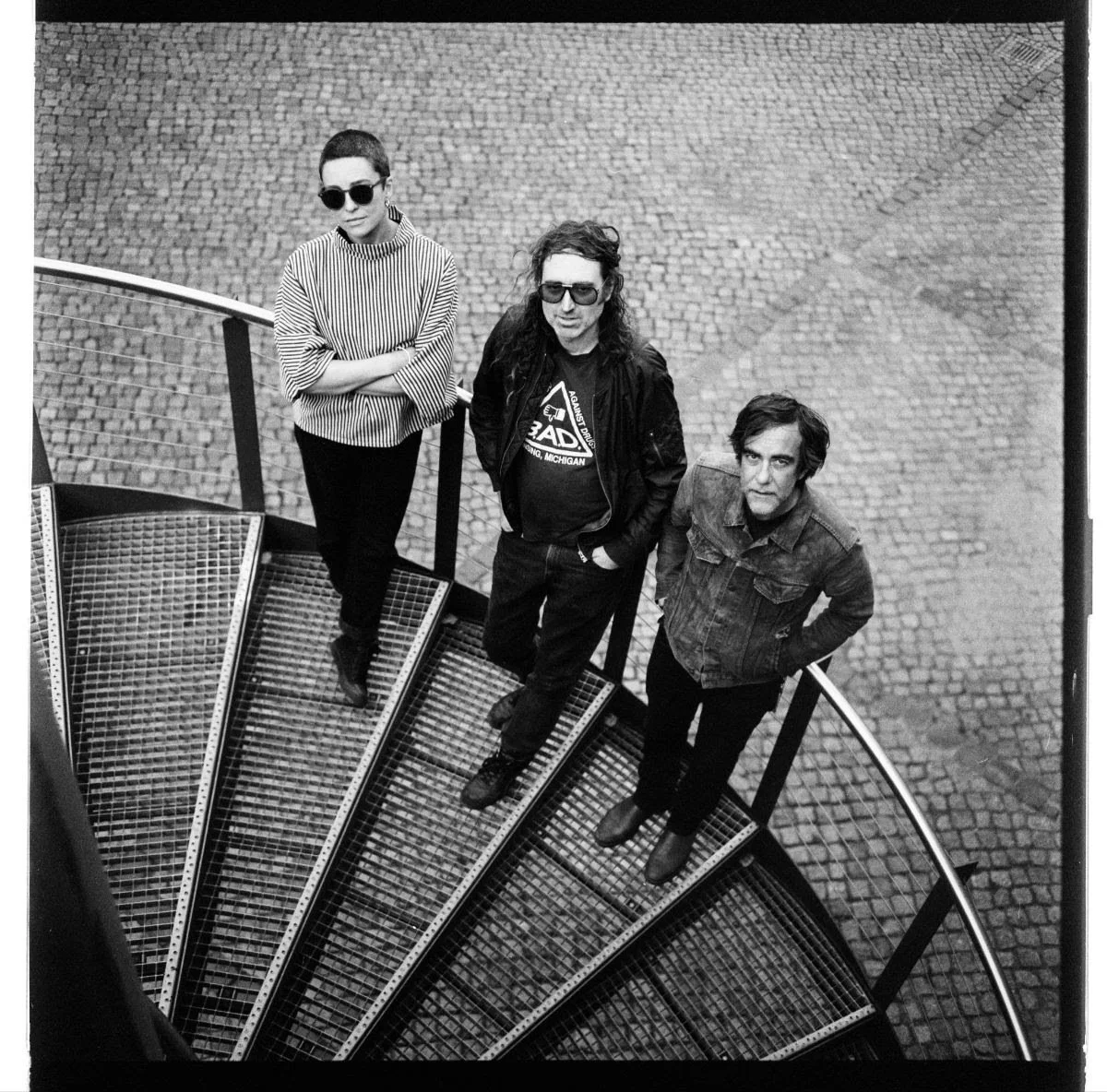
Photo Credit: Holger Nitschke
A PLACE TO BURY STRANGERS HAS NO PLANS ON SLOWING DOWN — Producing seven studio albums and 14 EPs, playing over a thousand live shows and their career spanning nearly a quarter century, New York’s A Place to Bury Strangers may seem like they’ve left all their best work on the line already. To frontman and founder Oliver Ackermann, though, now seemed like as good a time as any to purge inventory from the last ten years in the form of Rare and Deadly, an exploration of unreleased tracks, demos and lesser-known experiments from the vault.
Rare and Deadly feels not like an arbitrary compilation or frivolous output of ideas, but rather a fractal exploration into the inner workings of a colorful and calamitous mind. With unfinished hems, half-written but wholehearted, the release allows listeners into the swirling sonic universe of such a prolific project. Especially unique about this album was Ackermann’s decision to sequence a different tracklist for each release format. The vinyl, CD, cassette, and digital releases feature different tracks in different orders, allowing for a singular listening experience that bolsters the importance and art of owning physical media.
The Luna Collective recently sat down with Ackermann to pick his brain over his creative process, sonic development and the act of finding vulnerability through sharing art. Read below for the full interview, and be sure to pick up a copy of Rare and Deadly in every form at your local record store.
Photo Credit: Patricio Lizama
LUNA: First of all, congratulations on putting out this rarities and demos album. How are you feeling?
ACKERMANN: Yeah, it feels good. It's cool to put these songs out. They were tied to all sorts of different kinds of emotional things. You never know if you're going to do this stuff, and you never know what people's reaction is going to be to all of this. People are stoked, and that's really cool.
LUNA: Obviously, putting out art anytime is vulnerable, but putting together works that have not been released, maybe are varying degrees of emotional states, and varying degrees of how finished they are, how complete they feel. Do you feel like there was a particular emotional trigger that led to this decision to put everything out?
ACKERMANN: I don't know, not necessarily. There was just looking back on these things. There were a few of these songs that I always thought should have been on a record or something. I was like, “oh, maybe I should do something with this.” But them being so old, it seemed like, how does it even relate exactly with what we're doing now? So I thought to maybe do something with these things. Then as I started looking back, there were more and more tracks that I was like, “oh, these are pretty cool too.” At the time when I was assembling the record, I was like, “oh, this isn't good enough to go on this record.” Or maybe this was, who knows what. But those kinds of things you get fond of as time goes on, and you are kind of a neat photo of this time in A Place to Bury Strangers' history and life. So I think that's kind of, I don't know, it's close to maybe like documentaries I like to get sometimes. You can let the listeners make up their own history and thoughts and all this stuff a bit.
LUNA: How did the decision come to do a different track listing for every print format that came out? That's really unique.
ACKERMANN: It was just because I could. That was maybe the initial thought, that was just like, oh, we could just do this. Why not? Then it also strangely led all of these to this really natural connection with the formats. When [it came to] assembling a CD, how would I make a CD that I would want to play in my car? When making a cassette, how would you dub a cassette that you were making for a friend, like a mixtape? It just came together.
It was fun to think of these different formats as their own entities and not take it so seriously that it had to be some regimented format. I think that it is like a collection of maybe too many songs to fit on a record. It's also nice to not put everything out digitally. We're in this age where things are supposed to be homogenized and connected, and all of these things just seem anti-personal and anti-exciting, so I think people should be sticking their middle finger up to norms as much as possible.
LUNA: There's obviously been a resurgence in Gen Z's interest in physical media. I was wondering if you feel like there's kind of a second wave of fans that have found your music, that have connected with your music in that way?
ACKERMANN: I don't know. It's always hard to know. There are definitely fans, and more and more people are interested in A Place to Bury Strangers, and that's cool. I really like that. Having grown up with all of these different formats, even coming out as my life was going on, in that first wave of when CDs came out and all that stuff, and having a vinyl collection, before you would see people on videos, I just have different romantic ideas tied to all of these different formats. I probably have my own weird ideas about all of that stuff. But I think it's surprising. I had a bet a long time ago with a friend where I was like, CDs are done for, there's no way there are going to be more CDs. And he was like, no, watch out. In five or 10 years, they're going to come back. And they were right.
LUNA: I know there's a lot of conversation about genre these days and how relevant it is. Have you ever identified heavily with genre conventions?
ACKERMANN: No, and I think that's always been one thing that has not helped A Place to Bury Strangers fit in. I don't even know what to tell people when they ask me. We'll say avant garde or something. It was really funny, we were in a taxi, and the guy was like, “What kind of music are you?” And we were like, “Oh, we're like art punks,” or something. And he was like, “Oh, that sounds cool.” And we're like, “Yeah, we like old hardcore music and stuff.” And he's like, “Oh, let me put you on.” And he goes to Spotify, and it's this super mellow track of ours. We're like, oh, man, what do we think it's like? We just told this guy we're like twee pop or something like that.
LUNA: You've always kind of had this ability to connect with listeners through different ways of putting out physical media. I actually had a friend build the synth from your Synthesizer album. Do you have any future ideas for things like that?
ACKERMANN: We have a future idea. It won't be as intense as a synthesizer, but I think that's fun. I always like those things. I have a record where they smear dirt on a piece of paper as the cover, or this other record which is like a sheet of metal on the inside. I don't even know if they intentionally put sand in there, but it scratches the record each time you pull it out of the case. I always just like that stuff. It's fun. There are old things like the Led Zeppelin record or the Rolling Stones’ one with all the cutouts and pictures behind. That stuff is neat. You have this opportunity, you're making a package and putting something together. You're an artist curating these different things, you may as well experiment and try some different stuff.
LUNA: I know this particular release is a little bit different because it's rarities and demos. But more generally speaking, when you're creating new music, how do you decide what is classic A Place to Bury Strangers, and what can be stretched and grown and experimented with?
ACKERMANN: I don't know, necessarily, the answer to that. We have cornered ourselves off from the world of what is accepted and are just trying to make music for ourselves. Now with the current band, we're all super excited about making music together, bouncing ideas back and forth. We're just creating this stuff. I don't know what it necessarily is. Then when you come to see a group of songs, it has this language all on its own, where they all speak to each other and tell you what makes sense. That usually ends up cutting a bunch of songs from what could have been the record and figuring that stuff out, and sometimes rewriting and changing songs at the last minute. I'm always a person who believes that you can always do better, and that makes it difficult to finish things sometimes. I'm always scrambling and working on things up until the last minute. You get this weird mix between frantic and different ideas which come together and you're not even sure about. Then when it comes out, over time it solidifies itself.
I feel like A Place to Bury Strangers was always a couple different ideas that I thought would stay true, where we would be a band that would always be heavy and intense. I never wanted to do something that seemed weaker than what we had done in the past. It's always a goal to be on that same wavelength. Otherwise, it would be something else. Maybe there could be some side project that's really spacey and dreamy.
LUNA: How much does your emotional state impact your creative process? Are you someone who can create from any capacity, or are there certain modes of being that you feel more inspired to create in?
ACKERMANN: Definitely when you're in any sort of heavy emotional state, you're a lot more creative. It's some sort of internally working things out with yourself, and that can be almost like therapy to what you're doing. But I also try to create stuff all the time. You never know when you're going to happen upon something that you think is really cool or is shiny, and then gravitate towards and want to work on more. I try to work a lot on stuff, and then that happens. But definitely if you're feeling super pissed off, or madly in love, that really ties into writing really good songs. I think there are artists where you get people who have lived really rough or interesting lives or are in weird situations, and you can really hear it in the music coming through. They're in some oppressive country or any of these kinds of things, and it really, I think, is incredible.
LUNA: Are there any bands or artists right now that have really been inspiring you, past or present?
ACKERMANN: Sure. I like that band Owls. That's a sick band. I like these bands. We're going on tour with Contravoid, which is really sick. I'm super excited about that. At the New Colossus Festival, this band Diansalt I thought was really sick, as well as Fat Concubine. That's an awesome name. Some of the bands on the label, like Platinum Boy, I love them, and Data Animal and Why Together. There are tons of bands. I think it's a really interesting time for music, and there are a lot of really cool, interesting bands coming out right now.
LUNA: Do you have any last messages or anything you want listeners or readers to know
ACKERMANN: I think just, follow your heart and the decisions that you make. Try to be kind to one another. I think that is important. Think about other people. People together and working together is a really fun, magical thing. Don't get discouraged with that kind of stuff, because people are great.
