
Q&A: Adai Song is Blossoming, Changing the Past With Latest ‘The Bloom Project’
INTERVIEW
INTERVIEW
☆ BY STARLY LOU RIGGS ☆
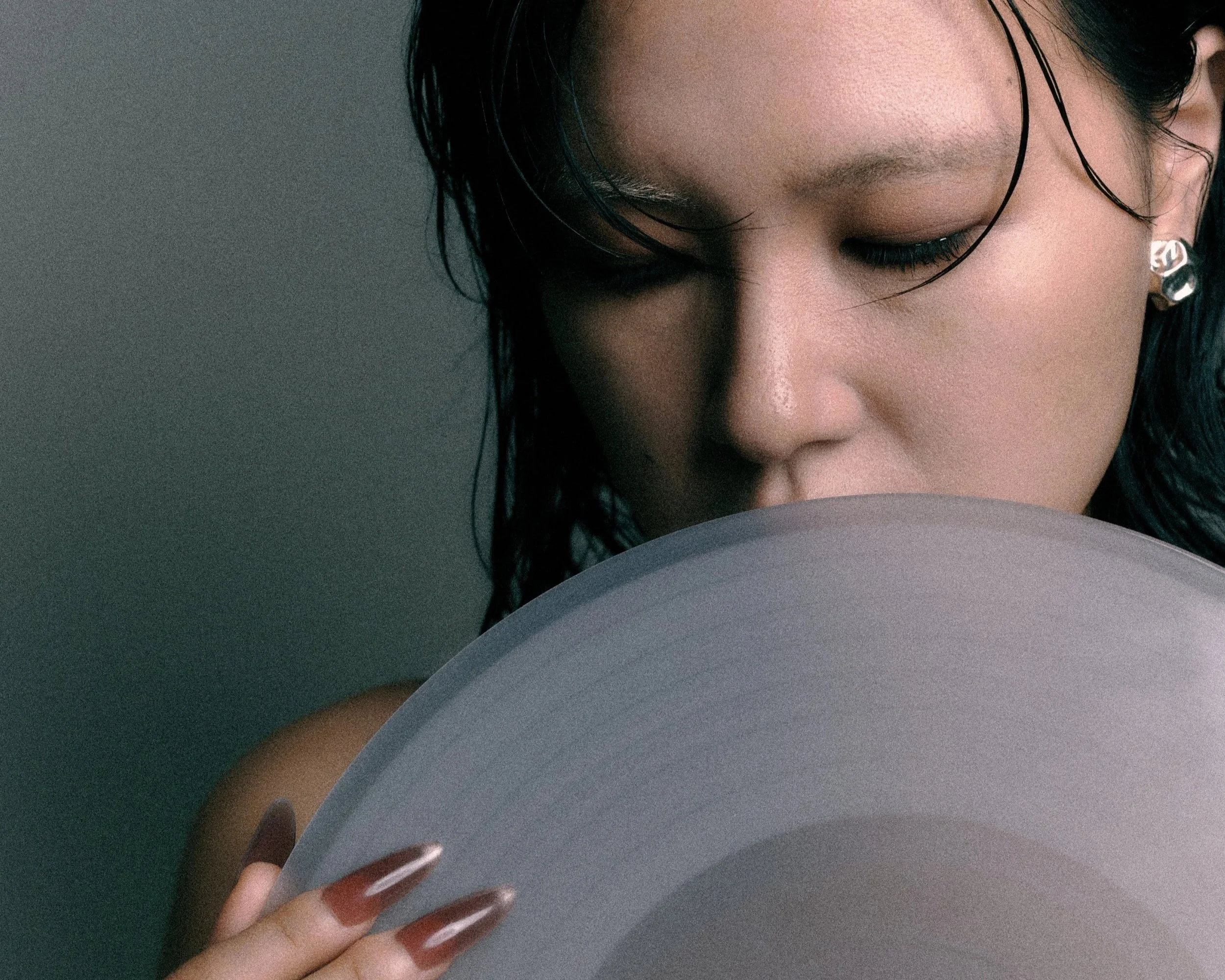
ALSO KNOWN AS ADÀI IN EDM CIRCUITS—Adai Song is using her classical musical training to revolutionize sound as we know it. Her latest masterpiece, The Bloom Project, brings together elements of traditional Chinese instrumentation and experimental electronic pop in a full-scale conceptually driven anthemic tour de force.
The Bloom Project is a delicate mixture of the past and present, inspired by shidaiqu, a fusion of Chinese folk and Western jazz that came about in China in the 1920s. Now, 100 years later, Song examines these sonic elements, dissects the meanings and reformats them to make a statement about the male gaze, feminine power and reclamation. While many of the original tracks from the previous century were written from the lens of a woman, the songs themselves were written by men. Song’s work takes back the power, illuminating the strength of women in music and holding space for shidaiqu in light of today’s world. Once a fusion of two genres, The Bloom Project is a collaboration between space and time, synthesizing new sounds like none heard before.
Luna speaks with Adai Song about her production process, what academia means to her, and how her latest project came to be.
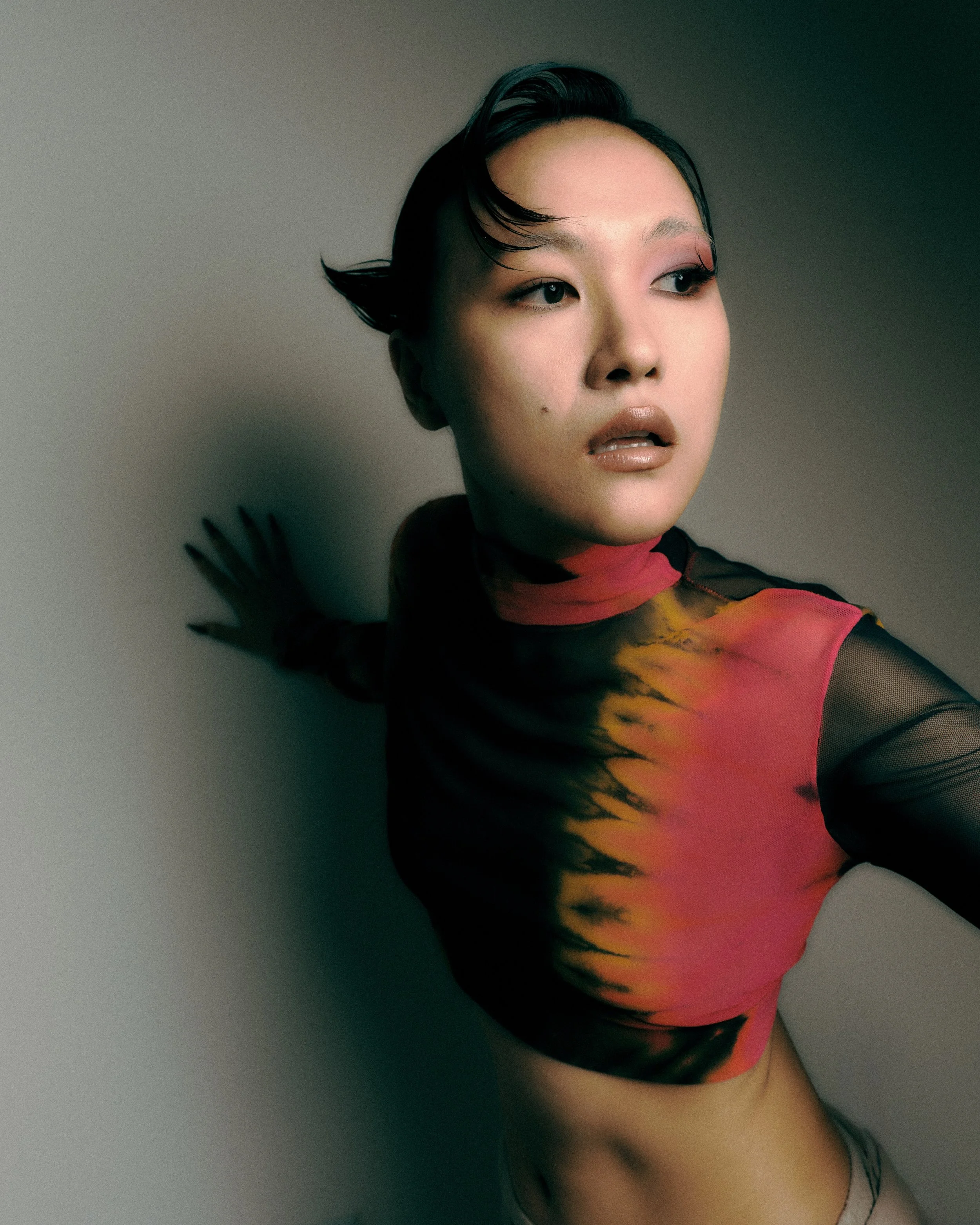
LUNA: I’ll be honest right off the bat—I think this is a truly genius album. From concept to production, every piece is intentional and has something very powerful to say. Let’s go from the beginning: You started playing music very young, with violin, keys and guitar. How old were you when you began writing and producing your own songs?
SONG: I started violin at age three, and I absolutely hated practicing but it shaped my entire musical life. It trained my ear so deeply that by the time I was twelve, I was already writing melodies without realizing I was composing. One day I just wrote down a melody that kept looping in my head, then added lyrics because it felt natural.
Throughout middle school and high school, I picked up guitar and piano so I could write more freely. In college, I took basic audio engineering and music industry classes, watched endless YouTube tutorials, and was already making rough demos in my dorm room. After graduation, I was brave enough to upload them online, and that eventually led to my first record deal.
LUNA: How did this more traditional classical training influence the music you’re making today? When did you start producing electronic music?
SONG: Classical training gave me a strong internal sense of melody, musical structure and emotional architecture. Even when I’m working on a heavy electronic track, I still put a lot of weight on the melodic arc, where it breathes, where it breaks, where it blooms.
I started producing electronic music seriously after moving to New York and started collaborating with EDM producers worldwide as ADÀI, my EDM persona. Those experiences, plus the Songwriting and Production program at Berklee NYC gave me the technical vocabulary I needed to express the sonic ideas I had been carrying for years. That’s when I shifted from being a songwriter with ideas to a producer with a full sonic world.
LUNA: You went to Berklee School of Music and are continuing an education, studying music as a PhD. How do you feel your academic studies influence your musical style and ways of experimenting and creating?
SONG: Academia pushes me to ask deeper questions about the sound I’m making, not just how I make it, but why.
My PhD work looks at digital music technology, creative agency, and how women navigate and author their own production spaces in the digital age. That research runs parallel to my practice. While I’m producing, I’m also thinking about cultural identity, virtual communities, the history of women in studios, and how digital tools reshape authorship.
So yes, the two worlds constantly feed each other. My music is a form of research, and my research helps me articulate the purpose behind my music.
LUNA: This album, The Bloom Project, is inspired by 1920s Shanghai “shidaiqu". What drew you to explore this music style? What does it mean to bring this style into the contemporary (now 100 years later)?
SONG: I grew up hearing these melodies without knowing their history: aunties humming them in the kitchen, TV dramas playing them in the background. Later, I learned shidaiqu was the first major fusion of Chinese folk and Western jazz, created right at the moment when Chinese women could begin imagining independence.
But the songs were mostly written by men. Even the lyrics written “in a woman’s voice” were essentially men imagining what women would feel. That realization sparked something in me: What would it sound like if I, a woman a century later, could speak back?
Revisiting shidaiqu isn’t nostalgia for me. It’s a cross-time conversation: honoring the women who came before, while speaking from the autonomy and authorship my generation has.
LUNA: If shidaiqu were songs of its era (the 1920s), what do you feel are the songs of this era, now?
SONG: The songs of this era are digital, hybrid, borderless and made by people who are negotiating multiple identities at once. We’re no longer defined by one culture or one tradition. We’re living in the remix.
LUNA: What does it mean to bloom? What is the “bloom project”?
SONG: Personally, “blooming” means trusting myself enough to produce the whole thing. After learning the tools and techniques, I found the willingness to say: I can build an entire sonic universe myself. And I don’t need to shrink myself to enter the room.
Culturally, "blooming" is pushing tradition forward on new terms. It means not asking for validation of ideas or for permission from the establishment.
Artistically, "blooming" means fusing different influences, eras, and styles. It's realizing I don't have to choose between them—I can let them collide and create something new.
LUNA: I feel like the meanings of each track are really palpable, sharing a fierce feminist-forward ideology, particularly with tracks like “Soft but Thorned,” and “Alone but Resonant, She Builds Her Own World.” Did you change any of the lyrics to bring the songs into modernity, or is everything original, reinterpreted now with a new sonic atmosphere?
SONG: Some are rearranged, some are re-written, some are completely reconceptualized. For example: “Wild Thorny Molihua” (茉莉花) traditionally praises a “pure, white, gentle” flower. I turned it into a dubstep anthem—the jasmine becomes fierce, thorned, unbreakable.
For “Make Way” (玫瑰玫瑰我爱你 / Rose, Rose I Love You), I flipped the male gaze into a first-person voice. Yes, I’m beautiful. No, that doesn’t give anyone the right to objectify me.
And “River Run” came from the folk song 小河淌水 (Small River Flows), which is originally a very soft, sentimental folk tune about a girl missing her lover. I flipped that narrative completely. Instead of longing, I wanted movement, a river that grows wider, louder, stronger, whose life is not just about loving, but achieving. So I turned the “small river” into a big river that runs, using a pulsing bassline, metallic synth stacks, and layers of Chinese ensemble textures. And lyrically, I shifted the perspective from “Where are you, my love?” to “If I can’t find my love I’ll go ahead and find a bigger world.”
To me, that transformation from yearning to expanding, from waiting to expressing, is a perfect example of how I reimagine inherited femininity through sound.
LUNA: You not only sang on and arranged this album, but you fully produced it as well. There were a lot of people involved in the creation of this work. How did you choose who to work with? Can you share a little bit of your journey on production?
SONG: I only invite collaborators whose production and emotional language truly fits the track. For example, SHI, a guzheng player and synthwave producer, is perfect for blending ancient plucked timbres with neon electronic textures. Electron brings his heavy synthwave and electropop sensibilities, while Jack Choi contributes this explosive EDM/K-pop energy that pushes a song into a different dimension. Yuanming Zhang is a sonic chameleon who not only co-produced but also handled the spatial audio mixing for the album, and Siyi Chen sent me the jazz interpretation of “Wuxi Tune” that I later deconstructed, re-processed and rebuilt into something entirely new.
On the post-production side, mixers like Malcolm Welles stepped in to further polish the sounds, tightening details, balancing layers, and bringing clarity and punch to the tracks. And Rachel Alina, my mastering engineer, formed the final sonic shape of the album.
LUNA: What does it mean to bring these Chinese folk songs into the realm of C-Pop? How do you feel it changes the meanings of the songs, and how do you feel they are the same?
SONG: To me, C-pop doesn’t need to imitate American or Western pop, nor does it need to stay locked inside the “traditional” sounds that often appear in outdated stereotypes. It can be a global language, just like how China itself has transformed over the past few decades.
Growing up and living between both worlds, I carry these folk tunes as something precious. That gives me a unique position to reinterpret and redefine what C-pop can be. I love the depth and diversity of Chinese culture, and I don’t want any of it to fade. By placing folk melodies inside electronic landscapes, I’m saying: Chinese culture isn’t an artifact—it’s alive, powerful, and ready for the future.
LUNA: How did the French operatic “Carmen” come to be on this album?
SONG: Grace Chang’s Mandarin adaptation from the 1960 Hong Kong film The Wild, Wild Rose was actually my first encounter with Carmen. I didn’t hear the original version until at a Western music class in middle school. That version shaped me more than Bizet’s opera did, because its lyrics are more liberal and wild, to my surprise.
And since the French opera is already somewhat an exotic interpretation of non-western women in the story (towards the Spanish and Romani), I want to take it to another extreme, with guzheng, pipa and more oriental instruments sitting in EDM and metallic landscape. Yet the lyrics are very female-centric. It’s a playful and fun experiment for me.
Carmen Habanera (EnglishTranslation from French Ver.)
Chinese Lyrics
Chinese Lyrics (English Translation)
Love is a rebellious bird that none can tame, And you call him quite in vain if it suits him not to come.
愛情不過是一種普通的玩意,一點也不稀奇, 男人不過是一件消遣的東西,有什麼了不起。
Love is nothing but a common toy, nothing special. Men are only a form of entertainment, what’s so great about them?
Nothing helps, neither threat nor prayer. One man talks well, the other's silent; still it's the other that I prefer.
你要是愛上我,你就自己找晦氣。 我要是愛上你,你就死在我手裡。
If you fall in love with me, you’re bringing trouble on yourself. If I fall in love with you, you'll be doomed by my hand.
Love! Love! Love! Love! Love is a gypsy's child, it has never, never known a law. If you don’t love me, I love you. If I love you, be careful!
什麼叫情,什麼叫意,還不是大家自己騙自己。 什麼叫癡,什麼叫迷,簡直是男的女的在做戲。
What is love? What is devotion? Isn't everyone just fooling themselves? What’s obsession? What’s infatuation? It’s simply men and women putting on a show.
LUNA: Some tracks like “A Lost Singer” and “Carmen” have both very delicate sonic elements, and really intricate, heavy electronic beats. What does it mean to have these elements of both softness and strength?
SONG: It reflects my own life and others I believe. I am soft, emotional, introspective at times, and also loud, ambitious, and unafraid to take up space. Musically, I love contrast: a clean, layered synth with erhu crying on top, or a fragile vocal sitting above a thunderous bassline.
The moments where old and new collide, softness and toughness meet, that’s where the most beautiful moments and magic bloom!!!
LUNA: Can you tell me a little bit about the organic instrumentation on The Bloom Project? What kinds of instruments were used?
SONG: The Bloom Project uses a wide palette of organic instruments, because I wanted the physicality of sound, the breath, the pluck, the friction, to speak alongside the electronics. Across the album, you’ll hear a full Chinese traditional ensemble: guzheng, pipa, dizi flute, xiao, erhu, and shakuhachi, jungu, shamisen, weaving through the synths. I also incorporated Peking opera percussion, gong, luo, ban, small drums, to bring in that theatrical sharpness and ritual energy. Some recorded and some through plugins.
Some songs mix even more unexpected timbres. “Wuxi Tune” features live saxophone and a real drum set, which come from Siyi Chen’s jazz-influenced arrangement. We later chopped, flipped, and reassembled those stems into something hybrid, but the acoustic origins still shape the emotional character of the track. When they interact with the electronic textures, they open up new emotional and cultural possibilities.
LUNA: What’s next for Adai Song?
SONG: The Bloom Project Vol.2!!!!!
