
Q&A: Akshara Breaks Through the Algorithm with Unusual Time Signatures on ‘I’m Bored of 4/4’
INTERVIEW
INTERVIEW
☆ BY MOLLY PECK ☆
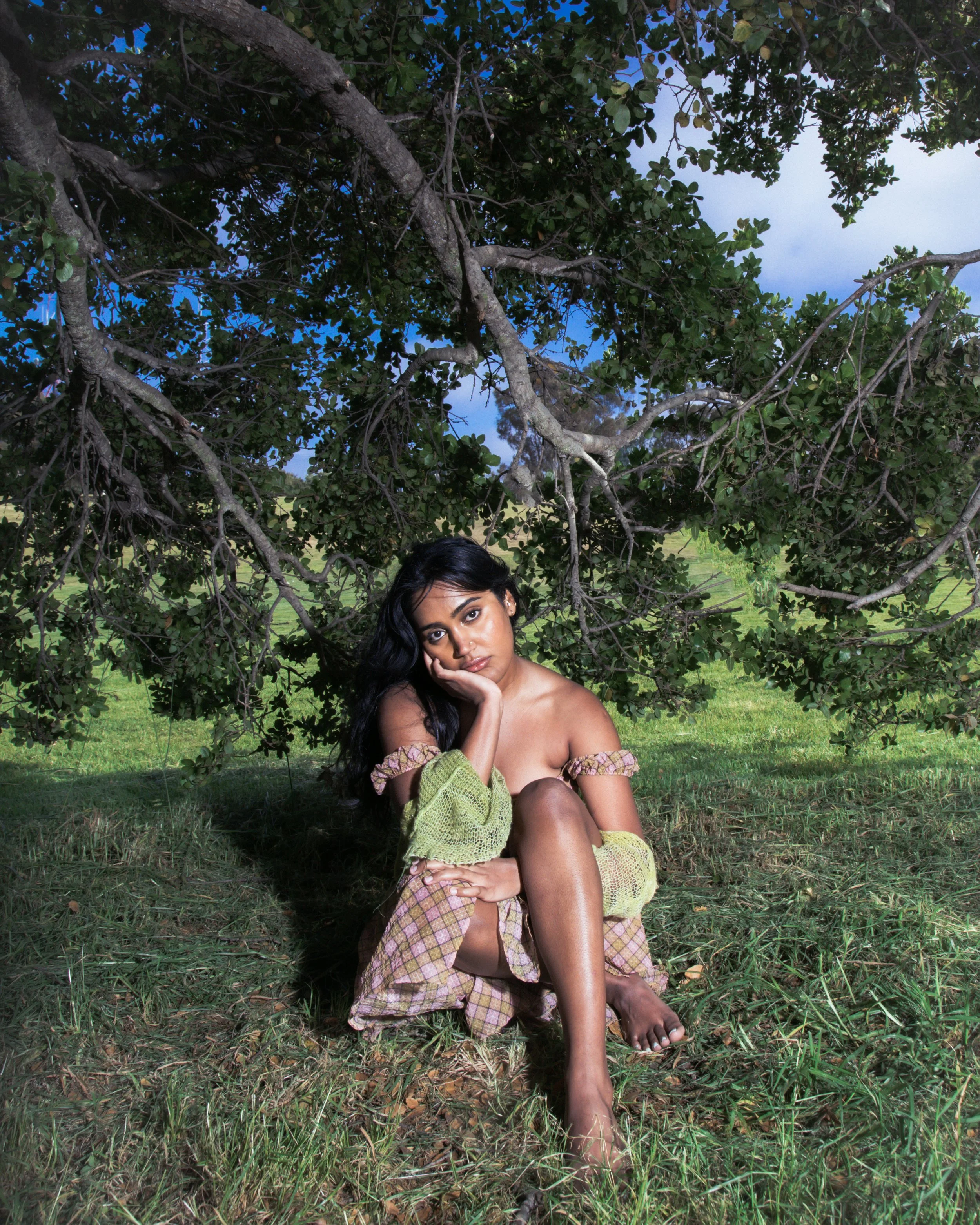
YOU WILL FIND AKSHARA AT THE INTERSECTION–of the digital and natural worlds. The young alt-R&B artist and producer frequently explores contradictory ideas: The meeting of Eastern and Western culture, the organic versus the digital the mixing of the old and new. Akshara’s music blends contemporary production, Indian classical vocals and intimate lyricism to create a fresh sound in the global R&B space.
Akshara is able to bring a cinematic, Bollywood sensibility to the vulnerability and softness of traditional R&B thanks to her time studying under film-scoring legend A.R. Rahman in Chennai. Rahman is an Academy Award-nominated composer, most famous for his work on the score of Slumdog Millionaire. Working with Rahman gave Akshara a strong sense of storytelling through music, and she uses this skill to its full effect in her new two-track project, I’m Bored of 4/4.
Although she didn’t set out to create an EP specifically centered around unusual time signatures, the project presented Akshara with a unique opportunity: to incorporate the theme of time into the construction of the tracks. The two songs on I’m Bored of 4/4, “Time Travel” and “Storyteller,” ruminate on different aspects of time, while playing with the actual timing of the music. Melding the theme of the tracks into the production is a creative choice that lends I’m Bored of 4/4 a level of professionalism and maturity usually reserved for more seasoned artists.
“Time Travel” opens the project with dreamy but slightly unsettling synths reminiscent of Jhené Aiko’s early work. Akshara’s ethereal vocals lend a quiet strength to the track as she laments the lack of true connection in the digital age. “I wish I could travel back/to a time when sincerity/was a measure of/who you are/give me some clarity,” Akshara sings over haunting yet soothing instrumentals and shimmery chimes. The seven-eight time signature is ear-catching and accentuates the slightly eerie sound. “Time Travel” uses the discomfort of a time signature that is not four-four to tell a complete emotional story about uncertainty and confusion.
The second track on the EP, “Storyteller,” takes a different approach to the theme, but is equally as effective. The five-eight time signature paired with plucky, resonant strings that make the beat gives the song a circular feeling. The notes repeat over and over in quick succession, emphasizing the theme of time as a cycle, and generations coming one after another. Akshara draws inspiration from her culture and lineage, embodying the role of a storyteller full of tales from those who came before her. The track delves into what it means to have a history, the responsibility, and the weight of knowing the stories of those who came before you.
Akshara is currently working on her first full-length album titled Solar Punk, which continues to explore the relationship between nature and technology. Luna recently sat down with Akshara to talk about time, inspiring films and Solar Punk.
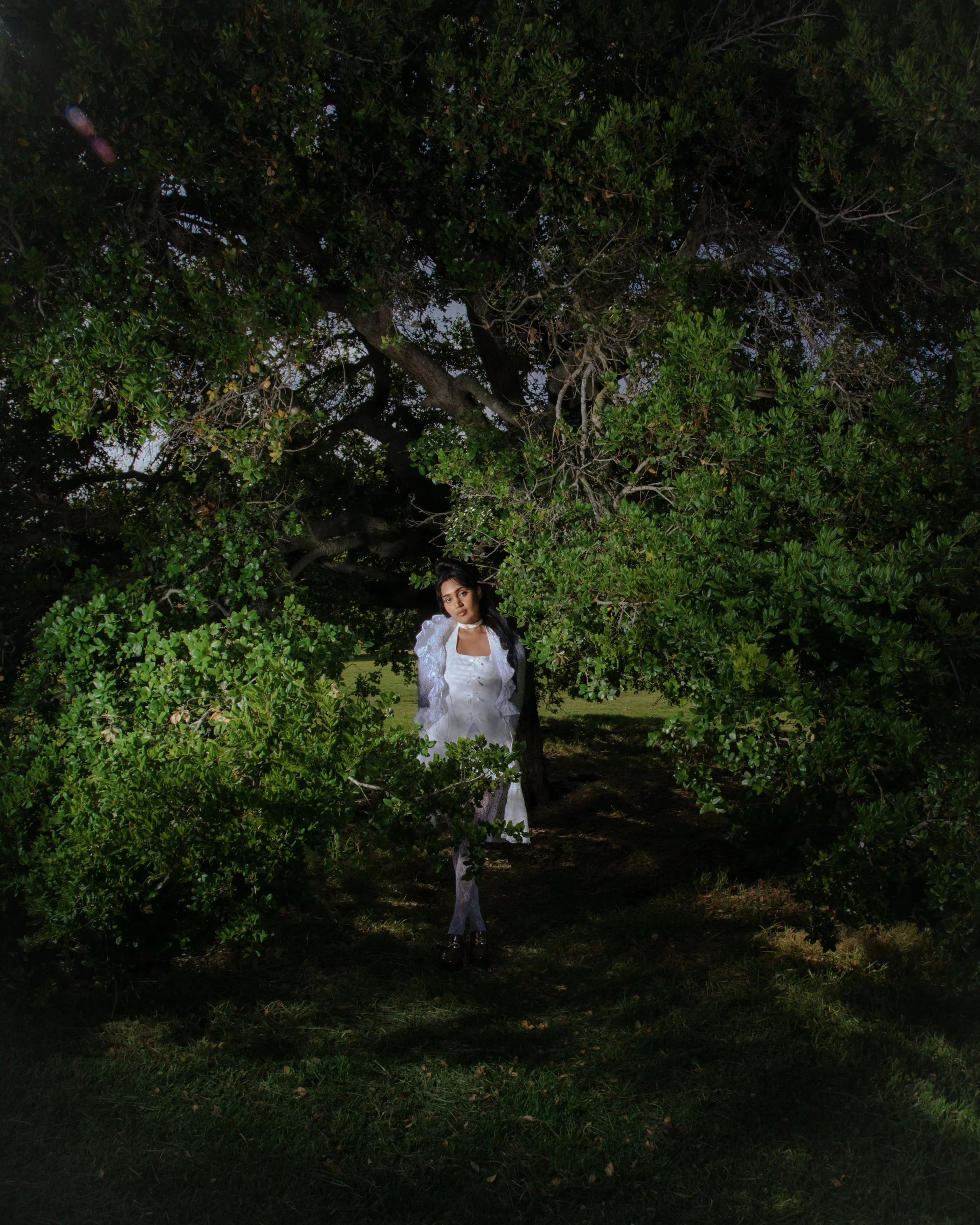
LUNA: For readers who are unfamiliar with your music, what are some of your biggest inspirations and influences?
AKSHARA: I love to bring Eastern and Southeast Asian influences into what I make. What I love contemporary music-wise is seeing other artists do that. With language barriers and global music in general, I love to see people get inspired by artists and music that they don't even understand. With TikTok culture, I've really started to see that become big. One of my biggest influences is Rosalia because I love the way she does that, and I love how vulnerable she can be with her writing. I recently went to see her in concert, and they had all of the lyrics [on a screen] translated into English, and I was like, “Wow.” Not knowing the language but still resonating with the music, and now understanding what she's saying, it just feels like it resonates so much deeper, and I want to be able to do that.
I also love to juxtapose that grand music with the kind of intimacy you see with artists like Clairo, and in the indie rock space with the writing of The Japanese House. I would say those are some of my biggest influences, and obviously my mom, who is a singer as well.
LUNA: You previously worked with award-winning music composer A.R. Rahman. What were some of the highlights of that experience, and how do you think it influenced your creative process?
AKSHARA: Being in cinema and being in Bollywood music, it's the experience. It's just so grand, and it's so cinematic. When I started making music, that's definitely something I wanted to incorporate; the cinematic, very grand feel. How to juxtapose that with more intimate, quieter moments, simpler soundscapes, and the dynamic range of music is something I learned from [Rahman]. He's so good at dynamically changing the shape of the song and making separate moments into different shapes. Discipline and focus, and the amount of detail that goes into every part of producing a song as well. It made me very detail-oriented and forced me to take my time making something sound as perfect as I can.
LUNA: Your latest project, I’m Bored of 4/4, is centered around your desire to hear a different beat in commercial music. What was it like working with unusual time signatures, and do you think you would ever do it again?
AKSHARA: Absolutely, I would do it again! It was really fun. When I started the idea, it didn't actually come from me wanting to explore that. It just kind of happened. I actually had a pack of guitars from a friend, and they were all in a bunch of different time signatures. “Storyteller” was the first song that came out of that, and I didn't even realize it was in a different time signature until I was trying to write the phrasing. I was like, "Oh, it's coming on every fifth beat instead of every four,” which is what we normally hear in almost every pop song or in commercial music, so it was tricky. Like, how do I write to a five count? Where do I place my words? Where do I take a breath? Where do I pause? Those kinds of things were really interesting to explore, and it made it feel really eerie, almost, and quirky, and I loved lyrically creating that. Creating those pockets, figuring out what I want to say with the spacing that I had.
Once I did it for “Storyteller,” I was like, “Oh my god, I want to do it again! I'm gonna try a harder one,” so then I did it for “Time Travel” with seven-eight. I also wanted to lyrically incorporate the concept of time, so both of these songs talk about transporting the listener to a different time. With “Time Travel,” you're transported to simpler times, and in “Storyteller,” you are a channel for your ancestors and a messenger.
LUNA: The first song on I’m Bored of 4/4 is called “Time Travel” and has themes about trying to be sincere and stay connected in a digital world. What about that theme inspired you?
AKSHARA: Social media culture, content culture; it feels like we're so disconnected from each other while chronically viewing each other's lives. It almost feels like we're seeing a part of people that isn't real, and you don't know what's authentic and what's coming out of people's mouths. Living in LA has really made me feel that way in some ways. I love it here, and I love that it inspires so much good music, but it is hard for me sometimes. Being out at events or parties, only authentic conversations flow naturally, so sometimes I don't know what to talk about. I'm not a small talk type of person. It makes me wish we were in a time when if you were in an elevator, both people weren't on their phones as an escape, and you’d strike up a conversation. Maybe you're sitting at a coffee shop and see someone cute. I yearn for that, and that’s where the song came from.
LUNA: The second song on the project, “Storyteller,” is about the way stories can live forever, and the people in those stories can live on even after death. What makes you feel connected to that theme?
AKSHARA: My grandmother, honestly. She and my mom both dreamt of being artists. Growing up in India, they each got married pretty young. My grandma was really good at theater when she was a kid. She loved drama, she loved to sing and dance. She inspired my mom to start doing it, and would put my mom in different plays when she was a kid. At that time, marriage and children were prioritized for women in India, and they didn't get the chance to explore art themselves. Growing up, I received an enormous amount of support from my maternal lineage. My grandmother and my mom have both been like, “We want you to go do this!” My whole family has pushed me to pursue music. I've always felt like I do this not only for myself, but for them as well. I know that they're living vicariously through me, so I feel responsibility in all of my music to tell their stories and talk about their lives as well.
LUNA: The visualizer for “Storyteller” depicts you doing ordinary things around your apartment, and is cut to match the five-eight time signature. How does that relate to the song, and what was your inspiration for the visuals?
AKSHARA: I was really inspired by The Grand Budapest Hotel. I love how quirky it is. The color grading of the movie and the way the stills were shot felt very rhythmic. It's almost very flat, but very rhythmic. Since I was playing with time, I wanted the visuals to feel like a reflection of the beat. The “Storyteller” visualizer was set in my house. All of the color grading and visuals were inspired by Wes Anderson; that's where I got that from. I wanted to cut the different shots to the time of what I was doing; biting into an apple, or doing something very ordinary to a five-count time instead of a four-count.
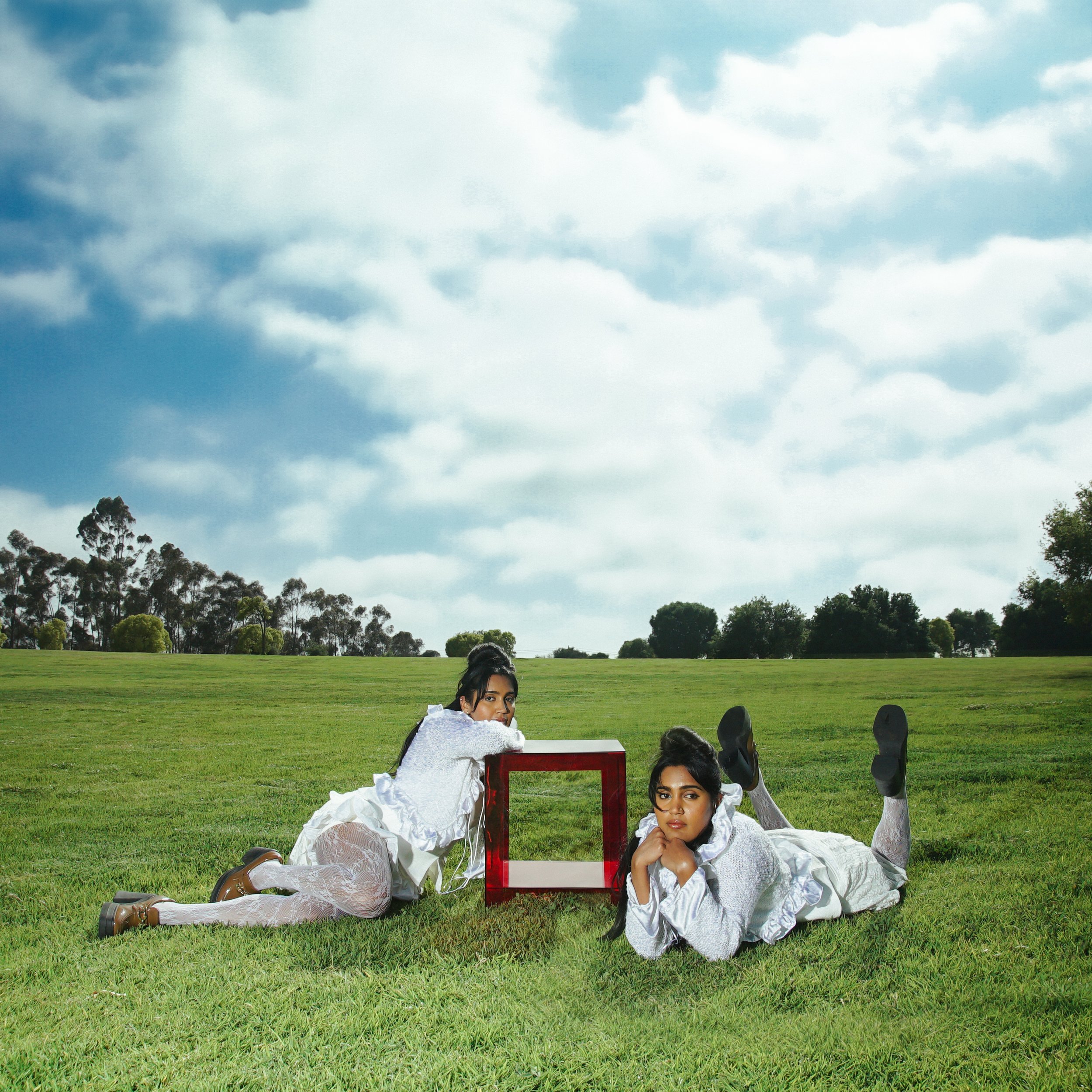
With “Time Travel,” again, I wanted the visuals to be about bridging the digital with nature. We got a really old vintage computer monitor and took it out to Kenneth Hahn Park. We wanted it to feel like I'm isolated out in the middle of nowhere, but I'm still going to be online. That urge to, no matter where you are, still be online.
LUNA: What's coming up next for you? Are you working on any other projects?
AKSHARA: I am definitely working on a project. I am in the process of making an album called Solar Punk. It's centered around the idea of using innovation as a tool while also focusing on sustainability; two very different extremes. How are they going to fit together? How, as a society, are we going to be able to sustain the environment, sustain our humanity, in an age of such fast innovation? How can we use technology in a positive way? That's the concept, and all of these songs—I'm Bored of 4/4 is a separate two-pack that won't be on the final album, but working on all of this is feeding into creating Solar Punk.
