
SPOTLIGHT: Annabelle Chairlegs on Grief, Anger and Her Latest Single “I Feel So Mad”
INTERVIEW
INTERVIEW
☆ BY PATRICK ZAVORSKAS ☆
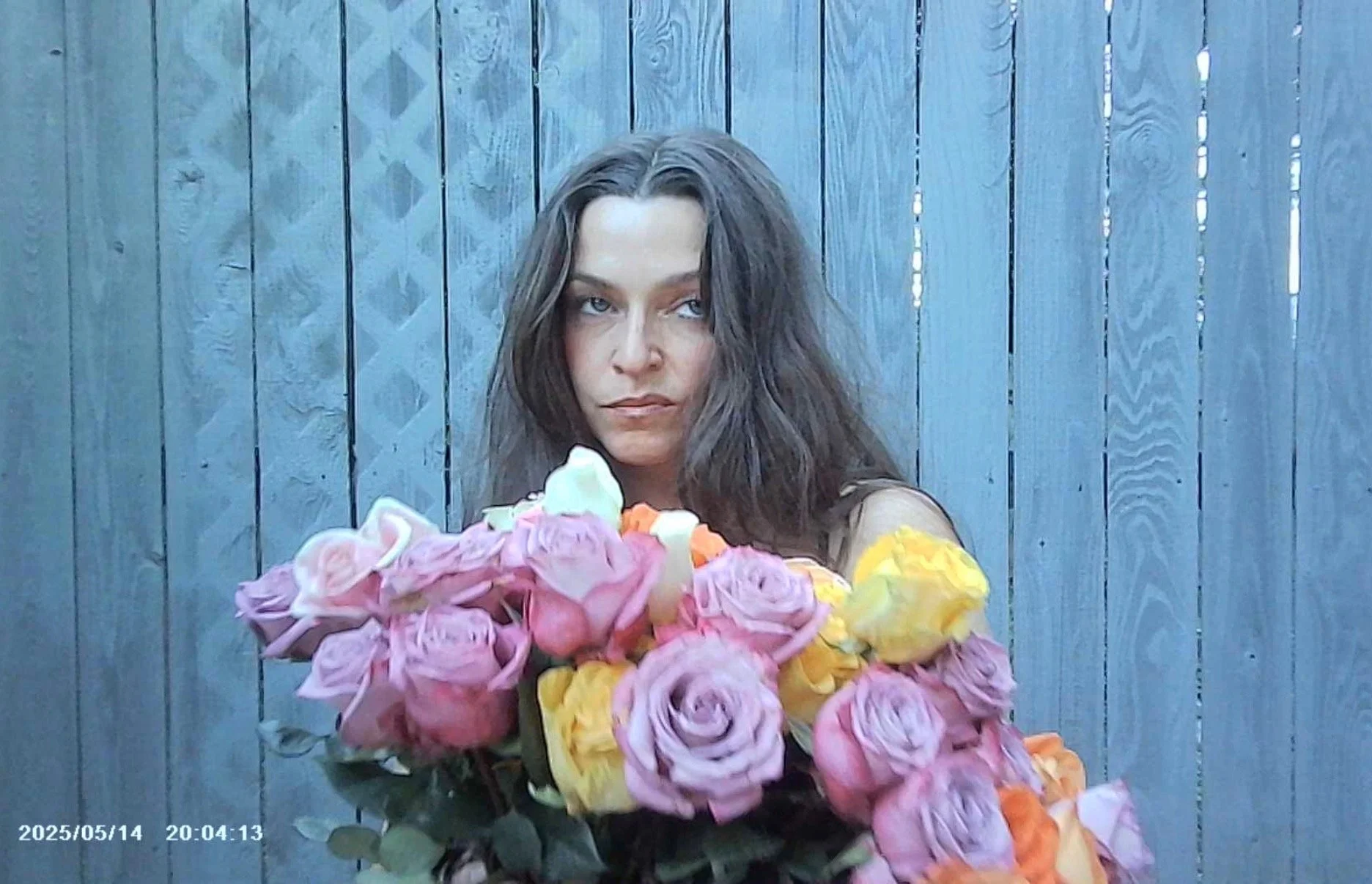
LINDSAY MACKIN IS THE KIND OF PERSON ANYBODY WOULD BE LUCKY TO KNOW — For starters, she is someone who unapologetically wears her heart on her sleeve. She is not afraid of vulnerability, whether that means shedding a tear or two when a question hits a little too close to the heart, or expressing a deep, sincere sense of gratitude. In moments, you may find she occasionally apologizes for being all over the place, losing her train of thought or struggling to find exactly the right words. But the truth of the matter is, even in those moments, there is an unmistakable genuineness to her. Nothing feels rehearsed. Nothing feels carefully guarded.
Perhaps that openness is fitting for someone who has built an entire world around giving emotions somewhere to go and be witnessed.
For example, long before Mackin released her 2026 album Waking Up, it existed under a different name: Heavy Sleeper. Mackin first planned the record in 2020, writing a collection of songs that she would later realize felt strangely disconnected from the emotions she was trying to process. Even though the songs and feelings existed, there was still something that had not quite clicked. As Mackin would later realize, she wasn't exactly awake to what she was trying to work through.
Years later, however, she returned to the record. Some songs were reworked and carried forward. Others were left behind, while new songs emerged to fill their place. Eventually, Heavy Sleeper became Waking Up—a record that feels strikingly more assured in both its sound and its emotional world.
The transformation is fitting. Waking Up isn't simply the title of an album; it is the culmination of Mackin finally arriving somewhere she wasn't ready to reach when she first began writing it.
That process of waking up is not separate from the creation of Annabelle Chairlegs. If anything, the persona gives Mackin a place to continue doing what Waking Up began: putting language, sound and form to feelings that don't always arrive neatly.
“One reason I initially started a band and wanted to write songs was that songwriting was a channel or vehicle for me to explore and express things in different ways. In making the album [Waking Up], there were moments in which there was a lot of darkness, but there's something about this idea of waking up from that and shifting the tone of all this grief and anger into moments of sassiness or fun…and moments of like, ‘Yeah, whatever.’ For me, it was truly about meeting these emotions somewhere else, and playing with them in a different way.”

When discussing emotions, we often speak as if they are one-dimensional. Grief is sadness. Anger is frustration. Joy is happiness. But in reality, we know that they are more complex than we often admit. Grief can make you laugh at something you never thought was funny at first. It can make you furious. It can make you nostalgic for something or someone you know you can't have back. To fully experience an emotion, then, is not necessarily to experience its most recognizable form, but to allow yourself to witness everything that exists within it. For Mackin, that willingness to sit with the entirety of an emotion adds to the values of Waking Up — especially when she admits that it took a journey in discovering that voice.
“I remember starting to write and being like, ‘Wow, I can be Annabelle Chairlegs, and I can explore and say anything I want’...She eventually became this protective thing for me, because I felt like for so long, I could not speak. There were moments I remember of being in class, for example, where I would get really nervous. My throat would close up or get tense, my face would turn red and I felt like I just could not say anything. I also started having these weird dreams where I would not have a voice…to me, I think music really helped me find a way to finally speak and express everything I wanted to originally.”
This is where Annabelle Chairlegs comes into play. On her latest single, “I Feel So Mad,” Mackin brings us to the feeling of not being able to hear. She describes the song as “when you can’t hear yourself think and the boys are talking too loud.” The song is filled with boisterous guitar and psychedelic flair, aggressive riffs filling the atmosphere as the song builds louder and louder until it slows down into an almost sigh of release. “I wrote the song when I was living in Sante Fe, New Mexico. I remember being so angry, almost suffocatingly so. I felt like I was living in the dust storm or like I was being buried alive. And there was just all of this heaviness that was starting to weigh down on me. But all of the sudden, there was this break in the chain, and this feeling of me needing to get out of there. I am getting out as fast as I can.” You can sense the adrenaline with every build, every frustrated, “I can’t hear / god knows I can hear you well,” serving as that desire. Every sound and lyric being used as a reclamation of space.
We further see this with the additional music in which she creates. For her, music is an outlet in which you can never be too loud or too noisy when trying to speak. With her music and songwriting, there is an intense freedom in knowing that she can write about anything, say whatever she wants and scream it out if needed. Her process usually involves a free-flowing state of consciousness:“I don't really realize what I was thinking or feeling until after it is written.” Vulnerability is at the forefront, and each session can soon turn into its own private therapy session. Any sense of bias, ego or fear is never present, allowing her to get to the core of exactly what she is feeling. To me, this is also what makes her music seem so relatable or moving. You can be a witness to every feeling that is present. Through her songs and experiences, you can hopefully also find someone who can help you carry the weight of your own.
“I do think that it’s so important to share,” she states in relation to this. “Not only can sharing these songs or experiences help someone else relate to them, but personally and for those people, hopefully it’s a way to free them from [their] body. I’m hoping that with the songs I put out, I could potentially give a voice to those who may still be trying to find theirs.”
The thing about grief and other similar emotions is that it must be witnessed. It must be shared. That does not mean that it will necessarily heal, or that it will be solved, but in sharing our grief becomes less solitary. For Mackin, again we see this coming through with Annabelle Chairlegs and her community. Without the music, world and stories she gives clarity to with this persona, there is the potential to never really understand the emotions in the first place. And as Mackin said, can you really be “awake” to them if you aren’t witnessing them with yourself and others?
Waking Up and songs like “I Feel So Mad” come from a place of not only processing, but also recognition. Each attempt to write the album and revisit old songs allowed her to become more capable of recognizing and expressing emotion. It also proves that transformation exists beyond the songs themselves. “I Feel So Mad” perhaps is the clearest example of this.Anger does not need to disappear for Mackin to move through it; it needs somewhere to exist, to be expressed and to be heard. When we learn and allow ourselves to live alongside grief and anger, we can then begin to see them as parts that deserve to be understood rather than overcome.
Lindsay Mackin is the kind of person anyone would be lucky to know because she lets you be seen, witnessed and heard through her work. Her music gives grief a voice. Her voice gives grief somewhere to go. And perhaps that is the gift of Mackin and Annabelle Chairlegs: not that she has figured out how to make difficult emotions disappear, but that she has created somewhere for them to exist — and invited us in.
