
Q&A: Annika Rose Lives in the Liminal Space Between Love and Letting Go in “CALL ME”
INTERVIEW
INTERVIEW
☆ BY KIMBERLY KAPELA ☆
Stefano Giovanni Giuliano
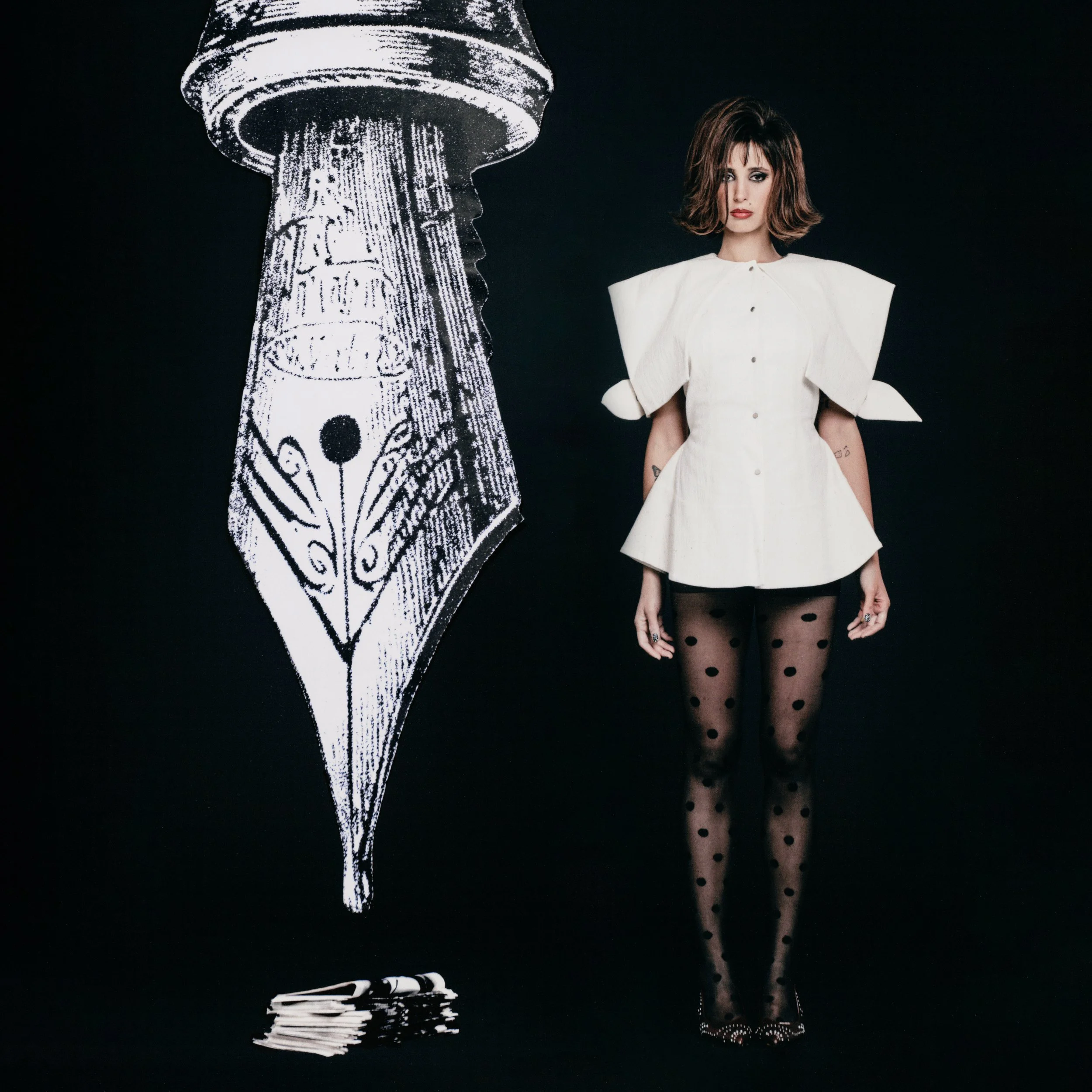
ANNIKA ROSE CHOOSES HERSELF — For alternative pop artist Annika Rose, vulnerability is the connective tissue between her music and the listeners who find themselves within it. On her latest single, “CALL ME,” Rose embraces that uncertainty, exploring what it means to choose yourself while still caring deeply for someone else. The track opens her forthcoming EP READ ALL ABOUT IT, with a song about choosing independence over the possibility of love, and wondering whether the friendship caught between the two can survive.
Blending alternative pop, indie pop, and pop rock, “CALL ME” moves between restraint and release. Sparse, confessional verses create an intimate sense of reflection before opening into a warmer, more expansive chorus.
Rose wrote “CALL ME” during a period of newfound independence after leaving a long-term relationship. For the first time in years, she was confronted with the opportunity and challenge of discovering who she was outside the framework of an intimate partnership.
“For the first time in years, I was discovering who I was when I wasn’t being defined by another human,” Rose says. “I cared about this person deeply, but I knew I wasn’t ready for another relationship—and I wasn’t willing to risk losing one of the most important friendships in my life by forcing something that wasn’t right with shaky hands.”
“For the first time in years, I was discovering who I was when I wasn’t being defined by another human,” Rose says. “I cared about this person deeply, but I knew I wasn’t ready for another relationship—and I wasn’t willing to risk losing one of the most important friendships in my life by forcing something that wasn’t right with shaky hands. This song isn’t about wanting someone back. It’s about wishing you could skip over the awkwardness and uncertainty that follows and just hear their voice again—to know that person is still anchored next to you despite the prospect of romance. Sometimes choosing yourself can be just as painful as choosing someone else, and ‘CALL ME’ lives in that liminal space between protecting your autonomy and trying not to lose someone you love.”
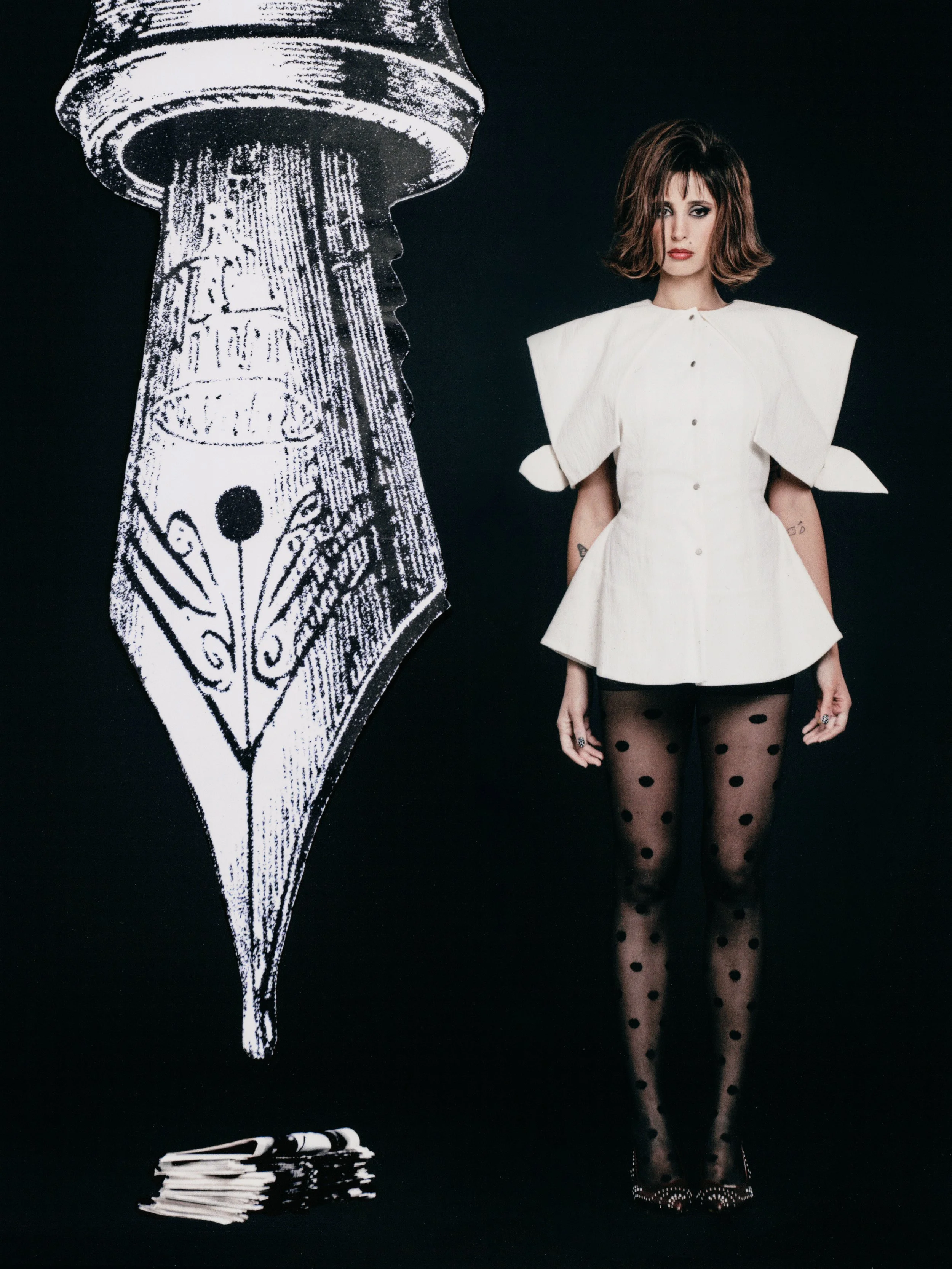
The single arrives alongside the fourth edition of The Bond St. Bulletin, the newspaper she writes, prints, and distributes herself. Through each issue, she expands the story behind her music and transforms a digital release into a physical object fans can hold onto. Rose has distributed more than 5,000 copies across previous editions, staging newspaper drops in cities throughout the country on release days. The decision to build something physical around her music feels especially fitting for an artist whose work is centered on intimacy.
In an era where songs can appear on a phone screen and disappear into an endless stream of content, The Bond St. Bulletin asks listeners to slow down, hold onto something and engage with the story beyond the three-minute confines of a single.
Through both “CALL ME” and the Bulletin, Rose continues to build a world where vulnerability is not something to hide from, but something to share.
Stefano Giovanni Giuliano
LUNA: Thank you for talking to Luna. Our readers would love to get to know you and your music more.
For any readers who aren’t familiar with you yet, what inspires your artistic style and sound?
ANNIKA: I listen to so much music. I think my north star for someone who has been a guiding light for me forever, who I've looked up to for so many reasons, is Haley Williams from Paramore. I am a Paramore fan through and through. I think, yeah. If I were to compare my music, the inspiration is the love child of Paramore, Alanis and Sheryl Crow. I love The 1975. I love Fleetwood Mac. I think those might be my top five, and I sit somewhere in that realm if they were all making music in 2026.
LUNA: You’ve described your newest single “CALL ME” as existing in the “liminal space” between protecting your autonomy and not wanting to lose someone you love. What inspired the single and what messages or emotions did you want to explore?
ANNIKA: I was in a difficult dynamic that had been very, very set in stone and established between somebody else in my life and myself, and I held that relationship and that dynamic so close to my heart. At some point there was a new layer that was introduced into the relationship that was really conflicting and just evoked this internal tug of war between me, myself and I. There's so many sacrifices that would come with the prospect of this being successful and not successful, and I had made a prior commitment to myself to hold true to moving as a solo unit for a while. I was in a long-term relationship that was wonderful, but it was during the most formative years of my life, and I vowed to myself to really know what my baseline was outside of a partnership with anyone else.
The cultivation of self trust is something that I put a lot of emphasis on. I was struggling between potentially losing the relationship and also sacrificing that cultivation because I really wanted to know that once I commit to something with myself, that I actually see that through to the end and feel it out. It would have felt like a betrayal of self if I would have ignored that promise and blindly moved into something that just didn't feel 100% right. I was very much in that liminal space mentally, and if writing was the only thing I could do to solve any of the mystery inside of that question, “CALL ME” is the product of that.
LUNA: You wrote “CALL ME” after leaving a long-term relationship and rediscovering yourself outside of partnership. What parts of yourself were you most surprised to rediscover during that period of independence?
ANNIKA: For one that I wasn't dull and stale as bread. I think the color came back into my life. It was a difficult time for so many reasons because that companionship evolved so quickly because of COVID. I had just turned 18, and it was this forced self isolation, and I got to live out the honeymoon phase in a time where I didn't have to sacrifice any other areas of my life because I was forced to be in confinement with this person. I think getting into that rhythm and spending that much time in such close quarters, the sort of rapidity of the evolution of the relationship came so quickly, and the routines that were established stuck as the world continued to broaden again and open up.
I think in the process of developing these systems and habits inside of that relationship, I lost a lot of my own color and my ability to see it inside myself, and it wasn't until I started finding it again and seeing different shades of things in the world and inside of myself that I was lost. I actually am extremely social, and I do like to talk to people, and I do like to be out in the world and have new experiences and make spontaneous choices about what my day is going to be and who I'm going to be spending it with. I just lost that, and it was such a beautiful surprise to come out and be like, "Oh my God, I can really take up a lot of space in the room and not feel bad about it, or not feel like I'm protecting another person's role inside of a room where I might be too big and it makes someone else uncomfortable.” I think that was the most obvious thing that poked its head through during the initial point of that independence.
LUNA: “CALL ME” opens your forthcoming EP READ ALL ABOUT IT. What can listeners expect to discover about you across READ ALL ABOUT IT that they may not have heard in your previous work?
ANNIKA: I think there's a really large emotional access point through extremely vulnerable lyricism on this EP. I pride myself on the fact that I am extremely vocal about the internal nuance of my experiences through writing, but there's a lot that happened in the last few years, and I think I'm touching on subjects in READ ALL ABOUT IT that should probably stay in my journal, but they're not. I think that's also the connective tissue between my audiences and me is knowing that they're able to depend on me for vulnerability in lyrics, and I think for as much as they might be familiar with me touching on those things historically, READ ALL ABOUT IT elevates that idea.
LUNA: The project blends alternative pop, indie pop and pop rock. What sounds, artists or experiences influenced the sonic world you wanted to create this time around?
ANNIKA: I wasn't really referencing a lot of music during this EP’s creative process. I'm working on an album after this, and that very much has its artistic North Stars. The songs were scattered in READ ALL ABOUT IT. They came from different places. Some of it was written in Sweden. Some of it was written here. Some were in my bedroom. I think because the creation of all of them was so spread out over the course of a year, my taste was evolving pretty rapidly that I couldn't really hang on to anything for long enough for it to influence the music I was making. It's pretty free of a reference point, which is surprising. I haven't even thought about that. I was listening to a lot of music, and maybe unconsciously things were entering into the sonic world that was developed on this EP, but truly, it was pretty void of artistic references.
LUNA: You write, print and distribute The Bond St. Bulletin yourself, turning each release into a physical artifact. Where did the idea for creating your own newspaper originate?
ANNIKA: I grew up playing in bands, and something that I always try to hone back in on throughout this absolute fucking ruthless machine that is the music industry is the remembrance of why I started doing something in the first place. Before I had the mental wherewithal to understand the terminology to identify what made music feel so good, there was this purity in the physicality of music, where you're playing a show and you're actually seeing the sweat on somebody's face from dancing, and you're standing at the merch table, and someone's looking around and taking their time and picking something. There's just something so beautiful about this physical experience and exchange that happens when you are actually sharing a room with someone or sharing space as an independent artist who is not a child of nepotism.
It's really fucking difficult to play shows and to fund yourself. I'm not working another job. This is what I do. You're working with scraps. I was trying to figure out a way where I could touch back on that indescribable feeling of playing shows and sharing those rooms with people in a way that wouldn't break the bank, and so the origin story for that was really just me seeking connection with other people without being homeless. What's a way to expand on the stories and also offer a more intentional, meaningful experience for myself and for other people that isn't going to break the bank, and is something that I can be doing consistently.
When my last EP came out, I was coming off the back of a really terrible experience that I had with someone, which is where the alter ego was born, and Broadway and Bond represents a lot because this person was based in New York, and that's where we met was on Broadway and Bond, so there's a lot of lore that's woven into everything. There's so much richness to these stories that I feel like if I wrote more about them and gave them more context, how could I do that? What would that look like? The newspapers served as this double-edged sword. You get to contextualize the stories that you're talking about in the music that are hard to contain in three minutes, and you're also able to do whatever you want with them. I flew to New York on the $89 Frontier flight, and let's stand in Washington Square Park for 10 hours, and let's print 2,000 papers at a school printing facility, and let's hand them out to people, and let's introduce people to my music through physical media, and in turn, I get to tell more of the stories. I also get to shake hands, hug bodies, travel, walk the streets, see people's reactions in real time and also create a more meaningful experience for music consumption. The catalyst was just that desperate need for connection and context.
LUNA: How do you hope listeners — especially your femme audience — can connect with or find power in this new era of music from you? What emotions or messages do you want to leave with them?
ANNIKA: The catalyst of all of this was really a terrible experience with a man. Tell your story and not be afraid to tell your story, and also to prove that the negative experiences in your life don't need to sit like a rock at the bottom of your stomach and in your nervous system. You have the ability to actually turn it into something that offers you peace and can also bring peace to other people. It's not just for me. This is for everyone. I feel like some people are maybe just better conditioned to be the conduit for things, but really, it's a collective experience that's just being turned into something physical and something you can put in your headphones. I think, especially for women and for men, and just for people at large, tell your story, tell your truth and turn it into something. Even if you don't turn it into a fucking newspaper, talk about it. It's really important and healing.
LUNA: What is fueling your fire right now that’s pushing you into this new era of your career?
ANNIKA: I'm listening to a lot of really good music right now. I've been on this quest to find weird, niche things that inspire me to keep making music and to just go for a longer run because the shit in my headphones is so good. I hosted an event on Tuesday, and talking to people and seeing people respond in real time is like okay, it doesn't matter if this reaches. I want it to reach millions of people, but if it stays like this, it's satisfying enough because it's that rewarding. Creating more in real life experiences is the most incredible motivation to just keep going and try and reach more people for the next one.
LUNA: How are you feeling in this current era of your career and what does the rest of the year look like that you would like to share with Luna?
ANNIKA: I feel really good. I feel really motivated. I'm definitely underslept now, but that's the independent artist journey. READ ALL ABOUT IT will be out in a couple months. There's a lot of great new music, and I'm planning a lot of live things in the world. Hopefully, traveling back to New York to do something there. I'm shooting a live piece in an actual newspaper printing facility at the end of this month, so we're hiring a crew to come up north to this massive facility and professionally record and film a live piece in a facility where they are printing the newspapers around me. I'm super excited about that, and I'm also working on an album.
