
Q&A: Aubrie Sellers Dissects Modern Romance on ‘Attachment Theory’
INTERVIEW
INTERVIEW
☆ BY SHEVON GREENE ☆
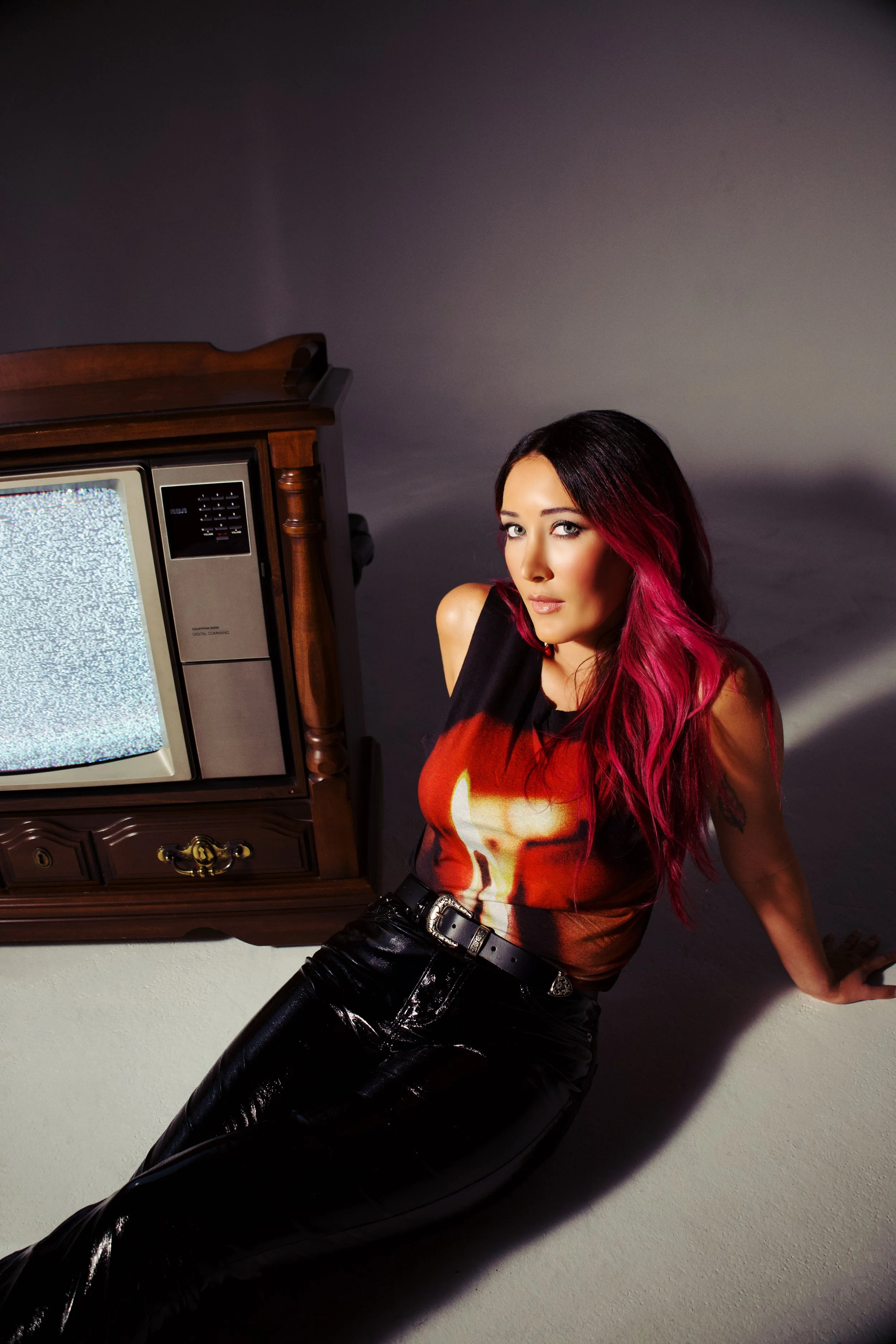
FALLING IN LOVE OFTEN MEANS LEARNING THE HARD WAY—how people attach, detach and protect themselves. On Attachment Theory, out today, Aubrie Sellers emphasizes on that tension, tracing the emotional fallout of love in the age of apps, avoidance and endless choice.
Attachment Theory is Sellers’ third studio album and her darkest, slowest-burning work yet. Blending her “garage country” roots with shoegaze textures, cinematic guitars and space atmospherics, the record stands out as its own unique piece of artwork.
Songs like “Subatomic,” “Villain of the Week” and “Little Rooms” wrestle with avoidant behavior, criticism disguised as honesty and the loneliness that can exist inside relationships. Rather than framing these experiences as purely emotional, Sellers examines them through a psychological lens, exploring how attachment styles shape the way we love and pull away.
That curiosity extends beyond the music itself. Released weekly up to the album drop, “Attachment Theory: The Podcast” allows Sellers to unpack each song’s theme in conversation, diving deeper into the psychology behind modern relationships in a way a three-minute track can’t always hold.
We sat down with Sellers to talk about heartbreak as a learning process, writing without a roadmap and why “Subatomic” was the only way this album could begin. Keep reading for a deeper look inside Attachment Theory.

LUNA: Attachment Theory feels like both a personal reckoning and a cultural one across this project. When did you realize heartbreak wasn’t just emotional, but psychological too?
SELLERS: It’s funny; this whole record and the podcast grew out of attachment theory popping up repeatedly in my adult relationships. I read Attached [by Amir Levine and Rachel Heller] around 2021, but I’d been interested in psychology since high school when I first got into astrology and personality types.
It came back up more intensely while I was writing these songs and figuring out what the next record would be. I realized I didn’t just want to write about the emotional side of relationships, but actually understand them. I love talking about these things with friends and family, so when I realized each song focused on a specific relational theme, the podcast felt like the perfect extension. You can only say so much in three minutes, and I really wanted to dive deeper into the ideas behind each song.
LUNA: That makes so much sense, and it’s clear how passionate you are about it. You’ve described this record as darker and more slow-burning than your past work. What headspace were you in when you made that shift?
SELLERS: I hate to call it a heartbreak record, but it kind of is. I’ve always been more motivated to write when I’m processing something emotionally. This record feels more introspective overall.
There were moments where I wondered if it was too slow-burning, especially thinking about live performance, but I tried not to overthink that. I focused on the songs themselves and let them come together naturally. I don’t usually start with a concept; I write, then look back and ask what the common thread is.
Musically, Ethan Ballinger and I were really in sync. We’ve worked together for years, and this record naturally leaned further into shoegaze textures and expansive guitar sounds, especially compared to my Jackson+Sellers work, which felt warmer and more vintage. But ultimately, this record was about emotional cohesion more than sonic rules.
LUNA: I love hearing that process; writing first, then zooming out. “Subatomic” opens the album in such a striking way. It feels intimate but cosmic at the same time. Why did that feel like the right entry point?
SELLERS: Sonically, it sets the tone for the whole record. If I had to choose one song that represents the album’s emotional and sonic landscape, it would be that one. I love records that feel like a full journey rather than a collection of singles, and “Subatomic” invites you to sit down and really listen.
LUNA: I also wanted to ask about “Little Rooms,” especially the visuals. The dollhouse concept is so charming. How involved are you in shaping your visual world?
SELLERS: Very involved. With “Little Rooms,” I actually had that visual concept while writing the song, which doesn’t always happen. I build mood boards and come in with a strong vision, then collaborate with people who can elevate it.
I worked with Luke Harvey of Mossflower Pictures, and we clicked instantly. There’s very little creative friction; we’re usually on the same page, and he brings ideas I wouldn’t have thought of, like the layered side-profile shots. He’s an incredible filmmaker.
LUNA: The record looks at avoidant behavior with empathy, without excusing harm. Was that balance important to you?
SELLERS: Definitely. I’m securely attached overall, but anyone in a relationship with someone anxious or avoidant can get pushed toward the opposite polarity. I’ve felt both.
Avoidance, especially, can be incredibly lonely on the receiving end. Even when it’s unconscious, distancing behaviors like criticism or minimization can be really painful. That’s where “Subatomic” came from. I wanted to leave room for empathy while still naming the damage.
LUNA: Dating apps come up a lot on the record and in the podcast. Do you think they’ve changed how people communicate (or avoid) honesty?
SELLERS: I think dating apps create the illusion of infinite choice, which can make people more emotionally unavailable. The apps are designed to keep you swiping, like a slot machine. People who are emotionally available tend to leave the apps sooner, so the pool skews a certain way. That dynamic didn’t really exist before.
LUNA: The album leans into sci-fi and cinematic imagery. What does that allow you to express that realism alone doesn’t?
SELLERS: I’m naturally a dreamy, visual person. Sci-fi, spirituality, and emotional alienation all feel connected to me. Relationships have a spiritual dimension, and using spacey imagery helps express that learning and transformation in a way realism sometimes can’t.
LUNA: You blend country roots with shoegaze and rock textures. How do you know how far to push without losing yourself?
SELLERS: I just follow where I am emotionally. I grew up around country and bluegrass, but I listen to a lot of rock. I don’t consciously aim for a genre; I make the record that reflects who I am at that moment and hope it finds the right people.
LUNA: Making the album alongside the podcast creates two different forms of vulnerability. Did the conversations affect your songwriting?
SELLERS: Not during the writing, but afterward. The podcast helped me articulate what the songs were really about and think about how those themes might help others. The songs came first, and the reflection followed.
LUNA: Did learning the theory ever help you reframe your own experiences?
SELLERS: By the time I made the podcast, I’d already done a lot of processing. Revisiting it helped me think about what I could share that might be useful to others. The podcast isn’t a promo tool; it’s something I genuinely wanted to make.
LUNA: “Villain of the Week” uses humor in a really effective way. How do you decide when humor serves a song better than sincerity alone?
SELLERS: With that song, we talked about it a lot. If it leaned too sincere, it could’ve sounded bitter. Humor helped it feel lighter and more honest. Sometimes the tone just fits the idea better.
LUNA: There’s a tension throughout the album between wanting connection and protecting yourself. Where do you feel that most right now?
SELLERS: Dating apps really highlighted that tension. I’m in a relationship now, but during that phase, I had to take breaks. Actively dating can feel like a job. I think it’s about finding ways to protect yourself while staying open, instead of shutting down.
LUNA: You’ve been releasing music for nearly a decade. How does this album reflect how your relationship to love has changed?
SELLERS: This was the first time I’d really dated strangers intentionally. That experience changed my perspective and made me more appreciative of stability and loyalty now. Seeing what’s out there reframed what I value.
LUNA: With both the album and podcast out, what conversations do you hope they start, especially for women navigating modern dating?
SELLERS: I hope people become more intentional about learning, about relationships, about themselves. Relationships take active work. I also hope men listen to the podcast. It’s framed toward women, but the ideas apply to everyone.
