
Q&A: Baby Nova Embraces Discomfort, Humor and Control on ‘Shhugar’
INTERVIEW
INTERVIEW
☆ BY SHEVON GREENE ☆
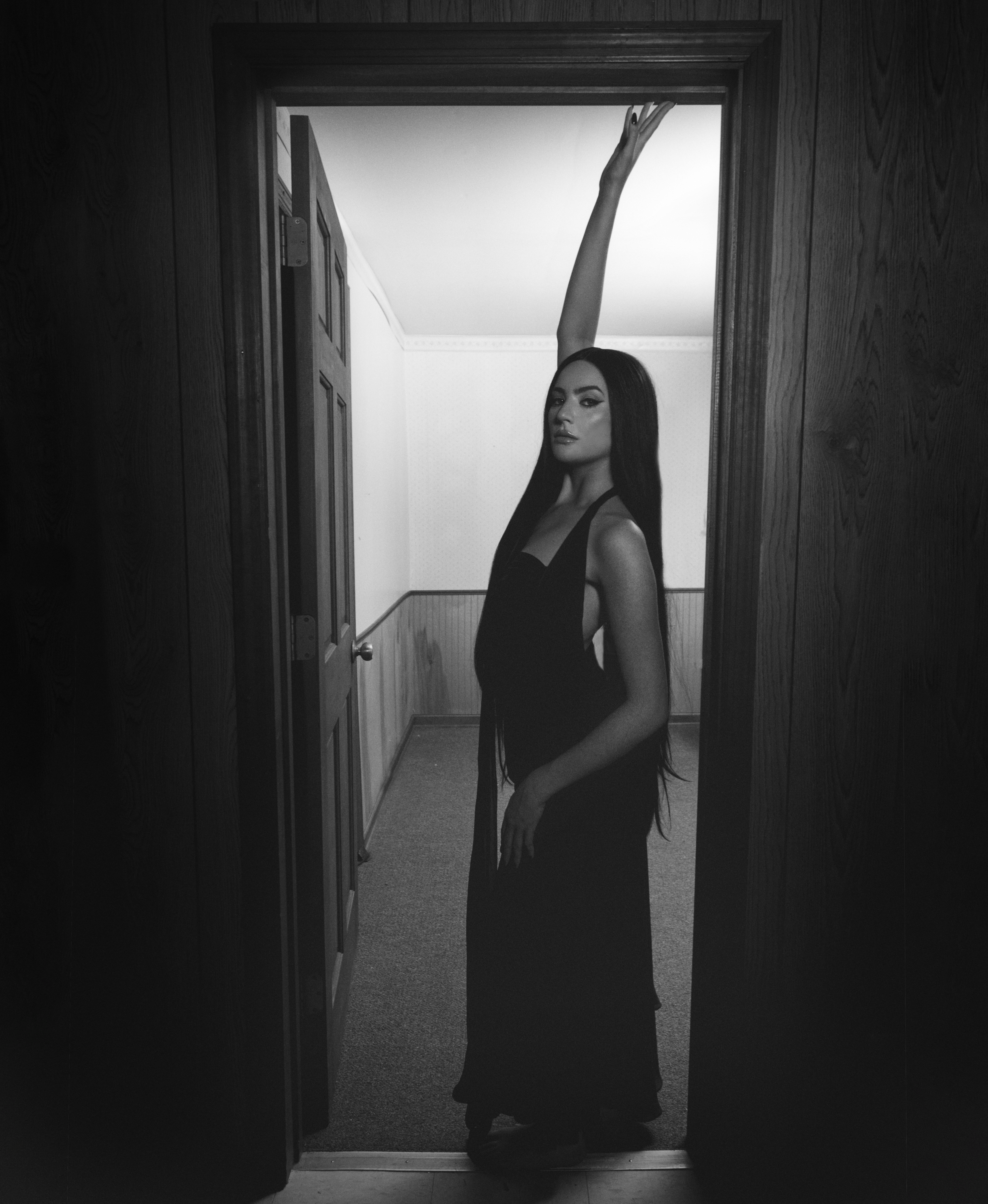
BABY NOVA IS AN ARTIST WHO SHARPENS THE EDGES OF HER EXPERIENCES INSTEAD OF SOFTENING THEM—The Nova Scotia-born artist has a knack for turning desire, shame, power and humor into brutal yet strangely tender music.
Released on January 16, Shhugar is a a mix of eerie folk storytelling. Its hypnotic electronic-pop focuses on confession, contradiction and dark wit. The album documents years of lived experience (naive, devout, reckless, self-aware) that collides into one beautiful and cohesive voice.
Across songs like “Killed For Sport,” “Broke Bitch Boogie” and “Too Pretty For Buffalo,” Nova wrestles with Catholic guilt, sexual agency, economic survival, and the dilemma of wanting independence and craving care. Her writing doesn’t shy away from discomfort, but instead faces it head on with a confident grin.
That same confidence carries into her visuals, where her childhood spaces, high-concept styling and corsetry become an important emotional standpoint for this project. For the “Killed For Sport” music video, Nova even wears a corset once owned by Priscilla Presley, emphasizing her love for fashion. Those fashion choices (often pulling from designers she believes in) are as carefully thought out as her lyrics.
We sat down with Baby Nova to talk about shaping Shhugar, writing without a filter, religion, shame and why humor is sometimes the only way through. Keep reading to step inside her world.
LUNA: During the process of making Shhugar, were you deliberately shaping it? Did you have a certain idea in mind, or did the songs come together naturally as you were writing them?
BABY NOVA: I like that you’re asking this because the process is interesting. I wrote pretty freely about a lot of things that had happened. At some point during writing, I’ll develop a concept and then I start curating what I’ve written to fit what I land on. I think “Wonder Breadwinner,” sonically was when we figured out the instrumentation and started building around that. I curate based on a vibe. I’m actually doing that right now for a second record, which I don’t know how much I should say about—but we could potentially see a second album this year.
LUNA: I’m excited to hear more about it. It’s cool to hear how that moment clicks, where everything suddenly makes sense.
BABY NOVA: Yeah, the pieces naturally start to fall together, even conceptually. Then there’s a moment where it clicks, and I turn on my curation brain—this fits, this doesn’t. Until then, I just write whatever.
LUNA: A lot of the songs touch on desire, shame, power and even humor. Do you usually know what emotional lane a song is in while you’re writing, or do you figure that out after?
BABY NOVA: I know how it feels, but it’s not a conscious thought. I’m just going off my feelings. I don’t go into sessions thinking, “I want to write about this.” Most of the time, I don’t know what I’m writing about until after. By hour eight or nine, I’ll realize what I’m talking about and then I put it together.
A lot of the melodies were freestyle. I sing gibberish, and then out of that I’m like, “Oh, I know what my brain is trying to say,” and I write from there.
LUNA: That’s such a cool way of working. It’s always interesting hearing how different artists approach that.
BABY NOVA: I’ve always wished I could plan things more. But when I do, I get in my own way. I’ll get excited by a reference track and then freeze. I’ve worked with people who are great at planning, though, and it’s fascinating to watch.
LUNA: Religion shows up a lot in your lyrics: Jesus, prayer, sin, confession. Is that imagery something you’re still unpacking, or is it just the language you naturally gravitate toward?
BABY NOVA: It’s both. I grew up Catholic in Nova Scotia, which was pretty religious culturally, so that language is just in me. But symbolically, the record deals a lot with shame, and my earliest experiences learning shame came from Catholicism. No shade to anyone practicing; it’s just my experience.
I hadn’t thought about religion much for years, but when I went through a lot last year, it came back up. I even found myself praying for the first time in a long time. I’m not religious, but intense moments can trigger a kind of spiritual reckoning.
LUNA: Yeah, that really resonates. You absorb so much of that stuff as a kid without realizing it.
BABY NOVA: Exactly, it just lives in the background.
LUNA: Do you see the voices in these songs as characters or are they all versions of you?
BABY NOVA: They’re definitely not characters; they’re all autobiographical. I feel like I have multiple versions of myself [emotionally]. I’ll be crying during sessions, then bouncing around, then suddenly serious.
This album spans different versions of me: naive and hopeful, sexually awakening, angry and strong. It took 10 years to release an album, so it captures a lot of lives lived.
LUNA: “Broke Bitch Boogie” turns something bleak into something almost celebratory. What does humor give you that vulnerability alone doesn’t?
BABY NOVA: Humor gives you everything. I wouldn’t have survived the last 10 years without people who could make me laugh. I wanted that song to be what my best friend Nate was for me; something fun that helps you get through it. The strongest people in my life are the ones who make things feel light, even when life is heavy.
LUNA: When you’re thinking visually—music videos, visuals, aesthetics—how do you decide what world a song should live in?
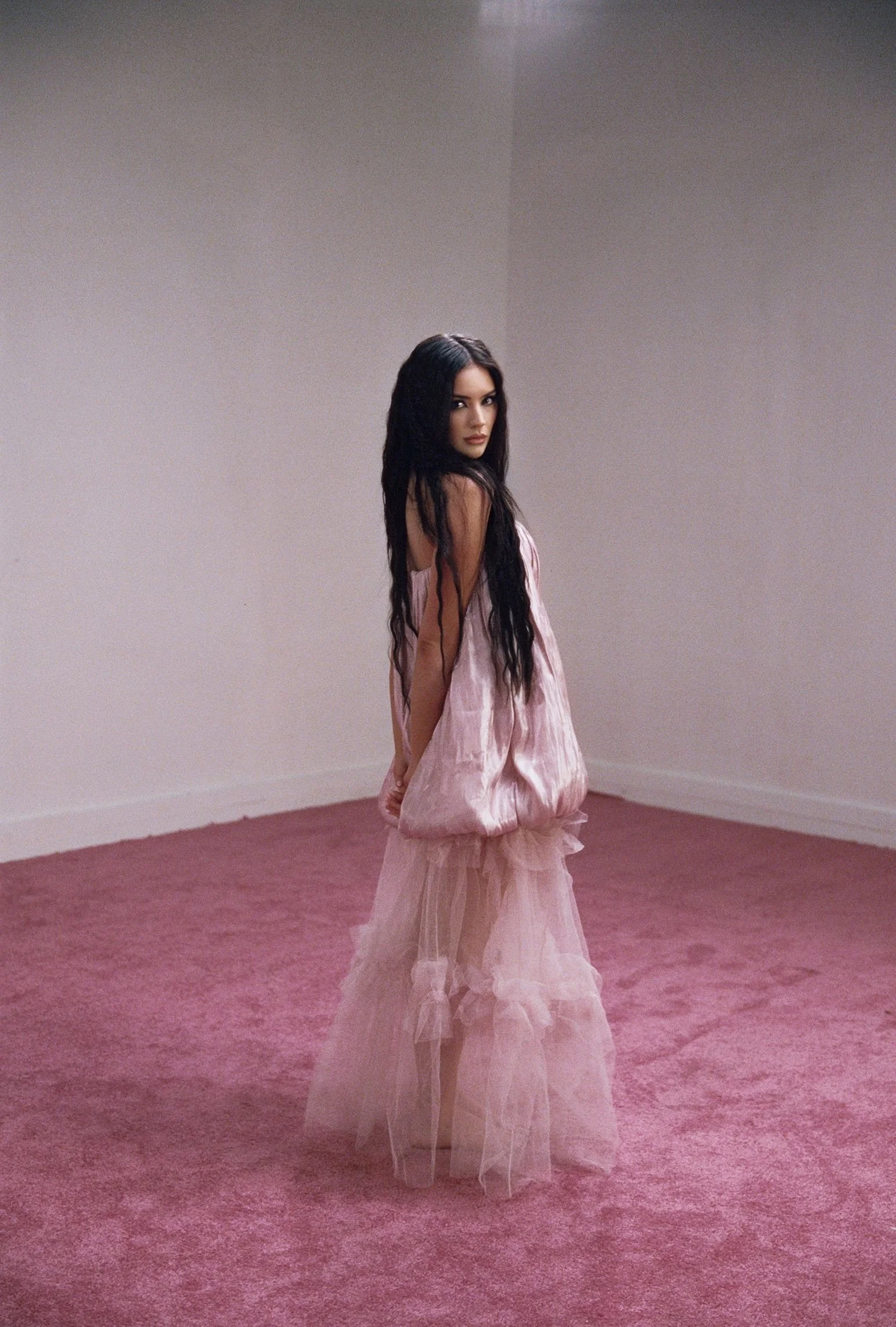
BABY NOVA: I love concepts. A lot of Shhugar pulls from my childhood: religion, trauma—things I had to unlearn. Even the carpet in one of my music videos matches my childhood basement. Corsetry shows up because it’s constricting but also sexual. For example, the corset that’s being worn in the “Killed For Sport” video is Priscilla Presley’s corset from her closet. My friend brought it to the shoot, which was so cool. There are so many little symbolic pieces like that.
On a non-symbolism level, I’m also really inspired by designers. If I could have gone to school for something else, I would’ve loved to study fashion design. I found this girl in Toronto named Max—she has a brand called SAGRADESA—and I’ve worn a lot of her stuff. I get really inspired when I find people I believe in and want to build and grow with. I love wearing her pieces because they make me feel like the most beautiful human ever. She’s perfect at what she does.
I’m also just very conceptual. For the album I’m working on right now, I’m pulling everything into a really specific concept when I’m lining things up or making choices.
LUNA: Location shows up a lot: Buffalo, LA, motel rooms, highways. How much of that is literal versus emotional?
BABY NOVA: Most of it is real, except Buffalo—I was actually talking about Toronto, but Buffalo sang better and is closest to Toronto in that sense.
LUNA: The girls who get it, get it.
BABY NOVA: Exactly! I do get asked quite a bit if I’m from Buffalo. I’ve had so many people named Katie come to shows from Buffalo, or write to me from there. The girl who did my makeup in the music video for “Too Pretty For Buffalo,” was named Katie, and she was from Buffalo.
LUNA: That is so cool.
BABY NOVA: It is very cute. I’ve found this little unexpected family of Katies from Buffalo.
LUNA: There’s a recurring tension between wanting to be taken care of and wanting autonomy. Is that a contradiction you’re still living inside of?
BABY NOVA: Oh, yeah (laughs). Constantly. In life, not just music. I want freedom, but I don’t want to feel alone. I want to take care of myself, but it’s also nice not having to all the time.
LUNA: It’s not too much to ask for, truly. Your lyrics are very vivid and confrontational. Do you ever worry about being misunderstood?
BABY NOVA: Not really. I’m deliberate with what I say, and I stand behind it. The only people I worry about are my family. I like how brazen it is; it’s a pushback against things I wasn’t allowed to do.
LUNA: When you write something that blunt, do you ever pull back?
BABY NOVA: Sometimes. I pour everything out first, then filter. I never want to hurt anyone, so I’ll peel things back to keep it vague enough for people to project onto it. Some things should just stay in the journal.
LUNA: How do you know when a song is finished?
BABY NOVA: A lot of these songs are day-of demos. I’m not an over-editor. There were changes—different choruses, harmonies removed—but I love first vocals. There’s magic in them.
LUNA: Now that Shhugar is out, what do you hope listeners feel permission to do?
BABY NOVA: I hope they feel what I felt making it—that they’re allowed to feel whatever comes up. Happy, sad, messy. Especially for women, I hope it helps with some of the weird stuff we’re taught to carry.
LUNA: And what’s coming next?
BABY NOVA: A lot. Shows, merch, alternate versions, collaborations, probably a second album. Lots coming.
