
Q&A: Bike Routes’ ‘Prairie’ Is Exactly What It Needs to Be
INTERVIEW
INTERVIEW
☆ BY GIGI KANG ☆
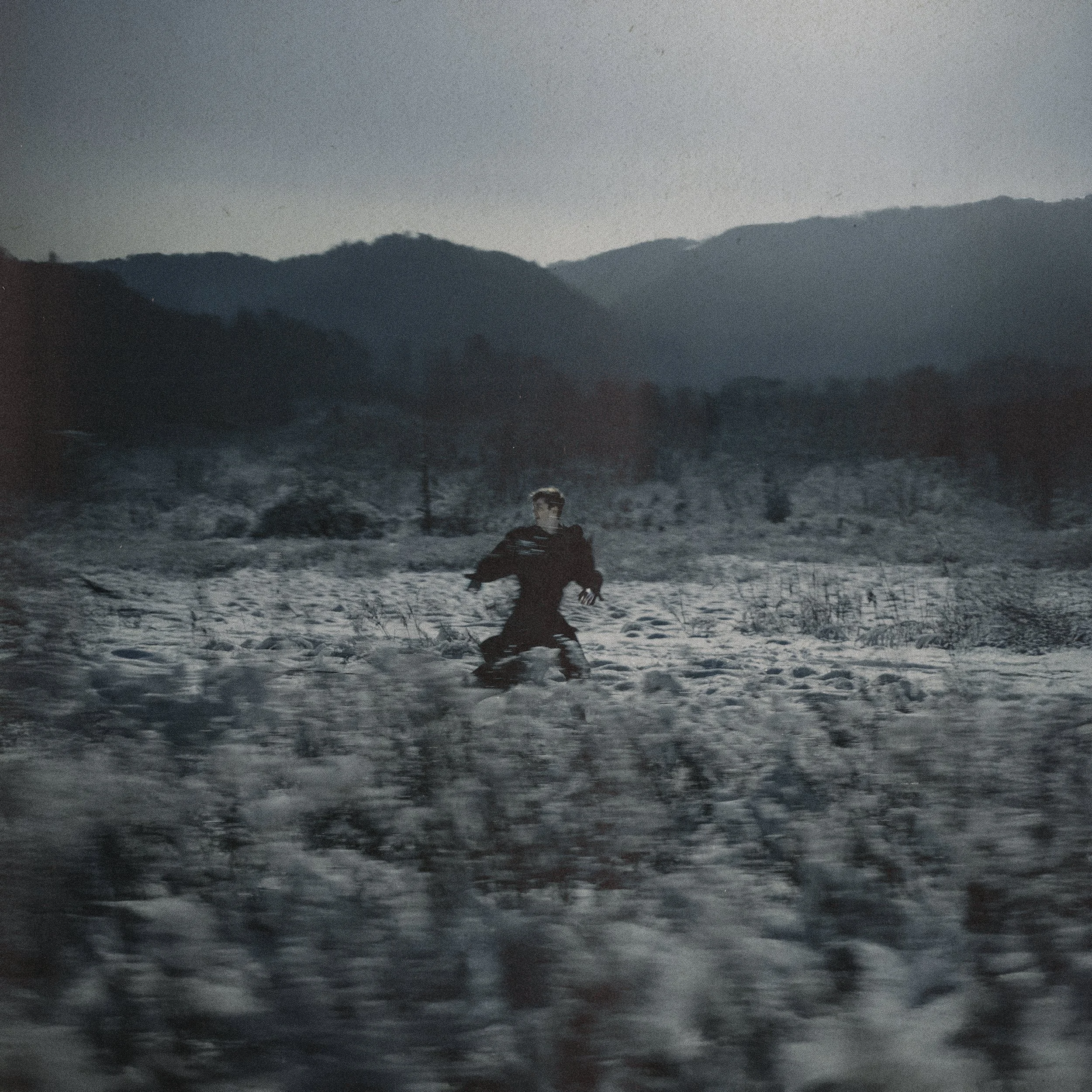
PRAIRIE IS THE LATEST ALBUM FROM BIKE ROUTES—and it has always been the goal. Self-described as the “perfect encapsulation of what Bike Routes was meant to be from the beginning,” the album is a triumphant celebration of everything David Osterhout has built over the past decade.
Released on June 26, Prairie preserves the acoustic sound at the heart of Bike Routes while adding catchy synths inspired by the nostalgia of music Osterhout grew up listening to. “Acceptance In A Fragile Form” exhibits this best through a synth breakdown.
In addition, a full band accompanies Osterhout on each track, illuminating his stories in a way that feels communal. For example, in “Homeward Bound,” Osterhout’s gentle vocals escalate with urgency alongside keys and drums that intensify in parallel.
A stand-out track is “Ripley” where Osterhout’s vocals are sharp, making you feel the passion behind every syllable of every word. The emotion in his voice is always paired with vivid lyrics like, “Tell me what I have to say / Tell me why there’s bullets in my brain / ‘Cause I’m driving these streets again with no plan and no way out.” His descriptions are specific in a way that enables the listener to unlock their own honesty. A catalyst through his sincerity, Bike Routes is the type of artist that reminds you of yourself.
A major inspiration for Prairie was Osterhout’s hometown New Jersey. It’s only fitting that the final lyric on the project is “New Jersey cut me open from the inside out.” Interestingly, the line could go two ways—to cut as in injure, or to cut as in unveil beneath the surface. It aligns with the dual moods of the album where Osterhout comments on either the scars resulting from an experience, or the growth.
For example, in “Delicate,” he asserts, “Tonight I’m gonna burn them down / I’m not that delicate,” while in “There It Goes,” he sings, “Maybe it’s just some fucked up bloodline or ancestoral curse / And maybe everybody else dodged it, man, so I just got it worse.”
From his lifelong experiences in New Jersey to his personal mental health and musical journey as Bike Routes, Prairie acknowledges both Osterhout’s aches and joys over the years. It’s a summary of everything he is and has been, and it’s beautiful.
“Prairie is the culmination and actualization of all the previous things I worked on,” Osterhout shares. “Even when I was playing acoustic in coffee shops, I always pictured one day having this full sound and band behind the songs. 10 years down the line, it’s finally coming to fruition.”
Be sure to check out Prairie and read our full conversation with Osterhout below.
LUNA: I love that the first track, “Homeward Bound,” sets the tone with, “It’s only natural for this to start with existential dread and a broken heart.” What an opener. Would you say that’s an accurate description of when you first started working on Prairie?
OSTERHOUT: I pull a lot from emotional experiences. I grew up with really bad OCD and it took shape in existential dread and death. Especially when I was younger, these concepts were so new and insane to me. Now as an adult, with going through therapy, I think that’s what Prairie symbolizes—the flow of life for me and all these things that built up to this record. Heartbreak and existential dread, but also hope and family in your hometown. All those things are what pieced this record together, so it was only natural to start it that way.
LUNA: The hometown imagery across the album is conflicting in a way. There’s a lot of love through lyrics like, “I love this place / Something about it makes me wanna stay alive.” But then you have lyrics like, “I had my doubts that the love of your life is from this fucking town.”
OSTERHOUT: There are definitely two distinct narrators on the album. One is happier and the other is blunt and aggressive. I think those two narrators rage inside of me when it comes to my hometown and growing up. One is the younger self, classic pop-punk, I-hate-my-hometown type. The other is, as I grew up and saw the world, I came back home and I was like, “Oh, I love this place. It gave me a good moral compass.” It’s those two conflicting personalities across the record and each one has its own song.
LUNA: How did you decide New Jersey was going to play a big part on this record?
OSTERHOUT: New Jersey is where all of my fondest memories have taken place, but also my not-so-fond memories. I think that’s amazing. I wouldn’t have it any other way. I’m very grateful to New Jersey as a whole and the community I grew up with. One thing I always wanted to do was express that in my music. Bike Routes started with just me and my guitar. I was writing songs for my friends and parents to listen to and I always wanted that sentiment to stay. If the rest of the world doesn’t understand what I’m talking about, but my friend group, my community, my hometown, my state get it, then mission accomplished. That played a big part in this record. It’s a prominent concept that I will always return to and think about.
LUNA: Another inspiration was your favorite authors. How did that translate into the music?
OSTERHOUT: I’m a big reader and a lot of my favorite authors touch on things that I also write about. One of my favorite authors is Iris Murdoch. She was very philosophical [and wrote] existential dread type of books, but they were also funny. I have like 40 copies of her books. Kurt Vonnegut is the same way; I have three tattoos for him. He puts it all into a lighthearted perspective while speaking aggressively about life and how to stand up for your community and what you believe in. Reading has been such a good outlet for me. Visualizing settings and characters inside of your mind—they’re something completely different in someone else’s mind. That has always been a cool concept to me and I’ve tried putting it into my writing.
LUNA: I was thinking about why you might have chosen Prairie as the title because Jersey isn’t exactly prairie land, but some of your favorite authors like Cormac McCarthy write about grassland. Did that play a role in the choice?
OSTERHOUT: Absolutely. McCarthy is one of my favorite authors of all time. I think he is the king at setting the stage in a novel and that always stuck with me. I love reading his description of places, like the valleys and the prairies of his novels. For me, the prairie represents the soundscape we built, how it’s this rolling land of sound and emotion and my life. My life was never peaks, it was never mountains of anything good or bad—it just kind of rolled. On the record, sonically there are no crazy peaks or divots. It rolls exactly the way I always wanted it to.
LUNA: My favorite song on the album is “There It Goes”. I specifically love the lyric, “I ain’t scared of getting killed, I’m scared of dying unfulfilled.” You’ve been doing Bike Routes since 2020 but you’ve been playing for a lot longer than that. Has your understanding of purpose changed after all these years of playing?
OSTERHOUT: Yes and no. All I wanted to do was write songs and play shows for my friends. At the end of the day, all I still want to do is write songs and play shows with my friends. Even if Bike Routes was not an active band, I like to think these songs would still exist to some capacity. I’d still write these songs in my room by myself. I’d still show them to my parents. I think that never changed. That is what I’m always chasing. I’m not afraid of dying, but I’m afraid of dying before I’ve gotten all these songs out of me and gotten everything out of me that I have to say to my friends and my family.
LUNA: On “Acceptance In A Fragile Form,” your voice is soft and it’s maybe the most pop vocals across the album. Then you go to “Ripley” which is the opposite. Tell me about your vocal approach and how you landed where you landed for each song.
OSTERHOUT: Vocally, I was able to fine tune the range that I wanted to sing in. Sometimes when I’m writing songs, I don’t think about where it is in my range. This is the first record where I was like, “This is exactly in that comfortable range where I can emote the way I want to.” That was really important to me. I also think over the past few years touring a bunch, I learned more about my voice and how to hit notes in a healthy way. I started out screaming in bands and reaching those notes in whatever way possible. From singing 30 days in a row on tour, singing everywhere I drive in my car for the last 11 years and playing shows from coffee shops to big stages, it’s the 10,000 hours of practice you need to learn something. That all helped build my vocal range and vocal style without even meaning to. This is the first record where I’ve been able to showcase and experiment with that openly.
