
Q&A: The Long Distance Heart of Black Viiolet’s ‘Dark Blue’
INTERVIEW
INTERVIEW
☆ BY KIMBERLY KAPELA ☆
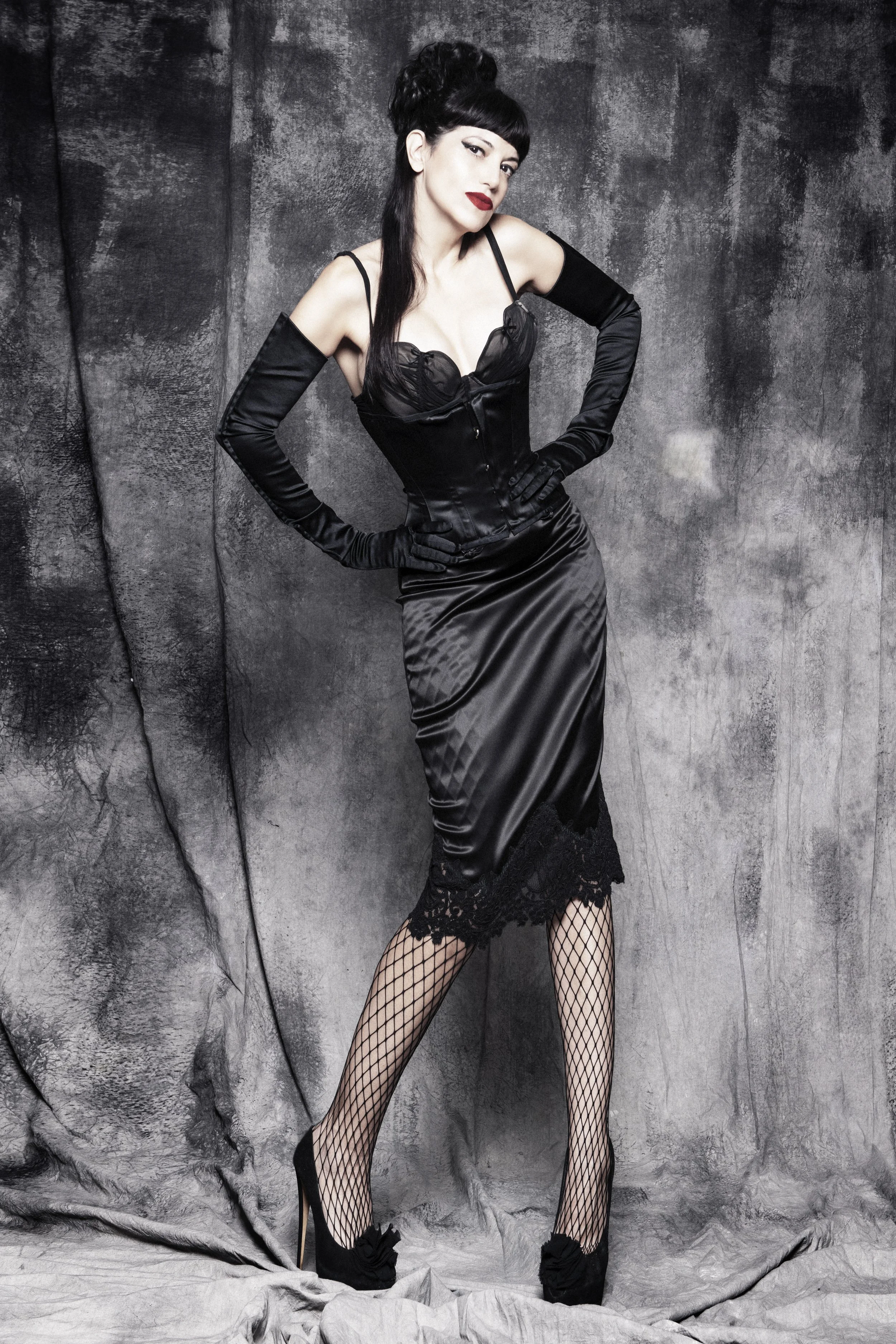
Photo Credit: Emmanuelle Margarita
NICOLE LAURENNE DOESN’T FLINCH WHEN SHE TALKS ABOUT HEARTBREAK — What began as a need to “get these emotions out” evolved into her most atmospheric and emotionally layered album yet. On Dark Blue, Laurenne trades The Darts’ voltage for something slower, smokier and far more intimate. Returning under the moniker Black Viiolet, the multi-instrumentalist leans into neo-soul and trip-hop textures, pulling from the lineage of Portishead, Amy Winehouse and Nina Simone, never settling into imitation.
Fans who know her from the raw propulsion of her garage rock roots will still recognize that instinct and the emotional sharpness, but here it arrives cloaked in velvet.
The title came to Laurenne instinctively while writing, a color that felt expansive enough to hold both sorrow and richness. The songs are blue. The songs are dark. But they aren’t drained of light. There’s depth in them. Even the celebratory moments carry a trace of distance, like a shadow cast across something glowing.
Much of Dark Blue was written in motion, sketched out in vans and backstage corridors while touring her debut. Laurenne built the record hands on every instrument she can reach, ears tuned to the hum of whatever room she’s in, drawing rhythm and color from whatever city blurs past the window that night. There’s a restlessness in the arrangements, but it’s a patient one.
Dark Blue is about distance. Touring relentlessly while navigating a new long-distance relationship left Laurenne suspended between hope and heaviness. “When you’re doing what you love but the person you love is always far away, you get stretched thin,” she says.
“Dark Blue” itself holds the record’s center of gravity. Laurenne describes the feeling behind it as “a deep, rich, velvety shade… but a little dark, and a little blue.”
“It's no secret that even the dark songs are about bad romance, because I have a lot of them,” Laurenne says to Luna. “The color dark blue came to me as I was writing this, because the songs are blue, the songs are dark, but there's also a richness in it, and that whole relationship there was this depth and coolness and a velvety happiness to it. It's not just sad. There are a lot of songs on there that are happy, that celebrate it, but there's always a tinge of distance that you can hear.”
At Studio Black Box in France’s Loire Valley, producer Peter Deimel introduced Laurenne to a restored 1930s Berlin piano he had rescued years prior. She struck a single note and immediately decided to extend the outro of “Dark Blue” with a piano solo. What manifests is one of the album’s most bruised and beautiful moments.
Dark Blue also marks the first time Nicole has ever recorded “Why Don’t You Do Right,” the jazz standard she has played on every stray piano in every club, hotel and hallway she has passed through for years. Jessica Rabbit singing it in Who Framed Roger Rabbit was the reason Black Viiolet existed in the first place, but she never put it to tape until now. The album opens up to a few unexpected guests. Jason DeVore of Authority Zero lifts “Just Met,” Tom Hagerman of DeVotchKa threads heart-splitting strings through “Whiskey Eyes,” and Blag Dahlia reshapes “One” with his own arrangement and vocals.
Dark Blue doesn’t try to resolve the tension it holds. Instead, Laurenne lets the ache breathe.
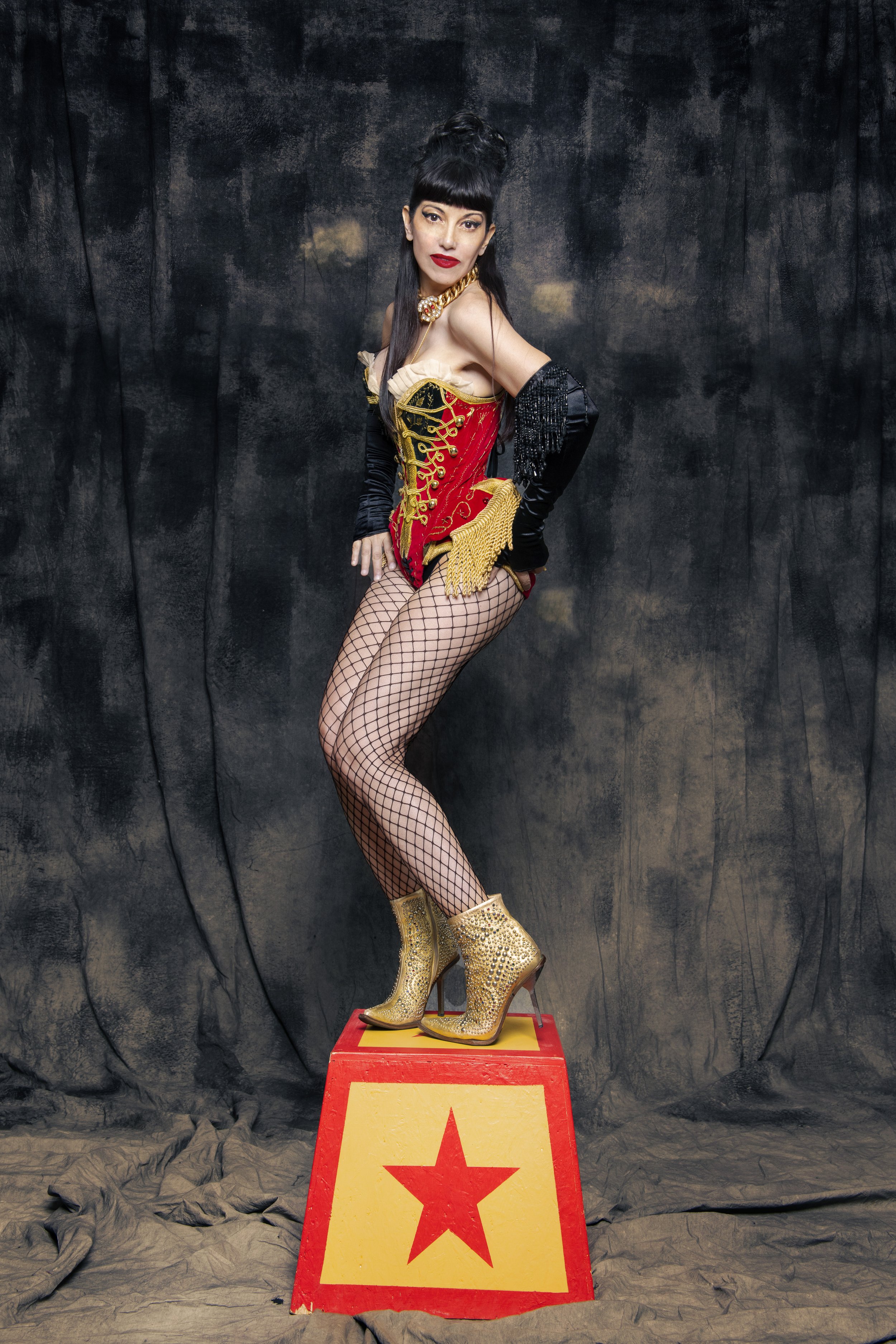
Photo Credit: Emmanuelle Margarita
LUNA: Thank you for talking to Luna. Our readers would love to get to know you and your music more. For any readers who aren’t familiar with you yet, what inspires your artistic style and sound?
NICOLE: Black Viiolet is really different from obviously what I do in The Darts. It's not punk, it's not garage, it comes from a very different part of my brain. I grew up playing classical piano and then some jazz. I dabbled in it, and I love it. I listen to it a lot, even though it's way too difficult to be an expert at it, but it's a really satisfying thing for me to listen to. During COVID, when The Darts weren't touring, I was bored, and I started writing trip-hop beats, which I also love. I love Portishead and things like that. Somehow, I came across on YouTube a video of Shirley Bassey, who sings the Goldfinger James Bond theme song, and she was backed up by the propeller heads who were doing this hip-hop beat with horns. This is the coolest thing I've ever seen in my life and that just sent me off on a trail. I was also watching a lot of movies like Who Framed Roger Rabbit? — remember Jessica Rabbit takes the stage and sings this little croonie song — that got me thinking about how much I love that vintage style.
My idea was to write what sounded like a vintage song, but then put trip-hop beats underneath it. I don't really know a lot of acts that do this, so I didn't really have a lot of inspiration going in. I was just off the top of my head. Then as I started recording it, people were like, this sounds like Lovage, which was one of the projects of Dan the Automator, who was behind the Gorillaz. Then there's a little Portishead influence going on there, and there's Nina Simone and Amy Winehouse that you can hear in there, but none of them are exactly right on point. I just pulled from a lot of different influences, and whatever comes out of my head, that's what you're hearing.
LUNA: You’ve built a reputation through the high-voltage garage rock energy of The Darts. What did stepping into Black Viiolet allow you to express that didn’t fit within that world?
NICOLE: I stumbled into garage rock when somebody came to me after a show with an old band and wanted to start a garage rack band. I didn't even know what garage rock was, and he introduced me to it, and I loved it, and I got into it. That wasn't my idea. It wasn't my baby. I grew to love it. It grew into this whole lifestyle that I fully embrace, but the real me sits somewhere in a quieter place, in a more chill, maybe slightly sadder, darker place than garage rock lets me go sometimes. I can get that out of my ballads. With The Darts, you'll hear a lot of that, but I really love exploring this quieter side. When I play Black Viiolet songs live, I get to pause between the songs and tell the story of the song and the emotions behind it. People, very often, weirdly, they'll start crying during the set. It's really emotional, and it's really personal, hard to do in a garage rock set. But I can really tell my story in these songs personally,
LUNA: The album circles around distance — physical, romantic, emotional. What does Dark Blue represent for you?
NICOLE: The whole project started out with me wanting to get these emotions out. And it's no secret that even the dark songs are about bad romance, because I have a lot of them. My defining feature is my bad romance. I'm always in the middle of a breakup. I'm always doing over, so this continues that theme. While I was writing Dark Blue, I actually had a really great relationship going on with a person in Germany and who I had met on tour, and we were trying to juggle this long distance relationship. Even when I was off tour, it was still a long distance. But when I'm on tour, it's always long distance.
I spent the good part of those two years feeling frustrated. And I think he did too. Like, how do we make this work? It's really expensive, and we can never be together enough to really get started. We had a lot of beautiful times together, but you can hear the sadness in it. The color dark blue came to me as I was writing this, because the songs are blue, the songs are dark, but there's also a richness in it, and that whole relationship there was this depth and coolness and a velvety happiness to it. It's not just sad. There are a lot of songs on there that are happy, that celebrate it, but there's always a tinge of distance that you can hear.
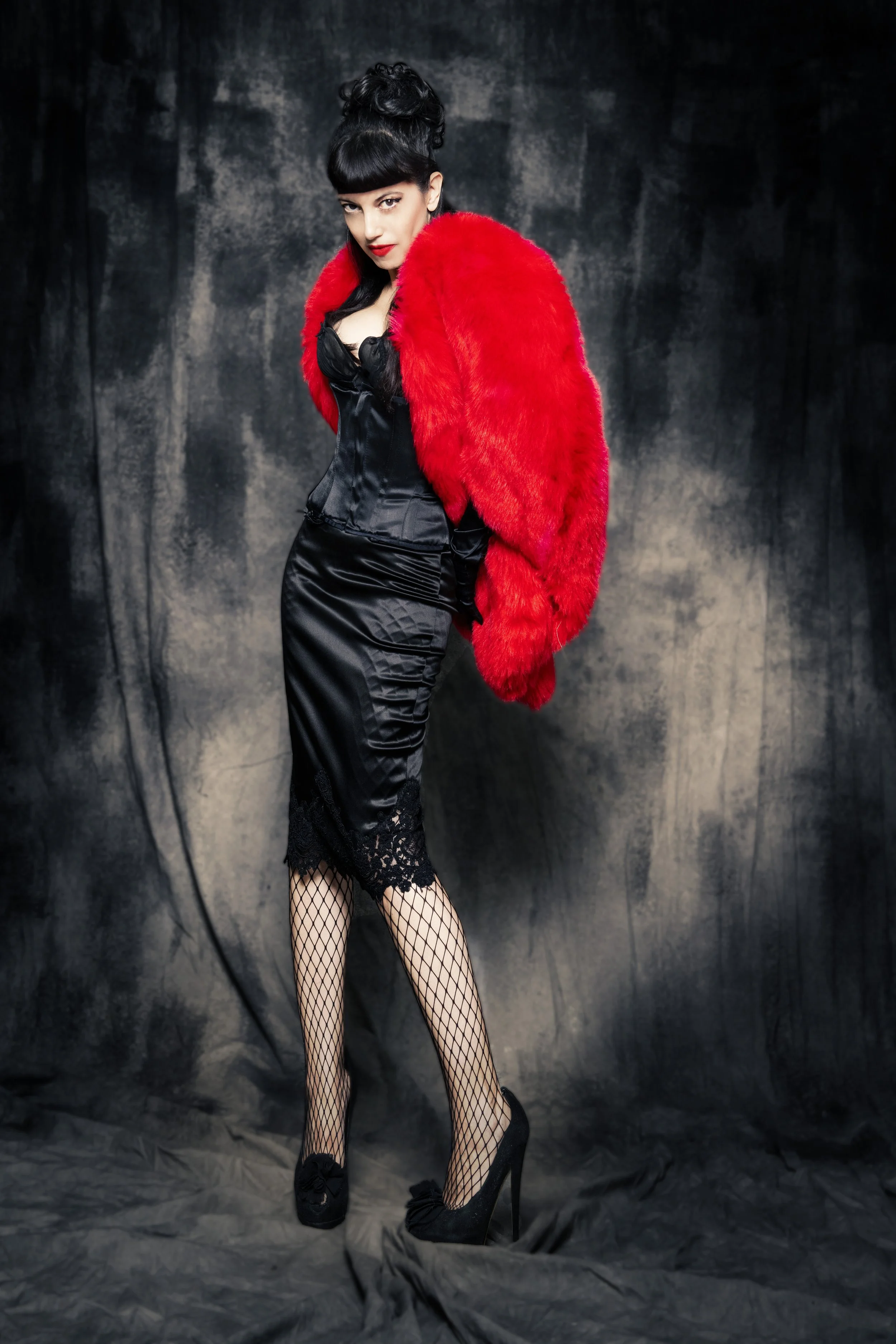
Photo Credit: Emmanuelle Margarita
LUNA: Recording at Studio Black Box feels almost mythic in the story of this record. Producer Peter Deimel also put you in front of a restored 1930s Berlin piano. What was it like bringing these influences into your creative process? How did he influence the sound of the album?
NICOLE: I've been wanting to record at Studio black box for a while because some of my favorite bands have been there. Peter is from Germany, but he's married to Sylvie, who is French, and they bought this property out in the countryside in France, in the Loire Valley, where all the vineyards are. They bought these little stone buildings all connected like a little compound. They made one into a beautiful, incredible studio, and then they made the others into places where the artists can stay while they're there recording. You just move in for a week, and you live in these little stone, old houses, and you eat and sleep together and it's a whole experience.
You go into the studio building, and he's got all this vintage gear, one of which is this 1930s piano that he rescued from Berlin. This piano has seen so much in its life. I feel like you can hear what it's been through. It's got this plaintive sound, like it's crying a little bit inside. The minute I sat down at it and started playing, I wanted to use this on so many tracks. The song “Dark Blue” had this long outro where it was just going to be us improvising, but I wanted that to be a piano outro now, because I want to use this sound. This is the sound of “Dark Blue” right here. I just started going off on that outro and you can hear that sound peppered throughout the entire record.
LUNA: You wrote much of this album in the van while touring your debut. What does songwriting look like in transit?
NICOLE: It's the weirdest thing. I'm in the back of the van, sharing the back seat with my bass player on one side and my drummer on the other. I love these guys. They're the coolest people ever, but the French guys are sitting up front, gabbing in French for six hours straight. These guys are listening to crazy French accordion music and jazz, they're talking about all that in the front and then my guys from the US are talking over my head about 80s punk, like weird conversations are all over the place, because they're all brilliant musicians. Here I am with my headphones on, and my garage band opened on my laptop on my lap, balancing my coffee in one hand. They're eating their French sandwiches on the side, and we're trying to get to the next gig. That's what it looks like. It's easy for me to get in the zone the minute I put my headphones on and I open up Garage Band, and I start writing a beat, and I'm lost. Everybody else might be sleeping or reading or eating or whatever, but I'm always writing in the van. I'm in this little cocoon where I can write for hours, it's nothing like it. I love it.
LUNA: Every record has one song that feels like the emotional spine. Is there a song on Dark Blue that surprised you while writing it? One that revealed something you didn’t know you were carrying?
NICOLE: There's two. “No Fool Like Me” and “Don't Fade” really took on a life of their own. They're both songs about expecting the relationship to end, knowing it's going to end. My relationships never work, but you know it's not going to work. You're entering this beautiful relationship, and you're already planning for the end, and that's what both songs are about. It's depressing in a way, but I need to enjoy this while it exists. The first time we played “Don’t Fade” live in France was a huge show. My daughter happened to be in the audience. She was visiting France, and halfway through the song, I look out in this huge crowd, and I see her face, and there's just tears down her face and she's not that kind of a kid.
That song has an interlude in the middle where it's just the horns. I told them during the recording, I want all the music to stop, and I want the horns to take it, and I want you to find your inner Baroque musicians. I wanted that to be a chamber music moment, so I asked these jazz musicians to do it. And man, did they ever, without even thinking about it. It's beautiful on stage every time we play it, it's beautiful on the recording. They just killed it, and it's just heart wrenching and amazing. I didn't expect this to be this epic moment in a set, and it always is. We played in Bremerton, Washington two weeks ago for a bunch of mohawked punk kids who were 16 years old, and they were leaning on the front of the stage going nuts over the song. There's something about it.
LUNA: If someone had never heard Black Viiolet before, which song would you play them first, and which would you save for later, once they’re ready?
NICOLE: I open my sets with the song “Got Me Down,” which is from the new album. I think that sets a tone. It's not too serious, it's accessible. I want to get across that this band can be pretty funky and have a beat to it, and it doesn't take itself too seriously. There's a darkness and a seriousness to the musicianship. I think that's a good introduction to what the whole project can be.
And as you get to know the band, I would play “Whiskey Eyes” for them, which is the big closer on this record. That was another huge surprise. I wrote this little song about how insecure I am until the person I'm with starts drinking, gets their beer goggles, and then I can relax, because I know they don't really see the real me anymore. What I didn't expect was the devotchka string player, Tom Hagerman, to offer to play strings on it, which blew my mind, and also sent me not just a violin track, but 16 tracks of strings and violas and harmonics. It brought tears to my eyes the minute I first heard it, and it grew into this incredible thing where he added exactly what it needed. My daughter, Zoe, plays upright bass on it. The bowing bass is her playing on it. There's a lot of emotion in that song. I've had a lot of people write to me and say that song, they've listened to it eight times in a row and they cry every single time. I don't want this band to be all about crying, but it's touching people in ways I did not expect. You have to have to be ready for “Whiskey Eyes,” and you have to understand what the band's about, because that's a unique moment on the record.
LUNA: How do you hope listeners — especially your femme audience — can connect with or find power in this new era of music from you? What emotions or messages do you want to leave with them?
NICOLE: It's amazing that you asked that this week, because we just played this pro choice benefit show in Bremerton, Washington that I didn't really expect to be anything, but it turned into this amazing show. It was all ages, which is pretty rare for a Black Viiolet show in the US, and all these punk kids showed up because it was a very eclectic build. As we played, all these 16 year old girls made their way to the front of the stage and leaned on the stage and when I went up and sang to them, they were screaming and they were so into it. And afterwards, I was waiting in line for the bathroom, and all these girls were in line with me, and this girl said to me, ‘I just want to thank you. That music to me sounded like what it feels like to be a woman.’
It's a unique experience to be female or to identify as female, especially in this time politically and culturally. We have a lot of power, and we do a lot of amazing things, but there are expectations, and there's child raising, and there's trying to juggle a relationship with a narcissist or something. There's hard things to figure out. I want this album to be like a love letter to those of us who are feeling these feelings. I don't care if you're female or whatever you are, I want you to listen to this record and find something in there that tells you it's really okay to be sad. Sometimes it's okay to be happy and then be sad. Sometimes it's okay to have things end because you'll start again.
LUNA: How are you feeling in this current era of your career and what does the rest of the year look like that you would like to share with Luna?
NICOLE: I am floating on cloud nine. I don't say that lightly, because that is not my style, I am so grateful to have two bands with incredible human beings in them and around them. They're so positive and happy and so grateful to be on the road all the time, and I don't have enough words for the people that are involved around me. It's really something. I really feel like your own emotions are so much a product of the people that you put next to, so you have to choose carefully. Everything's humming, and we're about to embark on a tour now, both bands hopscotching over for each other, but from March 6 to December 6, I'm going to be on tour, and there's no other life I want. I'm going crazy trying to figure out merch and everything else, but it's such a gift. This could end tomorrow and people could just not be interested suddenly. If that happens, it happens. But right now, I'm on the cusp of something that I've looked forward to my whole life, and I'm just so excited.
LUNA: Is there anything that I didn't ask that you would like to add?
NICOLE: I want to give a shout out to the other studio that was involved on this record, very heavily involved, Ruby Room in Seattle. When Peter in France couldn't follow through with the mix because of personal things going on, unexpectedly, I came back to Seattle and Ruby Room — who did a lot of work on my first records — jumped up and took over and did the mix. They are just brilliant. I just can't say enough good things about my producers.
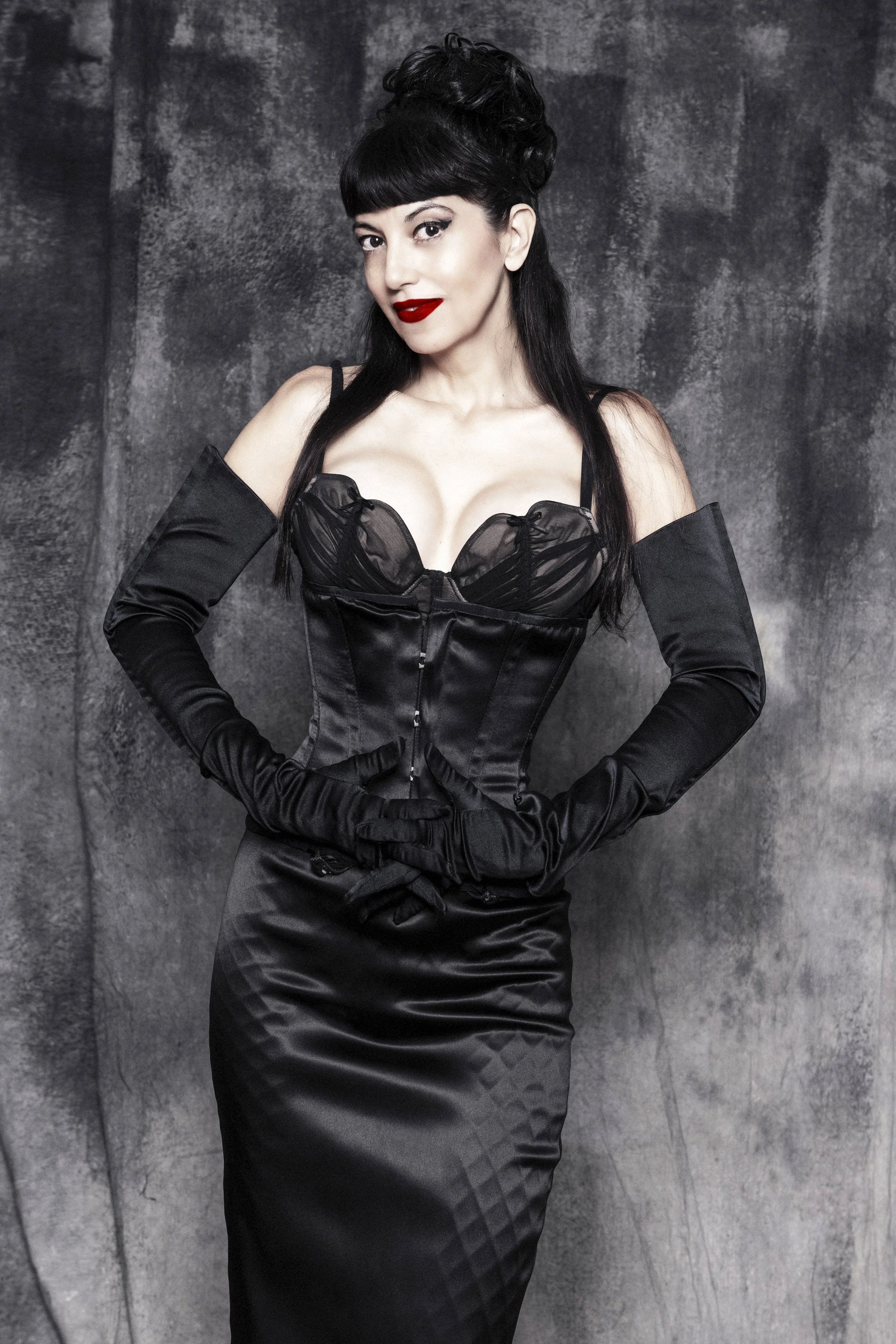
Photo Credit: Emmanuelle Margarita
