
Q&A: Riot Grrrl Legends Bratmobile Were So Cool, Cool At Riot Fest
INTERVIEW
INTERVIEW
☆ BY MILA MATEJCEK ☆
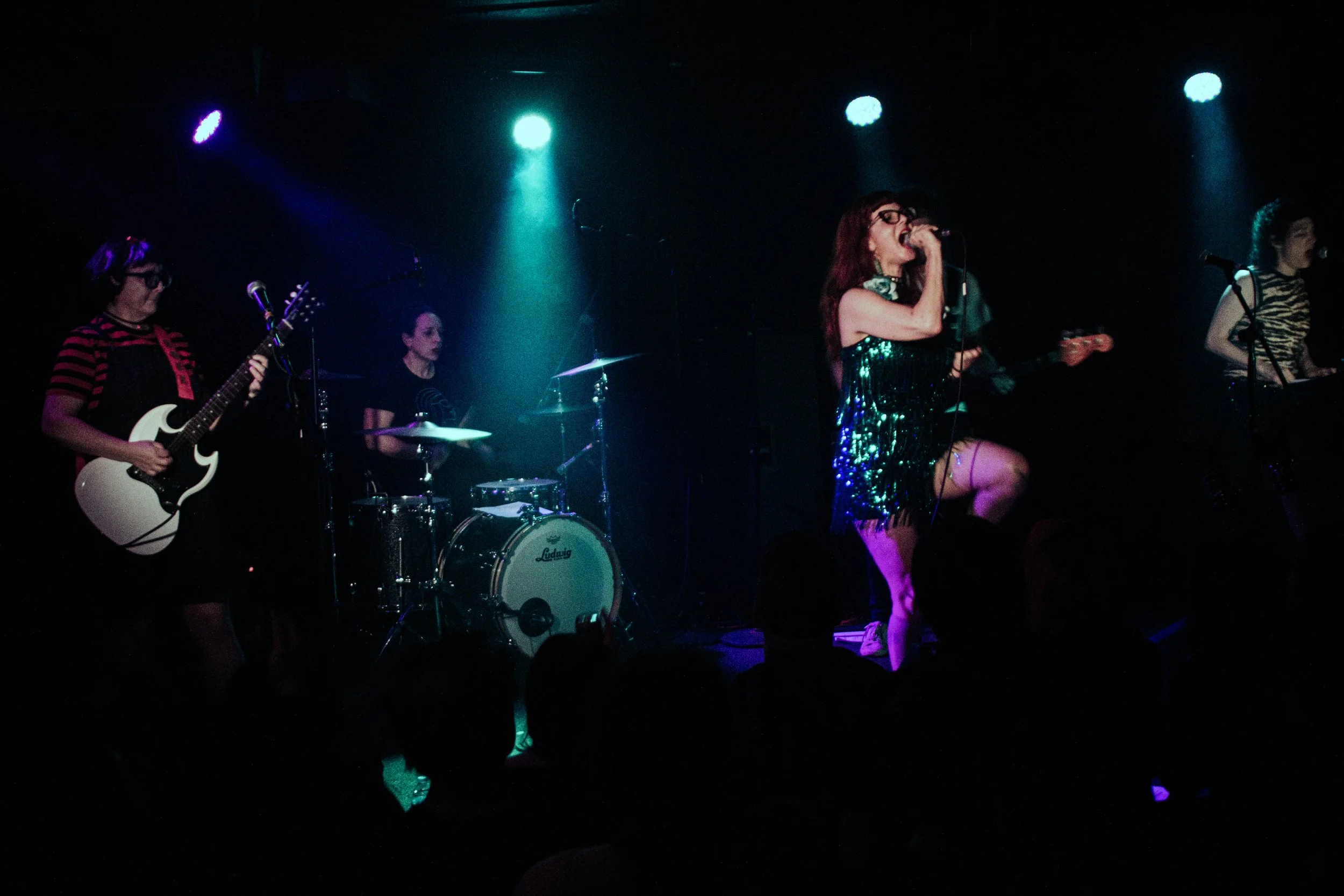
Photo by Mila Matejcek
HELLO WORLD! THEY’RE YOUR WILD GIRLS—1990s Olympia, WA bore one of the most prolific DIY feminist punk movements music has ever seen: riot grrrl. Alongside other core pioneers like Bikini Kill, Sleater-Kinney and Heavens to Betsy, we have Bratmobile to thank for the genre. Bratmobile dominated an in-your-face attitude that never shied away from prioritizing conversations about true activism and women’s rights. In the modern day, the group continues to shine like a beacon of hope in a climate of political contention, as their music only gains importance with younger generations who identify with their bravery and feminist stances.
Bratmobile are among the heroes of zine culture, tackling patriarchy not only in their songwriting, but in their collage-y, crafty, handmade magazines. During a pre-internet time when music spaces were painfully male-dominated and often sexist, their zine, Girl Germs (1990-1991) offered women a rare platform to voice their thoughts and feelings. This greatly elevated women’s ability to organize and come together—and have fun doing it.
Powerful, free-spirited and clad in sequins, Bratmobile arrived in Chicago this September to deliver two electrifying performances for Riot Fest—first on the Rise Stage, and second at their aftershow at The Empty Bottle, where they were accompanied by Hammered Hulls. The band’s current live lineup features original members Allison Wolfe and Molly Neuman alongside other longtime friends and performers: Rose Melberg (The Softies, Tiger Trap), Jen Sbragia (The Softies) and Marty Key (Ted Leo and the Pharmacists).
Luna caught up with Bratmobile’s Wolfe and Neuman at Chicago’s very own venue, The Empty Bottle, to talk Riot Fest, The Real Janelle + The Peel Session, ‘90s zine culture and advice for the future generation of activists.
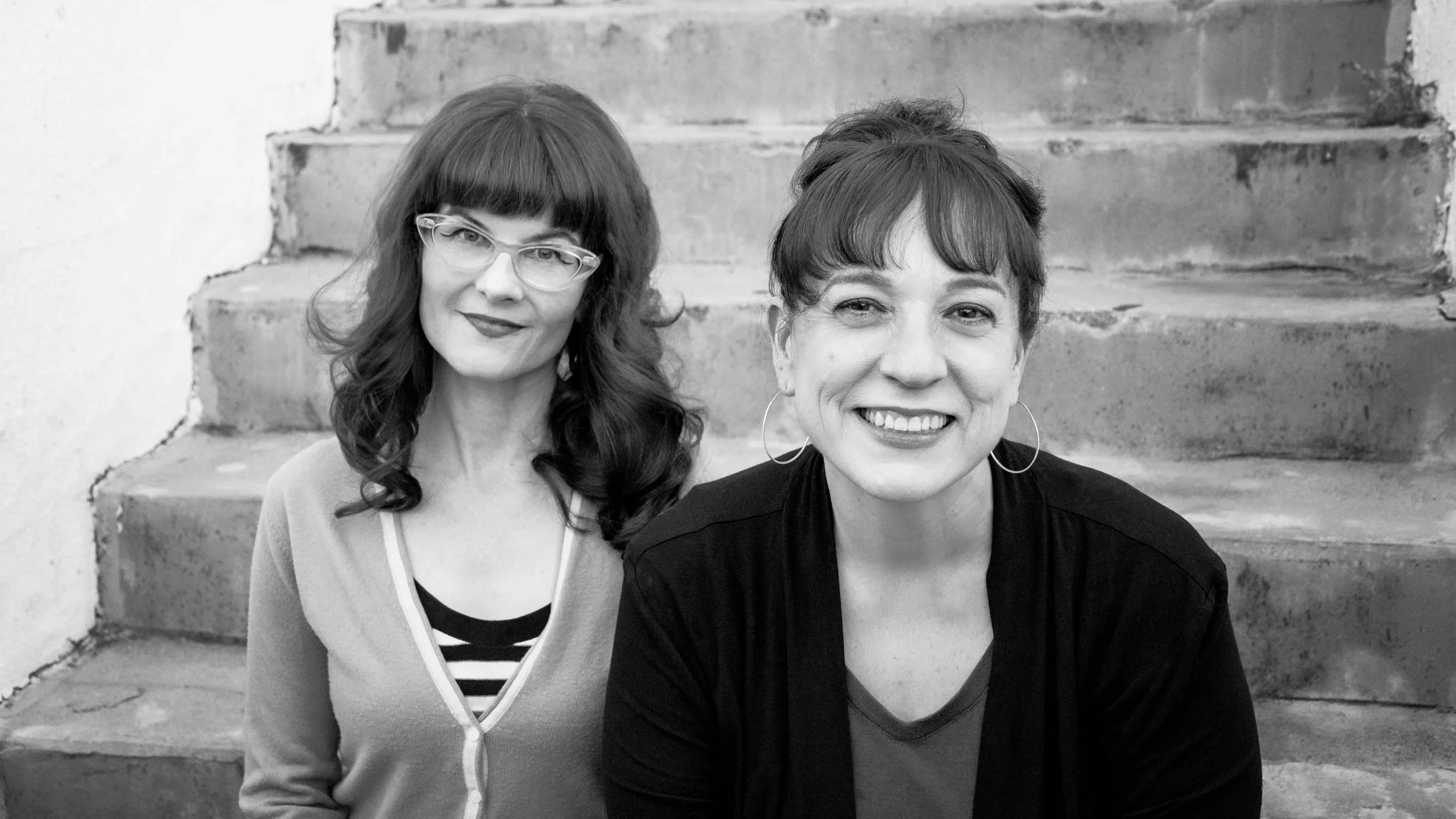
Photo by Vice Cooler
LUNA: You just played Riot Fest. How did it go?
WOLFE: It was great, actually. I thought we had a good show. My twin sister came on stage to do the last two songs with us, which is funny. We had matching dresses, and everyone played great! We also have a new band member playing with us right now. Jen from the Softies is playing keys and backup vocals, and she was great. It's just been fun watching the footage—because we don't normally get to see it from that angle. We [Wolfe and Neuman] both have family in the crowd, actually. Me and my family partied till the end of the night after the show. Half of us left a little early, it was a long day.
LUNA: Neuman, were you the one leaving early?
NEUMAN: Yes (laughs). But it was fun! it's a really ambitious festival because it's in the middle of the city, five, six stages, right? It's a lot of logistics to do in an uncontrolled environment.
LUNA: What were you most looking forward to seeing at Riot Fest?
NEUMAN: We saw Iggy Pop, which was really fun. Santigold. [Neuman] saw her recently at the Olivia Rodrigo Fest, and she was amazing. Our friends Pretty Girls Make Graves played, too, which was so fun. Elvis Costello, Patti Smith—and Insane Clow Posse!
WOLFE: I’ve never seen them and I want to see the crowd. I hear it’s all about the fans. And Faygo. My nephew, who's 19, he's here and he’s been before. He already went crazy at Gwar and got Gwar snot all over himself. And he was crowd surfing during that, and he'll probably go crazy during insane clown posse, too. That'll be good.
LUNA: Are you into wild theatrics? Would you ever incorporate something like that into your acts?
NEUMAN: No, probably not.
WOLFE: I've been in a band before, though, where we got a bunch of maxi pads from the dollar store, and we put fake Halloween blood on them, and then threw them all over the place. It's funny…girls thought it was funny. Guys were like, "That is so gross. They saved all their pads and actually threw them.” We were just like, “Oh my God! They really think it's real blood!” It's bright red, and we filled like 40 pounds of pads with it, and we saved them for a year. It doesn't smell at all or anything. And the pads were sticking, too. I remember people walking around their guys with maxi pads stuck to their shoes, their ankles. It was hilarious.
LUNA: We’re approaching the one year anniversary of the release of The Real Janelle + The Peel Session; both were originally recorded in the ‘90s, but many of the songs haven't been released since their original run. What prompted you to choose to do this combined re-release? How does it feel to have the songs freshly out, again?
NEUMAN: Well, they are both EPs, so they were both shorter, [and] it was nice to be able to package them into one. Janelle had been out of print for a long time, and The Peel Session had not ever properly been released, so it was nice that that was finally able to get done. It's a little trickier to license that music from the BBC, so [we] had some technical business issues. But when that got handled, yeah, it was great!
WOLFE: Also, we recorded both of those within weeks of each other. I like it because it shows this certain slice of time for Bratmobile. It was 1993 summer—July I think. And even though they sound different, it's the same time frame. It was after Pottymouth. It's just so funny how, back then, records took a year to come out. You’d record it and it would come out a year later.
LUNA: Bratmobile has always been a feminist band that has given people the space to talk about women’s issues. A large part of that was through zines, like Girl Germs, which allowed people to connect pre-internet. Many of these conversations are still prevalent today. Reflecting now, in 2026, what’s a piece of advice you would give to young people wanting to create community and change?
NEUMAN: I think that's not too complicated. It's to do it. Period. Start a band, write songs, play them, find friends. Try to share it and do it with sincerity. That's my advice.
WOLFE: To the community aspect, like building community—I think that, in some ways, you definitely could use things like social media to maybe gather and to let people know about things…but I think it's important for all of us to remember to get off the internet sometimes and actually go meet in person and commune, right? We’re stronger together, right? We need each other. People really need each other and need human contact more than ever, now, with late stage capitalism taking over. It's just horrible, horrible political times right now. So, there’s just strength in numbers, resistance and building community.
And you might as well have fun in the revolution, right? We need the revolution, but you need it to be fun and with your friends, because otherwise people aren't gonna stick around and keep fighting. Party for your right to fight, fight for your right to party.
LUNA: There’s an anthology of a bunch of the old zines from the ‘90s, including Girl Germs. What stands out is how people would write in to Girl Germs, saying that they personally resonated with what you had to say. There was one girl in particular talking about how you had emboldened her, related to abortion and a women's right to choose. Reading some of these old messages can feel a little disenheartening, because it means we’ve had these same issues since the ‘90s.
NEUMAN: It's worse, now. It's actually worse. It’s illegal. It’s brutal.
WOLFE: It’s hard. My mom started the first women's health clinic in Washington State, and she fought really hard for reproductive rights her whole life. And I remember—she passed away in 2000—before she died, she was like, "Don't ever let your guard down on this. They will take whatever they can. Take rights away from women, and people.” When you grow up around it, you take it for granted. You're just like “Yeah, that's just how it is.” And then she was right. Everything came to pass.
LUNA: It's scary, but there’s also some hope, because it seems like movements like riot grrrl are catching on again with the younger generation and people who weren't alive in the ‘90s.
NEUMAN: Well, we hope so, because people are literally dying for no reason. They're dying because their child died in utero, and they can't have it terminated and removed. It's horrifying. So I think that there is more consciousness around the irrationality of those extreme situations—it is actually our right to choose, and what we want to do if we don't want to have a kid at any stage in life. And so hopefully we don't forget about that because everything's so extreme, right? For whatever reason, you should be able to make that decision.
[When it comes to building community during a time post internet], it seems like the younger generation is doing a couple things well. They realize that there is value in actual tangible things. Sure, there's more people, there's more technology, there's more apps and things like that. But it does seem that there is a little bit of [awareness] that these things are toxic. Like, “Maybe I should do something [else].” You hear these anecdotes, [of] people [who] have a flip phone or don't want to be on the internet all the time. So hopefully there's a little bit of a glimmer of possibility: self-regulation.
LUNA: Is there an aspect of zine culture that you miss?
WOLFE: I miss the literal hands-on making of things.
NEUMAN: Yeah, that and we made them together, too. That was fun! I don't think we thought of ourselves as very crafty. Where Alison grew up in Olympia (where we ended up living) is very cute and has lots of appreciation for things that are handmade and bespoke. And that's awesome. But I think we were not “that.” We didn't really use computers. We used glue sticks and xeroxing.
WOLFE: I think there was a sense of urgency too, in a way. We could do it overnight. We made the Riot Grrrl fanzine overnight, usually on someone’s parent’s Xerox Machine. My father’s, mainly. So there's something to that, like there was a disposable nature to the zines, too. You make it; it's got whatever zine report from that week or that month, and then you move on. So sometimes, seeing how these zines are collected and put in archives and stuff, and people are studying them…I'm like, no, that's just whatever came out of my ass, basically. Whatever. Sometimes I feel like it wasn't meant to last necessarily. Just like the way you post stuff every day…it’s there! There's a record of it. You can't escape it. But at the same time, you're hoping that it's buried in the pile somewhere.
LUNA: Do you feel any sense of regret about any of the stuff that you were writing?
WOLFE: We were growing. We were changing. I guess it was like social media in a way. It was just our version. But no one really wants to be held to the same thing their whole lives, right? Because, who knows, you’re just thinking out loud.
LUNA: What’s next for Bratmobile?
WOLFE: We tend to play a handful of shows every year, and then it winds down in fall. With our free time coming up, we’ll mainly just take it easy and see family.
