
Q&A: CIFIKA Never Wants to Stay in One Place — The Artist on “Old Fantasy,” Change and Creative Freedom
INTERVIEW
INTERVIEW
☆ BY ALICIA ZAMORA ☆
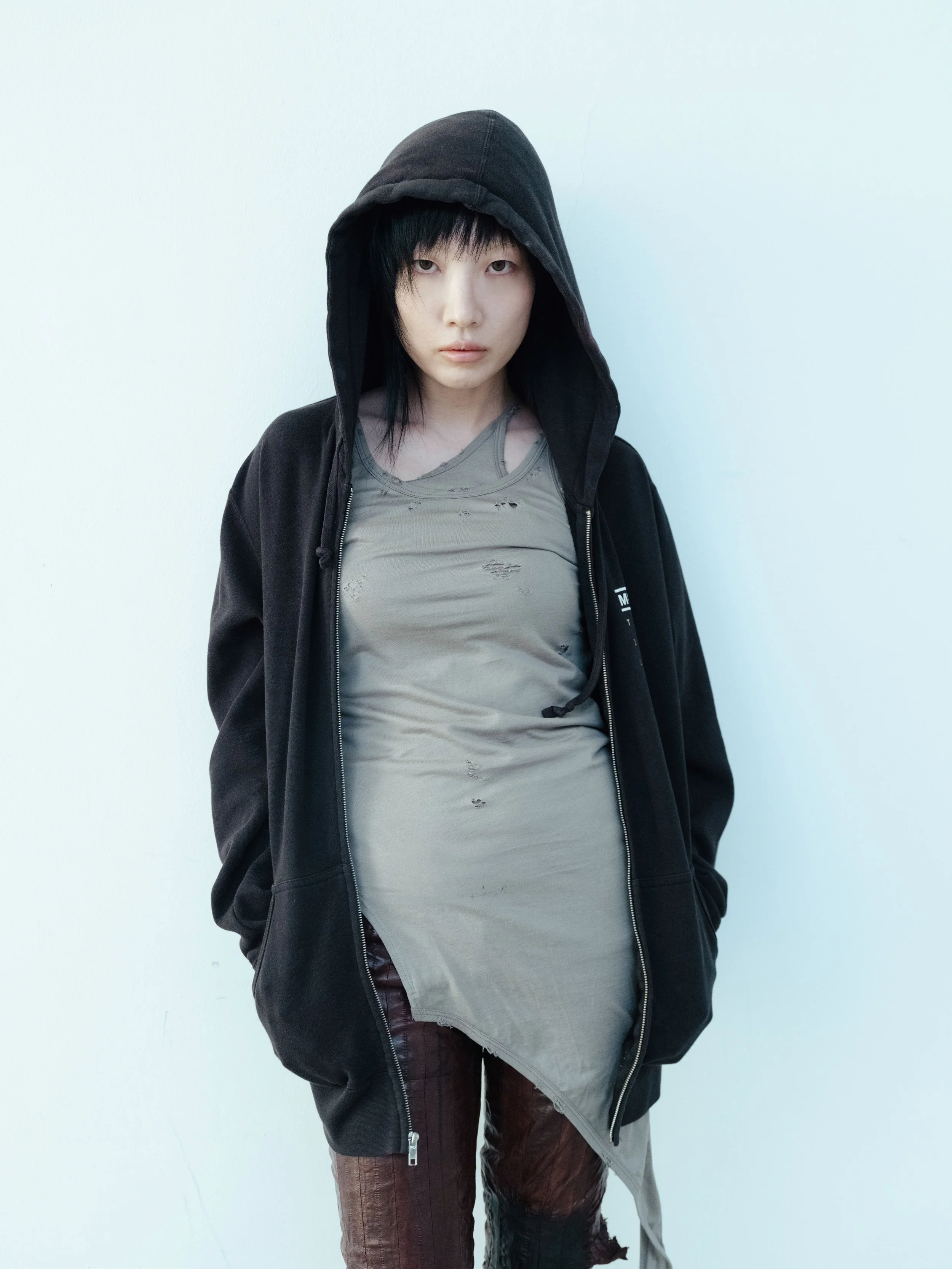
CIFIKA IS LOOKING BACK TO MOVE FORWARD—For CIFIKA, Old Fantasy became a way to look back at the different versions of herself that shaped who she is now. After ten years of making music, she found herself missing the innocence of her younger self—the version of Yousun who made music without worrying about how it would be received. Instead of recreating the past, she wanted to ask what that person would make today.
That idea runs through the album in unexpected ways. Childhood memories, old dreams and different sides of herself all find their way into the seven songs. Even the title comes from a version of CIFIKA she once imagined becoming: a superstar with wealth, recognition and an effortless career. That person never arrived, but the fantasy stayed with her.
Now, CIFIKA feels more confident in making music that sounds like her. She’s still drawn to change and contrast, but Old Fantasy has given her the courage to go deeper into what feels true to her. After once thinking this could be her last album, she’s already curious about what comes next.
Read Luna’s conversation with CIFIKA below to learn more about Old Fantasy, the past selves behind the album and what she wants to explore next.
LUNA: You've described Old Fantasy as "thirty people singing through one person." That line feels like it gets to the core of CIFIKA—someone who has always seemed to contain multiple sounds, moods and identities at once. Where do you think that multiplicity comes from?
CIFIKA: I think it comes from how I grew up. I was born and raised in Korea, but I spent a short time in Canada as a child before coming back, then moved to the U.S. at 15 and didn't return to Korea until I was past 25. Moving back and forth between Eastern and Western cultures, I've come to feel like I have a lot of different selves. Some words come to me in English first, and others come to me in Korean first. I think that's also why I wanted to go deeper into choral singing—choral vocal production doesn't require language at all. It asks for nothing but my voice.
LUNA: Your music has never really stayed in one place—you've moved through electronic, experimental, pop and more atmospheric sounds without treating genre as a boundary. What is it about constantly changing that feels necessary to you?
CIFIKA: I'm someone who can't stand repetition. I can't even sit in the same spot for very long. Listeners might think I'm indecisive, that my mind keeps flipping from one thing to the next—and yes, that's right! That's exactly me. Once I've tried this, I want to try that. That's who I am.
LUNA: There's a very physical quality to your music—even when a song is electronic or abstract, it can feel emotional, almost like you're translating something that doesn't have words yet. What usually comes first for you: an emotion, a sound, an image or an idea?
CIFIKA: An image always comes first. Because I studied visual art, I learned how to express things visually before anything else. So even when I was learning Ableton, I remember thinking, "Wow, this is exactly like Photoshop!" An image always arrives first for me, like a scene from a film. Then I decide on the painterly style—whether it'll be Delacroix or Van Gogh or Picasso or Malevich or Agnes Martin…
LUNA: You produce your own music, so you're involved in basically every part of bringing an idea to life. Has producing your own work changed the way you understand your sound over the years?
CIFIKA: Yes. If I weren't producing, I think I'd still just be the featured voice on someone else's track, the singer on someone else's song. Of course there are plenty of musicians who work purely as vocalists and make wonderful records—but through producing I've learned so many musical elements: my own vocal style, how to compose, how to use samples, how synthesizers work, how rhythm works. And because I've folded all of that directly into my own album, I can say it changed how I understand sound. My pace may be slower than people who focus only on producing, or only on singing, but I'll get to something good eventually. I love that I'm someone who can do both—even if my skills develop more slowly than other people's.
LUNA: After 10 years of making music, you've seen a lot of sounds and trends come and go. What makes something exciting to you now, and what makes you want to stay away from it?
CIFIKA: What excites me is the live set for this record. There are so many trends, and lately—maybe because of TikTok—you can see them come and go faster than ever. Inside that cycle, I honestly don't know what it means to catch a trend. And if you've already caught it, isn't it too late by then? I'm not someone who keeps up with trends in the first place. What I want to stay away from is arrogance. I have never once seen arrogance help anyone.
LUNA: You've gone through so many different phases as CIFIKA. Do you feel like those older versions of yourself are still part of the music you make now, or do you see each era as something you've moved on from?
CIFIKA: Through all those phases, there's one thing I've most wanted to protect: innocence. I still have exactly that same innocence now. I've come close to losing it many times, but I think it's still there in my music. Naturally, every one of those phases is in the music—directly and metaphorically—and that will keep being true. Each era is held inside the music, and when I pull it out and listen, the era comes vividly back to life.
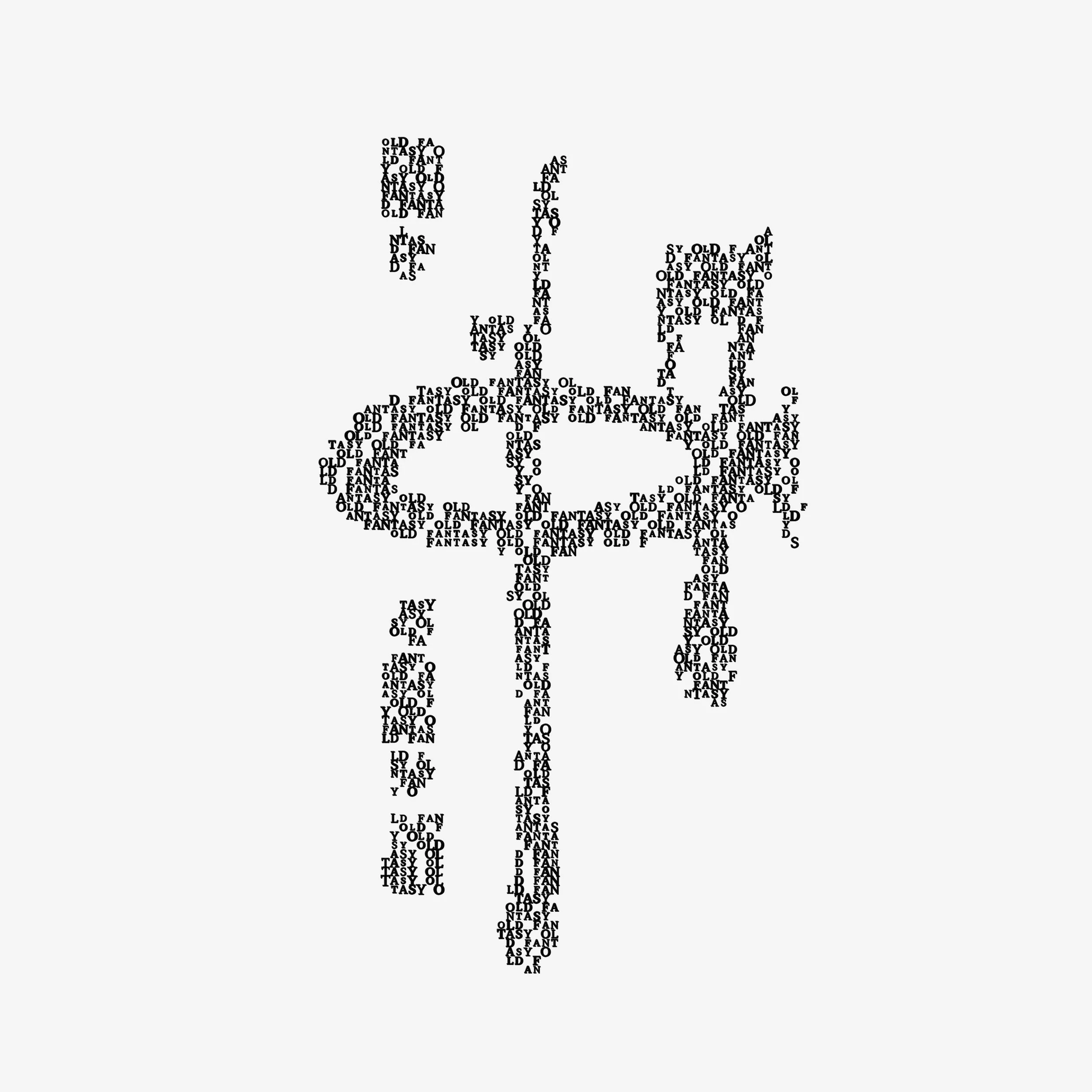
LUNA: There's a lot of looking back on Old Fantasy, but it doesn't feel like you're trying to recreate the past. Were there certain parts of your younger self that came back to you while making this project?
CIFIKA: This record starts by going all the way back into my past. I'd gotten a little tired of imagining the future and singing about that, and I felt that if I wanted to know myself better, the right move was to go backwards and dig up my own traces again. So the album begins with a memory of a playground in Gwacheon where I played as a small child. When I was six I had a first love I met every single day in the sandpit of our apartment complex, and "Mine" came out of that. When we passed each other on the swings, his voice would come closer and drift away—which is exactly what a phaser does—so I put a real phaser on the vocal.
The other thing that came back was Yousun in 2016. The person who uploaded things to SoundCloud with no fear, who didn't know how to be embarrassed by whatever came out of her. When I listen to my first album now, I miss that naïvety—not because I'm embarrassed by the record, but because I miss not knowing there was anything to be embarrassed about. I wasn't trying to recreate the past. The album came out of one question: what would that person make if she were making music now?
LUNA: I'm curious about the title Old Fantasy. What does that phrase mean to you personally, and why did it feel like the right name for this project?
CIFIKA: Before I started making music, I assumed that 10 years in I'd be a superstar. I thought I'd have real wealth and real recognition, and that making music would become easy for me. None of that turned out to be true. I'm a completely ordinary person who worries about the future like everyone else, who takes pleasure in small things, and who still wants to become a better musician. And more than anything, the CIFIKA I'd imagined for so long—the one who makes the music she actually wants to make, and makes it well—hasn't shown up yet.
That's why the title felt right. An old fantasy isn't something that died; it's something that never arrived, and walked alongside you for ten years anyway. So the question became: what would that person make, right now? These seven songs are the answer—made without worrying about how they'd land, made with the sense that I had nothing to lose so I might as well go deeper. And although it's a record about my own fantasy, everyone has a version of their life they once drew up and then quietly folded away. If listening to this gives someone a moment to unfold theirs, then I've done my job.
LUNA: There are a lot of different feelings sitting next to each other on Old Fantasy. Do you think you're naturally drawn to that kind of contrast when you're creating?
CIFIKA: I love contrast as an element of art. At art school we were taught about the use of positive and negative space, and about harmony, until we were sick of it. And in Eastern thought there's yin and yang. So for me, contrast is more or less an essential element.
LUNA: You've spent so much time exploring different sides of yourself through music. Has making Old Fantasy changed the way you think about who you are, or are you still figuring that out as you go?
CIFIKA: Working on this album, I found out what kind of person I am—and I found out what I'd been "missing" as a human being, all because I was a musician. From here on, I want to make music that's more like me, in my own way, and I've gained the courage to do that. Because I did what was true to me, people showed up to help, and in the end I think that's what leads me to greater happiness. Honestly, I thought there wouldn't be an album after Old Fantasy—I thought this was the last one. Now I want to make the next thing too.
LUNA: If Old Fantasy is bringing together all these different voices and versions of you from the past 10 years, what part of yourself are you most curious to explore next?
CIFIKA: This time I made the fullest possible use of vocals, the thing I'm most confident in—so next I want to explore the musical element I'm least confident in: rhythm. I've been listening to a lot of contemporary classical music and, at the same time, a lot of trip-hop, so I imagine what comes out will be some fusion of the two.
