
Q&A: Crys Matthews on Music, Resistance and the Fight for Democracy
INTERVIEW
INTERVIEW
☆ BY VICTORIA POLSELY ☆
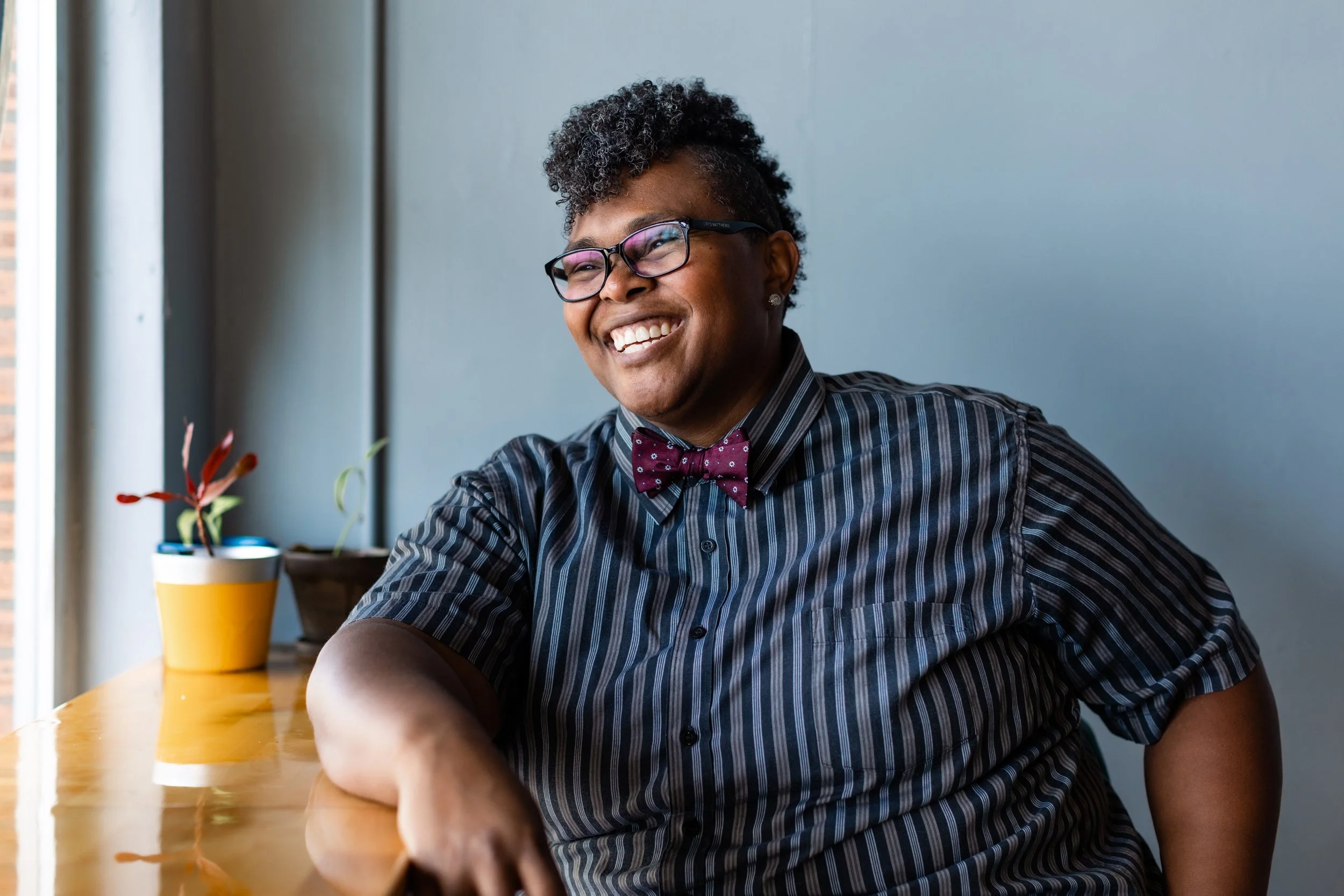
Photo by Emily April Allen
A PROUD BLACK, LESBIAN AMERICANA AND FOLK ARTIST CRYS MATTHEWS- has built her career on amplifying unheard voices and confronting injustice with clarity and conviction. Her latest single, "Forged In Fire" arrives not just as a song, but as a searing reflection of a nation in flux, written during a single week marked by political upheaval, protests, and policy battles that rippled communities across the country. Rooted in the traditions of protest music and echoing the resilience of the Civil Rights Movement, the track channels both urgency and endurance, positioning itself as a modern-day rallying cry.
Now entering a new chapter with TRO Essex Music Group and Shamus Records, she continues that mission with renewed force. Produced by longtime collaborator Seth Glier and elevated by a powerful collective of vocalists, “Forged In Fire” blends spiritual intensity with contemporary resistance. The result is a song that not only captures the chaos of its creation, but also insists on something more enduring: hope, action, and the unshakable strength of community.
In this interview with The Luna Collective, Crys Matthews opens up about the spontaneous moment of inspiration behind the song, the historical parallels shaping her work, and why, especially now, music remains a vital force in the fight for justice.

Photo by Emily April Allen
LUNA: What inspired you to write “Forged In Fire,” and how did that specific moment shape the song’s message?
MATTHEWS: “Forged In Fire”was written just a few short months into a precarious interpretation of American democracy courtesy of the second Trump administration. The headlines that week were: U.S. Judge Blocks Trump’s Birthright Ban, Allows Class-Action Lawsuit to Proceed; Protesters Confront Feds in Camarillo, CA, as Agents Target Farmworkers; CPJ Calls for Release of Journalist Mario Guevara; Trump Admin Withdraws Head Start Services for Undocumented Children; CUNY Targets Pro-Palestinian Students and Staff in Latest Crackdown; and countless others about everything from tariffs to deadly floods in Texas. While this song was born out of the chaos of a particular week, almost a year later, in the wake of the turmoil this administration's disdain for democracy has wrought in Minneapolis and in so many other American cities, "Forged In Fire" feels like a rallying cry from those who withstood similar conditions during the Civil Rights movement.
LUNA: Can you walk us through your songwriting process for this single?
MATTHEWS: I remember driving through Pennsylvania and getting this little melody in my head before I stopped for gas. I stopped the car, filled up the tank, got back in, and the entire song was there like it had just landed in my lap like a gift from my ancestors. It felt like it was from them. It felt like the songs I grew up singing during the Black History Month program at the church I grew up in, the church my great-grandfather's hands helped build.
LUNA: What emotions do you want listeners to feel when they hear “Forged In Fire”?
MATTHEWS: When people hear the song, I hope that they will feel every ounce of the tenacity in all of our voices and that it will encourage them to find some of their own. To get through a moment like this one in which we find ourselves, it will require, as Austin Channing said, " more than your vote." Folks all over this country need to take a page from Black southerners who stared down worse and still imagined better, they need to take a page from the people of Minneapolis, and Portland, Vermont, and North Carolina who have all understood that inaction equates to complicity in the face of fascism.
LUNA: What role do you think musicians should play in times of political and social unrest?
MATTHEWS: Just as Toni Morrison said, this is precisely the time when artists go to work. I think folk musicians especially have always embodied this truth in our art. Think of all of the labor movement songs, all of the freedom songs, and how a soundtrack always seems to accompany movements for change. As Harry Belafonte said, "When the movement is strong, the music is strong."
LUNA: You referenced Civil Rights-era resilience—how do you see those parallels showing up today?
MATTHEWS: So much of what this young country of ours knows about resistance it learned from the South. We are again seeing people utilize the tools of nonviolent direct action as a means of demanding better from our government: the bands playing off-key lullabies at hotels known to offer respite to I.C.E. agents, all of the Singing Resistance chapters popping up all over the country, all of the Indivisible chapters, all of the marches, and bridge brigades — people understand where we are and what is required. They are the main thing that gives me hope day in and day out.
LUNA: What does signing with TRO Essex Music Group and Shamus Records represent for your career?
MATTHEWS: As I get older, I am deeply concerned with the legacy I leave behind. I want to know that my songs are able to offer hope and encouragement far beyond my years. To know that they (and I) will be cared for by the very folks who tend to and care for the legacies of so many of my heroes. Because of the artists they represent, they aren't uneasy about me fully showing up as myself, i.e. with a catalogue full of protest music. Other labels would be having conversations like, maybe say that a different way, or think about a different image or concept, meanwhile TRO and Shamus are like, “This is great, let's do it!” My mission statement is who I am and who I intend to be in this world both on and off stage, so to have them fully embrace that mission and be so excited about this partnership is beautiful. This has been a long time coming, but was well worth the wait. I'm excited for what the future holds.
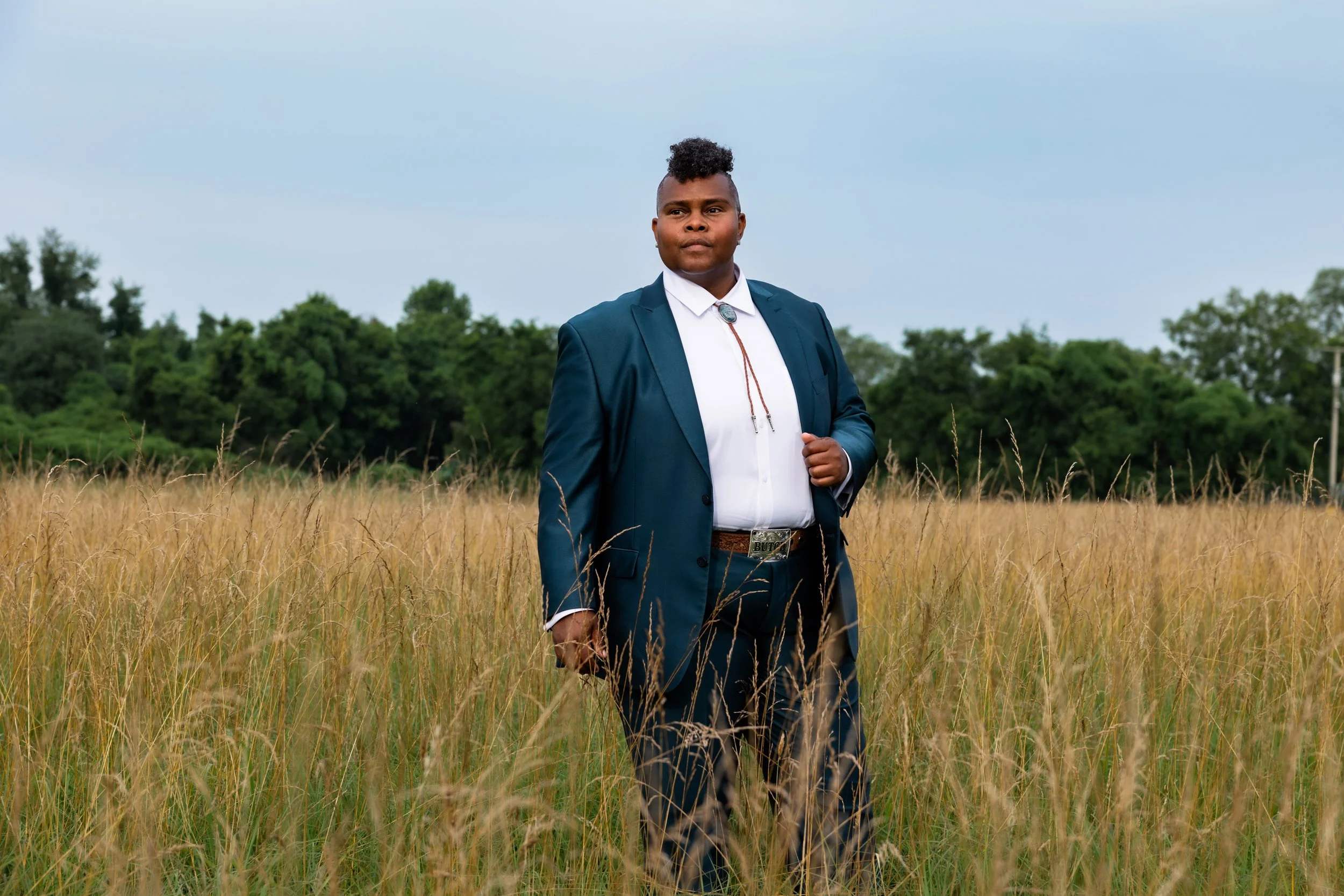
Photo by Emily April Allen
LUNA: What was it like working with Seth Glier on this project?
MATTHEWS: Seth and I worked together on my song “Sleeves Up,” which won song of the year at the International Folk Music Awards earlier this year. He is such a dear, dear friend in addition to being one of my absolute favorite musicians and songwriters. His mind is so brilliant. I sang this song for him at his house when I was staying there, and his mind started racing with all of these amazing ideas about what the song could be, and I knew right then that he was the person to bring this song to life. We went into his home studio and, in two hours, we were finished. We work so well together. He says that I always have such a clear vision for what I want a song to be, which is something that makes it easy for him to get in there and do his thing. I love how much trust and faith he had in the vision for this song.
LUNA: The featured vocalists bring a “take us to church” energy; how did those collaborations come together?
MATTHEWS: When we were finished with our parts, we sent it off to some of my friends in Nashville and asked them to sprinkle their magic all over it, and boy did they! They took us to church and back and back again! I can't thank Kyshona, Nickie, Jason, Kiley, and Wil enough.
LUNA: Why did you choose No King’s Day as the release date?
MATTHEWS: It matters so much to me that people understand how much power they have. Authoritarians count on us forgetting that, and I wanted folks to listen to these words (and hopefully sing these words) as they gather with their communities. The refrain says, "keep that steel in your spine," and I want folks to draw on the temerity of my ancestors and the strength of their own communities so that they can continue to resist the erosion of our democracy.
LUNA: What do you hope listeners take away from this song in today’s climate?
MATTHEWS: Hope, always hope. When we hope for better, we fight for better.
