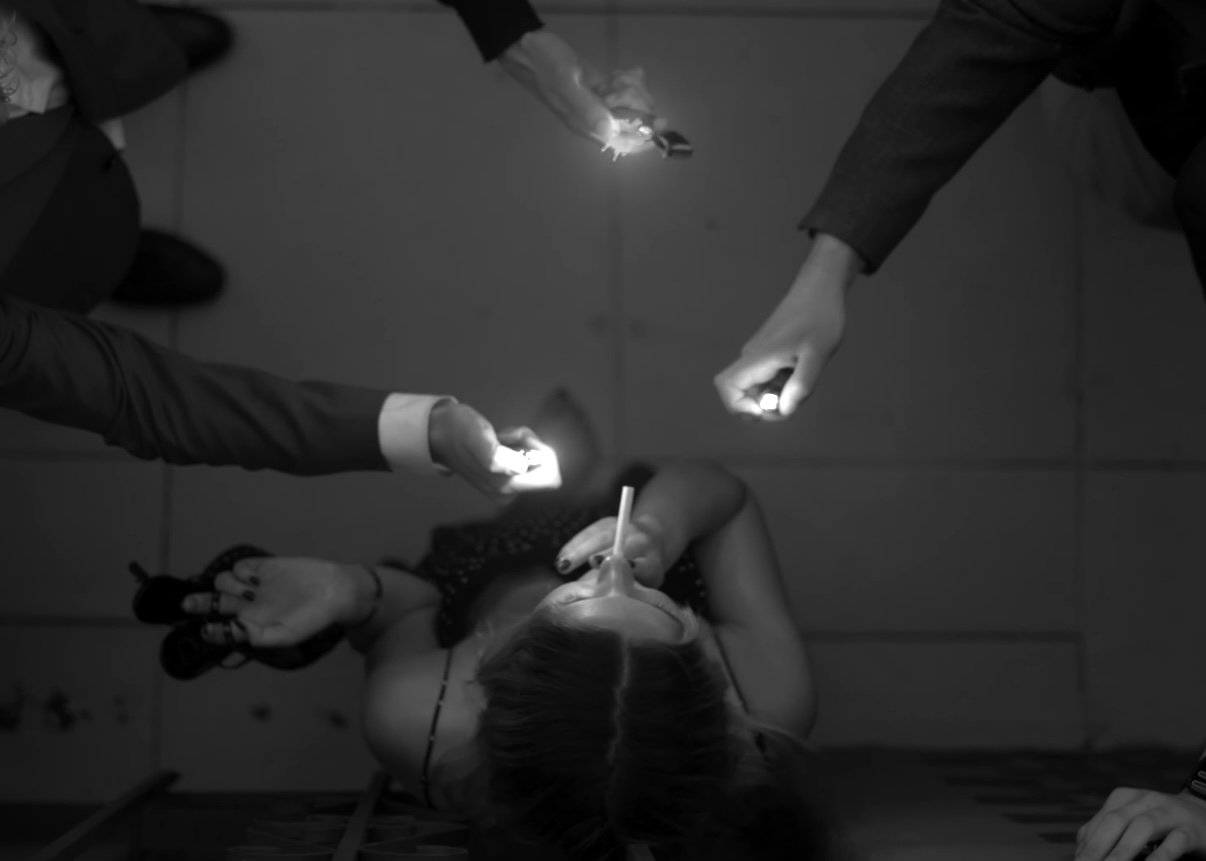
Q&A: Dani Stocksdale on Wanting to be Wanted in “Cigarette Rush”
INTERVIEW
INTERVIEW
☆ BY SHEVON GREENE ☆
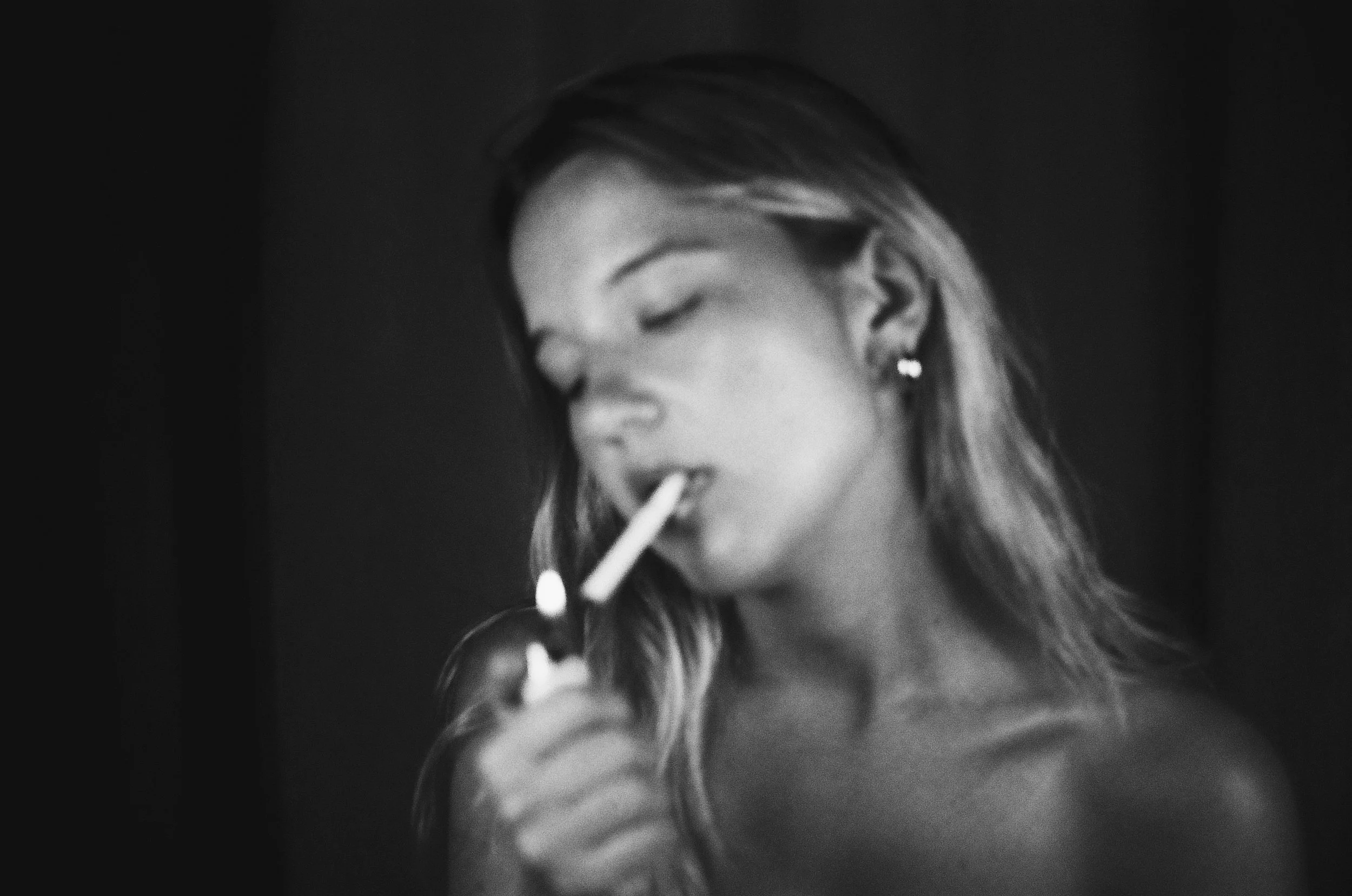
DANI STOCKSDALE KNOWS THE PATTERN—falling fast, feeling everything at full volume and still walking away with nothing to show for it. And yet, she keeps choosing it anyway.
This cycle shows up in her music, where infatuation blurs into reality and situationships leave just enough behind to stick with her. Instead of trying to resolve those moments in her music, she instead sits in them, stretching out the smallest details until the listener feels fully immersed.
The Los Angeles-based indie pop artist, originally from south Florida, has blended her sharp and detail-driven talent in lyricism with dreamy, cinematic-like production. On her debut EP Whatever This Is, out this year, Stocksdale explores the emotional limbo of your twenties, where nothing feels set in place yet and every connection seems to exist somewhere in between.
When we spoke, she admitted that she was fully aware of the pattern. “I make the same mistakes over and over,” she said, describing the tendency to go all in, even when she knows how it might end. That desire to be chosen instinctively without question sits at the core of tracks like “Cigarette Rush,” (out today) where longing becomes less about the other person and more about wanting to become someone’s first choice.
We caught up with Stocksdale to talk about “Cigarette Rush,” situationships and learning to sit with the feelings that don’t have a clear ending. Keep reading for more.
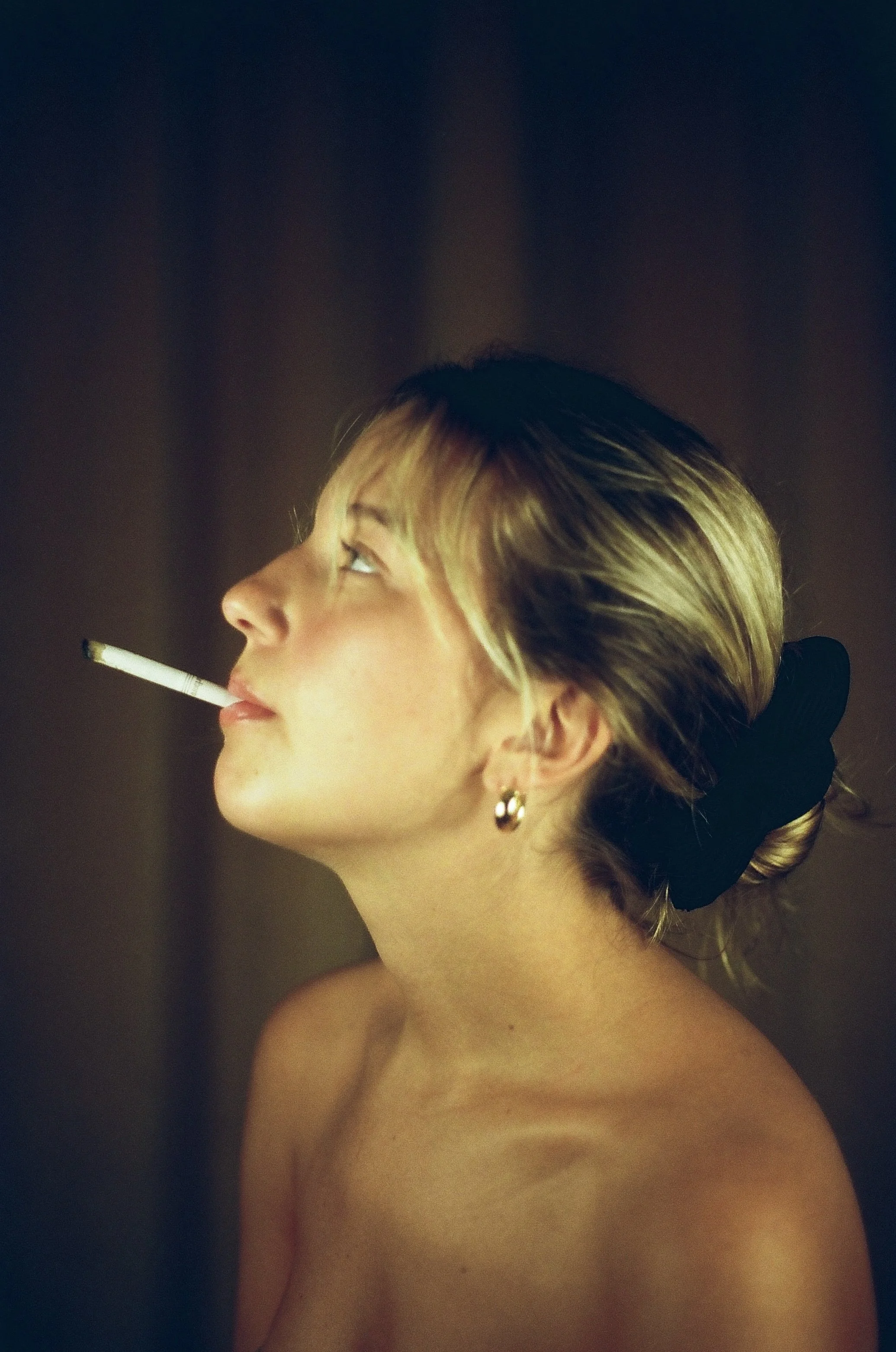
LUNA: Do you mind introducing yourself for those who might not know you yet?
STOCKSDALE: I’m Dani Stocksdale. I’m 25 years old. I’m a singer-songwriter based out in LA, but I grew up in South Florida, closer to Fort Lauderdale. I grew up really tight-knit with my family. My mom’s from Mexico, my dad’s from Maryland. From a young age, I was super into performing and entertaining people in any way possible.
I ended up making a little band that did YouTube covers with my friends, and one of them is my roommate now. Then I went to school for music; I didn’t realize that was possible. I was such a studious kid, so I thought I’d pursue the Ivy League route. But then I realized I could go to school for music, and that completely changed my entire life plan. So I applied to the Clive Davis program, got accepted and really honed my skills there—songwriting, performing—and met a bunch of people who became my collaborators. I moved out to LA last year and started working on this project that’s coming out in the summer. Before this, I would just release singles, but never a full idea, so this is the first time it feels cohesive.
LUNA: To get a little sneak peek of your upcoming EP Whatever This Is, I know it captures that in-between stage of your 20s where nothing is fully defined yet. Was there a point where you realized that feeling was strong enough to carry an entire project?
STOCKSDALE: Yeah, at first it was just writing a bunch of songs, doing a bunch of sessions. Then I wrote “Bug Eyes,” which was the first single off the project, and it has “whatever this is” in the chorus. At that point, I already had most of the songs in different stages. I was floating around title ideas, and I thought about Whatever This Is being the title because if someone asks what you’re listening to, you could say, “whatever this is.” I thought that was funny, but it also felt really true.
I had conversations with my friends and my dad about how I’m 25 and don’t feel solid in anything—personal life, career, friendships, relationships. Everything feels like a lava lamp, just floating around, nothing certain or in stone. It’s scary, but also really beautiful.
LUNA: Definitely. I feel like that’s what your 20s are for. Everything’s up in the air and changing constantly.
STOCKSDALE: For sure. You have to give yourself some grace too, because I’m very hard on myself. It’s refreshing to meet people who are brave enough to say, “I’m not vibing with this, I’m going to try something else.” I have a friend who’s thinking about quitting her job and doing something totally different, and I’m in awe of that. It shows nothing has to be permanent.
LUNA: Your songs sit in that space between infatuation and reality where you know something isn’t right, but you’re still in it anyway. Do you feel like you’re writing from inside those moments or reflecting on them after?
STOCKSDALE: I’m inside those moments. Like, literally the days right after hanging out. “Bug Eyes” and “Cigarette Rush” are about the same person. I was feeling so inspired in those days. Sometimes I have dry spells where I don’t feel inspired, but this just poured out of me. I knew exactly what I wanted to say, and those songs came out quickly.
They were kind of positive-ish songs. Even though there’s longing, it felt exciting, like these pretty moments of being really into someone. But when I’m writing about sad things, it’s harder to write in the moment because I don’t want to give it more airtime. Friends have told me that’s exactly what I should do, though; let it pass through me.
LUNA: That definitely comes through. “Bug Eyes” feels like such a small, specific moment, but you stretch it out emotionally. What drew you to that?
STOCKSDALE: I remember being with him [the person the song is about] and getting to that point where you’re silly together, even though he was in the friend group. It was our first time hanging out alone, and we were getting really close to each other’s faces; that’s where the term “bug eyes” came from. I had written “bug eyes” and “wingspan” in my notes; just words I thought were cool. Then I built from there and made it more general: I love this so much, can I have more of this? It’s easier to write when you have specific experiences. Like in the second verse when I talk about buying a secondhand book for him; that actually happened.
LUNA: I love how detail-driven your lyrics are. How do you decide which moments are worth building a song around?
STOCKSDALE: A lot of things go in my notes, and some are good, some are bad. The ones I keep coming back to are the ones I know are worth it. If something doesn’t work in one session, I’ll bring it into another. I actually wrote the “wingspan” idea in a different song first, and it didn’t hit the way I wanted. But instead of scrapping it, I brought it back in a new way. Also, I love being specific because I want people to know songs are about them.
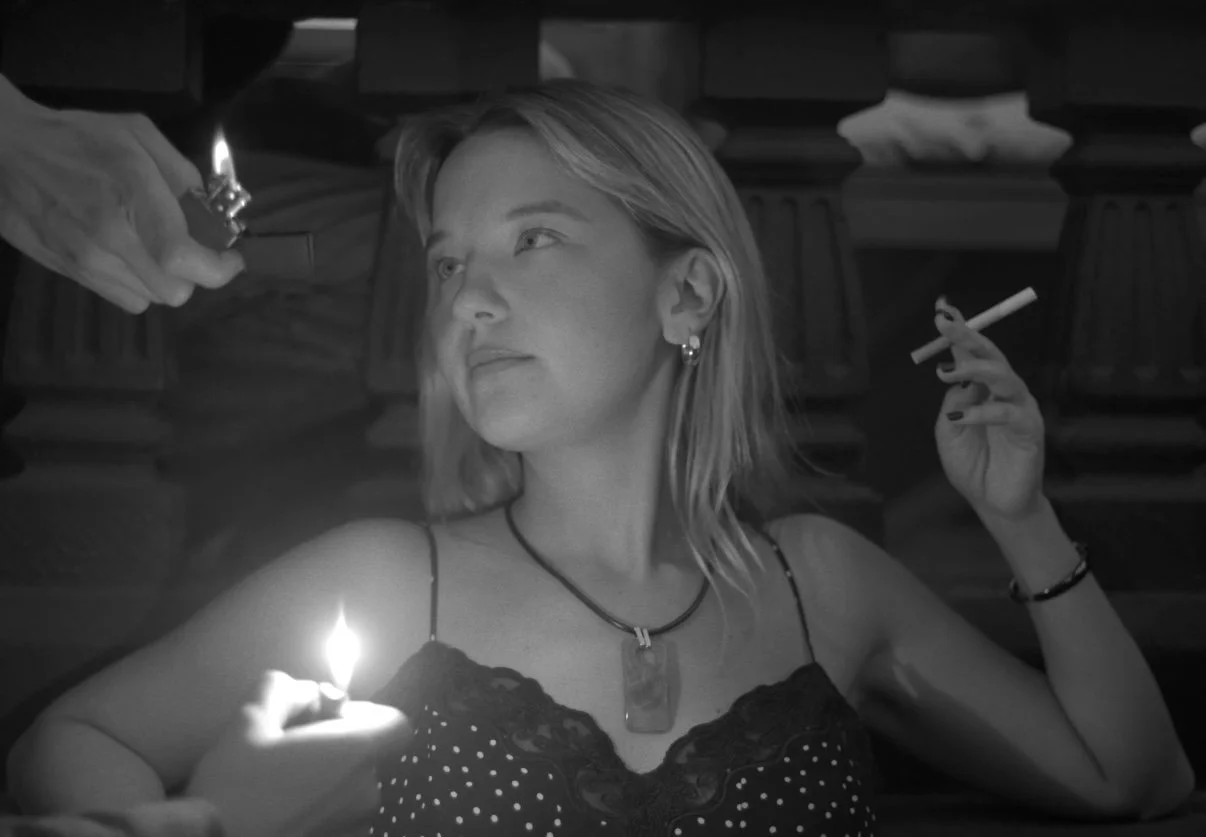
LUNA: In “Cigarette Rush,” how did that comparison of wanting to be chosen like someone chooses their habits come to mind?
STOCKSDALE: Everyone was smoking cigarettes when I moved to LA. I’d never experienced that before. When I kissed the guy I was seeing, I could taste it, and I started noticing how constant it was for him. I realized I wanted to be that: something instinctive, always there. Obviously it’s not healthy, but I wanted to be wanted that badly.
LUNA: That quiet desperation really comes through. Like reshaping yourself a little.
STOCKSDALE: Yeah, I definitely felt that. I started doing things the way he did them, like going to secondhand bookstores instead of Barnes & Noble. I wanted to be the type of girl I thought he’d like instead of fully being myself.
LUNA: Do you think situationships are harder to write about than something more defined?
STOCKSDALE: I love that question. I think situationships are easier for me to write about because everything is so intense. It’s like a full relationship condensed into two weeks, and then it just ends with no closure. That drop-off is hard. Someone who was such an anchor suddenly isn’t in your life anymore. The feelings are still real, even if it wasn’t “official.” I would love a long-term relationship though. I’m still looking for that. But I think I go for the fireworks instead of something stable.
LUNA: You’ve mentioned being a perfectionist and holding songs close for a long time. What shifted for you in releasing them?
STOCKSDALE: I felt like the first song had to be perfect because I’d waited so long. But playing songs for people and seeing their reactions helped me realize I was being too hard on myself. When I released “Swimming Pools,” it lowered the stakes. It didn’t have to be this huge statement; it could just be fun. That changed everything and made me want to keep releasing music.
LUNA: When you’re songwriting, do you edit heavily?
STOCKSDALE: I’m very lyric-focused. I do a lot of editing in the first session; we’ll hammer it over and over. But once that’s done, I don’t go back much. If it worked in that moment, I trust it. I usually start with a lyrical idea and build from there.
LUNA: Do you think writing these songs has changed how you approach situationships?
STOCKSDALE: God, I wish (laughs). No. I make the same mistakes over and over. I go in with an open heart, feel everything at 100 percent, and then nothing comes from it. But I like to say it’s inspiration for more music.
LUNA: How has posting online and getting feedback shaped how you see your music?
STOCKSDALE: It helps a lot. When I keep things to myself, I get really critical. But hearing from people I don’t know who connect to it, it keeps me going. It’s also a community builder. Even small interactions mean a lot.
LUNA: What’s next after “Cigarette Rush”?
STOCKSDALE: After “Cigarette Rush,” there are at least two more singles coming, including one called “Pretty Thing,” and then the full EP.