
Q&A: DICE Are in Love With Freedom on ‘I Thought The Altitude Would Make It Worth The View’
INTERVIEW
INTERVIEW
☆ BY ALEAH ANTONIO ☆
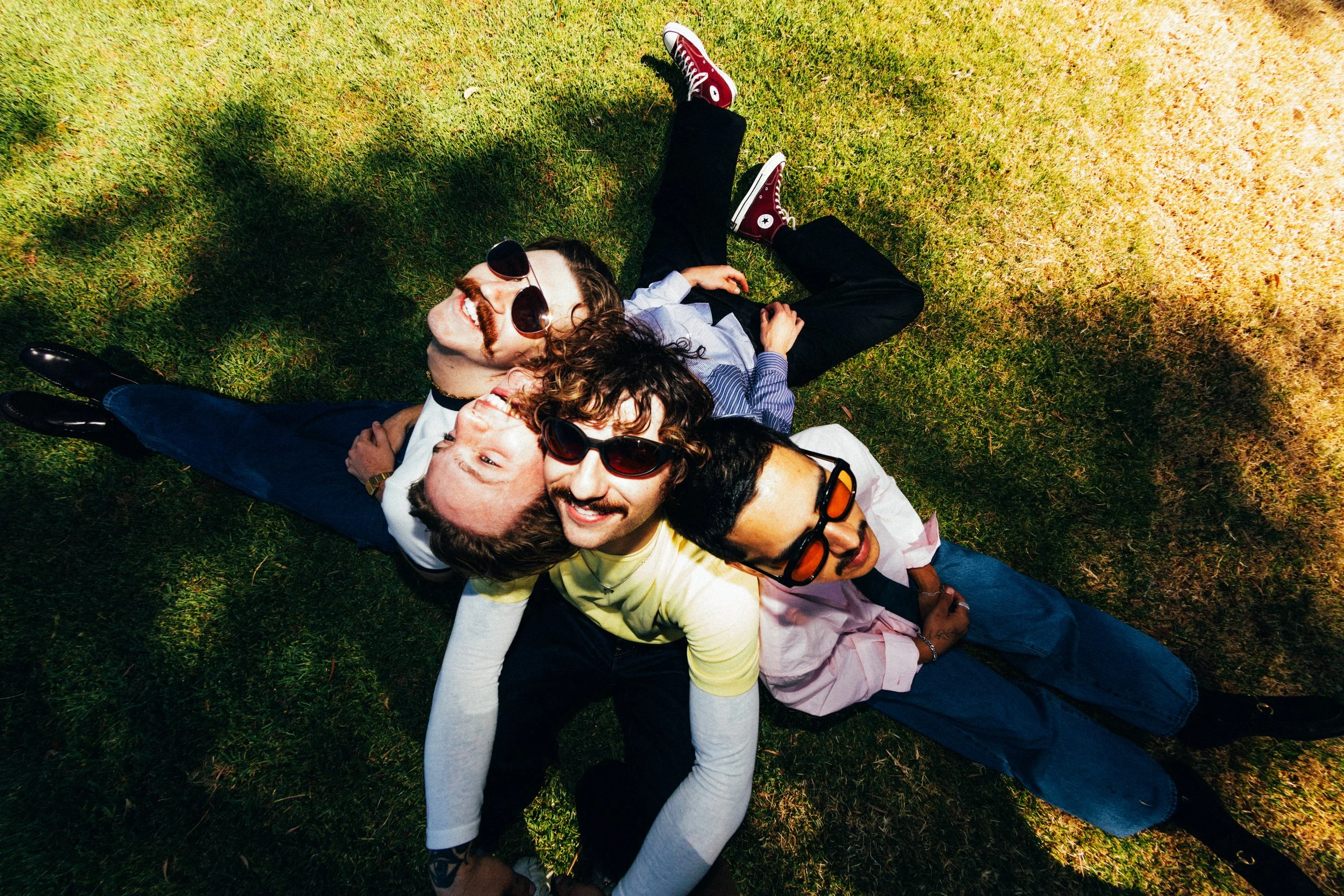
Photo by Anna Cappello
TOM KING AFFECTIONATELY CALLS HIS BANDMATES “HODGY” AND “LENNY”—which are short for Ben Hodge, singer, and Sam Barrett-Lennard, drummer, of Perth band DICE. Their bassist Regan Beazley’s last name sounds like a nickname in of itself; and guitarist Tom King is, I guess, just Tom.
The four members of DICE have been friends (mates, they’d say) since they were young kids. King and Hodge knew each other the longest, their friendship reaching back to before double-digit ages. They act like it, too—King and Barrett-Lennard are both on a video call on a sunny Sunday afternoon. They occasionally finish each other’s sentences and, when one is speaking, he might as well be speaking for all.
They started the band in 2020 and have since taken off as some of the best indie rock to come out of Western Australia. DICE just released their new record, I Thought The Altitude Would Make It Worth The View, last Friday. It’s an infectious, hooky confessional of freedom. They traded their inhibition for ambition, making an original and energetic indie rock record that resonates far past their hometown. To them, it’s “the most personal and freeing project” they’ve made so far.
DICE made a breakthrough with I Thought The Altitude, coming a long way from the early 2020s. In 2022, they released the EP Adolescent Arcade, then Time Will Tell a year later. Early DICE is reminiscent of Incubus, even Rebelution, with psych rock influence and a reggae feel. They turned left on debut album Midnight Zoo, letting out their angst and frustration in the studio. Making I Thought The Altitude was like striking a gold mine in their own creativity. They thought about DICE before their success—what did they love about music when it was just four of them playing in a garage?
DICE embark on their Australian tour this Saturday in Adelaide, and make their U.S. return this October with the kickoff in Washington, D.C.
King and Barrett-Lennard discuss with Luna their excitement with their new record, returning to the stage and making the music they’ve always wanted to make. Keep reading for more.
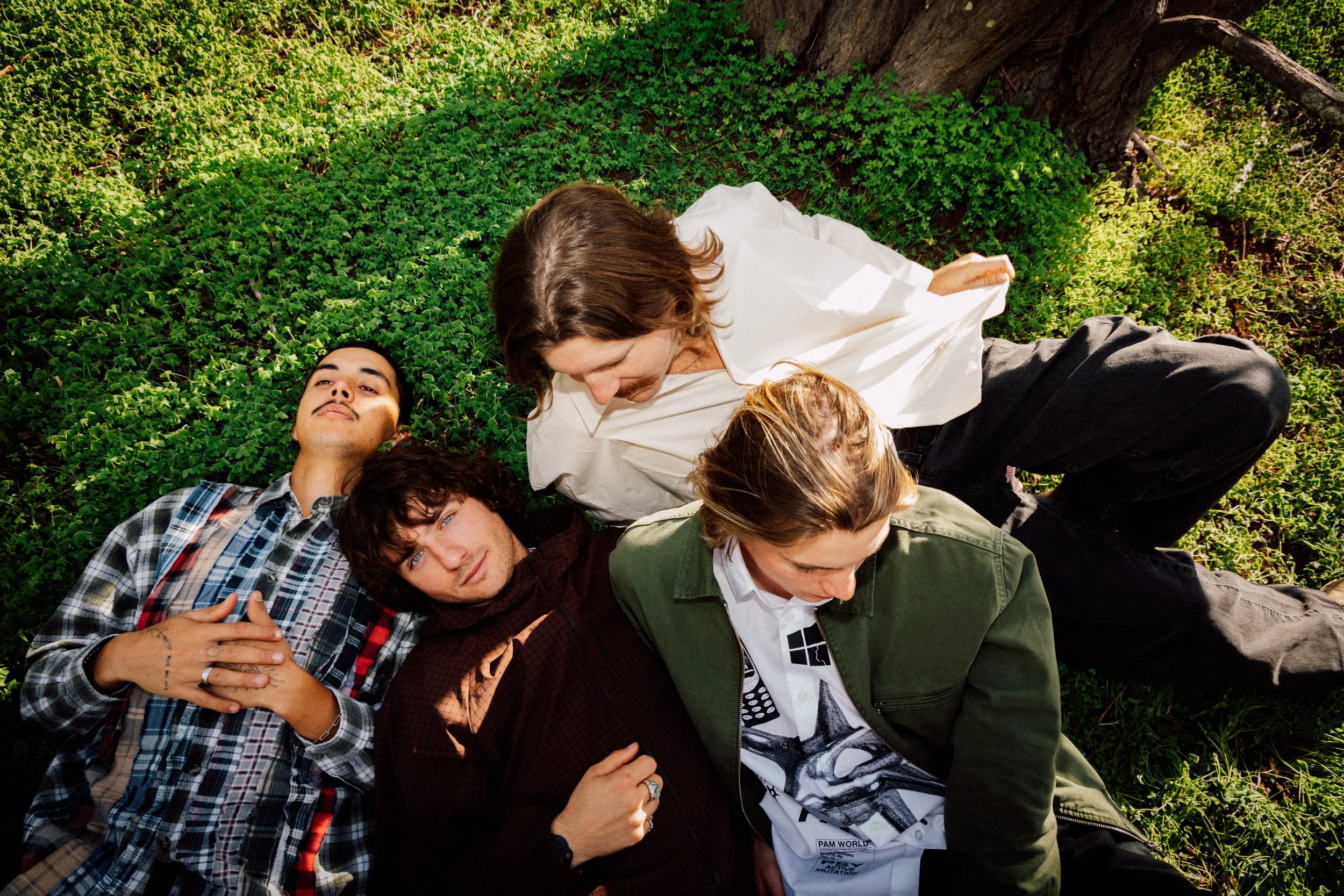
Photo by Anna Cappello
LUNA: Are you born and raised in Perth or are you guys from other cities?
BARRETT-LENNARD: Yeah, we are.
KING: All four of us from the band are born and raised in Perth.
LUNA: What is the scene like in Perth?
KING: It's like one big happy family and community. It was really good pre-COVID, but then post-COVID had this real resurgence. During COVID, we were super lucky in Perth that we were the only city, and state, being Western Australia, that kept live music venues open. We only had maybe like two or three weekends where they weren't open over that two year period. A lot of people who weren't necessarily in the live music scene would come down to the shows. That's like when we started, in the middle of 2020. All of our friends who weren't into indie rock music would come down to the shows and be like, “Well, this is actually sick.” I think that happened for every band starting out at that time—South Summit, Old Merves. Everyone just became this big, massive family. The guys last night were at a South Summit gig, and half the people in the crowd would have just been people in other bands and musicians.
BARRET-LENNARD: We're so isolated on the other side of Australia. All the east coast cities, like Sydney, Melbourne and Brisbane, are all so close together, so it's so easy for bands over there to tour other cities. For us, it's at least a five hour flight. We've just learnt to adapt. There's not many venues around either. Under 500 capacity, there's maybe 10 venues. From 500 to 1,000, there's probably only two or three. When bands from over east come over to Perth, everyone welcomes them with open arms. There's been so many bands—The Velvet Club, Rum Jungle, Cauliflowers—that we brought over to Perth for the first time…so when people come here, we welcome them with open arms and those people tend to integrate really well and become part of the Perth community, even if they live somewhere else.
LUNA: When was the last time you guys played live?
KING: A proper tour—we haven't had [one] since we toured America in November last year. It’s definitely the longest we’ve gone without touring since the band started. It has been a nice break for sure, but I think everyone’s itching to get back.
LUNA: Some musicians are keen on the studio, and for other people, performing live is their favorite part. Do you lean one way or another?
KING: I think I'm speaking for everyone that the live part is definitely the reason we're in the band. It’s such a feeling, connecting with the audience. It's like handing this art that we've made over time, and going, “Here, this is for you.” People are so welcoming and accepting. They get so into it and they love it—It's such an amazing feeling that you can't describe unless you've been on stage. We feel so privileged to be able to share our music with people. We'll be playing in corners of the States that we probably never would have thought we'd ever travel to, and then someone will be like, "Yeah, I drove 14 hours to come see the show,” and that's crazy.
LUNA: With your new record, what was the inception point of when you started writing?
KING: Almost a year ago, we went and bought a massive six foot by 10 foot piece of plywood, and mind mapped out like what we wanted this record to be. We've always dove headfirst into every project we've ever done. We really wanted to plan out this project and define what DICE is.
LUNA: When you’re creating the mind map, what are you putting on it?
KING: The first thing we started was defining what DICE is to the four of us. What our sound is, what it means to us. Then we branched out into our influences and what we wanted to try on the record, because we never really think about that stuff.
Ben said his influences were Adele, Leon Bridges, Labrinth—so a more pop-y vocal. I think doing those things helped that definition of DICE. We’ve never really recognized how pop-y Ben’s voice is, but recognizing it and playing to that strength…it’s the best work we’ve ever done, in our opinion. We’re so proud of it.
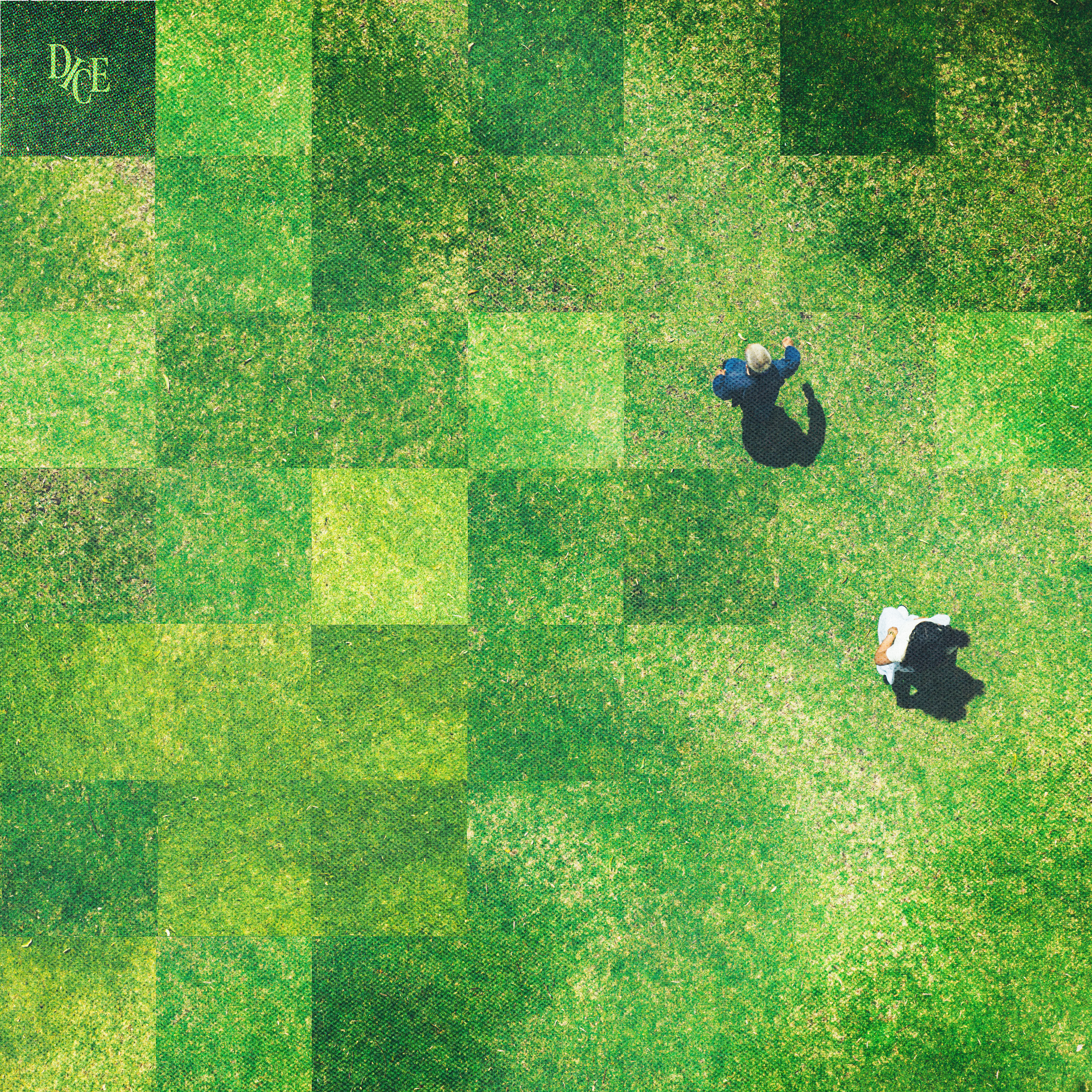
BARRET-LEONARD: All four of us have such strong opinions on the music, and sometimes it’s hard to navigate that into one channel of creative flow. I think in past works, we’ve gone straight in headfirst, tried to navigate it and struggled a little bit. This was a way of us being like, "Look, let's get on the same page. Let's write down all of what's in our heads so we can understand each other and help navigate that creative flow together.”
KING: We didn't really have a preconceived idea of what we wanted the record to be. After doing that process, we kind of realized we're all in the same headspace. In [Midnight Zoo], we were all going through darker personal stuff and I think you can hear that throughout the record. We tried to make it more moody and dark, but because we didn't really talk it through and think about it, it's like half dark, half light, trying to be something else. With [I Thought The Altitude Would Make It Worth The View], we're like, “This is such a freeing experience, defining what DICE is. Let's make the music sound like that.” That's what DICE is. It's running through a field with no shoes on, your hair in the wind. Let's make the record sound like that. It came so easy and so natural.
LUNA: Where does the title of the album come from?
KING: It comes from the track “Rooftops.” The name actually came really late in the process. We were running with the name “Mirror Mirror” for ages. It was locked in with the creative director and everything. We were doing the finishing touches and we had a board with all the songs and what needed to be recorded. It had “Mirror Mirror” at the top, so we wrote down “I Thought The Altitude Would Make It Worth The View,” which I suggested to Hodgy (Ben) as the song name for “Rooftops” ages ago. He’s like, “it would be such a sick album name, but we’ve got one locked in.” I was like, “just write it down underneath.” It was just staring at us. We’re like, we can’t not change it. We’re so stoked with it.
LUNA: Do you find that your opinions are completely different most of the time? Or is it easy to agree on stuff?
BARRETT-LENNARD: When it comes to music, it’s quite different, but in a good way. The fact that we have four completely different likes in sounds, it creates this blend that’s new. When it comes to other stuff, we also have differences of opinions. For the most part, we navigate that. I think [our creative director] Anna helping with all the creative stuff helped us communicate and navigate that into something that words.
LUNA: You guys have been making music now for six years. How has the dynamic changed from when you first started DICE to now?
BARRETT-LENNARD: I’ll be honest…it has become quite hard to navigate the pressure of the band over the six years. I was talking to Ben, and when it started there was no pressure whatsoever. You just create what you want and you put it out to the world—there’s no good or bad. It’s just the song. As our band grew, there became people with expectations. That is actually quite hard as a creative to try and strip away from all that—[to] go back to being creative and focusing on the song and not what anyone else will think about it.
That has been quite difficult for Ben—and for all of us, in some way—to fully strip away from expectation and running a full business of a band, to just being a songwriter and making music that you love.
KING: I think we found our way back with this record. We live tracked the album at EastWest Studios in Hollywood. That was just the four of us in the room, cranked amps, just playing the songs. That really helped us remember why we started this. I wouldn’t say we lost our way before this record, because I think that’s a very far end of the spectrum. But, it definitely helped us regain perspective of why we’re doing this; we’re making these songs because we love them for us, not for other people. We hand it over and then people can do with it what they want.
LUNA: When you started DICE, did you envision yourselves coming to the point where you are now?
KING: We had no idea. When we started, it was just me and Ben in the backyard of my sharehouse just fucking around. There’s no other way to put it—we didn’t think anything was gonna happen.
I think especially me and Lenny always had this dream of being in a band and touring around the world. I don’t know what it is about it. It’s always been in me.
BARRETT-LENNARD: When I joined the band, it was quite small still. There was no reason to believe this, but I had some sneaky feeling, the intuition inside of me, that we’d make it work and we could do this as a career. It’s so sick actually, finally seeing it come together. [We] have so many pressures and so many little problems. [We] need to strip away from all of that and be like, “This is actually sick. We’re doing it.”
KING: It’s been such a liberating experience for us. I don’t think we’ve ever been so excited to go on tour, or ever been so excited to release music. That’s because we’re having fun with it and being unapologetically ourselves. It’s so easy, going back to what Lenny was saying before, to get caught up in everything that’s going on and all the external pressure. It takes a lot of energy to block that out, so much energy to be like, “I don’t care what anyone thinks. We’re doing this for us.”
