
Q&A: Ella Hunt's Debut Album ‘Blindspot’ Captures the Many Faces of Grief
INTERVIEW
INTERVIEW
☆ BY KIMBERLY KAPELA ☆
Thomas Bartlett
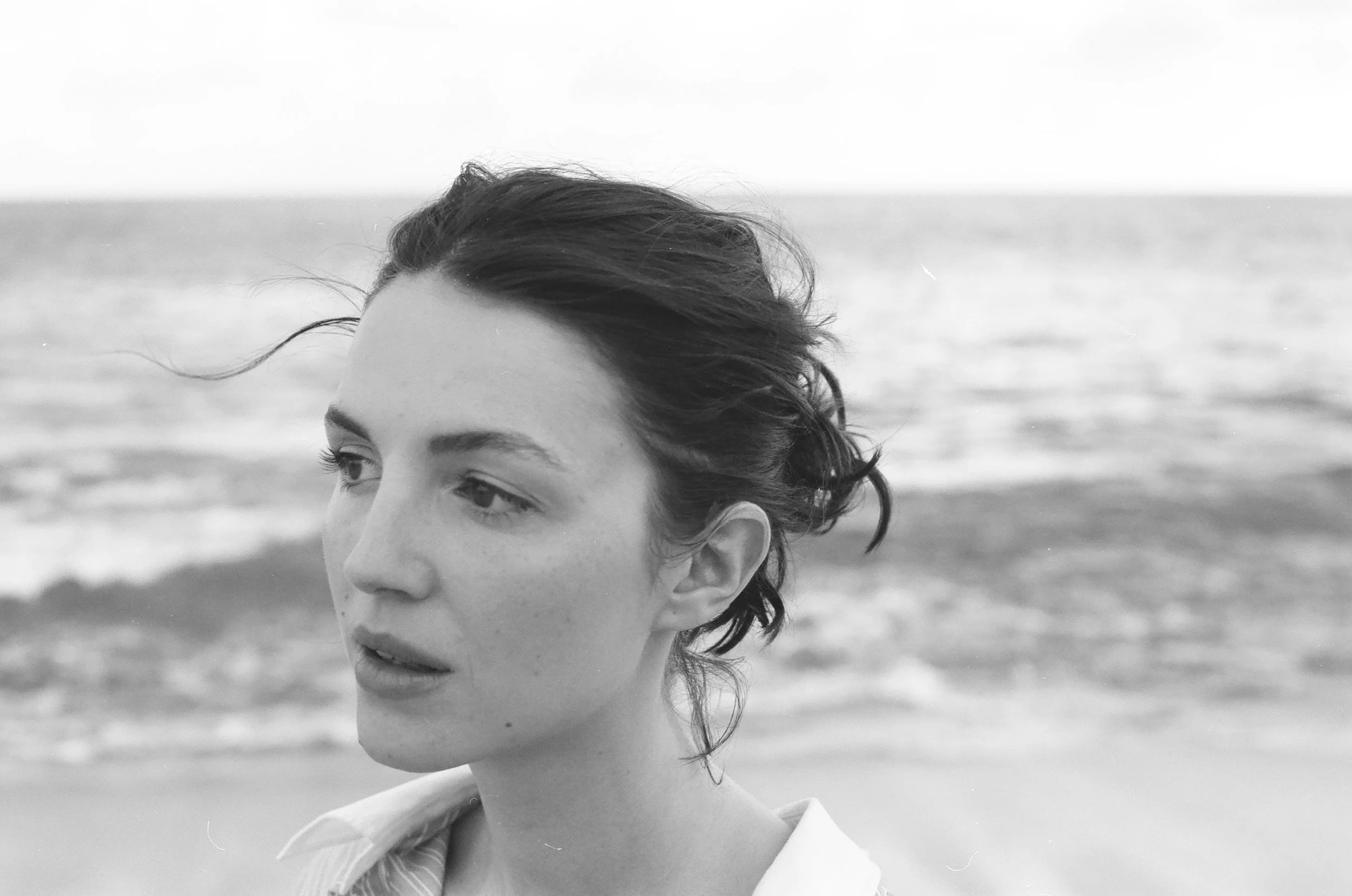
IN THE WAKE OF LOSS, ELLA HUNT FINDS HER VOICE — Some debut albums introduce an artist. Others reveal that the artist has been waiting for the right moment to speak. With Blindspot, Ella Hunt arrives with a striking sense of purpose, delivering a deeply intimate and raw collection that feels less like a first chapter and more like the work of a seasoned songwriter.
Across 13 emotionally rich tracks, Hunt proves herself to be both an incisive lyricist and an endlessly expressive vocalist. Produced by Jimmy Hogarth and recorded between London and her adopted home of New York, Blindspot balances cinematic arrangements with intimate storytelling, allowing every lyric and vocal inflection to land with remarkable clarity. The result is an album that embraces vulnerability without ever becoming consumed by it, instead finding strength in honesty.
At its heart, Blindspot is an exploration of grief. Written largely in the aftermath of losing her sister Emily to brain cancer in 2023, the album captures the fragmented, often contradictory emotions that accompany profound loss. Rather than presenting grief as a linear journey, Hunt documents its unpredictable rhythms.
“I was so struck by how beautiful that period of time was, alongside it being utterly brutal,” Hunt says to Luna. “I was so moved by the light palliative care cast my family in; the way we expressed love individually and collectively; the way everyday mundanities like cleaning the kitchen, doing laundry, making tea became kind of massive and crystallised in this moment of saying goodbye.”
The first song Hunt wrote for the record, “Dove Grey” captures intimate scenes from a hospital bedside. “Six Hours” captures the numbness that often follows tragedy, while “What a Relief” acknowledges the difficult process of allowing yourself to move forward. Together, they create a moving portrait of a family navigating unimaginable heartbreak while finding ways to carry one another through it.
Yet Blindspot refuses to remain solely within sorrow. Hunt understands that life doesn't pause for grief, and some of the album's most compelling moments arrive when she pivots toward humor, desire, and self-possession. “Subway Trash” manifests into an empowering anthem, unpacking maternal influence alongside what Hunt has described as the “male gaze industrial complex.”
Hunt never confines herself to a single mood, instead embracing the contradictions that define both grief and everyday life. With Blindspot, she emerges as a formidable songwriter with a singular voice, one capable of transmuting life's most painful experiences into songs that resonate with startling intimacy.
Thomas Bartlett
LUNA: Thank you for talking to Luna. Our readers would love to get to know you and your music more. For any readers who aren’t familiar with you yet, what inspires your artistic style and sound?
ELLA: I have a pretty diaristic approach to writing music and I think I’ve always been comforted by music as an outlet and a place where I can express sadness without it being an issue or something I need to quickly pack away in a neat little box. I feel such a sense of emotional freedom sitting at the piano. I grew up playing the piano in my parents kitchen; listening to Nina Simone, Joni Mitchell and Leonard Cohen; I’m very inspired by narrative songwriters like Lana del Rey, Mitski, Fiona Apple but I think in terms of my sound right now I’m just trying to make music that sounds like I do when I’m playing the piano in my parents kitchen.
LUNA: You just released your debut album Blindspot and huge congratulations are in order! What emotions or inspirations did you feel compelled to explore for your debut?
ELLA: I’m so thrilled Blindspot is finally out, I feel like I’ve spent a decade fantasising about and working towards releasing a body of work like this but I think what was so surprising to me in making it was just how different a writing experience it was to the music I’d made in the past. I’d always experienced the songs I wrote as individuals but with Blindspot the songs really felt like siblings to me, who wanted to stand in the birth order for a family portrait. I’d say the record is largely about grief and girlhood. It’s a lot about family and home, the unique textures of North Devon in my childhood home in late June / early July.
LUNA: Much of Blindspot was written after the loss of your sister Emily. How did songwriting become a way to process grief and preserve memories during such a life-changing period?
ELLA: Initially I was really reluctant to write about grief, I felt this weird push and pull of craving the catharsis and emotional outlet of songwriting but I really didn’t want to turn the reality of Emily’s palliative care and passing into my personal poetry project. That said, I was so struck by how beautiful that period of time was, alongside it being utterly brutal. I was so moved by the light palliative care cast my family in; the way we expressed love individually and collectively; the way everyday mundanities like cleaning the kitchen, doing laundry, making tea became kind of massive and crystallised in this moment of saying goodbye. The first song I wrote for the record was “Dove Grey,” which I’d say is the most diaristic and personal on the record. After writing “Dove Grey,” I started to feel more freedom to write expansively about the time.
LUNA: You worked with producer Jimmy Hogarth and recorded between London and New York. What was it like bringing him into your creative process, and how did he influence the sound of the album?
ELLA: Writing with Jimmy was such a freaking thrill! I didn’t think I could write with (or even in front of) anyone else before we started working together but I think what makes Jimmy such a special producer and writer is his ability to create space, quietly, without imposing himself that feels private and exploratory. He’s like a musical midwife. We wrote “Blindspot,” “Dove Grey,” “Subway Trash” and “The Less it Hurts” in our first four days of working together. It was so immediate and easy to write together. He was able to quiet the loudest of my insecurities while encouraging me to be discerning about my writing, this record really wouldn’t exist without him.
Another really crucial thing about making this with Jimmy is he encouraged me to lean into the immediacy of my writing and the rubato of my playing. He wasn’t uncomfortable about recording without click or recording vocals while I accompanied myself on the piano (it can make mixing a bit tricky with vocal bleed) and so it’s the first time I’ve recorded music that had the raw personal quality of my writing at home in Devon.
LUNA: Do you have a personal favorite song on Blindspot — one that feels closest to your heart or most revealing of who Ella Hunt is right now?
ELLA: For me that’s always been “Six Hours.” It’s my favourite to sing and I’m proud of the writing. I love how taut and lyrical the opening is and the way it grows into the wildness of the second half.
LUNA: Looking back at the making of Blindspot, what surprised you most about yourself?
ELLA: I love that question! I think my anger was surprising to me. I’ve really struggled in the past to express anger and frustration. I'm the middle child between two brothers and I think I got in the habit of suppressing anger at a very young age as a way of pleasing my parents and placating my brothers. This period of grief was one of the first times I actually experienced my anger viscerally as an adult. “Subway Trash,” especially, is a song written from a place of anger, but I’d also say some of the prettiest songs on the record like “So What” and “Six Hours” have an undercurrent and engine of anger to them that was really fascinating to me.
LUNA: The album holds space for vulnerability but also power and defiance. Was it important for you to show that grief and strength can exist together?
ELLA: I think that happened unconsciously but yes, absolutely. I think grief can feel kind of impenetrable and abstract from the outside and it’s natural to assume sadness as the predominant emotion of grief (because loosing someone you love is of course fucking sad) but I think the predominant emotion of grief is resilience.
LUNA: How did you celebrate the album release?
ELLA: The album came out on June 5 and my show “Not Suitable For Work” came out on June 2 and I think it was up there with the most draining weeks of my young life, so I didn’t celebrate on the day of. When Jimmy and I finished writing the record we went out for lunch at The Wet Fish in Hampstead and got sweetly drunk. I remember walking home listening to “What A Relief” feeling like a phoenix rising from the ashes of my grief and not feeling an ounce of cheesiness about it, the goofy melancholy girl that I am.
The week after the release I played a show at Le Poisson Rouge in NYC with my band that was one of the happiest and calmest nights of my life. LPR was one of the first venues I visited when I moved to New York, I’ve seen so many of my friends and heroes play there (Martha Wainwright, Elysian Fields, Sam Amidon) that to play my debut album release show there felt like an arrival and exactly the beginning I wished for for this record.
LUNA: If someone listens to Blindspot for the first time, what do you hope they take away from the story you’re telling?
ELLA: Oh goodness, I always struggle to answer questions like this or honestly to imagine anyone listening to my music. I just feel a big disconnect between making and releasing music. What I can say is that I know when I play Blindspot live for people that I want to give them the experience of being handed their heart in their hand that I’ve had when I see my favourite musicians perform.
LUNA: What is fueling your fire right now that’s pushing you into this new era of your career?
ELLA: Playing live. I feel so inspired when I’m playing with my band. I still feel like such a baby musician, there’s so much I want to learn about writing and performing but I think the next step for me in that growth is taking this music on tour.
LUNA: How are you feeling in this current era of your career and what does the rest of the year look like that you would like to share with Luna?
ELLA: I generally feel a lot of agitation creatively but right now I feel like I’m heaving a sigh of relief to be sharing this album and taking a step back from that eagerness and agitation and trusting that it’s finding people gently. I’m going to be playing more shows, opening for Angus and Julia Stone on some of the North America leg of their tour and hopefully shooting the second season of “Not Suitable for Work.”

Olivia Nikkanen
