
Q&A: FAUX REAL’S SOPHOMORE ALBUM ‘POISON TIME’ IS ASKING MORE QUESTIONS THAN IT ANSWERS
INTERVIEW
INTERVIEW
☆ BY KYLEE WIENS ☆
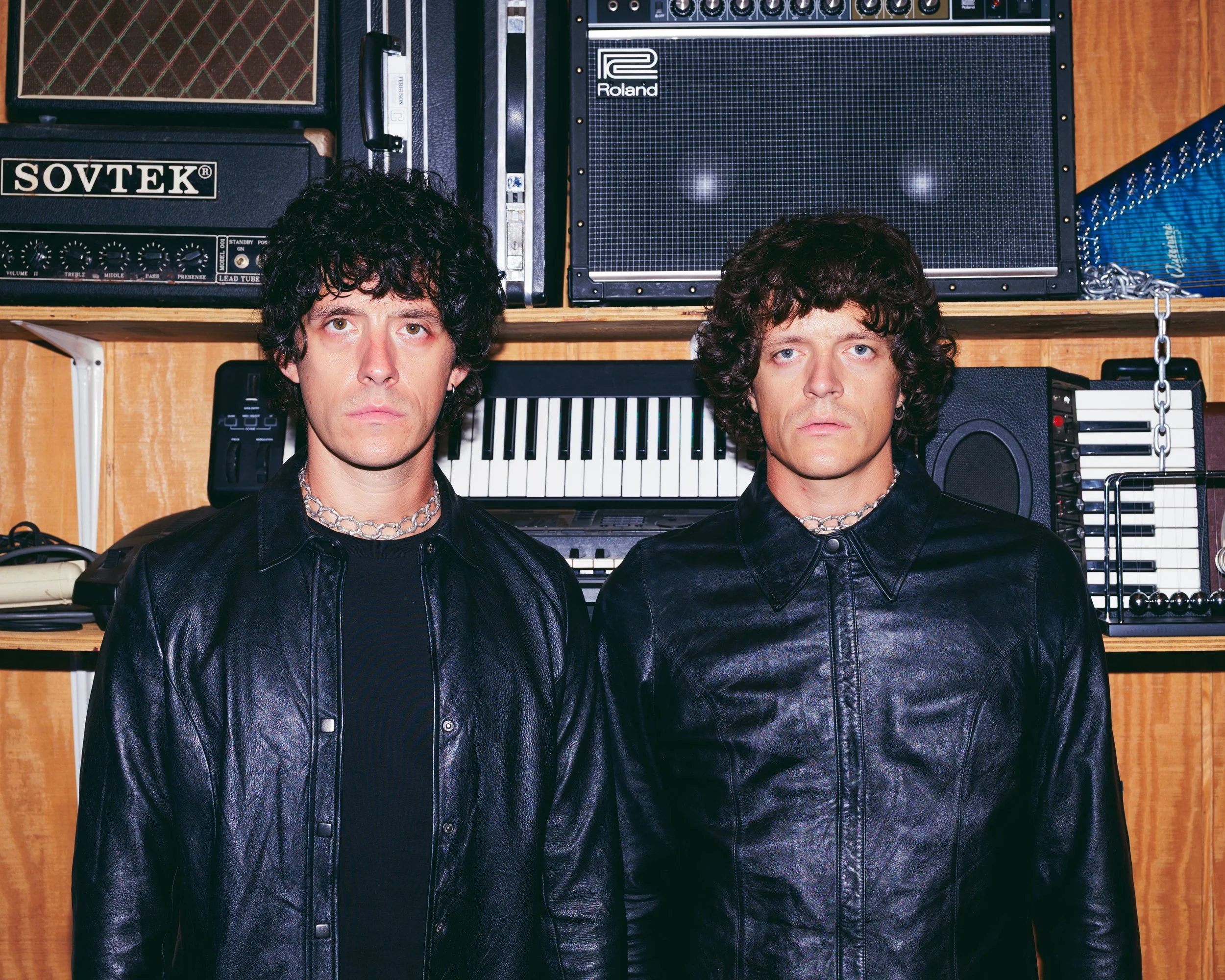
Photo by @jondelreal
TO FRANCO-AMERICAN BROTHERS ELLIOT AND VIRGIL ARNDT—writing an album feels like designing a universe. The high-camp, art-pop duo better known as FAUX REAL spent months in their LA home studio writing, recording, directing, designing, stretching and subverting to create their 11-track frenetic masterpiece, Poison Time. The result is a kaleidoscopic, silly and poppy panache that invites listeners to relent what they previously thought music could be.
The brothers’ sophomore album explores philosophy, stagnancy, absurdity and the dancefloor across time, genre, space and aesthetics. It’s theatrical in its approach yet serious in its polish, breaking countless electro-pop molds in the process. FAUX REAL embarks on a North American and European tour this fall, and their live performances are not to be missed.
Read below for Luna’s exclusive interview with the band, and be sure to stream Poison Time on all services.
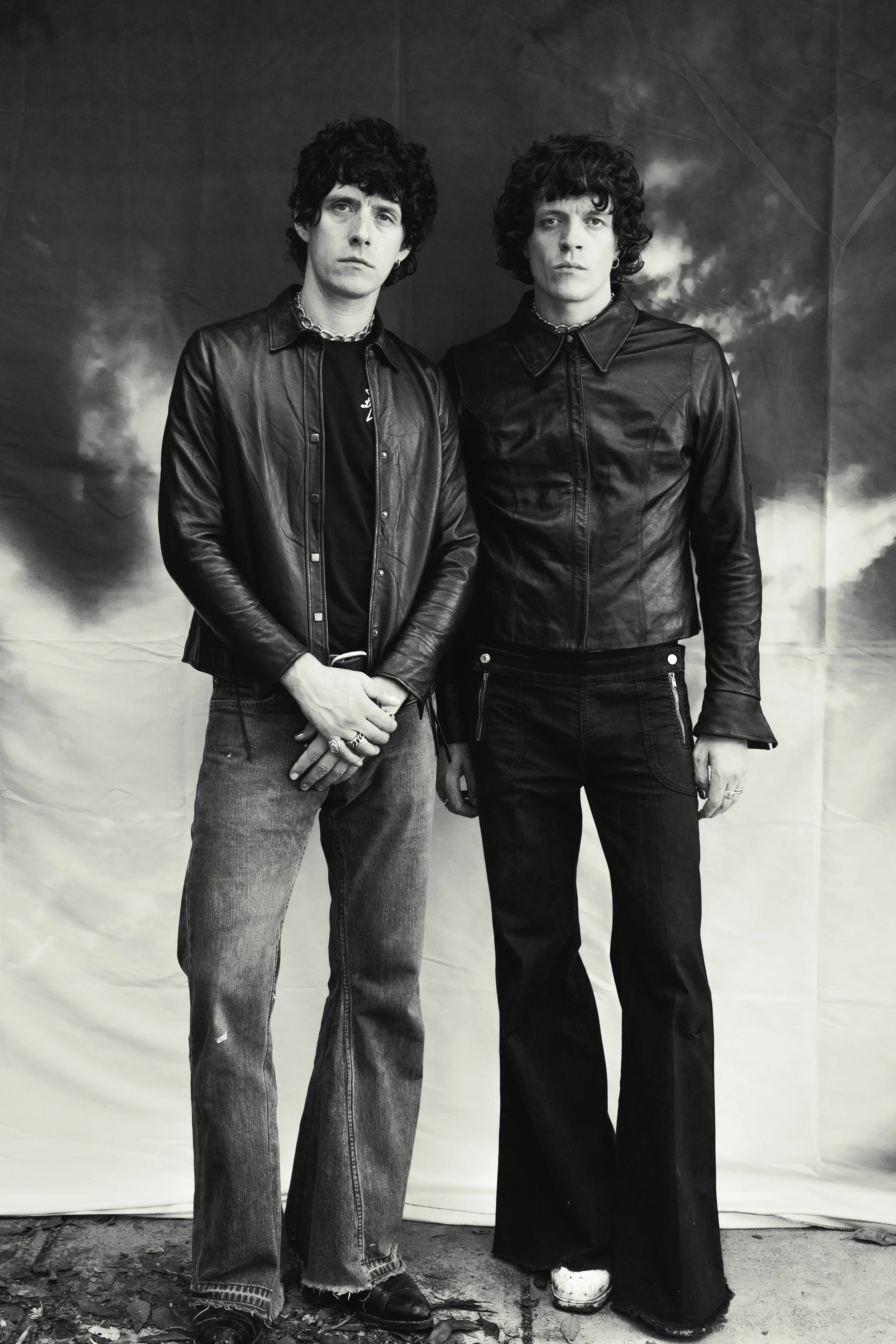
Photo by @jondelreal
LUNA: Congratulations! You have an album coming out. You're about to go on tour. You guys have obviously been picking up tons of momentum and attention, and I'm sure it all feels exciting, but maybe overwhelming. In your own words, how are you guys feeling?
FAUX REAL: Yeah, we’re doing great. There's been a good amount of press, and people are paying attention; it feels good. We've just been keeping our heads down and making all of it as true to what we have in our heads, you know, like from the videos to the artworks to the press things to the music.
LUNA: What do you think is the best part about releasing new music, and maybe also the hardest part?
FAUX REAL: It feels so good because it’s this thing that's in your head, and then it becomes real, and you know that it's real. It’s a gestational period, and you're trying to figure out a way to put it out into the world for a long time. In the music world, it takes time; so when you do get that release, it just feels really good. We’re always really proud.
There's also a slightly nerve-wracking side of it, to know how it's gonna be received and if it's gonna do what you want it to do; and it's gonna be seen by the eyes you want. I also think we learned from releasing music over the years that releasing it is actually just the date of birth of whatever you're putting out. No matter how long it's been alive in your head and in your computer, once it's out in the world, that's when it actually starts existing. You prepare a release for months and months and months and years, and then by the time it comes out, you're just like, "That's it. I'm never going to think about this thing again.” Then actually you have to remind yourself, even if you're emotionally kind of distant from the work itself because it was a while in the past, that's the point where people start to connect with it. So you have to keep playing.
We owe it to the art to keep defending it and keep living alongside it. Touring the music does a lot of that. You're embodying these songs every night on stage, etc. That's also how you breathe life into them. I think what's hard about releases is that we’re an independent act. We're working with small budgets—not to complain, we're able to do so much—but I think it's also because we just care so much and we put so much time and effort into every little aspect of this project.
LUNA: When you are sitting down and saying, "Okay, we want to make an album”, what is step one for you?
FAUX REAL: Well, you know, it never really starts like that. It's always intentional because you start working on your music and you're excited. It's like you have a block of marble, right? You don't really know what shape it's going to take. Still, you just have to start chipping away somewhere, and it kind of comes to life as you do it. A lot of the time we'll pick up something older that we'd already been working on and ask, “What if we should just finish that to see where it takes us?”
I think there was a very clear “before” our debut album and “after” our debut album for us. Before, it was this long build-up. Once that was out, it was like, okay, now we at least love the album format; we will just make another one. We love that way of working. Honestly, I'm so happy to be doing that. To be putting an album out, and then touring it and doing the whole campaign, and the next step is a new album. It’s great. There's a great freedom to that, mentally, for sure.
I think also, you grow with the project. You get to know the project better and you know where you want to take it. Every subsequent album is a little gift you give yourself. A little less pressure and a little more freedom, hopefully. In that way, that's actually how you can refine what you want to be saying and how you want to be saying it, with less and less of the voice of the voice of the audience or the critic.
LUNA: Is there a moment on the new album that is a favorite or a moment that you feel the proudest of?
FAUX REAL: There's a few moments of bravado on this new record that I think we're both really happy with. Also, it's part of that process we were just talking about, of making something new. There'll be a moment in the studio when you hit something, it just crystallizes what you’re trying to say. It blows new life into all the rest too. I think one of those points for us was when we finished a song called "Circuit Breaker" that's on the A side of the record. It’s kind of a deep cut. It's a bit longer, and it's got a meandering kind of structure. It's a really dreamy, pointillistic, impressionistic bridge that takes you traveling, but it's also got a big guitar moment and quite a heavy chorus. The weirder it got, the more we felt like we cracked it. Yeah, we've cracked the song open, but in doing that, we also kind of cracked the record open.
LUNA: One thing I notice is that I feel like journalists have a hard time pinning down what your sound is. It seems sometimes they throw genre words at the wall to see what sticks. Do any of those really resonate? Do you identify strongly with genre, or do you feel that it's not super relevant?
FAUX REAL: I think it's relevant because you have to communicate in a concise way about what you're doing at some point. Even in real life, when you're trying to talk to someone about what you do, you know, there's always a point where it comes down to “what type of music is it?” So, I think it's relevant for that. I don't think it's super relevant to us when we're building sound and making songs and all of that, though. It's not something we think about.
It's much more guided by instinct than just our common language. Although it's also something we're sometimes a bit trapped in between because I think we listen to a lot of music that's very left field. To us, our sound is very pop. But to the pop crowd, what we make is so f*cking kooky.
I also like that about us. I think people struggle to put us in a scene, and that has maybe made it harder for us to get known on things like Spotify or whatever. They don't really know where to put us. But I'm so happy we don't sound like anything else. I think when you make something, and you're like, “we are the only people in the world that could have made that.” It’s a really good feeling.
LUNA: I can definitely hear influences in your sound, but it's not a regurgitation, or even as simple as a subversion. It feels complex and kaleidoscopic. On that note, do you have any specific influences or reference points that you draw from?
FAUX REAL: People indeed hear a lot of things in our music, so I think it's also why it's a bit puzzling to people. They're like “I know what this is!”, and then the more they listen, the more they're like “wait, I have no f*cking idea.”
Even within the same song, the next part comes along, and it twists the song on itself. All of a sudden, you're in another world. I think that's also what's fun for us to make and what's entertaining to us. I think the reference thing is also more internal for us too. We'll have a record that we're really digging at the moment, just specifically because of the production, and we'll listen to that together. Or we'll get really hooked on this one song because of the way it's written, and we'll pull that apart and try to understand what it is. It feeds into the project. I think also because we've been making music for a long time, it feeds into this much wider pool; gets mixed in with all the rest. I think that's why it's hard to pick it apart. I think again, what we like to do is deconstruct the language of a song and to borrow elements.
LUNA: Is there something specific that you hope listeners take from this album, or do you prefer to leave things more open to interpretation?
FAUX REAL: I think, especially with this record, we're not trying to answer people's questions. I think we're done with that. The deeper we go in our own thing, the less we care about what it might sound like. If it's just something that makes sense to us, that’s great. That is also apparent in the album title for us, where there isn’t a clear reason that we called the album Poison Time. It was just something that surfaced and that really stuck. I feel like we're asking more questions than we're answering. In that sense, it's fairly open. We just hope that people will like the songs as much as we like them.
