
Q&A: Dualities, Unconventional Venues and Canadiana with Fox Revett
INTERVIEW
INTERVIEW
☆ BY GIGI KANG ☆
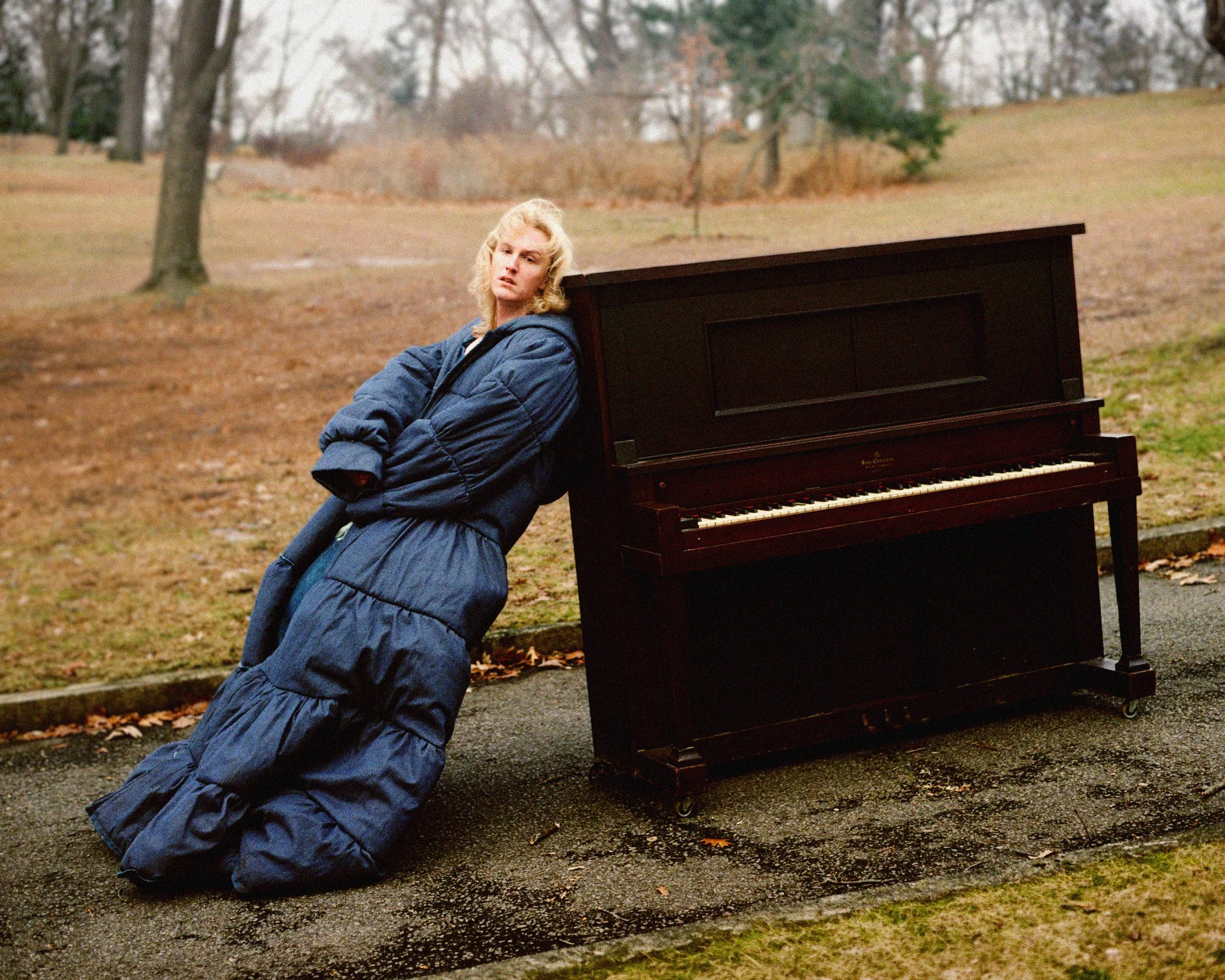
FOX REVETT IS BOTH THE KNIGHT AND THE PRINCESS—Described as “a non-binary Hercules,” Toronto-based Revett presents a balance of identity that is vivid yet intangible.
Visually, they are both buff and delicate. Sonically, their music sounds like pop girlie meets soulful rockstar.
There’s a refusal to be restricted to a single identity and their debut album, I Don’t Know Where I Left My Body, released on July 31, showcases this best. From ballads to electronic dance tracks to spill-your-guts pop to plain ol’ fun, there’s something for everybody.
Notably, two of the tracks, “A Thousand Days” and “Holding On,” are the same song presented in two different productions. The original idea was written 10 years ago, and finally found its home in I Don’t Know Where I Left My Body.
“I think with songwriting and finding your voice, you can channel past, present and future forms of yourself,” Revett shares over a call. “The song that I think is the most mature song on the album, I wrote 10 years ago at the same time that I was writing some of the worst music I’ve written in my life. It’s funny how that all happens. I feel like I was channeling this future version of myself that I have now assumed, which is exciting.”
Beyond its sonics, I Don’t Know Where I Left My Body is thematically unguarded. Some of Revett’s most personal experiences have been bled into this album, making for an honest project that reflects not only the artist but the human that is Fox Revett. Through topics like gender dysphoria and mental health, listeners are brought into Revett’s deepest muses.
What stands out about the album is the duality of looseness and severity. Revett is an artist that can simply be fun, while also making poignant observations on society’s current pain points.
An example is “Body of My Own” which sounds like an upbeat club jam, until you listen closely and realize it’s about consent: “Take it back, you should’ve known / Got a body of my own / If I said to take it slow / Baby, turn the lights down low / Got a body of my own / If I said can’t touch it / No.”
A Fox Revett track is rarely a one-sided story, such as “Innocent.” It’s one of Revett’s personal favorites. Lyrically, the song describes two painful yet pivotal memories from Revett’s past which involved harmful behavior from other individuals.
Rather than blame or anger, Revett’s pensive lyrics examine their own response to each situation, creating a soft refuge for listeners who may have experienced the same.
Read our full conversation with Revett below.
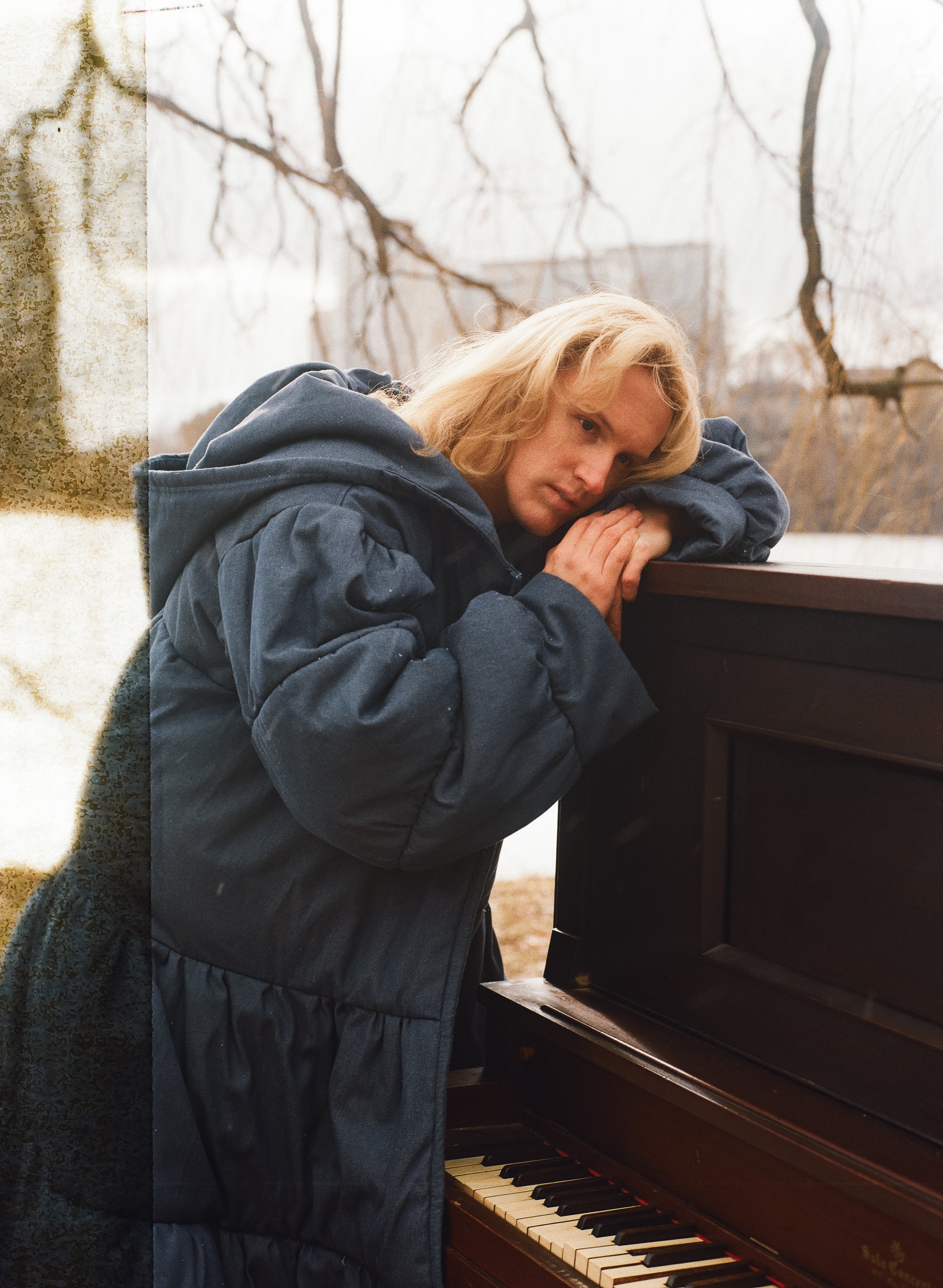
LUNA:I Don’t Know Where I Left My Body is such a thought-provoking title. Why did that feel like the best choice to represent this project?
REVETT: It’s pulled from a song that isn’t on the album. It’s a multi-textual title. It represents a broader search for identity and who you are amidst everything going on, while also representing the search for my own sound as an artist. There’s this persona or identity that you’re supposed to find, and I’m like, “I have no idea where this part of me that’s supposed to be intrinsic to who I am is. I don’t know where I left it or how I’m supposed to find it.” Finding your sound is supposed to be somehow natural yet impossible. So, [the title is] a play on this multifaceted aspect of the record.
LUNA: I wonder how much of it is just a perpetual state of becoming. It never ends.
REVETT: The idea for the record started with a song a couple years ago called “I Think I’m Missing.” [It was] this idea of trying to find yourself and that in the search of finding yourself, you become more yourself. When you choose to want to know more about yourself, or more about how you feel about things in the world, that act is actually you constantly becoming yourself. The process is the product.
LUNA: “Innocent” is integral to the album. It’s a track that I found myself lingering on because it presents a very unique perspective. It touches on two personal experiences and you’re looking at yourself in that song, rather than the other people involved. Why did that angle make the best fit for the song?
REVETT: It’s like the inciting incident of the album. It’s me reflecting on a time 10 years ago when all these really tough things happened. I had to take a couple years to regain my mental fortitude. In the song, I talk about working on songs for a project that ultimately got cut. It’s funny because one of the songs that got cut is on this album. Everything informs itself.
I was working on this record and everything felt like it was either about me reflecting on the person I am or the person I want to be. I never wrote anything about how I got here, and it feels like those incidents [described in “Innocent”] were really important. When I reflect on them, it’s hard because there’s a blurriness to the situation. Any time I talk about it with other people, they say, “Those people are horrible, bad people.” But, I still have this feeling of guilt. Then you go down a spiral of blame until you feel like you are not an innocent party. Beyond that, your heart is telling you that you feel hurt, so how can you be the person who’s responsible? I think a lot of people who survive domestic abuse and assault, we find ourselves blaming ourselves and finding it hard to forgive ourselves for the things that have been done to us.
LUNA: To create art out of one’s worst experiences is an act of power, then taking the step to present it to the world is an act of empathy because people will be able to find themselves in it. It’s a beautiful song. When you’re writing about difficult experiences, do you ever run into blockages? Does it come natural to you or do you find yourself encountering walls that you have to break through?
REVETT: I work much slower than everyone around me in that sense. I’m working to change that and be less self-limiting. For “Innocent,” it took me a year to finesse what the song was going to be, even though what it ended up being was so close to what the original version was. I had to go through all of these different iterations because I was like, “Am I being too transparent?”
There are some things that happen quickly like when I worked on “Get It.” I was doing a show in a boxing ring and I was like, “I don’t have an uppy-dancey kind of song where I can just air-punch with boxing gloves.” So I started working on that song. It fell out of the sky so fast and it was done. Sometimes things happen in a moment; sometimes things happen over a long time. With “Body of My Own,” I sat down at the piano and wrote it in less than an hour.
LUNA: “Holding On” and “1000 Days” are sister songs. Tell me about the decision to release two versions of the same story.
REVETT: That was the song I wrote 10 years ago and I always knew that I wanted to produce a version of it that was more radio friendly with more of a Canadiana vibe. I was trying to reconcile how to do that while preserving the feeling of it being at a piano. I woke up one day in the middle of the night and came up with an alternate second verse. We recorded it on my childhood piano and [it became] a love letter to when I first started writing songs, going out drinking at night and coming back to the piano.
LUNA: What was it like to revisit something that you made 10 years ago, but with a sharpened skill set?
REVETT: Honestly, I have older versions of it. I can reflect on them and see the potential, but I just didn’t have it yet. Although I am frustrated that I didn’t take the leap sooner, I am also happy that things are going the way they are. The person that I was 10 years ago would be so happy with how everything sounds. That’s the only thing you can move forward with—knowing that the person who made those songs and hated the sound of their voice would be shocked at how fully fleshed out everything is now.
LUNA: You’ve performed in all kinds of places, from a winery to the subway. Environment can be a very beautiful but sometimes limiting element of a creative’s life. What’s your relationship with location? Do you find inspiration anywhere, or are you picky with it?
REVETT: The exciting thing is that we take music with us everywhere we go in our headphones, speakers at home, concert venues and concert halls. Music is something that exists with you everywhere. Doing a show in the subway is funny to me because yes, it’s unconventional, but it’s also not unconventional at all because I’m listening to music there all the time.
My relationship with location is untethered to any rules about where you should be presenting your music, or what the rules are in terms of what you can and can’t achieve in those endeavors. I like a challenge. When you’re an artist at an emerging level, it often feels like you only have access to smaller rooms. The reality is you can pull from all and any things around you in order to exercise your creative muscles and creative potential.
LUNA: Music and location have always had an interesting relationship, especially certain genres more than others. Metal bands sometimes put on crazy shows in places that you would never think of, but it really works. It becomes a symbol of that genre. I find it really interesting.
REVETT: Yeah, there are a lot of times when there’s an association between genre and place. If you’re in a church, you’re hearing sacred, largely classical music. But, you also have the opportunity to contrast that. You could do something like a metal show in a church. The contrast of all of that elevates both the music and the location because you’re highlighting the differences between the two of them. You’re creating something entirely new and exciting.
LUNA: In a strange way, it can also show us our similarities to put two contrasting forces together. It shows us how they can work.
REVETT: That’s true. With the subway show, if I were to do that show in a traditional venue, I know how that would play out. But to do it in an abandoned subway station, everyone is having their own unique experience because they have their own unique experiences tied to the subway. Some people hate the subway. Some people love the subway. Some people are grossed out by it. Some people think the architecture is cool. At all points in the show, everyone is having their own unique experience informed by the correlation of music and location.
LUNA: Do you have any dream venues?
REVETT: I have a lot of conventional venues on the list, but I’m interested in how to do something different with them. In Toronto, the Mirvish theatres are the large play houses. I’m very interested in how to present what would traditionally be a theatre play, like Shakespeare or an opera, but as a pop concert within that framework. The Toronto Reference Library holds a selection of scores that people can read and check out. I’m really interested in that space because it reads like an opera hall when you go into it. I’ve also always wanted to do a free show where I get a flatbed truck and somehow strap myself to that truck and just play while driving through the traffic of Toronto. That would be so funny and campy and whimsical. There’s so much opportunity.
LUNA: On the note of location, we have to talk about Canada. What do you feel being Canadian contributes to your identity as an artist?
REVETT: I think all Canadian artists get sold this idea that you need to go to the States in order to achieve whatever you want to achieve. But, I’m surrounded by so many people in this country and I grew up on artists from this country who are just as good as any artist from anywhere in the world. I saw an artist named LOV who was working as a tree planter in Saskatchewan with her Indigenous community. She busked her way to Vancouver and makes this incredible music that only a Canadian could make. What she has to say could only happen here. Being a Canadian artist is beautiful.
We’re supported by different infrastructures within our country, whether that be arts councils or Canadian content laws. There is an opportunity to take risks and double down on your identity. I just love it. All of my favorite artists that I grew up on were Canadian. It’s not something I thought about until I was forced to confront that. They were artists that were presented to me probably because of Canadian content regulation.
LUNA: I feel the same way. Before I started music journalism, I never thought about it. When I started interacting with both American artists and Canadian artists, I found beauty in both but ultimately, it’s Canadian artists that make me feel at home. It’s amazing to see them thriving and I feel like it’s getting more prominent. There was a time when we weren’t getting to reach the same level as American artists, but I don’t feel that way anymore. I think things are shifting.
REVETT: I do too, especially with these divisive times, more than ever, people are looking to hear from Canadians. We’re looking for those stories and that music. There are artists like Sebastian Gaskin and Aysanabee who are important artists because they’re also passing down stories that have been passed down for generations.
LUNA: It’s really beautiful, and you’re a part of it!
REVETT: I’m talking about Canadian artists while I’m wearing a Lady Gaga shirt. But it’s LG, I have to.
