Q&A: Francisca Valenzuela Channels Unfiltered Female Rage in Powerful ‘MALDITA’ Era
INTERVIEW
INTERVIEW
☆ BY KIMBERLY KAPELA ☆
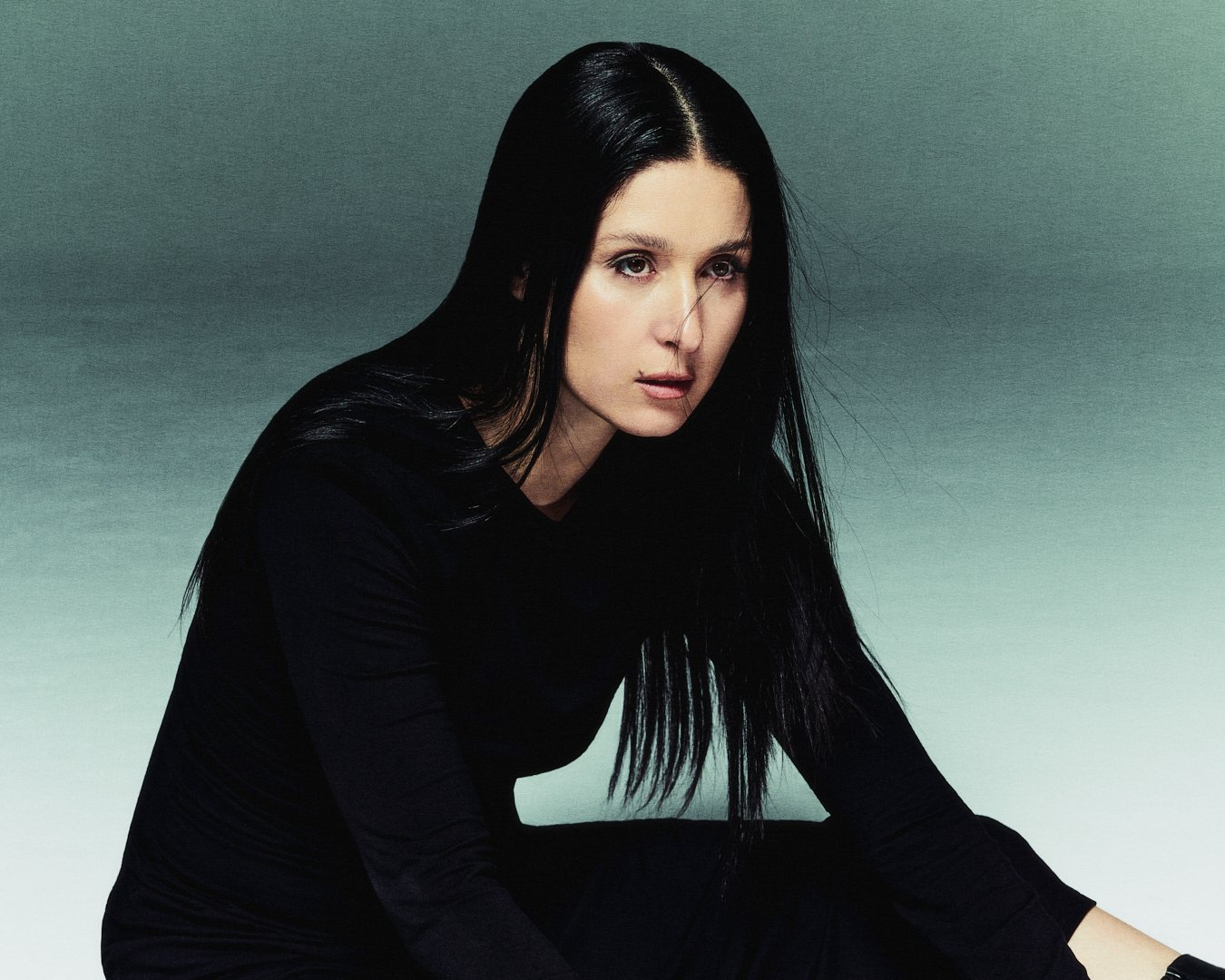
FEMALE RAGE HAS A UNIQUE FLAVOR — Few experiences are as universally recognized yet as deeply misunderstood as the transformation into motherhood. Often romanticized through idealized narratives, the complexity of matrescence, the ongoing process of becoming a mother, has long remained absent from mainstream cultural conversations. With her forthcoming album MALDITA, Chilean singer-songwriter Francisca Valenzuela steps directly into that silence, creating a body of work that refuses simplistic portrayals of womanhood in favor of something far more honest. Through themes of female rage, vulnerability, survival, and identity, MALDITA confronts the taboos surrounding motherhood and the expectations placed upon women.
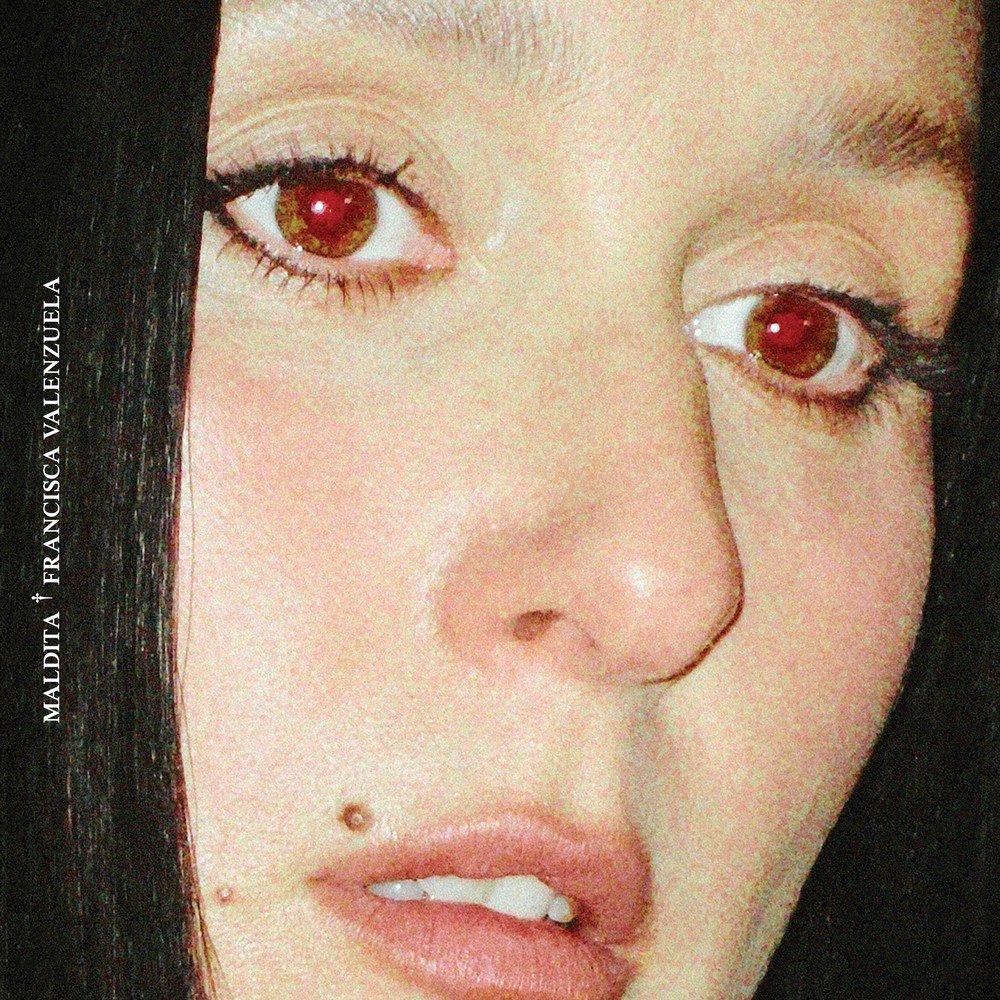
There is no mistaking the emotional force behind its latest single "MALACARA." The single from Valenzuela is not interested in softening its edges or making itself more palatable. Instead, it embraces fury as a language of survival, transforming years of silenced frustration into a literary art-pop anthem that refuses to apologize for taking up space.
Released as the second preview of her forthcoming album MALDITA, "MALACARA" stands as one of Valenzuela's most uncompromising works to date. The track is a razor-sharp portrait of female rage that intertwines lived experience, testimony, poetry and emotional honesty. Built around her unmistakable piano, the track expands into a cinematic arrangement that feels cathartic and confrontational.
"'MALACARA' is a visceral, intense, brutal and beautiful rant on being fed up," Valenzuela says. "It is being told to smile, be complacent and bury the rage and the discomfort. It sheds light on the internal roar and scream that us women have been taught to silence—nothing is more uncomfortable than an angry woman."
The song's most cutting moments are rooted in Valenzuela's own experiences navigating the music industry. Among its lyrics are echoes of dismissive remarks she has personally endured, including, "You talk too much, with that face you're not going anywhere" — comments she says came from straight, male industry professionals. By reclaiming these experiences within the song, Valenzuela transforms criticism into creative power by exposing the gendered biases.
"MALACARA" also reflects Valenzuela's longstanding affinity for literature and feminist thought. Quotations from writer and activist Audre Lorde and Chilean poet and visual artist Cecilia Vicuña are woven into the composition.
The track arrives as another glimpse into MALDITA, an album Valenzuela describes as an unapologetically vulnerable, stylish, energetic, dark, moody and elegant catharsis. The project aims to spark conversations that transcend language and geography, creating space for anyone who has felt misunderstood, isolated or overwhelmed by societal expectations.
Central to MALDITA is its exploration of matrescence and physical, emotional and spiritual transformation involved in becoming a mother. Valenzuela pushes back against idealized narratives that often reduce motherhood to a singular, performative experience while overlooking its complexities.
"It touches on the taboo," she says. "It is about matrescence — the process of becoming a mother, and I hope that this album adds to the moving, fundamental body of work made by women whose stories, about motherhood, no-motherhood, female rage, survival, have nurtured me and have kept me company and have been my lifeline. Yesterday, before, now and tomorrow."
MALDITA rejects patriarchal expectations in favor of authentic storytelling, positioning personal experience as both artistic expression and cultural commentary.
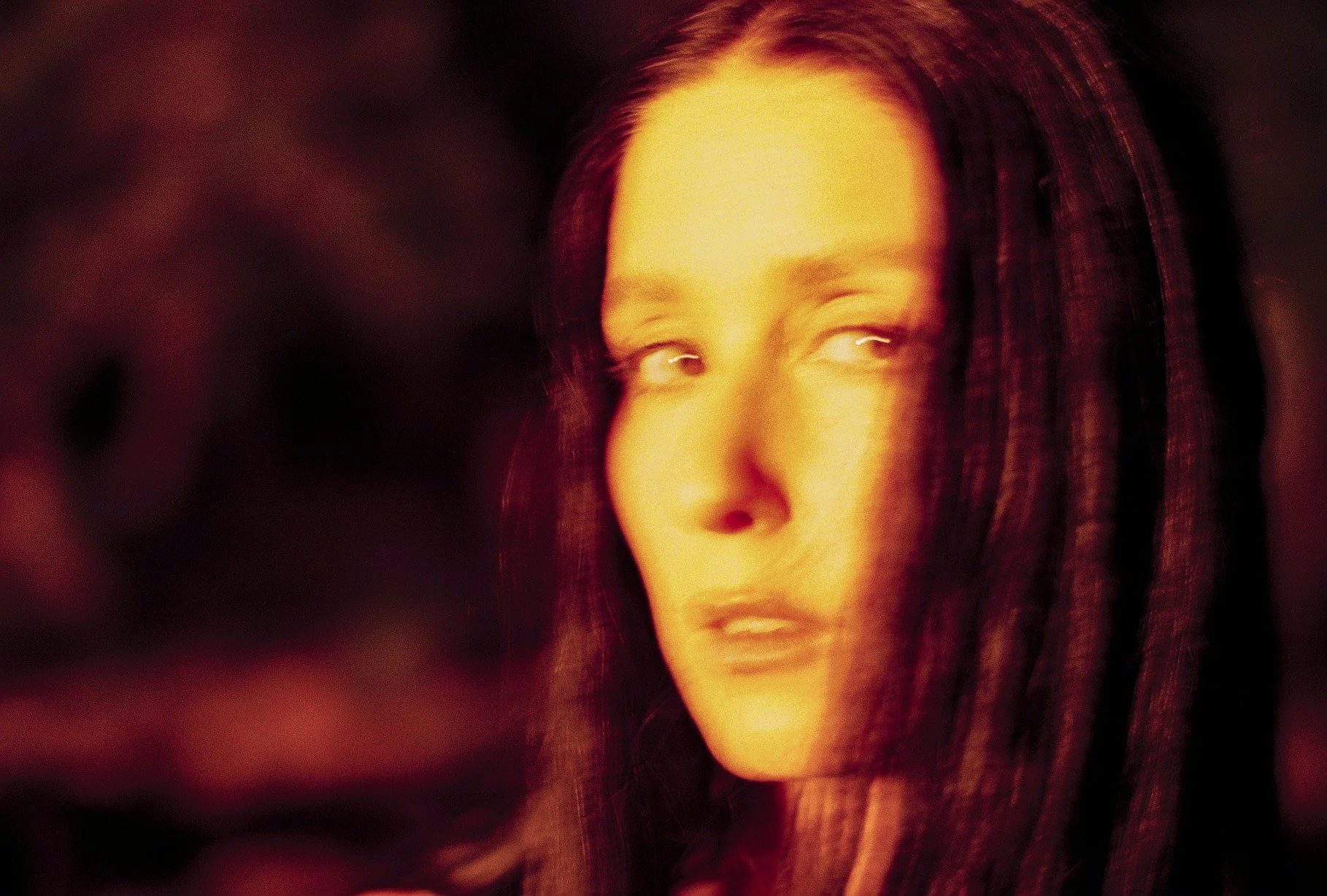
LUNA: Thank you for talking to Luna. Our readers would love to get to know you and your music more. For any readers who aren’t familiar with you yet, what kind of atmosphere or emotional space do you aim to create for your listeners?
FRANCISCA: I'm Francisca Valenzuela. I'm a Chilean singer, songwriter and artist. I would say that I create confessional alt art piano pop-driven songs. A lot of piano, a lot of words, a lot of feelings, and I usually explore and write about everything from rage to pleasure, to politics, to now motherhood, and the beautiful and brutal experience of being a woman and being alive.
LUNA: You describe “MALACARA” as “a visceral, intense, brutal and beautiful rant on being fed up.” Was there a specific moment or spark of inspiration that finally gave this song its voice?
FRANCISCA: I've felt that now that I've grown up, I feel like I've noticed how accommodating I've been in so many situations in my life, and I think a lot of us women feel the pressure to be accommodating and be unconditionally and unnecessarily nice and accommodating. In my line of work, especially, I've been faced with so many ridiculous situations where I've really been patient and even agreeable. For example, I say something in the end of the song with an octavator, like I have an octave low voice, and I'm simulating this guy in a major label who once said to me, ‘you're not 20, you're not viral, you're not beautiful with that face, you're never going to get anywhere.’ Literally things that random suits have said,
I think on the one hand it speaks to being fed up, especially with an industry in society that expects women to behave a certain way and be a certain way to be desired and considered and relevant. On the other hand, I think what really sparked the sense of urgency was that I had my first baby, and there was no time, no patience to even be remotely accommodating. If you haven't pushed a child in the last six months out of your vagina, don't come and say anything to me. I love the concept of “MALACARA,” which in Spanish roughly translates to why the long face? It speaks to the idea that we always have to smile. I think I've even felt that I've overcompensated by always trying to be nice and smiling. Even the songs that I've been writing have been more ragey and angry.
LUNA: “MALACARA” incorporates words from Audre Lorde and Cecilia Vicuña. What drew you to their work, and how did their voices naturally become part of the song?
FRANCISCA: When I finished writing “MALACARA,” there was this instrumental part and I had Cecilia Vicuña’s original text, which was “Your rage is your gold.” She's an amazing interdisciplinary artist from Chile. She's much older. She's the wisest witch that exists, and she writes and speaks a lot to the transformative energy of rage, of rage being a constructive force, and she spoke to this starting in the 70s in the dictatorship in Chile. She talked about how rage had this collective energy to allow change and to manifest change, really. She has been the speaker of all these truths, and I love her so much. She's been to my concerts, and we have a relationship. I had her at Ruidosa Fest. She's been all over the world with her art, and she's tremendous. How special to be able to take her words that are so magical and so true and put them in the song.
And then I was thinking, where else have I read something about rage and the constructive force it can be, and I thought about the essay, “The Issues of Anger” by Audrey Lord. I was googling the details about it and rereading it, because it’s from when she gave a speech at a conference, speaking to the oppressive forces over women, and in particular, with the race issues in the U.S. and being an African American woman. I think the way that she spoke to it was so eloquent, and it was so hopeful, gave me so much hope.
The idea that you can take something that fills you with rage and just this feeling of wanting to break something down and then trying to make it into something else. I thought it was so eloquent and beautiful, and I think rage is a misunderstood energy, because it is energetic. It's not like when you are melancholy or sad, and stricken down and hanging low. It has something that gives you energy. I put it in the middle of a song.
LUNA: The song explores the expectation that women should remain agreeable and suppress their anger. Why do you think female rage continues to make so many people uncomfortable?
FRANCISCA: I like the idea of saying female rage, because I do think it has a unique flavor. Now, the fact that we do have this reality for the majority of us women that we have to be accommodating and you don't know what to do with your anger. I think anger is an issue for all genders. For the traditional male idea, of course, rage has other issues, right? You get into fights, you're banging walls, you can't control it. There's a whole other gender representation as to how you behave, and in the case of women, I would say a traditional approach is women shouldn't get angry, if they do, you hide it, you sugarcoat it, and you just swallow it and keep going. I think their female rage speaks to what happens when you swallow and you keep going in the face of things that are draining you, are harming you. I think it speaks to how you display and express anger. I think there's a fear of the consequences it can bring, the fear of being misinterpreted or categorically put into this hysterical female rage.
When I started Ruidosa, everyone was like, ‘why are you just going to get together with other women and complain,’ like as if there was an issue. There are many issues, and that's why we started research by the way. Let me show you the numbers. I'll show you the issue. I think that there's a disbelief that there are reasons to be angry, and then there's a disbelief that anger needs to exist, and it's a legitimate energy and a legitimate emotion that you have to work with. It can coexist with the female form.
LUNA: You describe MALDITA as more than an album — as a cultural conversation. What did you feel drawn to exploring this time around?
FRANCISCA: I started MALDITA when I was six months postpartum. My friend Francisco, who's the producer with me in the album, we're on Zoom and he asked if I’m working on something, and I told him I'm ready to write a new album, and I'm telling him I want to make a pop glam album. I go to the gym, and I'm going to be like Miley Cyrus with “Flowers,” and come back and be muscular. I'm sitting there with my daughter in my arms, and I'm breastfeeding, and my sweater has milk stains and I have my top knot bun dangling over my head. I haven't slept. He's like, ‘Amiga, I love you, but that's not going to happen. We have to shift gears. What is really happening with you right now?’
I told him that I had been going through this horrible time, and what was keeping me alive was really connecting with other women's stories. At 3 a.m. I was breastfeeding my daughter. I was desperately, hungrily trying to find information and stories about women being discontent with their postpartum. I was so ashamed and horrified as to how I was living this postpartum. When he said that it was a catalyst for me to really dig deep and begin to take everything I've written, everything I was feeling, and begin to put it in this album, which we did between naps and diapers and all these things, and it has that brutal, dissonant, ambivalent tension of the terror and tenderness of a postpartum era.
LUNA: Much of mainstream culture still romanticizes motherhood. What perspectives surrounding matrescence did you feel were missing that this album needed to address?
FRANCISCA: I would say the fear. There's so much fear in the first year — fear of everything, fear of failing, fear that your kid will, that your baby's going to die, fear that you don't know what you're doing, fear that your body's changing, fear that you know your birth could have gone traumatically, just so much fear. There's so much fear and trauma around that first six months of experience, and that fear is external and objective and practical, and it's also internal. Just like having this creature, keeping that creature alive. Everything suddenly becomes something else. Your house is not your house anymore. It's this crazy new reality, and so there's a lot of fear, terror and doubt. I chose to be a mother. I feel very privileged that I've chosen my maternity. I've had the resources and the stability and the structure and the partner to do it with, and even so it feels difficult and almost impossible, and almost like I regret it at one point in the postpartum. I feel that ambivalence, that tension is often not legitimized, not represented, because if you chose motherhood, just shut up and deal with it.
You forget that there's a woman and a person and challenges. You don't even know what's happening with your body and yourself. There's a lot of ambivalence and tension. I remember I was so traumatized. I couldn't even put on the little backpack to carry my daughter around. Everything is like this dramatic, suspenseful movie. It's like these tiny things and so the revolution of it all, I feel like I've seen it in film, and I've read it in books, but to be honest, I had never heard it in an album before. I'm committed to making the album that no one's ever done before, and talk about breastfeeding in an erotic rave track, and talk about terror, hysteria and desire. “SOY TU FAN” is a song about just being horny and hysterical. It's the idea that I get to resignify what a mother looks like or means to me.
LUNA: That’s such a powerful approach. I've honestly never heard an album about the hysteria and fears throughout motherhood. It’s a very universal experience and many women can find solace in this because they’re not the only ones experiencing it.
FRANCISCA: Exactly. What was so magical are the voices and the stories of women that kept me alive. Seriously, like halfway through, I found Lucy Jones, who's this journalist, and Emily Oster, also from the U.S. from Broad University. Lucy Jones is from the UK, and I found them on Instagram. I read their books because I found Goodreads. I found the first page of their books on Goodreads, and they kept me company. I wrote them a DM, and was like, ‘I'm in Chile. I'm a creative woman, I'm a singer.’ We started a relationship and they began to give me feedback, and they're like, ‘This is the wildest ride and you're not alone. I think what you're saying is so important. Not only is it so specific and personal, but it also can resonate with so many women, especially today, where the decision of having kids is a really hard one, and it's really not a given,’ Especially women that were always working ourselves and trying to understand what the hell is happening, and you want truth, right? You want testimony.
LUNA: Do you have a personal favorite song on MALDITA — one that feels closest to your heart or most revealing of who Francisca Valenzuela is right now?
FRANCISCA: I think that I would say two. I would say “MALACARA” is one, and the other one is “NACÍ NECESITÁNDOTE,” which means I was born needing you. Because at the end of the day, it is the most revolutionary thing to write a love song to my daughter, which I didn't have before. I think that song, which is like a lullaby, has this phrase which I wrote that says “I hold you in my arms / And I die of love and I die of pain / Because my back hurts.” And then it says, “It's November / The parties continue / I lost all these friends / I never saw them again / And here I am, kissing your face and smelling your skin / Learning how to be a mom and learning how to be myself.”
LUNA: How do you hope listeners — especially your femme audience — can connect with or find power in this new era of music from you? What emotions or messages do you want to leave with them?
FRANCISCA: I would want women to feel that they can be full of contradictions and full of beauty, but also grossness, and just exist in their own free reality. I get to be free when I make music. I'm very proud and happy that as independent artists from Chile to the world, I've gotten to be myself throughout my career, sometimes with more success and sometimes with less, but at the end of the day, I don't owe anything to anyone. I haven't had to pretend and please, as an artist and the creative sense, so I would say I hope that they can find in my songs or in me or in what I've been doing creatively, a sense of belonging. It's a place full of mistakes, wonder, emotion and life and experiences. That sense of belonging, connection, and humanity, that allows you to just be a woman in the world and not have to be a certain way to be loved or be relevant or to live things a certain way because you're supposed to. I would say that freedom and that sense of belonging.
LUNA: What is fueling your fire right now that’s pushing you into this new era of your career?
FRANCISCA: Artistically, I think weirdly enough, though I've been doing this for a while, I feel like it has been a new era of rebirth, coincidentally with my daughter being born. I think that there is a sense of newness with myself, with what I've been doing with my work, and with the promise of what the work is bringing. As an independent artist from Chile, I feel like I have the maturity, the leadership, and the team to do what I've been dreaming of doing forever, and that feels really great and really exciting and very free artistically and different and original.
On the other hand, before I started Ruidosa, it was such an uphill battle to get to where we are today. It's an exportable festival from Chile to the world, which we're doing in the U.S. once a year. We have this award-winning research that's now supporting legislation for more female and non-binary folks in festivals. We're creating jobs. We're creating visibility. I feel like to see that impact, and then also to feel so activated and connected in those experiences — as an artist, as an audience member, and as a fan learning from other artists, learning from other females — a community-based and a collective-based organization experience feels hopeful and feels relevant and feels alive, especially in the face of so many things that happen now that are atrocious.
LUNA: How are you feeling in this current era of your career and what does the rest of the year look like that you would like to share with Luna?
FRANCISCA: I'm feeling good. I'm tired, but I'm good. I'm tired just because I feel like this babe that sleeps restlessly at night. We start our tour next week, so I'm tired but very happy. We start with New York at the Lincoln Center, and then we continue on to Chile and then Spain. I'm very nervous. It's the first time I have to really put myself out there for international shows, so opportunities like these are really important right now. I feel really excited to be able to share what I'm doing with organizations and people and platforms like you guys. The year looks like a very MALDITA year. We have a lot of Ruidosa, a lot of MALDITA and a lot of art music conversations. I'm going to New York to receive an award from the Billboard LAMC Women in Music, which I'm really excited about, and a lot of family as well. Just a lot of Legos, a lot of cooking, a lot of hanging out, snuggling and being also a lot of wonder with kids.