
Q&A: Grace Cummings Goes Deeper, Darker and Louder on ‘Bloodhorse!’
INTERVIEW
INTERVIEW
☆ BY KIMBERLY KAPELA ☆
Credit: Jeff Anderson Jr.
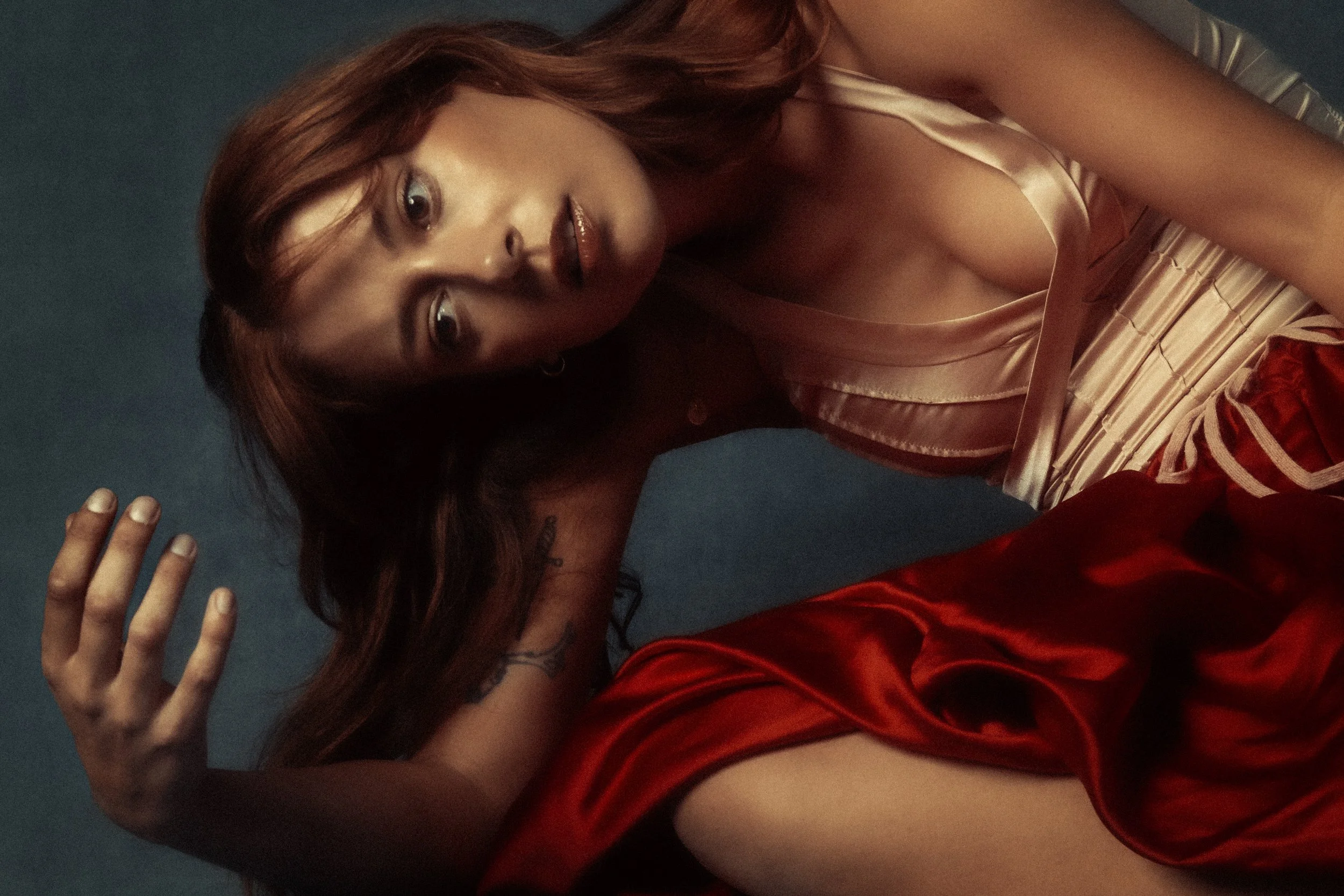
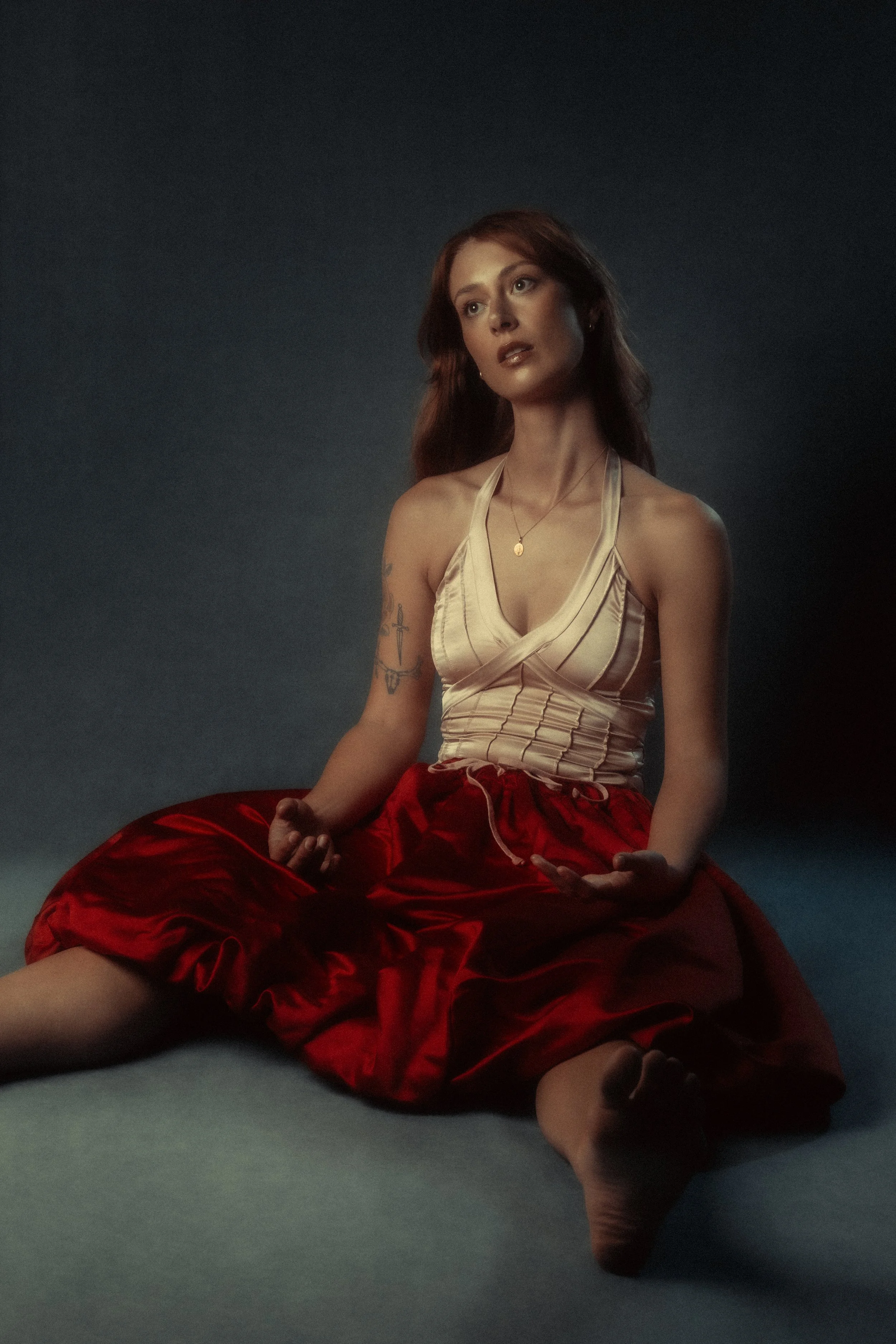
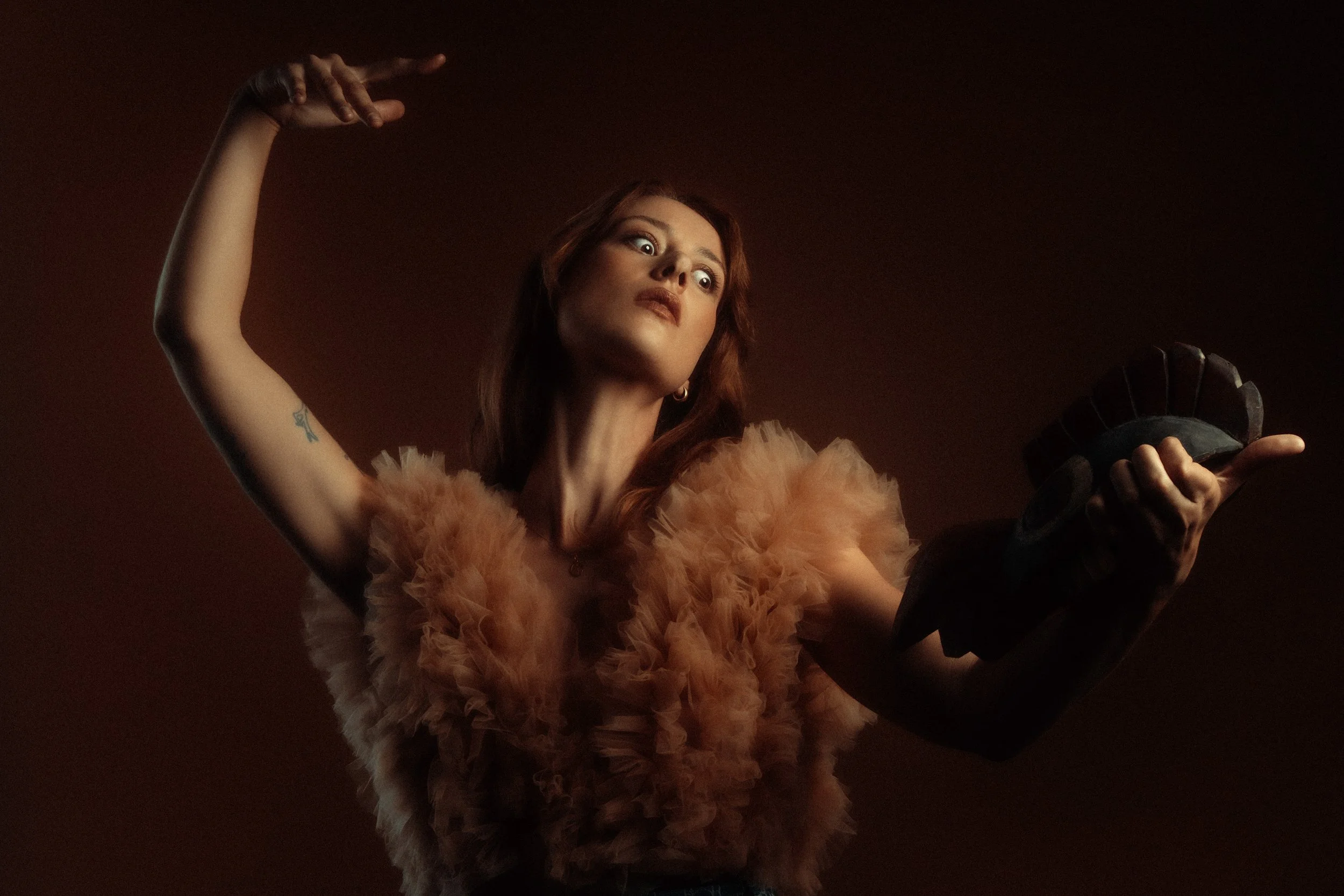
A BLOODHORSE IS BRED AND EXPECTED TO BE A WINNER — a symbol of strength, endurance and ambition. Yet beneath that expectation exists another reality. Lauded Australian singer-songwriter Grace Cummings is entering a new chapter with the release of her upcoming fourth full-length album, Bloodhorse! arriving August 14. Following the international acclaim surrounding her 2024 album Ramona, Cummings returns with a bold and deeply introspective record that explores the tension between survival and surrender, vulnerability and strength.
Once again recorded in Topanga Canyon, California with GRAMMY-nominated producer Jonathan Wilson, Bloodhorse! expands on the emotional depth and cinematic songwriting that have become hallmarks of Cummings’ artistry. While Ramona marked a significant evolution in her sound, pushing beyond her folk foundations into a more expansive sonic world, Bloodhorse! takes that exploration further by embracing darker textures and raw emotion.
The album’s title serves as a powerful metaphor for Cummings’ own relationship with ambition, fear and resilience. A bloodhorse is a horse bred and expected to be a winner, yet Cummings highlights the contradictions behind that image, with the fragility and pressure that exist beneath the surface.
“A bloodhorse is a horse expected to be a winner. But they can often also be temperamental, fearful, fragile and easily broken,” Cummings explains. “Sometimes I feel like I’m a trapped animal. And…when I go to sleep, sometimes it's like I'm in the gate, twitching. And as soon as I open my eyes, I'm fucking running.”
That constant motion fuels Bloodhorse!, an album built around the instinctive fight-or-flight response. Across its tracks, Cummings navigates anxiety, confession, and hope, creating a record that feels both intimate and expansive. Her songwriting moves through extremes — from gorgeous to grotesque, velvet to violent, sacred to profane — capturing the complicated emotions that shape the human experience.
“In the past few years I’ve gone through one of the biggest personal changes of my life,” Cummings says. “Bloodhorse! is an attempt to express the things I can't say. A confession, an act of courage. For no one else but me. And it’s me deciding to represent, not necessarily the way life is, but the way it feels.”
And those feelings are big. Themes of life, death, agency, abuse and self-examination — both psychic and physical — pump through the lyrics of Bloodhorse!
With Bloodhorse!, Grace Cummings continues to challenge the boundaries of her own artistry. It is a record about instinct, transformation, and the moments when survival becomes a form of expression, a fearless portrait of an artist confronting the darkness and finding power within it.
Credit: Jeff Anderson Jr.
LUNA: Thank you for talking to Luna. Our readers would love to get to know you and your music more. For any readers who aren’t familiar with you yet, what inspires your artistic style and sound?
GRACE: Everything. I think what inspires me when I'm talking about myself for making a record, or speaking to players that are playing with me, who are asking me how to direct or tell them what to do, I always focus on the way something feels, and what leads me is a primal, emotional feeling more than something intellectual or a particular idea that I want to follow. Sometimes an idea, but the thing that leads it is feeling an emotion, and something unruly inside.
LUNA: “I’m Not Crazy” is a striking glimpse into Bloodhorse! Why did you feel this was the right song to lead listeners into the album?
GRACE: I first of all think that once you hear the rest of the album, it's one of the more palatable songs on the record. I don't think it leads it for me, but I think that it shows something different that I have started to lean into, which is realizing that I can do many things with my voice and subsequently tell different stories or have different perspectives with the voice that I have. It's like any other instrument, just in a different pedal, or in a different tuning or in a different amp. This song was the first time that I really focused on changing my voice to sound like a different person, and that innocent girl that so many fuckwits want you to be.
LUNA: The title Bloodhorse! is rich with symbolism. When did the image of the bloodhorse first emerge as the defining metaphor for this album?
GRACE: I really can't remember. I was talking to Jonathan on the phone one day, and out of nowhere he was talking about something that made me think of it. I quickly wrote it down and put an exclamation mark on it to be like, don't forget this exclamation mark. The exclamation mark stays. Also the Blood Horse is a pretty grand, evocative image. When I was thinking about the name of the album, when that popped into my head out of nowhere, I was like, ‘oh, it's come to me.’ It's a strong image. It’s an animal that's bred for huge success and is actually a very fragile, flighty, scared, temperamental animal.
LUNA: You’ve called the album “a confession” and “an act of courage.” Were there moments during the writing process where you questioned whether certain songs were too personal to release?
GRACE: I still think that, but I do think that I'm still terrified. This next song that comes out, I'm terrified for it to come out, but like I also think, what the fuck else am I going to do? Something that's safe, or that's been done before? It doesn't mean anything. I think if I've got this incredible privilege to be able to do something, you get to a point where you realize this is the stuff that is in my life and in other people's lives, as long as music's ever existed or art has ever existed. I saw Gauguin's paintings change over time recently in Paris, and they start off very nice, just him the way he is, looking the way he is, and then they morph into the real thing, which is ugliness, and like this horrible self-reflection of things that no one wants to talk about, that is trapped in that basement. That's the stuff that affects other people, and that's affected me, and that could potentially connect with somebody, so my fear could help someone else.
LUNA: Ramona was praised for expanding your sound beyond your folk roots. In what ways did you experiment or take any creative risks with Bloodhorse! that push that evolution even further?
GRACE: I think that I lost all care for judgment, which is, I still think, a very risky thing to do, because some of it is absolutely just fucking bananas. I didn't tell anyone at the time. I didn't share it with the label. I didn't share it with my managers. It turned out that they like it, which is good, but it's just like no holds barred. Chaos reigns. I thought maybe this is the last thing that I'll ever do, so be who you are and lean right into it, which I'm really happy that I did,
LUNA: Do you have a personal favorite song from the album — one that feels closest to your heart or most revealing of who Grace Cummings is right now?
GRACE: It does change a lot. I wrote “Paradise” on the last day I was there. It doesn't go for very long, it goes for like a minute. That's my current favorite. But where Grace is at right now, I don't know. I really love “Witch, Witch, Witch.”
LUNA: How do you hope listeners — especially your femme audience — can connect with or find power in this new era of music from you? What emotions or messages do you want to leave with them?
GRACE: Your strength as a woman is inherent. You come from a long line of women, your ancestors, their mothers, their grandmothers, right up until right up to whoever they looked up to, whether it be religiously or whatever. Women have a quiet, relentless strength that goes without praise endlessly. Being too much isn't a thing. I hope that everyone, if they want to, can lean into the way that they are, in a way that would have made them burnt at the stake a couple of 100 years ago.
LUNA: What is fueling your fire right now that’s pushing you into this new era of your career?
GRACE: Trying not to have any block or judgment of anything, and so that I can perhaps learn from every experience, discover shit that I wouldn't discover if I had just a default judgment, connect with people, listening and looking out from my own bubble and moving constantly. I don't want to just stay here, I just want to move, I want to keep going, going, going. It's a lifelong mission, and it will be till the day I die. That's my goal, to try and see more, hear more, give more, and stop looking so much just in the immediate circle of my world and my life.
LUNA: How are you feeling in this current era of your career and what does the rest of the year look like that you would like to share with Luna?
GRACE: I'm feeling okay. The rest of the year looks exciting. I try and take it one step at a time, maybe it's a COVID thing, like I don't believe something's happening until I'm not even on the plane, until I'm on the stage, and then I'm like, now we're here, we're doing this. I just try to keep moving forward and try not to dwell. I mainly write songs or do songs that aren't even on this album. I've done my thing and it's not up to me anymore. I can't control the way that it is received, so I'm going to try my hardest not to sign up to that whole process of what comes next in terms of the release of an album, I can't control it, and it's not useful for me or my mental health to control it.
Credit: Jeff Anderson Jr.
