
Q&A: Ian Cobiella Pens an Emotional Reckoning With Folk-Drenched “Trial By Fire”
INTERVIEW
INTERVIEW
☆ BY VICTORIA POLSELY ☆
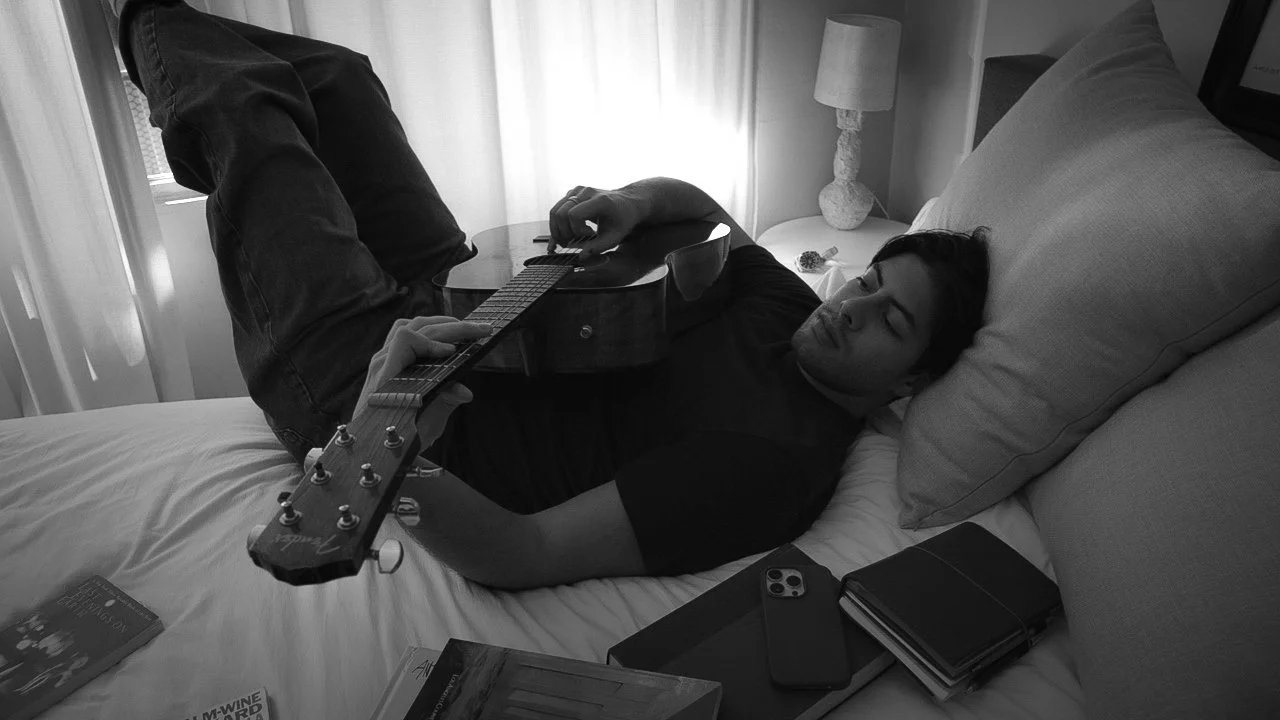
CUBAN-BOLIVIAN SINGER-SONGWRITER IAN COBIELLA—delivers a stirring meditation on resilience, vulnerability and the quiet strength found in surrender with his new single "Trial By Fire." The slow-burning track from the LA-based artist is rooted in folk rock with classical musical elements, making it feel both intimate and expansive.
"Trial By Fire" is a song born from frustration, growth and collaboration. It captures the tension between giving your all and learning to accept whatever follows. The song is ultimately a meditation on what it means to be vulnerable and brave, throwing oneself into life experiences, even if the outcome is unknown.
Long before stepping fully into songwriting, Ian Cobiella was immersed in the world of classical piano, studying composers like Sergei Rachmaninoff with the intensity of someone destined for the concert stage. That foundation, built on repetition, emotional interpretation and deep immersion, now underpins his songwriting process. Rather than abandoning his classical roots, he’s reshaped them. He channels their rigor into folk-leaning arrangements that feel raw, reflective and emotionally unguarded.
In this conversation with The Luna Collective, Ian Cobiella opens up about creative blocks, the vulnerable origins of “Trial By Fire,” the resilience forged through early live setbacks and the collaborators who helped bring the track to life. From his upbringing between Cuban and Bolivian musical traditions to the wide sonic landscape of Los Angeles, he reflects on the experiences that continue to shape his artistry, and why, above all, emotional honesty remains his guiding principle.
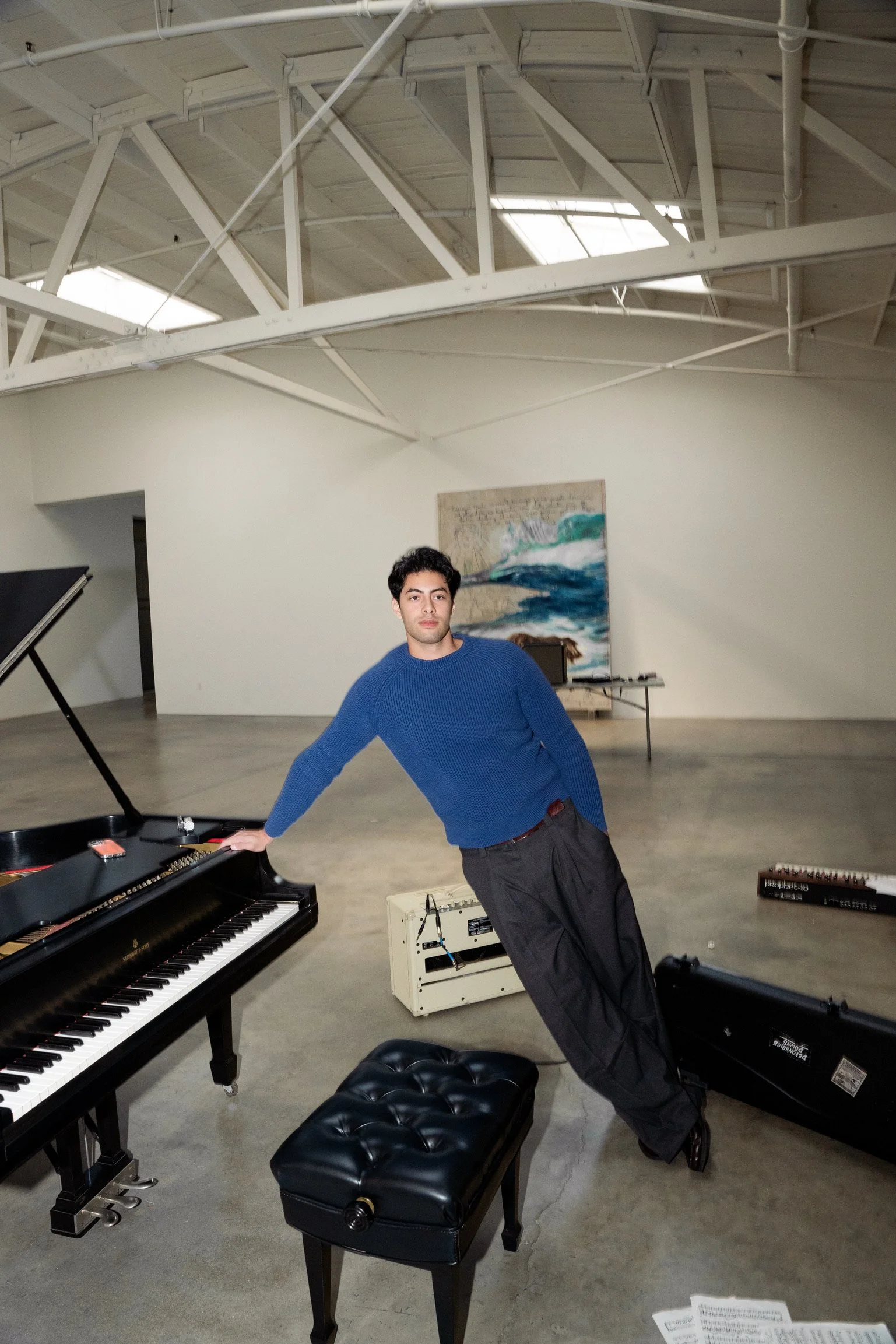
Photo by Grace Galvin
LUNA: You began with classical piano before transitioning fully into songwriting. What prompted that shift?
COBIELLA: I started out fully committed to classical piano from a young age and was dead set on becoming a concert pianist. During lockdown, I had an enormous amount of time. At 18, I was practicing constantly and reading everything I could about composers and artists I admired, especially Sergei Rachmaninoff. I taught myself bass and guitar when I was 12, but I had no idea how to write a song then. During the COVID period, I began approaching songwriting with the same discipline I learned from classical piano, and the songs I wrote then became my first work.
LUNA: How does your classical training still show up in your songwriting and production choices today?
COBIELLA: It shows up most in simply walking up to the piano every day. Whether that’s practicing or writing a song a day, repetition is what I was taught. My piano teacher really wanted me to read and understand what composers were trying to convey. She believed deeply in immersing yourself in a composer’s life in order to understand their composition. I’ve brought that philosophy into my current songwriting process.
LUNA: Your music blends folk, alternative and classical traditions. How do you balance those influences without one overpowering the others.
COBIELLA: I try to keep all of them at the core of my songwriting, but sometimes I’ll let one take the lead. If one influence overpowers the others, I think that’s okay as long as it serves the song.
LUNA: You’ve said you prefer “letting emotional honesty lead the way.” What does that look like practically when you’re writing?
COBIELLA: I can’t write what I’m not. I feel like the listener can pick up on that immediately. I can’t write something I haven’t felt or experienced. I think it would feel like a disservice to whoever is listening. That’s the best way I can describe it.
LUNA: What was the specific moment or realization that sparked “Trial By Fire”?
COBIELLA: I was going through a period where I couldn’t write anything that resonated with me. I remember coming up with the “Trial By Fire” riff alone in my room and then not touching it for a long time. I wasn’t sure how to structure the song, and the lyrics were just on a piece of paper for a while. I eventually asked Gabby to help me with another song idea we worked on for about half an hour. She asked what else I had, and I played her the riff with the lyrics and melody I’d written so far, and she helped shape it into what it is now. Then Jackson, along with Nate, further captured the feeling of the song so beautifully.
LUNA: The song explores giving your all and accepting the opposite outcome. Was there a personal experience that shaped this narrative?
COBIELLA: My second show in 2023 was a huge learning experience. I was recovering from bronchitis and we ran into a number of technical setbacks, so it didn’t go exactly as planned. But it pushed me to grow quickly as a performer and taught me resilience early on. In many ways, that night shaped how I think about giving your all even when circumstances are less than ideal.
LUNA: The video features cinematic everyday vignettes. What was the vision behind that concept?
COBIELLA: I wanted to create something reflective—something that showed the LA I grew up in and the LA I live in now. I spent my early years around Venice and Vermont Avenue, and those everyday vignettes feel deeply beautiful to me. This video is home for anyone who grew up the way I did. Everyone knows what that panadería smells like, what buying flowers on the side of the street feels like, playing soccer with friends, or eating a bowl of soup so hot you’re sweating. And I wanted to shoot it in the first studio I ever worked in. Mandie Zamora, Bryana Zamora, and Grace Galvin really helped bring that vision to life.
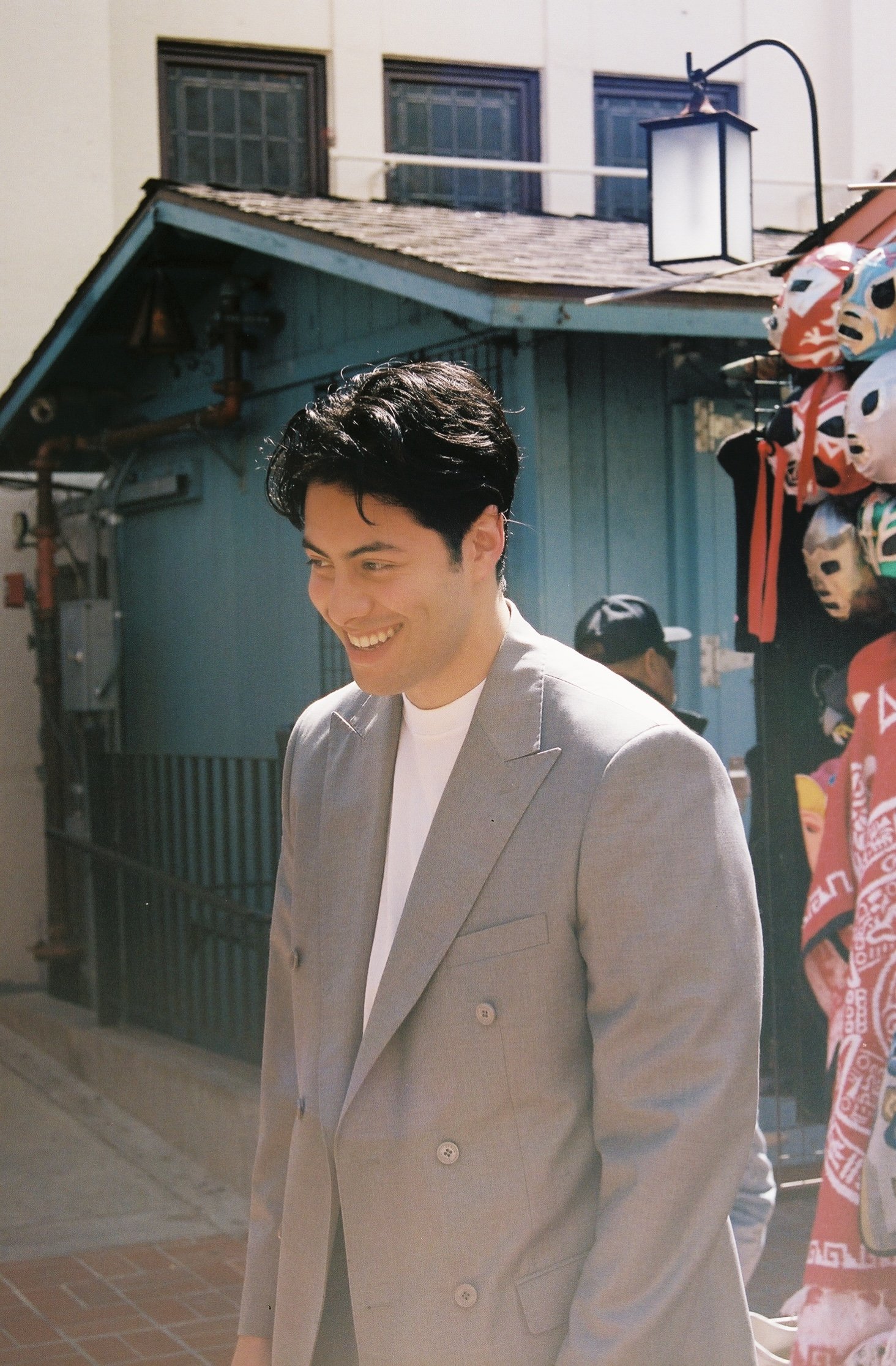
Photo by Grace Galvin
LUNA: How has your Cuban-Bolivian upbringing shaped your artistic identity?
COBIELLA: Both cultures carry such rich musical histories, and growing up between them shaped how I understand music and identity. They taught me to blend everything I am with everything I have—and to do it with real conviction. To me, that emotional intensity is at the heart of Latin American music. It’s about passion, storytelling, and not holding anything back. I just hope I’m honoring that lineage in my own way.
LUNA: How has living in Los Angeles influenced your sound and artistic direction?
COBIELLA: Growing up with Cuba and Bolivia in my house gave me a strong foundation. Living in LA helped me cast a much wider net. In a single week, I could see salsa, classical, electronic, jazz, rap, ambient and alternative shows;that exposure went a long way for me as a teenager.
LUNA: What was your collaboration process like with producer and mixer Jackson Haile?
COBIELLA: It really felt like a true group effort. Nate Van Fleet played drums and gave the song so much of its life. I first brought the idea to Gabby Neeley almost as a throwaway, and she helped shape the melody and arrangement into what it became. Jackson then helped me properly record and produce it, and ultimately mixed the track. This song genuinely wouldn’t exist without all of them.
LUNA: If listeners take one thing away from this song, what do you hope it is?
COBIELLA: I just hope they like it.
LUNA: How did you approach the production to match the emotional tone of the lyrics?
COBIELLA: Jackson and I stripped the production down as much as we could. We wanted it to feel intimate and true. Letting the lyrics lead felt like the right thing to do. Jackson mixed it beautifully, and I couldn’t be happier with how it turned out.
LUNA: You describe looking back at your past and laughing at its “ridiculousness and immutability.” How did that reflection influence the writing?
COBIELLA: Looking back at anything will always make you cringe. Nostalgia can make you happy, or it can make you think, what the hell were you doing? The lyrics came from sitting in that discomfort instead of running from it, and letting that slightly cynical, eye-opening disillusionment guide the song. That feeling doesn’t really go away, no matter how much time passes.
