
Q&A: ‘Shiverstruck’ is Ian Sweet’s Calling
INTERVIEW
INTERVIEW
☆ BY ALEAH ANTONIO ☆
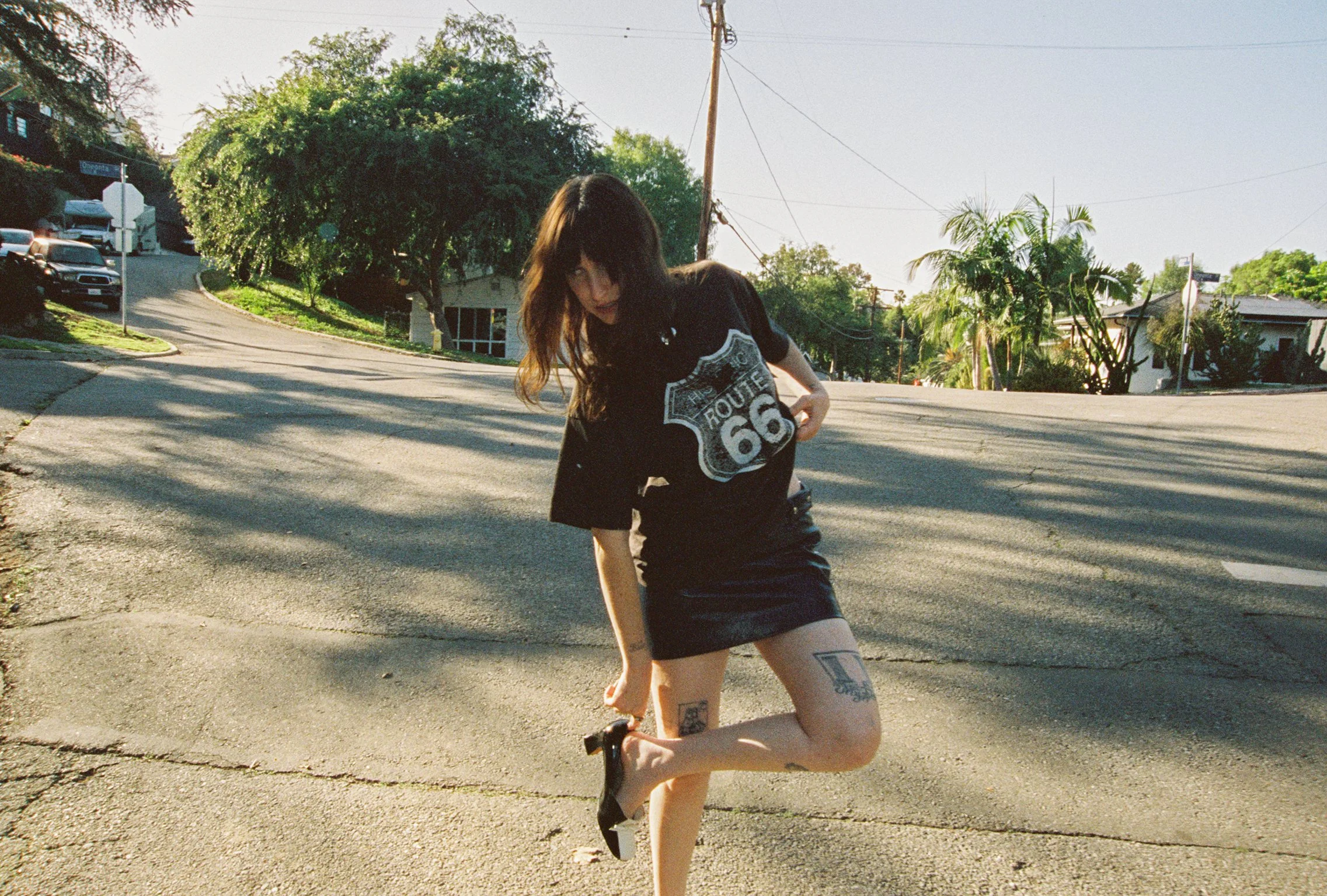
Photo by Alexa Viscius
IAN SWEET HAS FOUND, LOST, AND FOUND HERSELF AGAIN—Ian Sweet has been a band, then a solo endeavor, and is ultimately the brain child of Jilian Medford. She, a Los Angeles native and Berklee College of Music grad, has expressed herself in many iterations. In 2016, Ian Sweet was the Pitchfork-praised indie darling with her debut record Shapeshifter, then came up with its follow up Crush Crusher with a new band. That band fell apart, and after Medford had a bout of depression and a stint in an intensive therapy program, she poured out her heart on 2021’s Show Me How You Disappear.
It’s this last record that ditched her indie-rock tendencies for a wiry, cognizant pop sound. “Sword” is still one of Ian Sweet’s most streamed songs of all time. She pushed forward with this new voice; The next year, she released a handful of catchy, karaoke-worthy songs (STAR STUFF) before releasing her most recent album, SUCKER.
After all of these albums, is any one more “Ian Sweet” than the other? Do her clandestine pop shrieks overshadow her indie murmurs? Or is she still a rocker deep down? With her new album Shiverstruck, out July 24 via Polyvinyl, it’s none of the above. She’s making music that is more “Jilian Medford” than anything she’s made before. There’s even a song named after her—“Jilian”—which is out tomorrow.
While Medford has said in interviews before that she doesn’t quite resonate with Shapeshifter anymore, it’s her early career that struck her inspiration for Shiverstruck. After leaving LA for New York, then finding herself back in her hometown, her music has found its way home in a similar way. Shiverstruck is her mirror, full of affirmations, hard truths and musings about her real life.
Luna called Medford from her home in Glendale where, in between getting lovingly interrupted by her dog Blueberry, we chatted about her time in New York, an NDA she refused to sign and what makes Shiverstruck the “record of her dreams.”

Photo by Alexa Viscius
LUNA: I want to know how you’ve been since the last album release. You used to live in New York, so I’m curious when you moved to LA? And how was living in New York?
IAN SWEET: I love New York, but it was really emotionally challenging for me. It was hard to find the balance between work and surviving and making art all at once. I actually took a bunch of strange jobs, even singing to babies… while also making art and making the record.
I didn’t really start writing [Shiverstruck] until my second year living in New York. There was a chunk of time of living and doing things and experiencing that city, getting to know who I was there. I was dating someone at the time that was heavily involved in the New York world. He worked at Saturday Night Live, so it was that a lot of my time was spent being in that world with comedians and stuff. Which is really fun, but kind of exhausting and taxing. I think that this record came out of desperation to find my voice again; [to] find what I wanted to say. It takes so much time to write things you feel super confident and proud of and like you actually want to put out in the world. So this was a real labor of love. It took a long time to get it to the place that I really wanted it to.
LUNA: What made you want to move to New York in the first place?
IAN SWEET: I grew up in LA and have been here forever, and was just seeking a change. I loved New York every time I visited it. I realized that it probably is more my pace to be a place to visit rather than live, but you know, it’s so special. It’s so challenging, but it really strengthens you as a person. You’re just such a stronger human being for it.
LUNA: Was it hard for you to focus on music at first because you were moving to a new city? And you have to solidify your life there first?
IAN SWEET: Yeah. I mean, to get in the flow of everything when I first moved there, the day that I touched down we were mixing my last record. So, it was like the first year or so spent there was just focused on my last record, touring that and doing press for that. Then I took a little bit of a break to reset and get my bearings in New York. It’s definitely really hard to juggle an artistic life with working all these different jobs and just trying to survive and pay your rent, and also make time to be a functioning human being with friends.
I think there was something itching in me to start writing again. It was a bit slow moving at first, but then once I got into it, I really found a flow.
LUNA: You call Shiverstruck the “record of your dreams.” What is it about the record that makes you feel this way?
IAN SWEET: I think what was so special about it was wanting to return to, truly, what was calling me to make music in the first place. Sometimes you can hear so many outside voices and get swayed in one direction with your music. I feel like with this record, I was fully coming from the heart, the soul. I was listening to music and being influenced by so many people, but I wasn’t going to try to create something that’s not just fully grounded in who I am.
During the making of it, and even the aftermath, I just felt so proud listening to the songs. Every sound, every little tiny bit, every lyric was so, so, so specific and so chipped-away-at for so long that—not to say I’ve had regrets with past records—but I feel like I really put it all out there. It was everything that I wanted to say.
LUNA: Have you had moments in the past of your discography where something clicked as hard as Shiverstruck clicked for you?
IAN SWEET: I mean, in the moment, it all feels amazing. But I think early works, like my early records, is what this feeling feels like. [I] wasn’t trying super, super hard. I was just trying to approach it from like, “Why do I love to do this? Why am I making music in the first place?”
This is pretty deep in my career and I want to say exactly what I want to say. Not half-ass it, or put anything out that I wasn’t super proud of. It reminds me of the feeling with my first record. It just felt really authentic.
LUNA: The trajectory of your discography kind of goes in waves of different genres. Listening to your music, I’m always really in tune to the different productions on each record, but for this, I’m really focused on the lyrics. How was the writing process different for this record?
IAN SWEET: The production wasn’t as important to me on this one. I mean, it’s always important, but it wasn’t the focal point. Everything came after the lyrics. For me, the lyrics had to be so dialed in, like I was saying before, and I sometimes can get lost in production. Not to say that I don’t love what I’ve done in the past, but like overdoing a song that doesn’t need to be overdone; adding layers upon layers when it’s just not necessary.
I knew with this that being stripped back a bit more, focusing fully on the lyrics, the storytelling and also my voice… I really wanted to sing. I kept being like, I want to sing something inside of me that’s just, let’s give full voice and full volume. Not hiding behind production and come at it with confidence.
LUNA: Yeah, literally the first track. I listened to it and your voice, it goes to such a new place on specifically that song.
IAN SWEET: Yeah, that one was a little nerve wracking. My manager was like, “Open the record with that!” And I was like, “No. No, no, no. No way. No way in hell.” [Laughs] He was like, “I think you really should.” I came around to it… I was really trying to step into a place of, even if I’m feeling insecure, even if I’m questioning things, trying to push outside my comfort zone and see how that feels.
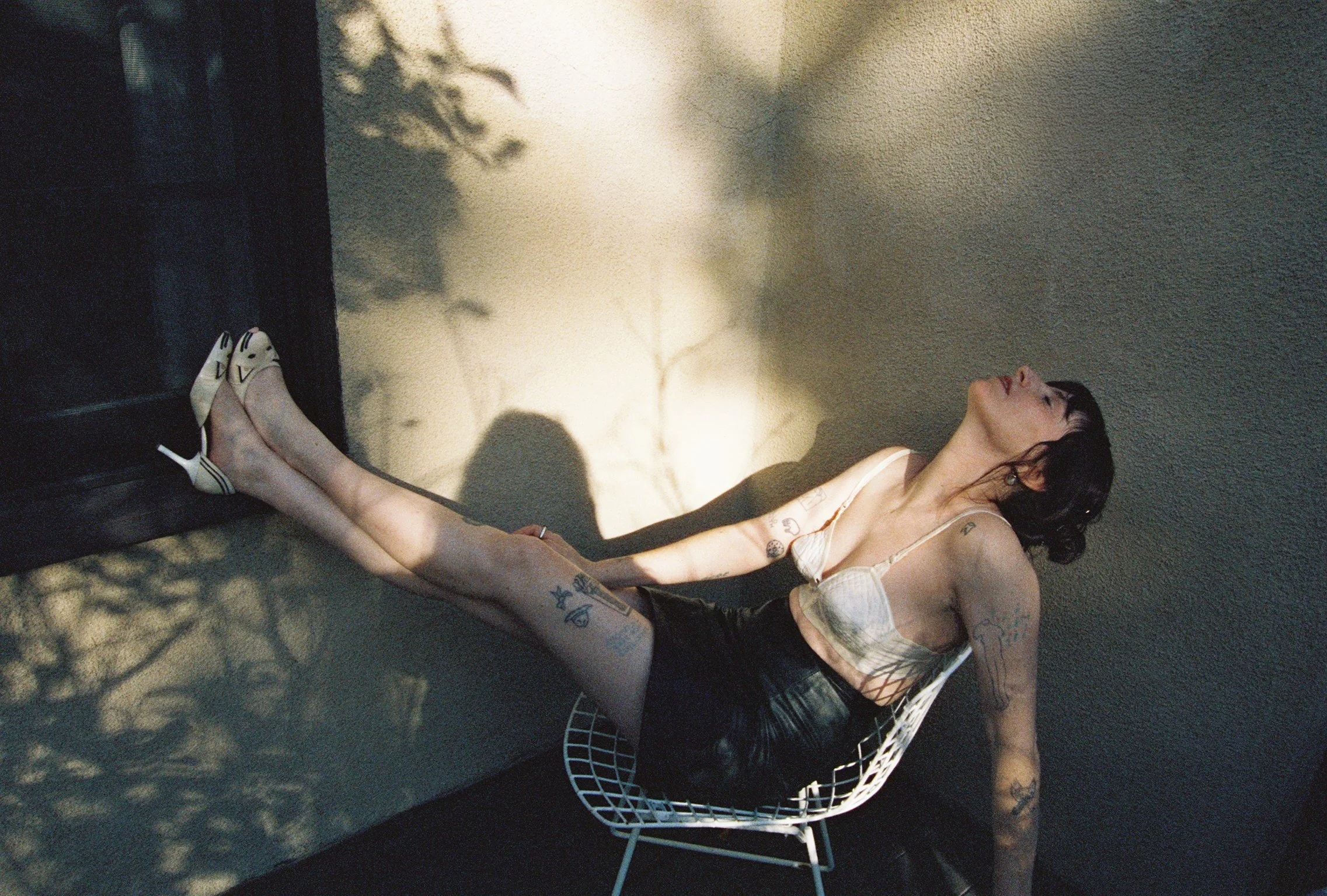
Photo by Alexa Viscius
LUNA: Do you have a personal favorite song on the record?
IAN SWEET: “Wild Heart” is a really special song for me. I remember getting pretty emotional when we were recording that one. That one’s really a testament to being in the industry and stuff. Struggling for many years but also never giving up. For me, it hits a note of like, I’ll always do this. I’ll always love doing this. This is what I feel like I’m put on Earth to do, but it does come with every kind of challenge in the world.
LUNA: Were there specific industry challenges that you were experiencing when writing the record?
IAN SWEET: I did have an experience like midway through writing the record. There was a song of mine that got used in a movie trailer without consent; Without anybody getting approval or paying us. It was a big trailer that was playing in theaters and all over the internet and stuff.
When we ended up reaching out to the [production] company, long story short, [they] were like, “She should be happy for the exposure.” It’s like, how cliche could you possibly be? Literally said those words. She should be happy for the exposure. She’s a small artist.
Then after trying to fight for what we were owed, they were like, we’ll give you this tiny amount of money—tiny—and you need to sign an NDA. It just sparked something in me. Like, how fucking by-the-book can you be? I didn’t take the money and I didn’t sign the NDA, so here we are. Because I was like, fuck you. Ew.
It just hits the nail on the head of people taking advantage of you in this industry. Not everyone, you know, there’s amazing people. But when you run into something so cliche like that… It was just a pretty icky situation.
LUNA: Something else I’ve noticed with this record is, I feel like a lot of your other songs are about things you’ve experienced, or about other people. I feel like this record is specifically self-reflective. You even have a song that is named after you. I’m curious if it’s different for you to write about life and experiences versus writing about yourself?
IAN SWEET: I mean, it’s all sort of self involved. [Laughs] The song “Jilian” specifically, that one was really easy to write, actually. I feel like it was something I really needed to say to myself. I think a lot of this record is me having a talking-to with myself… “Jilian” was interesting because it was a little bit of a shake-and-wake-up song. Like, you’re blaming the world for your problems, blaming others for what’s causing you to go slip into such a deep depressive hole. But really, it’s you, girl.
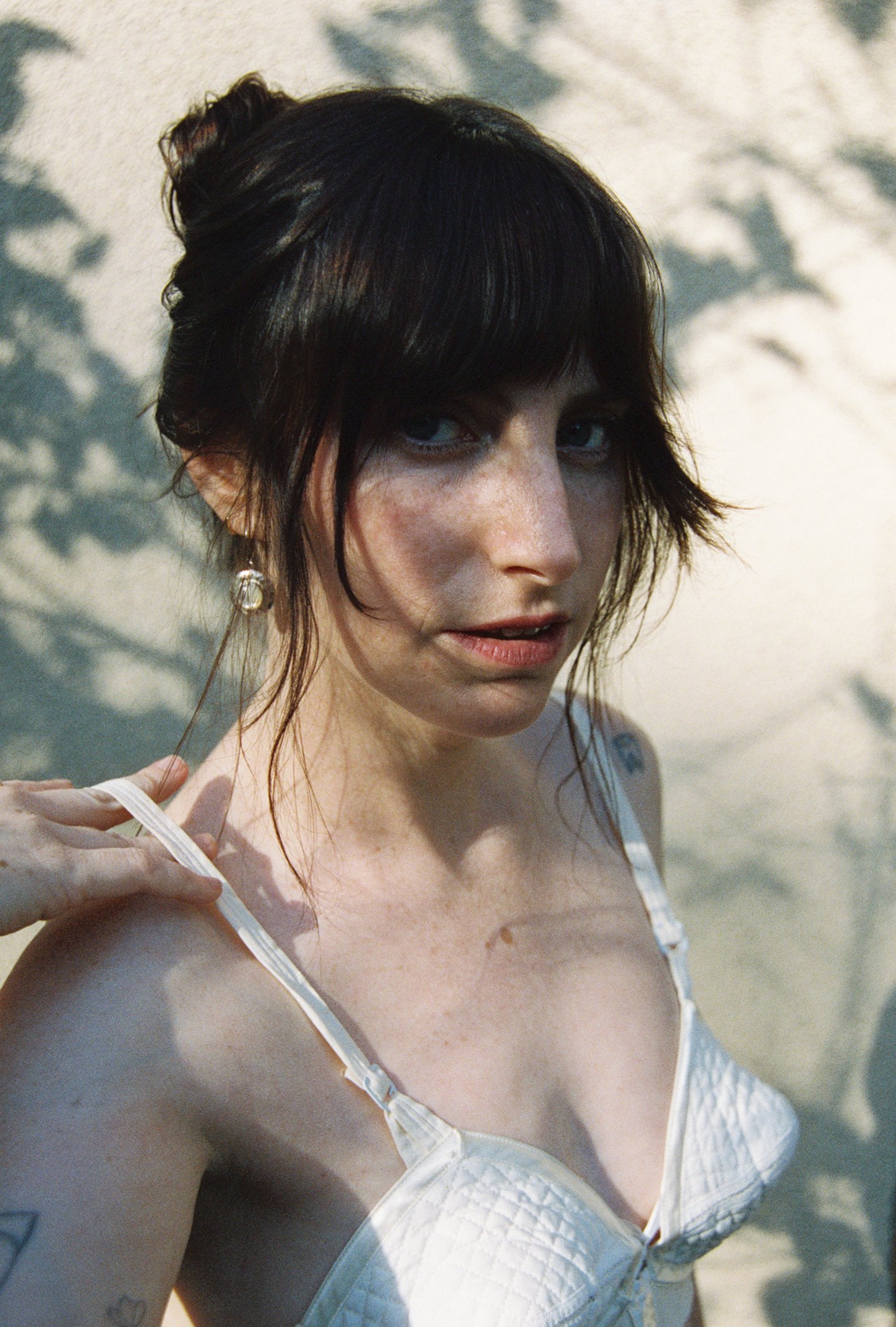
Photo by Alexa Viscius
LUNA: I feel like that realization is very coming-of-age. You realize it as you get older that you’re the main person responsible for your mental wellbeing and how you take charge of your life.
IAN SWEET: Yeah. I’ve gone through life sulking, being like, “Why me?” Or why this or that? I think as you get older, you’re just like, no one cares. Nobody cares! It’s you, and it’s only you, and you have to take charge of what you want and what you need and take care of yourself. There’s only so much that other people can do or give you.
LUNA: Did living in New York help you come to any of these realizations?
IAN SWEET: For sure. New York is a bit every man for himself out there. I felt really isolated for a while living there. My partner at the time worked a crazy, crazy job where the hours are absurd. I would spend so much time alone and have these thoughts like, why am I so alone? Why does nobody wanna hang out with me? And I just… I started doing things for myself. I just wanted to start taking care of myself in a real way… whether that’s a walk or riding a bike or whatever the thing is, that could ground me and bring me back to myself in this isolating world, I was trying to find that. And that helped with a lot of the writing too, because I was starting to connect with myself more.
LUNA: I want to talk about your record release show at Bob Baker’s. Which is… so fucking cool.
IAN SWEET: “I need one thing,” I said. Like, I don’t care about anything else. This has to happen. I’m very excited. I love them so much. I’ve just loved that place forever. And they’re like, yeah, send us the record and we’ll choreograph the songs! Like, stop! [Laughs]
LUNA: Is your show going to have the marionette puppets?
IAN SWEET: Yeah! It will have puppets. It’s all I want in life. Like, just kill me after that. I don’t care. It’s a bigger deal than playing Madison Square Garden.
