
Q&A: Jevon Unveils His Inner Truth in ‘Dark Duality’
INTERVIEW
INTERVIEW
☆ BY LAUREN AUDREY ☆
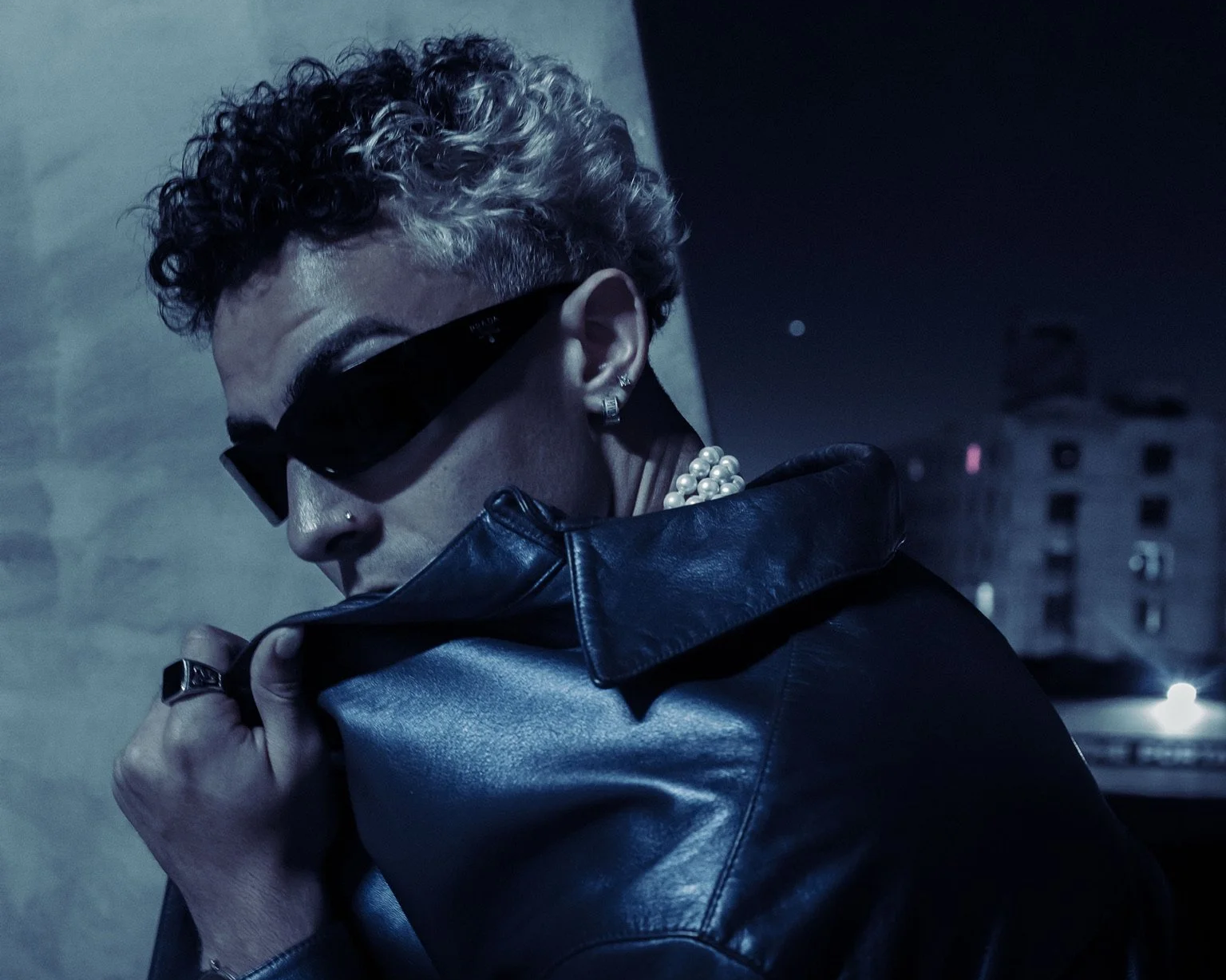
TRANSFORMING HEARTBREAK INTO A REFLECTION OF EMOTIONS WE OFTEN BURY—rising melodic hip-hop artist Jevon morphs jealousy, anger and recklessness into self-acceptance in his newest release Dark Duality. The five-track EP stemmed from the aftermath of a breakup, which resulted in a journey of confronting emotions and truths he thought he had left behind.
Hailing from Los Angeles, Jevon has found an authentic sound for himself which seamlessly blends R&B, soul and hip-hop. This fusion has resulted in an EP that’s equal parts fluid, raw and catchy. Dark Duality’s story of an ended love is deeply personal to Jevon, but also universally relatable. Every listener can find their own meaning within each track.
Jevon uses Dark Duality to push deeper into the vulnerability, darkness, hope and sound that define his current artistic journey. In this interview with Luna, Jevon takes us on a deep dive into his newest work and inspirations.
LUNA: Tell us about Dark Duality.
JEVON: Dark Duality is the embodiment of the emotions and behaviors that may be perceived as the worst parts of yourself. Jealousy, anger, sadness and all-around recklessness. During a breakup with my ex-girlfriend, who was once the most important person in the world to me, I went through all of these emotions. Specifically in the adjustment period, when she began to move on. I started seeing parts of myself that I hadn’t seen in a while, and ultimately thought I had gotten rid of. I began to feel such hate for these emotions, until I realized that the more I tried to suppress them, the more they would manifest. This is called the shadow self. I found through this project that the more I accepted the duality within myself, the more beautiful music would be created, and I would be able to be at peace with myself. Dark Duality is in us all, and this album shows the struggle of acceptance, but also the true magnificence of when you complete the process.
LUNA: Do you feel like all of the songs on this album are inspired by your own personal experiences?
JEVON: Absolutely. I had a period in my life when I first started recording music where I would get such writer's block because I was talking about things I wasn’t doing, trying to sound like everyone else. But the moment I started drawing from the rawest parts of my life, it began to flow. Every song I can pinpoint the day and time when I felt that specific emotion. Those moments inspired me beyond my own understanding, and I’m grateful for them.
LUNA: For those who may not be familiar, how would you describe your sound?
JEVON: I would describe my sound as melodic hip-hop, with a rock/alternative influence in the way that I contort my voice, as well as an ethereal mix of R&B with the harmonies that I incorporate into my style. The cadence of hip-hop, the freeness and the pain of rock and the soul of R&B.
LUNA: Dark Duality is your debut album. What’s the biggest thing you’ve learned throughout the process of creating it?
JEVON: The biggest thing that I learned was to believe in myself and my vision. There were so many times when I was in the process of writing a song where I didn’t know if it would be better than previous music that I made, but the more I stuck with the process, the more I knew that these were special in ways I would have never thought of. This album helped create a world, and it showed me that everything I have been working towards was not just in reach, but something I was going to have without a shadow of a doubt.
LUNA: What was the most challenging part of creating Dark Duality?
JEVON: The most challenging part about creating this album was having to feel the emotions that inspired a majority of the songs. I went through a lot of long nights where I couldn’t sleep, a few times where I looked in the mirror and I didn’t like what I saw. Those nights help create amazing music, and for that I’m forever grateful, but they definitely left some scars in the process.
LUNA: Are there any songs or lyrics from it that resonate with you more than the rest?
JEVON: In my song, “4Give Me” I say, “Can you forgive me for the darkest parts of myself? They taking over feel like somebody else.” This resonates with me so deeply because it sounds like a simple question, but it is one of the most loaded and vulnerable questions you can ask because for someone to answer with a “yes” truthfully, they must have an unconditional love for you. The darkest parts are coming to the surface—“can you accept me in spite of that, when I don’t even know if I can?” In a time when I was asking that question, she said “yes,” and it meant the world to me. I feel like we often hide these parts of ourselves out of fear of losing someone, but if that is a part of you, then they should accept it. If they only accept you for who they think you are, then did they ever know who you were to begin with?
LUNA: What’s the best piece of advice you’ve been given for being an artist?
JEVON: Make music for yourself. The moment you begin making it for everyone else, you will lose yourself. I believe this wholeheartedly. As I spoke about earlier, when I was first making music, I was just saying what everyone else was doing. At that time, every song was taking longer to write, and I was painting myself in a way that was a façade. The moment I began speaking from the heart, my music improved to the point where you would think they were two different artists. I felt better about showing people my music because it embodied who I am.
LUNA: What made you want to grow a career in music and how did you start?
JEVON: I began writing music when I was fourteen, but I never recorded anything out of fear of being made fun of. It was during COVID when I graduated that I bought a mic and a laptop and began trying it out. The moment I heard my voice with auto-tune, I started screaming. I was so excited and thought I sounded pretty good. From then on I started doing it on the side, while I was still chasing hoop dreams. I always thought that making music was a better lifestyle than playing basketball, but my music wasn’t at that level yet. The moment I decided that this was all I wanted to do was the day I quit playing basketball. I sat back and thought, “How could I make the biggest impact on the world?” I thought about XXXTentacion, who was my biggest inspiration. He created a world that made everyone who listened become a better version of themselves. I wanted to do that, and I will continue to do that forever.
