
Q&A: Julez and the Rollerz Reclaim Rock Mythology on ‘Dirty Little Rock ‘N’ Roller’
INTERVIEW
INTERVIEW
☆ BY KIMBERLY KAPELA ☆
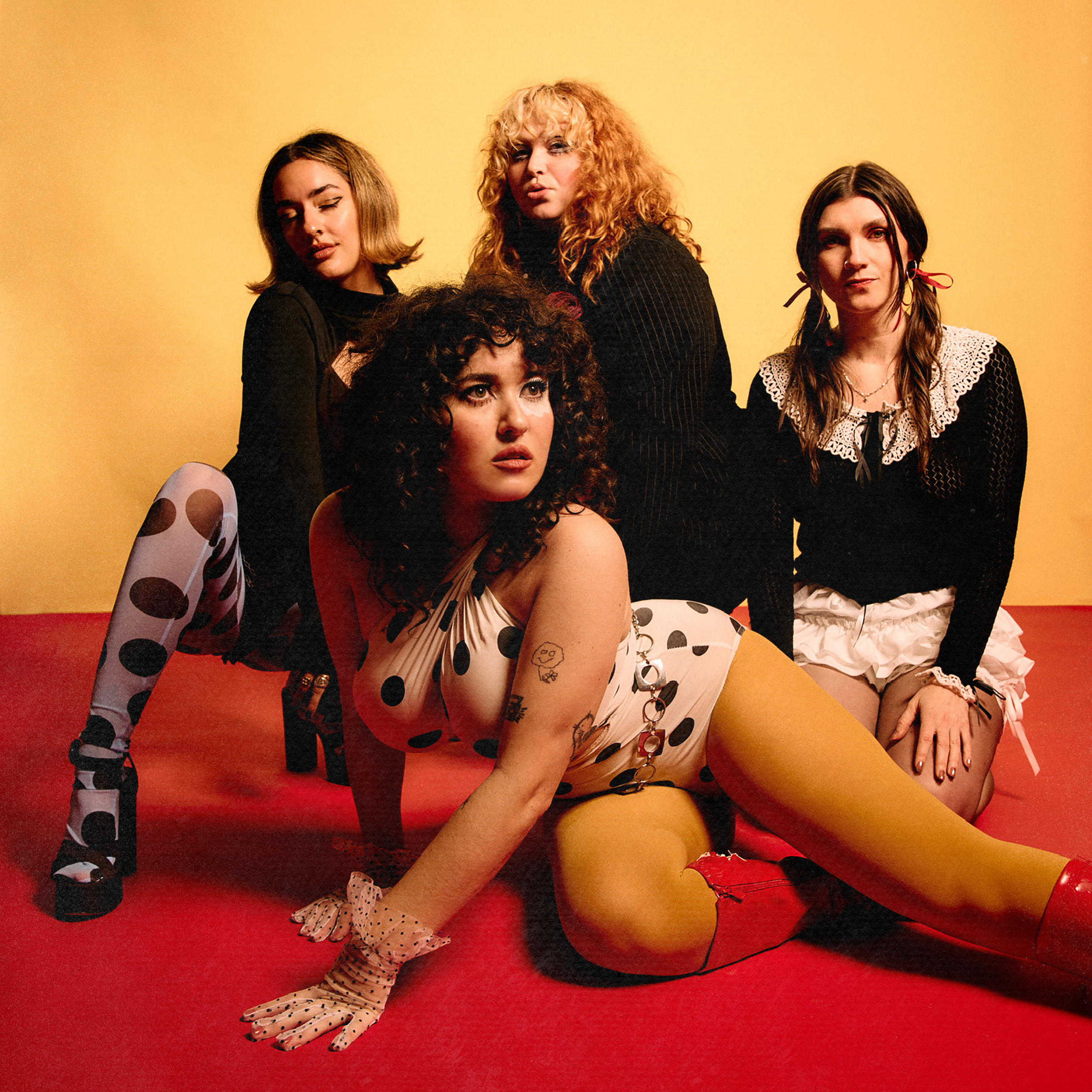
ROCK N’ ROLL WITHOUT THE ILLUSION — Julez and the Rollerz’s debut album Dirty Little Rock ‘N’ Roller, out June 26, focuses on what happens after the momentum slows. Across the record, the band confronts growing out of certain relationships, identity and the gradual shifts that come with growing older. It’s less concerned with the mythology of rock music and more interested in what remains once that mythology starts to wear thin.
The album’s title reflects that tension. Taken from the track “Hot Take,” “Dirty Little Rock ‘N’ Roller” began as a critique of the self-mythologizing that still defines parts of the LA rock scene — musicians performing a version of 1970s excess rather than living in the present. By naming the album after the phrase, the band reframes it. What starts as satire becomes self-awareness.
Produced, engineered and mixed by Alex Newport at Tiny Creatures Studio in Yucca Valley, California, the album captures the band live with a careful balance of raw performance and thoughtful layering.
The album’s latest single, “I Don’t Know You,” was written in the wake of vocalist and guitarist Jules Batterman turning 30, reflecting on the distance between past and present selves. Batterman writes openly about losing touch with people, with past versions of herself, and with any fixed idea of what her life should look like.
“Turning 30 made me confront the fact that I’ve outgrown parts of myself,” Batterman says. “‘I Don’t Know You’ started as a song about looking back at my younger self and thinking, ‘Who is she?’ But it naturally became more than just ‘that’. It’s also about how time reshapes everything. Sometimes you lose significant people in your life; whether it be friends, past lovers, family members…. sometimes you lose who you once were. We are forever changing, as are the people around us, and while scary, it’s also beautiful to think about. I’m now 31, married, still unsure of what I want out of life, and I’m hoping my past self is still proud of the path I’m on now.”
That perspective extends beyond genre and into the album’s broader themes of growth and change. As Batterman says to Luna, “I want women to feel empowered, to have big voices, own the stage, join a band with other women, because I think it’s very rewarding. Don’t be afraid of growing into yourself and change, because a lot of the topics in this album definitely touch on time and changing who we are and relationships and all that. I hope that other women or young girls can resonate with those themes to take with them.”
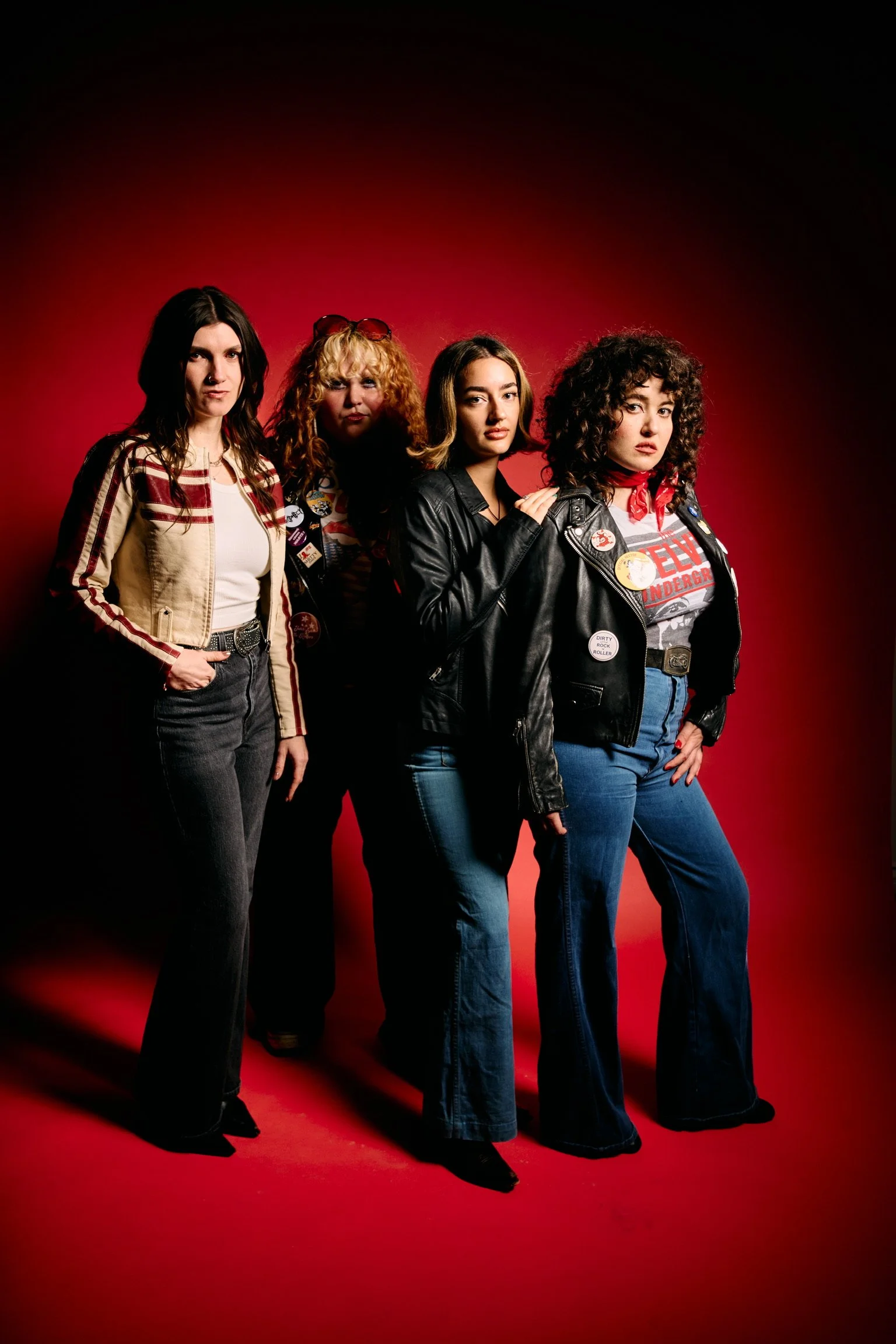
Zach Adams
LUNA: Thank you for talking to Luna. Our readers would love to get to know you and your music more. For any readers who aren’t familiar with you yet, what inspires your artistic style and sound?
JULIA: Music-wise, I would say I'm very inspired by The Pretenders’ Chrissie Hynde a lot. I know our bassist is inspired a lot by Suzi Quatro being a woman bassist in the field of rock. Also for the album, we’re very inspired by bands in our local scene in LA. I would say there's just so many people that I really look up to and respect.
LUNA: Your newest single “I Don’t Know You” reflects on disconnecting from your past self. What feelings or emotions sparked the song to come to its fruition?
JULIA: Last year, I turned 30, and I got engaged at the same time, and also got married that same year, and we were writing an album. I was just in my shower, and I started humming this tune that was the chorus to, “I Don't Know You.” I raised my voice so that my almost husband could hear me. I was like, grab my phone so I could record this. He ran into the shower and I recorded my audio messages so I didn't forget. I happened to be going through a very transformative time during that time with everything, with all of that. My parents were also turning 60, so I was feeling very existential. I decided to write this song to reflect that and deal with those emotions. I would say, just turning 30, parents turning 60, these milestones, getting engaged, getting married, having falling outs with people in my life and all that.
LUNA: “I Don’t Know You” is accompanied by a music video. What did you set out to capture and how was your experience filming it?
JULIA: It was wonderful. We can't recommend this team enough. It started off with this girl who came to our shows years ago, and she reached out about making a music video. We were looking to make a music video for the song. I remember she reached out and I found her in our DMs and she was still so down and she really delivered. I just thought we were going to do a DIY music video. But no, she and her huge team, really just did everything. It is one of our favorite music videos to date that we've ever done. They really captured what I was trying to say in the song, just nostalgia and feeling young and looking up to your older self and things like that. I really love the way they captured that. I would love to work with them again.
LUNA:Dirty Little Rock ‘N’ Roller is your debut record is releasing soon and a huge congratulations is in order! The title Dirty Little Rock ‘N’ Roller started as satire but became something reclaimed — what made you want to fully own that phrase?
JULIA: It was actually our drummer who didn't technically record on our album, but she kept pitching that as the album title. She was like, ‘what about Dirty Little Rock N’ Roller?’ I was like, ‘I don't know. I think it's kind of corny. I don't love it.’ But we were also looking to use album titles that would have the word ‘dirty’ in it. We were pitching different things, and they just weren't working. It just wasn't hitting. Then collectively, we decided on Dirty Little Rock N’ Roller, because it just is the album. It's a lyric in one of the songs, “Hot Take.” It's a very theatrical album in rock. I think it just umbrellas that pretty well.
LUNA: Do you have a personal favorite song on Dirty Little Rock ‘N’ Roller — one that feels closest to your heart or most revealing of who Julez and the Rollers are right now?
JULIA: We all have different favorites on the album. I know that Spark loves “I Don't Know You” the most, and I think that also is one of my favorites. Shay likes the one we're releasing next, called “I Need Love.” I'm sure that Morgan’s favorites are “Hot Take” and “Phaser.” I want to go with, “Always Hard For You,” which is not going to be released as a single, because I wrote that at a very emotional time in my life and I just love performing it, and since we're not releasing it as a single, it's not getting the same love that the other ones are. I want to give that one a shout out.
LUNA: Working with producer Alex Newport, you captured much of the album live. What did that approach allow you to express that a more polished process might not have?
JULIA: Some of it was live, some of it was more polished, because we all work differently. He made sure that it didn't sound too studio, and he always wanted us to add a little more energy to it which I think paid off. I was trying to make it sound more generic. But he was like, no, give us who you are and more motion. I was just afraid of it being too theatrical, which sometimes it did get a little too theatrical. He just really wanted to keep all of those little mistakes in so it sounded human, especially in an age of AI music, it's especially important, and a lot of producers and engineers are becoming less valuable to a lot of people with these tools, which I think is a real shame, because it's more fun to work with other human beings. The live aspect just gives it that little human touch. It was definitely hard, because you have to do a bunch of takes to make sure you get it right, but thankfully, he gave us some leeway, and we were able to do some overdubs.
LUNA: How do you hope listeners — especially your femme audience — can connect with or find power in this new era of music from you? What emotions or messages do you want to leave with them?
JULIA: I just want more women in rock n’ roll in general. Literally no hate to our male fans, we seem to have a lot of them, because they all are really tied to that idea of old school rock, which isn't entirely what we are. I want women to feel empowered, to have big voices, own the stage, join a band with other women, because I think it's very rewarding. Don’t be afraid of growing into yourself and change, because a lot of the topics in this album definitely touch on time and changing who we are and relationships and and all that. I hope that other women or young girls can resonate with those themes to take with them.
LUNA: What is fueling your fire right now that’s pushing you into this new chapter in your career?
JULIA: Since it's our first real debut album, I've been very excited about having this body of work to show to people, finally, because we had an EP, and that was fine, but this is an album. This is important to me. Now that I'm in my thirties, it feels and I don't want being in my thirties to be my identity as a musician, but it definitely gave me a new perspective of these things roll out, especially as a woman in this industry, because it seems like most women are latched on to at a very early age in order to make it. I know bands like Blondie and those bands were able to make it past their thirties, but it's an anomaly sometimes. I've just been waiting for too long for the band that I have now, now that I feel like I have that band, I just want to really utilize all of us and all of the traction and everything that we are getting, so that's kind of fueling my fire
LUNA: How are you feeling in this current era of your career and what does the rest of the year look like that you would like to share with Luna?
JULIA: Feeling excited. I'm going on my honeymoon in a month, so that's exciting. I'm also nervous and stressed. I hope people enjoy the album. I hope people listen to it. I've definitely poured a lot into this financially, energetically and emotionally. Hopefully, going on tour in September on the East Coast, but that's not confirmed yet, and hopefully more shows, a release show in June.
Zach Adams
