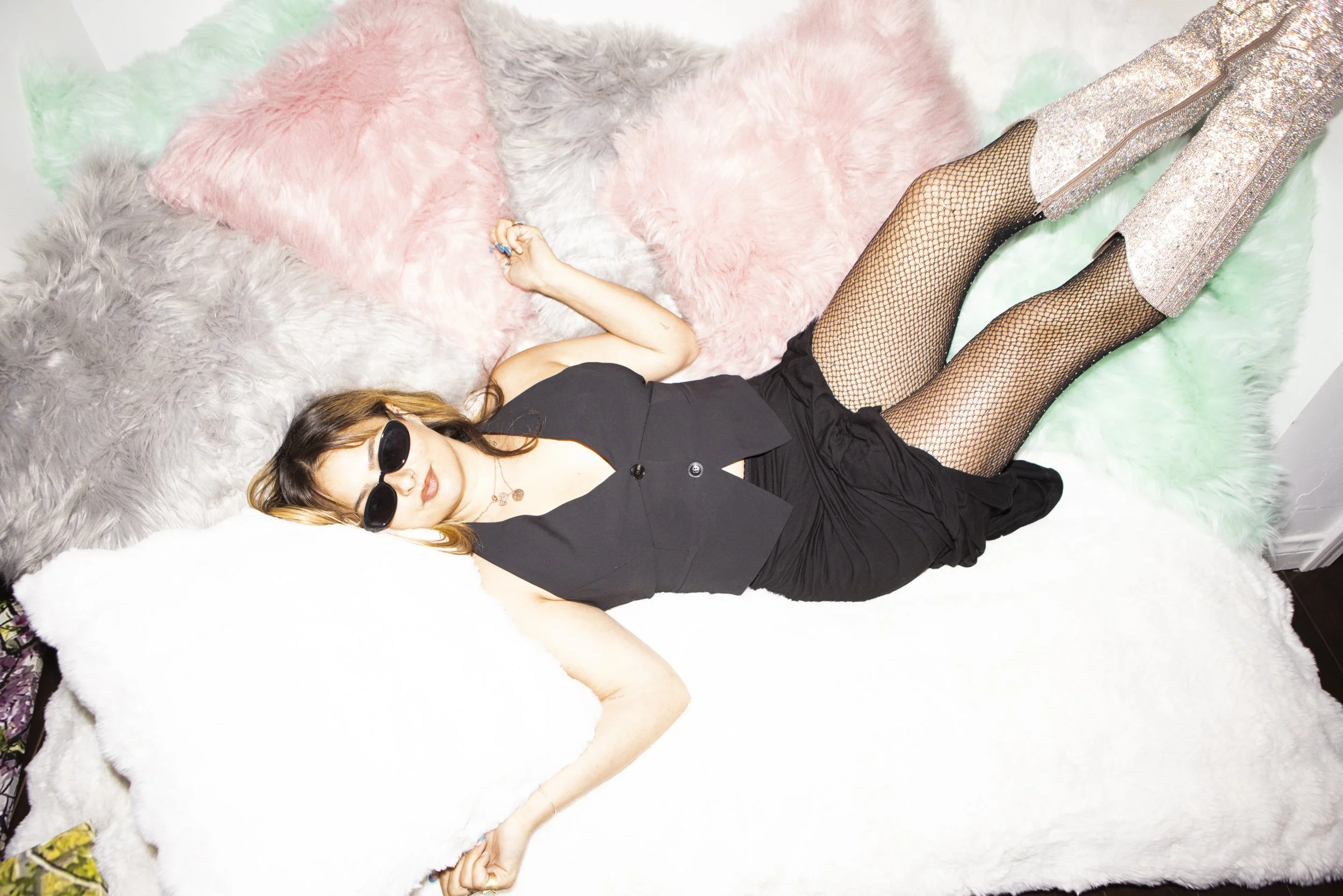
Q&A: Kate Grahn Reclaims Her Narrative on “Scot Free”
INTERVIEW
INTERVIEW
☆ BY KIMBERLY KAPELA ☆
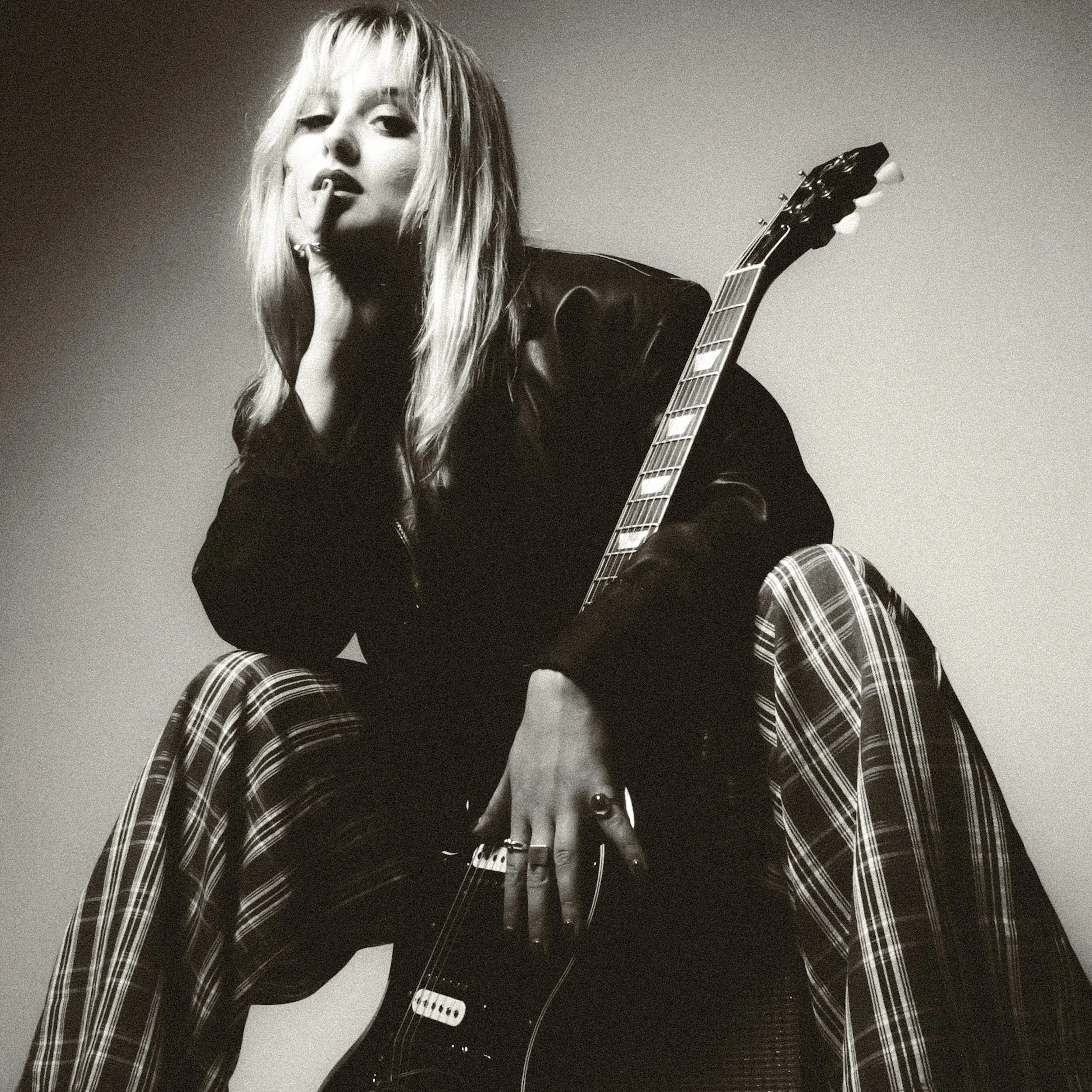
BREAKING THE SILENT CYCLE — Singer-songwriter Kate Grahn is reclaiming her truth. On her latest single “Scot Free,” Grahn transforms personal betrayal into something louder, sharper, and ultimately liberating: a pop-rock anthem that refuses to let silence have the final word.
There’s a quiet tension in its introspective verses, as if Grahn is carefully tracing the outline of a wound before deciding how to confront it. As “Scot Free” unfolds, it erupts into a storm of distorted guitars, thunderous percussion, and soaring vocals that mirrors the emotional arc of the song’s core.
“Scot Free” is about narrative ownership and autonomy. Grahn describes the song as a response to betrayal compounded by denial, an experience made even more disorienting when someone refuses accountability. Rather than allowing her story to be rewritten, she pushes back with clarity and force.
“Even when others try to rewrite history, I hold onto my truth,” she explains, positioning songwriting not just as expression, but as reclamation.
“Writing the song made me feel really powerful,” Grahn reveals to Luna. “I got to take my power back at that moment… I also think that with women, and with people who experience situations like that, it always feels like you're comparing it to something that someone else went through that's worse, and then you don't feel like you can have your grievances or even realize and understand that what happened to you was still not okay.”
Writing the song became an act of reclamation. For Grahn, it wasn’t about whether the person responsible would ever hear it or face consequences, it was about restoring something within herself. “I took care of myself,” she says, reframing healing as something self-defined.
She also taps into a broader, often unspoken truth about how people process harm, particularly women. There’s a tendency to measure pain against someone else’s, to downplay personal experiences because they don’t seem “as bad” in comparison to more overt or widely acknowledged forms of violence. Grahn challenges that instinct directly.
“This song is about reclaiming my narrative after experiencing betrayal and denial from someone who refused accountability,” Grahn says. “Even when others try to rewrite history, I hold onto my truth. Songwriting is where I transform pain into power and prove that our voices matter. It is where I eviscerate the lie that women will stay quiet.”
“Scot Free” is about being heard, unapologetically, at full volume.
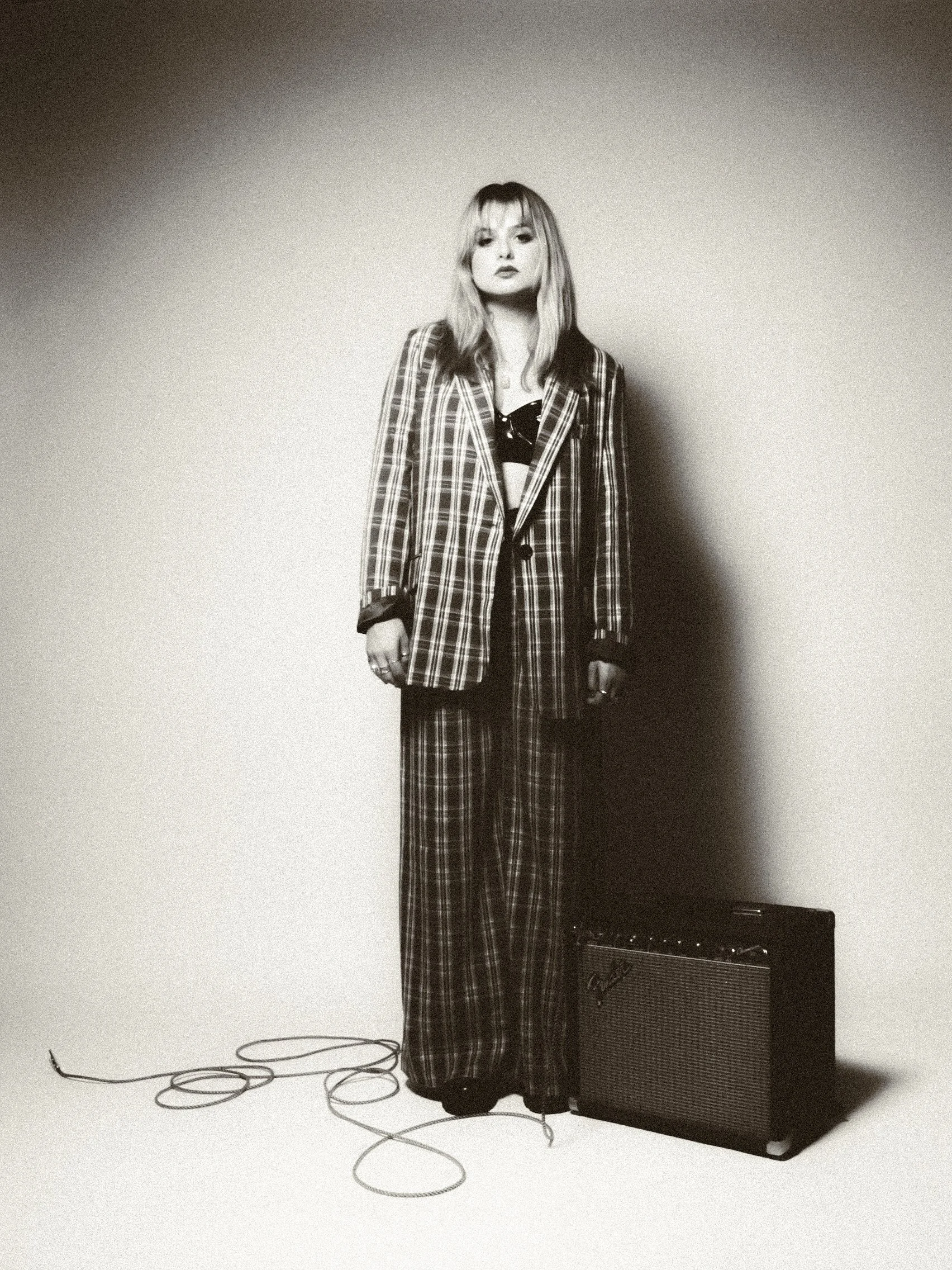
LUNA: Thank you for talking to Luna. Our readers would love to get to know you and your music more. For any readers who aren’t familiar with you yet, what inspires your artistic style and sound?
KATE: I grew up as a theater kid, but when I was in middle school, I was introduced to rock music. I feel like that combination is still deeply rooted in my music, of being a theater kid who was just incredibly inspired by Alanis Morissette, Grace Potter, Haley Williams, Pat Benatar, Janis Joplin, the Heart sisters and Zeppelin. My little bio on my Instagram is if the cast of Rent sang Led Zeppelin, so I feel like that's a good little example of what inspired me to pursue music on this platform.
LUNA: Did you listen to the new Hayley Williams’ record?
KATE: I did listen to it. I think it's amazing. I have to see when and where she's playing. I haven't done that. As someone who performs live, that's like my bread and butter. I need to go to more shows so I've yet to see her live, but I would absolutely love to and I will.
LUNA: You just released your newest single “Scot Free.” Can you walk us through the emotional starting point of the song? What inspired its themes and emotions?
KATE: It definitely derived from a very personal space. It's funny, because when I write music, I'm writing about personal experiences, and especially the things that are incredibly hard to digest are things that I have to write and work through, and then when I release it, I almost forget that the public is going to be listening to my very, very personal thoughts. I just have always accepted that, because I've always been someone that's worn my heart on my sleeve. Like I said, I'm a theater kid, I'll meet someone, and then immediately go, ‘hey, here's everything about me and the last time I cried.’ I tell them everything that they didn't need to know. So that's just a preface that when I write music that's very vulnerable and personal to me, I go about it in a way where I hope that this is helping maybe just one person or someone is hearing this and feeling a little less alone, or that someone else is advocating for them, if they don't feel like they're in the place in their life where they can speak up.
For this particular song, it was definitely about someone who took advantage of a moment in a very intimate moment, and when I realized what had happened and confronted them about it, they denied it and made me feel small and gaslit me and my friends even having to go, ‘hey, actually, this is what happened to you.’ Just because it wasn't as obvious as maybe other violent violations, this is still fucked up and it made me feel very weak. I think writing the song made me feel really powerful, so I really liked that. I got to take my power back at that moment. It doesn't matter if the song is about knowing if that person ever hears it has any consequences towards them, because I'm all good. I took care of myself.
I also think that with women, with people who experience situations like that, it always feels like you're comparing it to something that someone else went through that's worse, and then you don't feel like you can have your grievances or even realize and understand that what happened to you was still not okay. Just because it wasn't as bad as something that was maybe more black and white of a scenario. I think the reality is, it just is irrelevant whether it was not as bad as someone else's circumstance, it's still bad.
LUNA: Why do you love this song? Is there like a specific lyric or message that stands out to you? What excites you the most about the song?
KATE: I think musically, I really like the arc that it takes. The story disguises itself as small in the beginning. It's even a little tongue-in-cheek, because there's that lyric that goes, “I want you dead, just kidding, unless.” It seems like a very out of place lyric for the topic, but I like to keep things light. Comedy is my comfort because I listen to “Friends” every night before I go to sleep, because it's like being in a room listening to my parasocial relationships. I really like the arc that the song goes through, of here's what happened and this is really sad, and this is hard for me and then when you get to the bridge, it gets angry, because when you're telling this story or when you're telling any sort of story that was a difficult event for someone to go through, it's really easy to use dark comedy. At the bridge, it goes, wait, you did this and you did that and you suck.
I'm a very big proponent of sticking it to the man. I've always been loud. I've always been disruptive. I think that's what is powerful about this song is it's telling a story, and then it takes a 180 and goes, here's the story. Also this is why this is really, really fucked up, and then it's coming back and going, even though it was fucked up, I'm able to process this and make sure that I'm okay and I'm healthy. If you never learn your lesson, it’s not my issue.
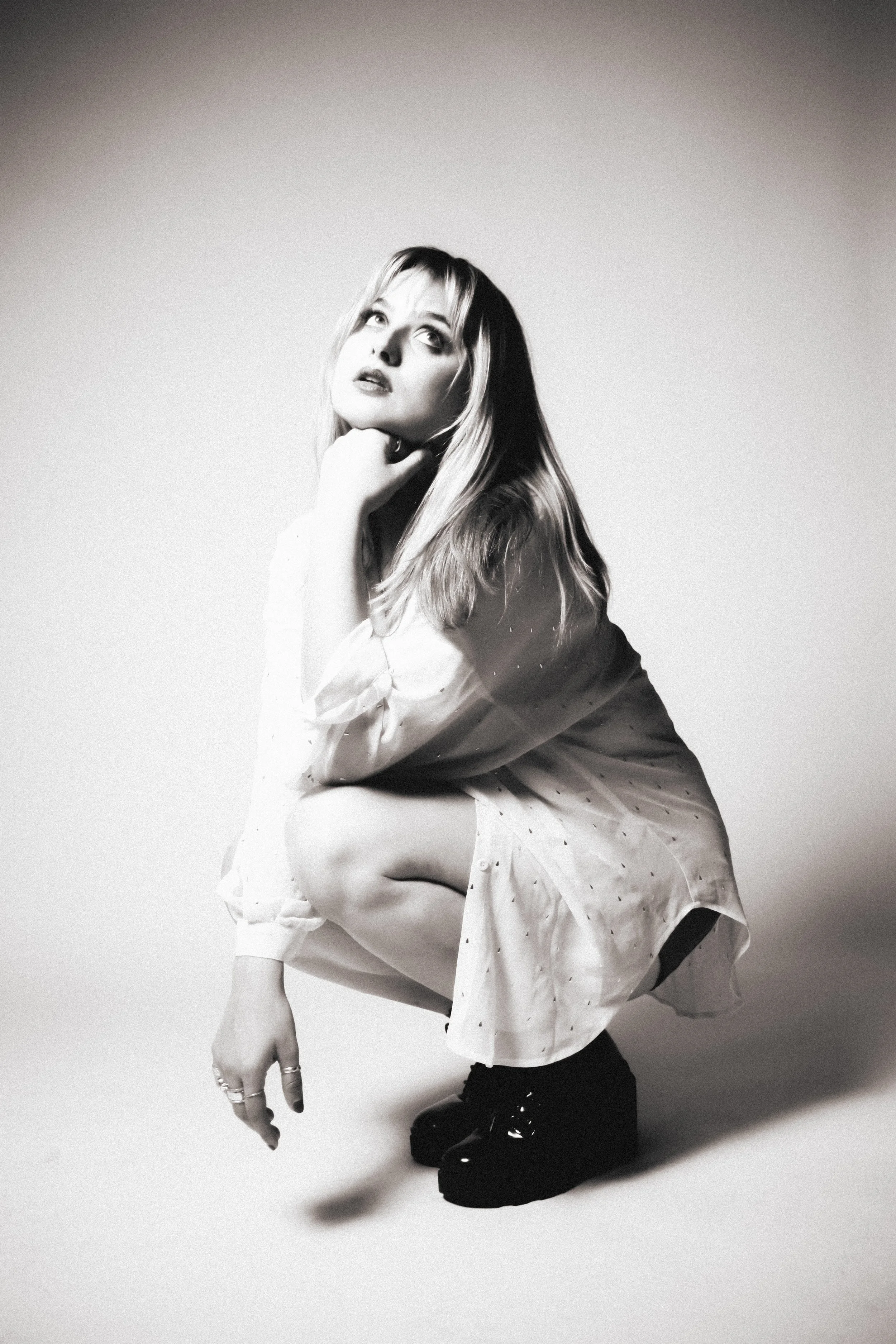
LUNA: I would love to touch more on the creative process behind “Scot Free.” How did the song evolve from its initial idea to the final version?
KATE: I typically write on guitar, but I actually started writing this song on piano. I wrote the pre-chorus on piano, and that's what I was going to do to make the chorus harmonically and melodically. I went into a session with a couple of friends of mine, Cali Rodi and Joel Ferber, who are so talented. I've worked with them in the past, so it was already a very comfortable environment. I was at first set on what I had, what is now the pre-chorus, to be the chorus, and Cali was advocating for that to be the pre-chorus and have a different melody for the chorus, because she was thinking it could be stronger. I was so game for it, and we came up with what is now the chorus, and I'm so glad that we did, because I think it's a way stronger chorus than the pre-chorus.
I've been talking a lot about AI recently with friends, and I kept thinking about just what it's like in sessions, and what it's like to have that momentary struggle of this isn't working, this melody isn't working. How do we fix it? I love that struggle. I think that's what makes it human? AI can't struggle and grapple with those differences of opinions, but when good writers don't have egos, you're able to create something collaborative that I think can be very special. That's what makes a session and a collaboration so special. I love collaborating. I would much rather collaborate with people than sit in my room and write alone. Because, while I have done that and I like that for some purposes, for the exact reason of this song, I wouldn't have thought to do a different melody for a chorus. That's what's so beautiful about having multiple brains in one room. We wrote it relatively quickly and then I think I recorded a demo, and then came back to re-record some vocals.
LUNA: How do you hope listeners — especially your femme audience — can connect with or find power in this new era of music from you? What emotions or messages do you want to leave with them?
KATE: Obviously the the underlying message of the song is that if it's not about being violated in intimate setting, you can take it as being taken advantage of in different ways and and that's what I like about music, too, is the different interpretations people can take that and use that in their own life to help them cope with what they're going through. This is obviously something that a lot of women go through.
Right now in this world, it is very, very hard to see how things can be fair and just because that just isn't what I'm seeing with ICE, with having an administration that is hurting women and children and not getting any consequences for it and that is on a huge stage and a huge platform of of not getting consequences for your actions. This one is definitely, obviously a personal experience, so it's smaller on a scale of the world versus my life, and still, even on this small scale, the person didn't face consequences. I never want women to let that minimize themselves in their life. I want them to continue to be brave and powerful and speak up and just take their power back in whatever way that they can. Because if you let someone dim your light, then you're only letting them win.
LUNA: What is the best environment to listen to your music in?
KATE: I get the most positive feedback from people when they see me live. I do have a show May 15 at the Viper Room that listeners definitely should go see but I think I always envision myself. If I've been pissed off or something, and I get in my car, and then I just scream, sing along to a song. I feel like that’s the perfect environment. Drive safely, but angry tears.
LUNA: What is fueling your fire right now that’s pushing you into this new chapter in your career?
KATE: The next song that I have coming out is a song that is very political and regarding social justice. Like I said, my mom has always been loud and and has always had something to say, and I think that she passed that down to me, and I think that it's a huge part of me as a human but also my music, because I'm a believer that art and creativity, that is a platform for you to talk about things that matter. Art is political. I know that that can be controversial, because some people feel like art is a place where people can escape that. That may be true if the world wasn't gearing towards fascism, but I just have a hard time digesting that narrative, so that's what fuels me. I'm tired of feeling angry and scared, but I'm hoping that creating music that lights and sparks a fire under people to create positive change and inspire some hope. That's what gets me going, and I really hope that the music that I create does that for other people in other fields.
LUNA: How are you feeling in this current era of your career and what does the rest of the year look like that you would like to share with Luna?
KATE: Being a completely independent artist is very difficult. I've been doing this since I was 13. I went to school for it, so I feel like professionally, I've been doing it since 2020 but I graduated right into the pandemic. It would be a lie to say that I'm feeling amazing, because it's hard to feel amazing because of all the things that I already talked about in terms of the world, but I also know that where I am in my life, living in LA and being in an apartment and having my family and my friends is a gift. I know that I am incredibly lucky to pursue my dream and have a mom that encourages me to pursue that dream, so having that perspective, I feel really good and really hopeful, but it is hard sometimes not to just be scared and angry about the world. Pursuing this dream is so incredibly difficult, but I want it so much and I'm willing to do the work.