
INTERVIEW
INTERVIEW
☆ BY DANIELLE HOLIAN ☆
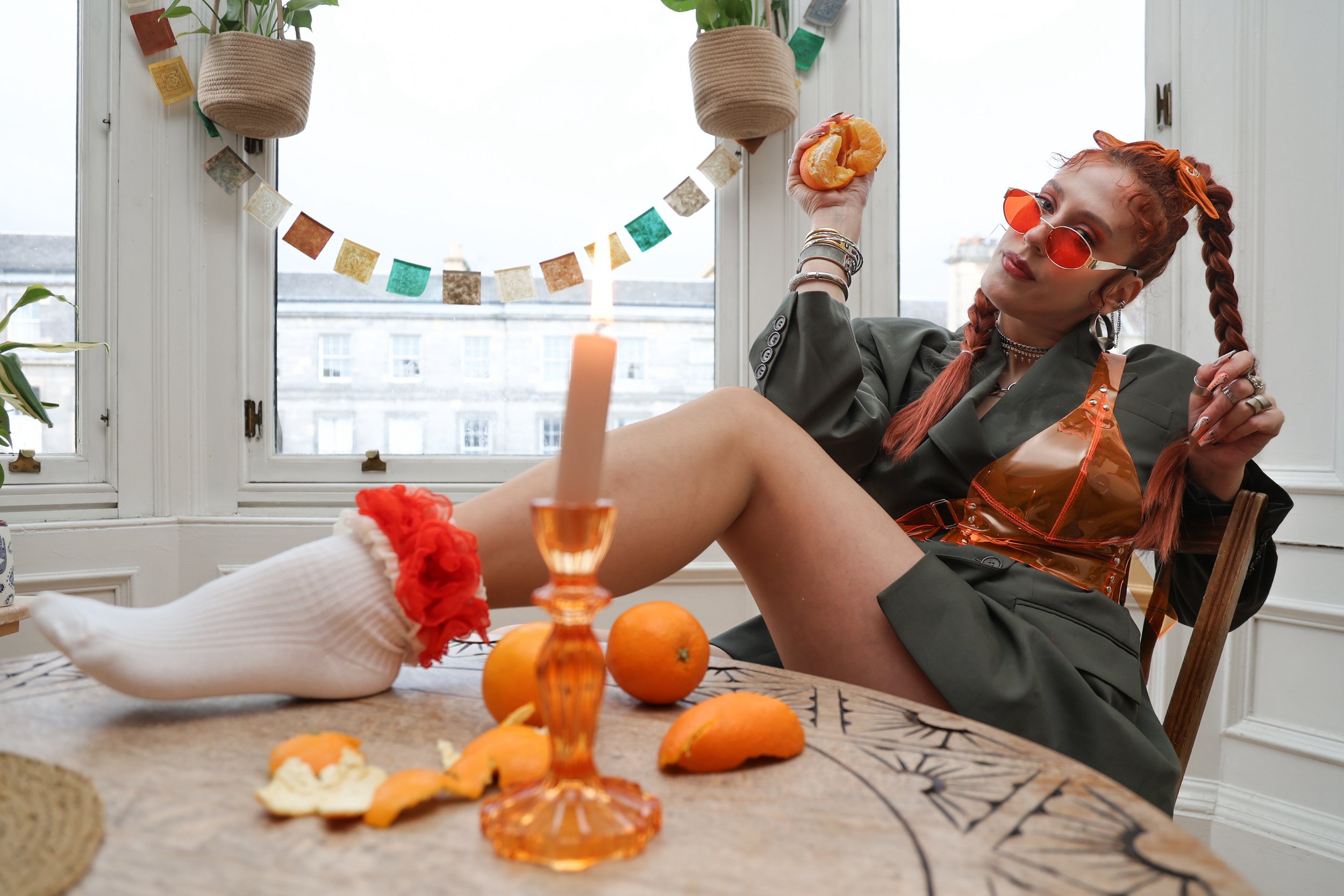
Photo by Charli Morachnick
ALT-POP SONGSTRESS KATHERINE ALY HAS BUILT A WORLD ENTIRELY HER OWN—where striking visuals, fearless storytelling and genre-defying sounds collide. Defined by her signature orange aesthetic and an instinct for pushing creative boundaries, her artistry is as vivid and unapologetic as the stories she tells, inviting listeners into a universe where vulnerability meets defiance.
The London and Edinburgh-based artist’s latest release, 222.2, moves between electronic pop and hyperpop, weaving Katherine’s instantly recognizable, commercially minded songwriting into a kaleidoscope of vibrant, shape-shifting production. Bound by the deliberately restrictive 2:22 format, each track feels like a fleeting confession, urgent and unfiltered, leaving no room for anything but the essential. Across four tracks, Katherine unpicks the tangled threads of power, desire and the quiet violence woven into modern love. She chooses self-worth over the slow ache of avoidant affection, calls out romantic games with razor-sharp clarity, dismantles the fantasy of purity built to serve another’s ego and confronts the ways women are objectified and erased beneath love’s deceptive promise.
In the days following the EP’s release, Luna caught up with Katherine Aly to discuss the making of 222.2, the contradictions of modern relationships and the art of turning confrontation into a reclamation of power.
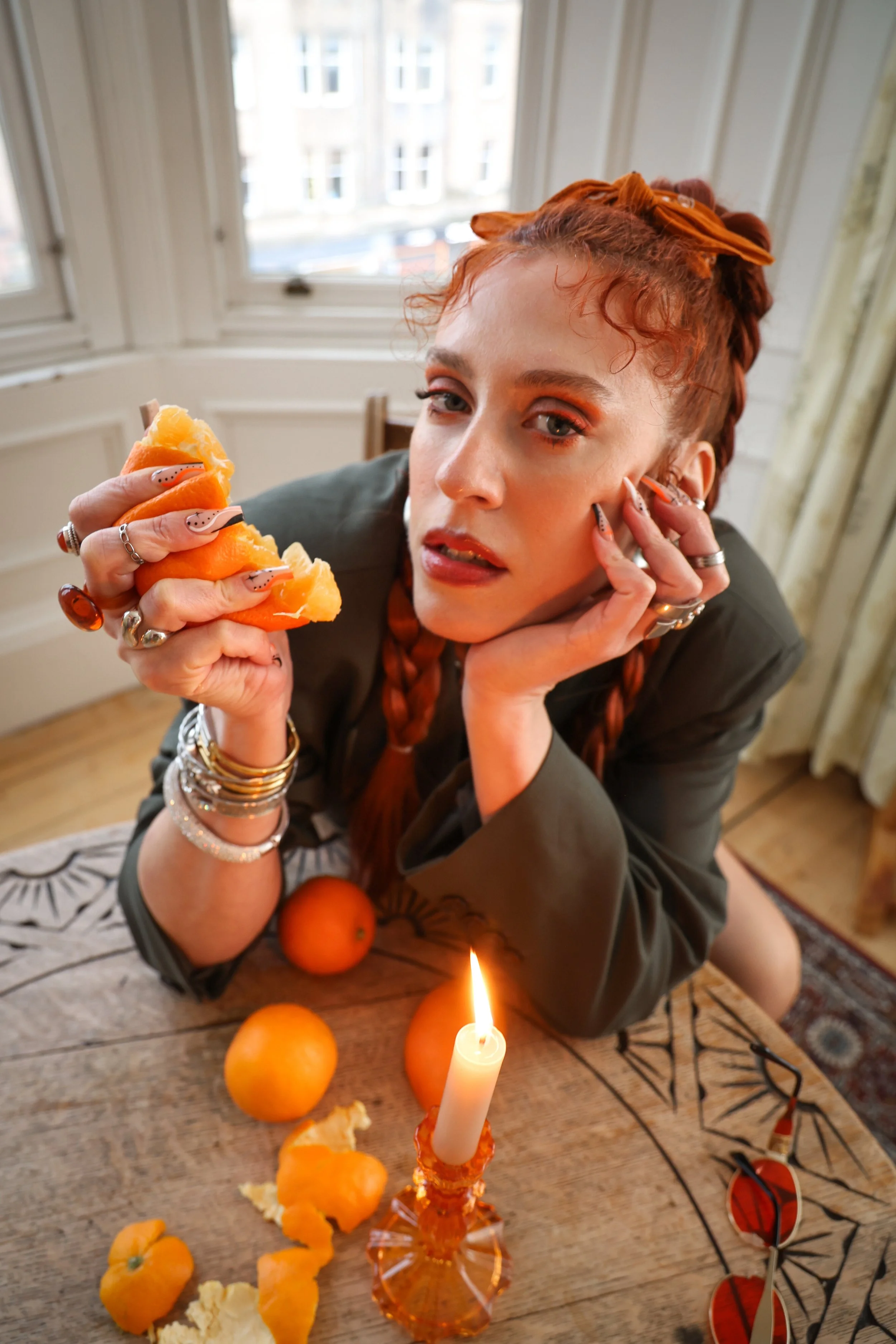
Photo by Charli Morachnick
LUNA: Your upcoming EP, 222.2, continues a project built around a very specific concept, with every track lasting exactly two minutes and 22 seconds and released on the 22nd of the month. Where did this idea originate, and what made you want to build such a precise structure around your music?
KATHERINE: It started as a coincidence with the first two songs of the project being 2:22 exactly and then it continued on as a creative challenge. To think that 222 is the number for trust and patience and my lyrical theme revolving around the bleakness of modern dating, it seemed very suitable as a concept.
LUNA: You have described 222.2 as “the next four verses of the same poem” that began with 222. How has the story evolved between the two releases, and what did you want to explore further with this second instalment?
KATHERINE: I felt like I had so much more to say, with more stories from my personal experience. Those around me unraveling as rapidly as they have, I just needed to release all my frustration and exasperation through a second chapter, a bit bolder sonically and more confrontational lyrically.
LUNA: The EP tackles power, desire, self-worth and the quieter forms of violence that can exist within modern relationships. What drew you towards these themes, and how important is it for your songwriting to challenge the romantic narratives we often take for granted?
KATHERINE: It was the shift from thinking these things happen around me, to realizing it’s a common experience for most women, not just myself and those in my close circle. In other words, realizing how systemic those issues are was a wake-up call that went way beyond dating; we’re talking about patriarchal oppression affecting everyone in real time as we speak. I couldn't stay silent, things got quite existential after a certain point! My songs are my humble contribution to the change I wanna see in the world.
LUNA: Your lead track, “KRUGER [for the worst one],” takes inspiration from Barbara Kruger’s artwork Untitled (Your gaze hits the side of my face). What was it about Kruger’s exploration of the gaze and objectification that resonated with you, and how did you translate those ideas into a song about contemporary dating?
KATHERINE: Her artwork depicts a statue of classical beauty, which firstly resonated with my Greek heritage; both the ancient culture and the modern “stare” coming from Mediterranean or Balkan men (if you know, you know). You can’t help but feel objectified, because you very much are. I translated that into a song about “the worst one” exactly because I find the objectification of women, of nature and of animals as one of the worst aspects of the patriarchy and the reason behind a lot of suffering; and it very much manifests within relationships too in ways that can only be described as abusive. It's a heavy song, but one of my best lyrical works and I’m very proud I was able to articulate uncomfortable matters the way I did inspired by such a powerful work of art by Barbara Kruger.
LUNA: In discussing “KRUGER [for the worst one],” you describe a cycle of “choose, use, leave, repeat” in modern romance. How did you approach writing about such uncomfortable dynamics while ensuring the track retained the sharp hooks and infectious energy that define your sound?
KATHERINE: I’m naturally a very hook/pop-driven songwriter but what I’m trying to do is bring deeper meaning into a genre that’s traditionally considered quite lighthearted, dare I say many times serving the very social structures I’m criticizing through my own lyrics. But I personally love this juxtaposition; why not dance and scream from the top of your lungs about things that truly matter, rather than hypersexualized, male-centric hooks? This is what I like doing and I love seeing people resonate with that too.
LUNA: Across 222.2, you explore the ways women can be expected to perform compliance, place others on pedestals and measure their worth through external validation. Do you see songwriting as a way to reclaim control over these narratives, and has writing this material changed how you approach your own experiences?
KATHERINE: I might be getting a bit too personal here, but yes it has definitely changed my own approach to dating as it’s the first time in my life I made a conscious decision to withdraw myself from this godawful game. I truly mean it when I say I suffer from male fatigue and describe my genre as “male fatigue pop;” I never thought I could find peace is solitude but it’s truly underrated; as long as I have my friends and family around, I don’t need no man, thank you. That is reclaiming my own power as a woman, as you very accurately described.
LUNA: Your music moves between electronic pop and hyperpop, combining accessible songwriting with more abrasive, experimental production. How do you strike a balance between creating something immediately catchy and pushing the boundaries of what pop music can sound like?
KATHERINE: I love keeping things quite experimental when it comes to my music. I honestly see my vocals as the one thing that keeps everything under the “pop” umbrella and by that I mean both my naturally bright tone and the catchy lyrics I come up with.
LUNA: The two-minute-and-22-second format places clear limits on how much space each song has to develop. Has this restriction changed the way you write lyrics, structure your tracks or approach production, and have you found that working within these boundaries makes you more creatively adventurous?
KATHERINE: Some people find it restrictive but I think it gives excellent structure! Sometimes the hardest part is finishing a song so when you know you’ve got a certain amount of time left to develop a middle eight or a last climaxing chorus, having a certain timeframe for it can be quite useful. I certainly haven’t found myself confined in any way but I’m also happy for this type of arrangement to end when this project does.
LUNA: Your songwriting has been praised for its clever one-liners and memorable choruses, often addressing subjects that are far from light-hearted. How do you use humor, irony or pop sensibilities to communicate difficult ideas without diminishing their emotional weight?
KATHERINE: That’s basically how I cope [with] life in general. A bit of humor here, a bit of sarcasm there, sometimes cynicism. It all comes down to community, that’s how we connect over our common experiences; we laugh together, cry together, get angry together and that’s exactly the atmosphere I wanted to create with these songs; we’re besties bonding over life being life and learning through hardship while still enjoying our human experience to the max.
LUNA: You have developed a distinctive visual identity around a striking orange aesthetic. What does this color represent within your artistic world, and how do you approach the relationship between your visual presentation, your music videos and the themes explored in your songs?
KATHERINE: Orange is a very bold color but it’s also quite unique; I’d call orange the neurospicy cousin of red! That’s what we’re doing here, keeping it energetic, confrontational and a little bit quirky—do you see the connection? I might need a person with synesthesia to confirm.
LUNA: Your previous track “FREUD [for the mama’s boy]” has gained significant traction through TikTok, while your music has also received airplay on BBC Radio 1 and BBC Radio 6 Music. How has navigating these different platforms shaped your understanding of your audience, and do you approach writing differently when you consider how people might discover your music online?
KATHERINE: I have indeed seen my collaborative work on BBC Radio 1 and BBC Radio 6 Music through genres I would never do as a solo artist. But I absolutely adore collaborating and discovering aspects of my creativity I never knew existed. This also helps with reaching out to very different audiences than my own, which is pretty cool. “FREUD [for the mama’s boy]” was the first song I released from this current project and it very much solidified my own audience, which is essentially everyone but white, cis, heterosexual men. I have to say though, men in that category who love my music and don’t get offended by it, are the greenest of the flags.
LUNA: Having received support from BBC Introducing Scotland, including being named its “Future-Ready Artist of 2026,” you are building a growing profile across the UK music scene. How has that recognition affected your confidence as an artist, and what challenges have you encountered while developing your own identity within an increasingly crowded alt-pop landscape?
KATHERINE: Thank you. I honestly believe that by this point we’ve done all music and the only way to stand out is by bringing unexpected music elements together, combining what’s essentially already been done in unique, refreshing ways that resonate with your own musical journey and influences. I feel very confident in what I do and you’re right, it’s definitely a saturated industry but there’s also eight billion people on this planet, so I believe there's an audience for every artist who is dedicated enough and stays true to themselves and their craft.
LUNA: You have shared stages with artists such as Honeyblood and are preparing to launch 222.2 at Folklore in Hoxton on October 22. How does performing your music live change its meaning for you, particularly when the songs explore intimate subjects such as desire, objectification and self-worth?
KATHERINE: Live performance doesn’t change the meaning of my music, it elevates it! I write to perform—in all honesty, I wouldn’t write if I couldn’t perform. Even in the pandemic I found ways to do so. Especially when it comes to the sensitive issues I sing about, it’s the sense of community that makes it easier to bring on stage. I’m not alone there, nor are the people in the audience; we come together to sing together and feel great afterwards.
That’s why I feel grateful that such established artists like Honeyblood have invited me to share the stage with them, and [I’m] buzzing for my headline in London so much. For the latter I’ve got some incredible artists on the lineup, KSENIA and Eden Lilith opening the night, as well as two surprise guests as part of my set, aside from my amazing dancers. We had a full rehearsal the other day and I’m delighted by how beautifully this show has come together.
LUNA: There’s a tension at the heart of your music between pop's traditionally polished, commercial appeal and the more confrontational ideas you explore lyrically. Do you deliberately use that contrast to draw listeners in before challenging them, or do you see catchy songwriting and provocative subject matter as naturally belonging together?
KATHERINE: To me, they do. We’re all free to express ourselves creatively in any way we want and I have to say it’s not deliberate for me to combine catchy hooks with thought-provoking ideas, it’s very natural to me. I always describe my music as not commercial but very catchy, as I’m trying to liberate a good hook from polished production. I like the concept of using catchy lyrics as a tool to lure people in and then tease their brains—never thought about it that way but I’ll take it.
LUNA: With 222.2 continuing a wider creative project, what comes next for Katherine Aly? Do you already have a sense of where the story will go in future releases, or are you interested in breaking away from the constraints of the 222 concept and exploring an entirely different direction?
KATHERINE: I’m going to say something really cliche now as my body and mind really need to stay in the present so that I stay regulated. It can get quite overwhelming juggling lots of moving parts at the same time as an independent artist so I really want to stay focused and enjoy what’s happening now while keeping my eyes and my heart open to what is to come. Some things need to be guided rather than planned and that comes from me, a very type A person, so believe me when I say it’s the result of a lot of inner work in therapy. All I know is that I’ll keep doing what I do and develop creatively and professionally for as long as I’m meant to.
