
Q&A: KIMIKO is Finally Telling Her Own Story with Debut EP ‘Modern Dance’
INTERVIEW
INTERVIEW
☆ BY SHEVON GREENE ☆
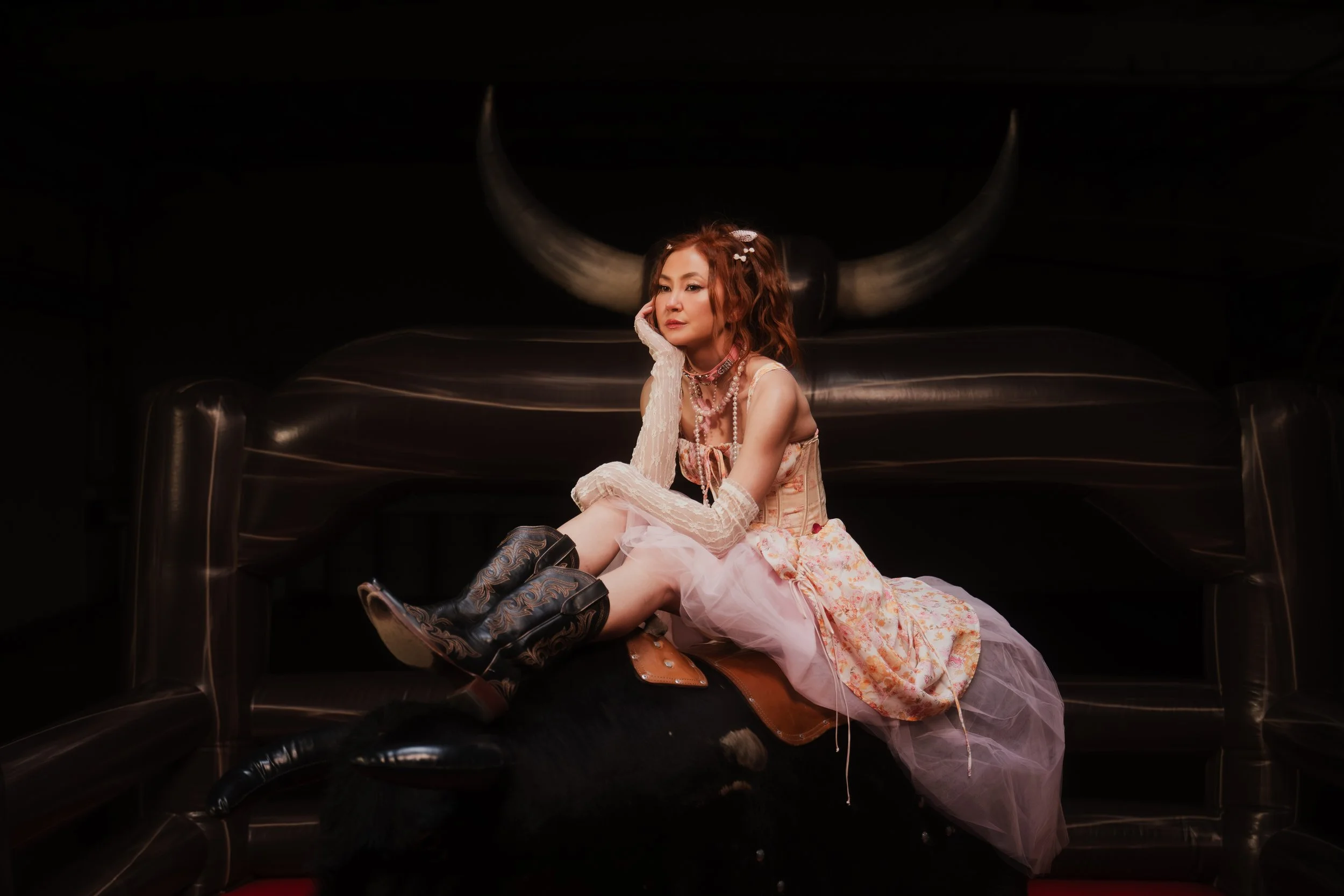
Photo by Acacia Evans
KIMIKO GLENN IS A WOMAN OF MANY TALENTS—I originally became a fan from her role of Brook Soso in the Netflix series, Orange is the New Black. On top of her roster of comedy appearances, she’s also well known for her voice work on shows such as BoJack Horseman, Hazbin Hotel and even the Academy Award-winning feature Spiderman: Into the Spider-Verse. But now, Glenn is stepping into a new light under her musical moniker KIMIKO, and has made a bold and playful entrance with her upcoming EP Modern Dance, out May 29.
Unlike the characters she’s spent years bringing to life, KIMIKO is fully her own: unfiltered, self-aware and chaotic in her own spunky and unique way. Modern Dance perfectly introduces a version of Glenn that balances vulnerability with humor, playing with dreamy pop production and adding a layer of tongue-in-cheek storytelling.
The EP focuses on the messiness of modern dating: the back-and-forth of situationships, the complications of mixed signals and the emotional whiplash as the cherry on top. Tracks like her most recent single “Emotional Whiplash” describe that instability in a relatable way while still pulling from Glenn’s own experiences navigating relationships that end as quickly as they begin.
Rather than going full-on ballad mode and leaning heavily into that heartbreak, KIMIKO instead focuses on the humor of it all. She’s constantly experimenting with contrast, which you can clearly see in her cinematic worlds in her self-directed visuals.
This project is also a major leap for Glenn creatively, as she’s stepping out of performing within someone else’s vision and instead fully leading her own. From writing to directing and editing her music videos, KIMIKO reclaims control of her own destiny while expressing herself freely, even when that process feels intimidating.
We sat down with KIMIKO to talk about navigating situationships, directing her own chaotic love stories on screen and what it means to finally create something that’s entirely hers. Keep reading for more on the humor, heartbreak and creative freedom behind Modern Dance.
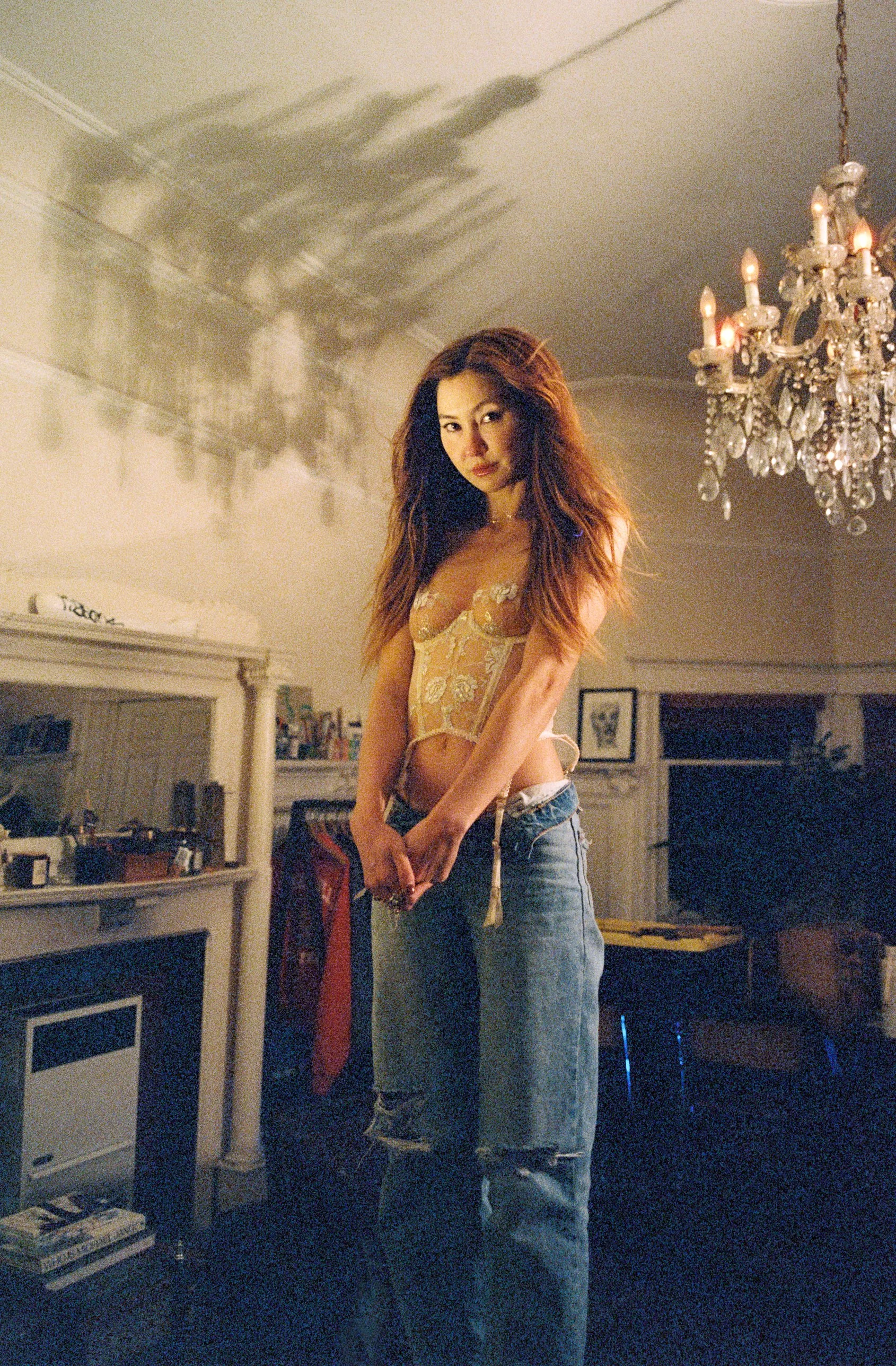
LUNA: With KIMIKO as a new project, it feels like there’s this new side of you unveiling. What made you decide that now was the right time to take that step into music?
KIMIKO: It sort of naturally unfolded in a way that might have spiraled out of my control, in a way that was unexpected and challenging, but also makes a lot of sense and feels right. Whatever nudges me over the ledge of getting over my fears, I sort of accept.
I’ve been in this mode the past couple years doing a lot of animation and voiceover, which has been wonderful because I’ve been a little bit hidden. My natural personality doesn’t love attention, which is hilarious because I’m an actor (laughs). But acting has always been therapeutic; it taught me it’s okay to be big, to have confidence. Stepping on stage fulfilled that for me, because it’s not me, it’s someone else.
But making music and putting it out feels so scary. I have a newfound respect for anyone who does music and constantly puts it out. I’ve always written songs, but I kept them for myself; it was like journaling. It was just how I processed things.
Initially I was like, I’ll just put stuff out [casually]. Then I had this idea for “Hang Out Forever?” with a visual concept that just popped into my brain and I had to do it. It cost time, energy, money—but I couldn’t not pursue it.
So I did it, and I set that bar… so it felt like I should keep going. It’s also an exercise in putting myself out there in a vulnerable way. Now I feel more confident sharing it because I understand what I’m doing more.
LUNA: That’s really awesome that you’re finding your confidence through this process. It’s such a huge step to go from something personal to sharing it with the world. Since you’ve spent so much of your career acting in other people’s worlds, what’s been the biggest shift stepping into music where it’s fully yours?
KIMIKO: It’s all been challenging. Being the driver of the ship is exciting and wonderful but also scary, because no one’s going to do it if I don’t. I’m the one who cares the most. As an actor, I have agency, but I also rely on someone else to say yes to me. Then I follow a director’s vision, adjust to writers, all of that. This is different. I have strong opinions, but I often keep them to myself as an actor. So stepping into this position is exciting, but also f*cking frightening.
With “Emotional Whiplash,” I directed, edited, executive produced—I was even doing wardrobe. Being executive producer was intense because I had to sign off on everything. So many people are relying on me. It’s great, but overwhelming.
LUNA: That makes total sense. I feel like people don’t always realize how much goes into that side of things, so it’s really insightful to hear. Your EP Modern Dance centers around the push and pull of modern relationships. Did that concept come first, or did it come together naturally as you were writing?
KIMIKO: A lot of what I need to process is about how I’ve been treated in relationships. So I wasn’t writing with that concept in mind; it was just what I kept writing about. I’d be in the studio and be like, “James [Colla], I just wrote another crazy song about this situation.” So, unfortunately, born from real life circumstances, but that’s okay. Hashtag relatable, right? (laughs)
LUNA: Exactly. Were there any songs you got stuck on or any roadblocks?
KIMIKO: Always. There was a learning curve—figuring out how to communicate with producers, how to find my sound. I write however I feel, so the genre is all over the place: pop, rock, indie. I was self-conscious about what the throughline was, and then I realized: I’m the throughline. My voice is the throughline.
But “Just Like That” [out April 22] took forever. We knew it was something good, but it didn’t feel cohesive at first. We figured it out eventually.
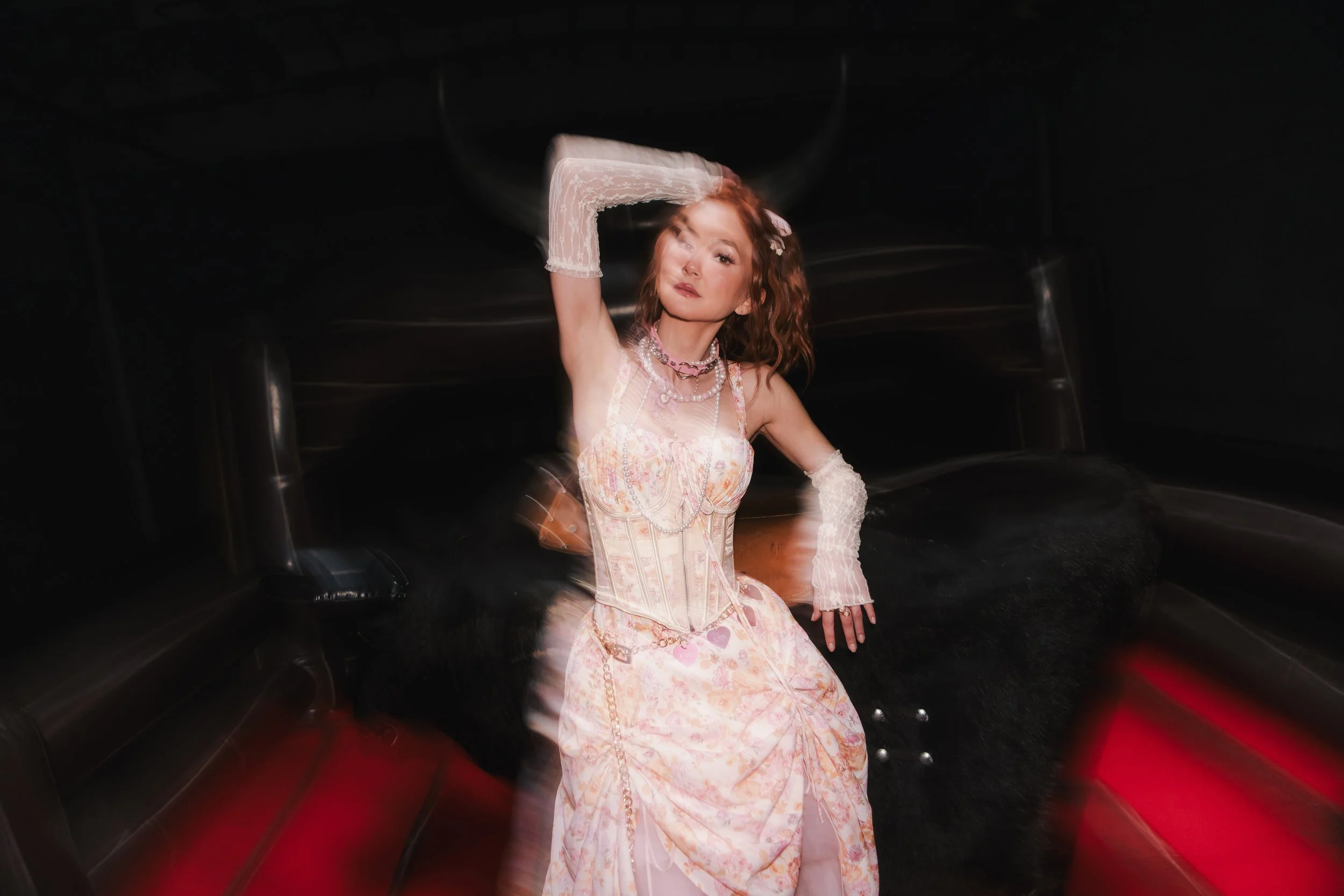
Photo by Acacia Evans
LUNA: Your music leans into situationships but with humor. Why go that route instead of making it more serious?
KIMIKO: That’s just more me. Even if something is horrifying, I try to find humor in it. It makes people more comfortable. I actually wrote a song for the next project that is Phoebe Bridgers vibes, but even then I don’t want to push it too deep in the feels. The melody might be melancholy, but the lyrics are trashing [the person I was referencing] in a funny way.
There has to be balance. Even in “Hang Out Forever?”—which was the only nice song I wrote about any of the guys—was too earnest. So we [Cody Tarpley and I] added weird sounds, like a power drill, horror elements, something slightly off underneath it. I’m always trying to balance sincerity with humor because that feels more relatable.
LUNA: That totally comes through, especially in the “Hang Out Forever?” video. What inspired that concept?
KIMIKO: I just didn’t want it to feel too earnest. I wrote it as a birthday present for my boyfriend at the time, and I was like, how do I balance this so it’s sweet but not too vulnerable? And then I was like… what if I trap him? (laughs) It was meant to feel like a joke. I’m not unhinged like that in that way, I promise.
LUNA: It was so cinematic. I loved it. For “Emotional Whiplash,” the visuals feel very symbolic: mannequins, the desert and the mechanical bull. How did that come together?
KIMIKO: There were like 50 iterations. Originally we [Bruce Wiegner and I] imagined a slow-motion crash dummy concept. But then budget became a factor, so I had to scale it down. The mannequins are symbolic—like how everyone looks the same when you’re dating, especially at the beginning when people present perfect pristine versions of themselves. There’s also this idea of being stuck in a cycle; choosing the wrong people, but how do you know who the wrong one is when everyone is presenting the same way? It’s hard to differentiate. And that masked guy breaking mannequins; that’s how it feels sometimes, like you’re getting shattered and trying to put yourself back together again.
And towards the end, when I break into metaphorical and literal pieces, the spectators watching me flail and trying to hold on, are at the ready to steal parts of me when I fall, and that feels very much like the experience of heartbreak and not knowing how to protect yourself in those vulnerable moments.
LUNA: That ending moment where the driver picking you up is a mannequin was so effective. Any situationship horror stories that didn’t make it into the EP?
KIMIKO: Oh, several. I actually realized most of the EP is about one guy… from a two-week situationship (laughs). He told me, “I deleted the apps, told my parents about you,” and then when I asked to schedule another date, he was like, “this is moving too fast.” And I couldn’t even tell you his name. That’s how short it was. But I was so frustrated by the push and pull; it’s classic love bombing.
LUNA: Men are always at the scene of the crime.
KIMIKO: Unfortunately (laughs). I think men are listening to too many men about how to date women. If you want to understand women, maybe listen to women. The bar is low—just treat us like human beings.
LUNA: Exactly, it doesn’t have to be complicated. What’s next after the EP?
KIMIKO: I don’t know (laughs). I just wanted this to be a creative endeavor without feeling beholden to a label or management. But I’ve already started writing the next project. It’s more narrative, more specific, very honest. This next one… the guy I’m writing about 100 percent deserves this, and he knows that.
LUNA: I support you. He definitely deserved it (laughs).
