
Q&A: Lee Emi Has Spent Her Whole Life Learning How to Belong to Herself
INTERVIEW
INTERVIEW
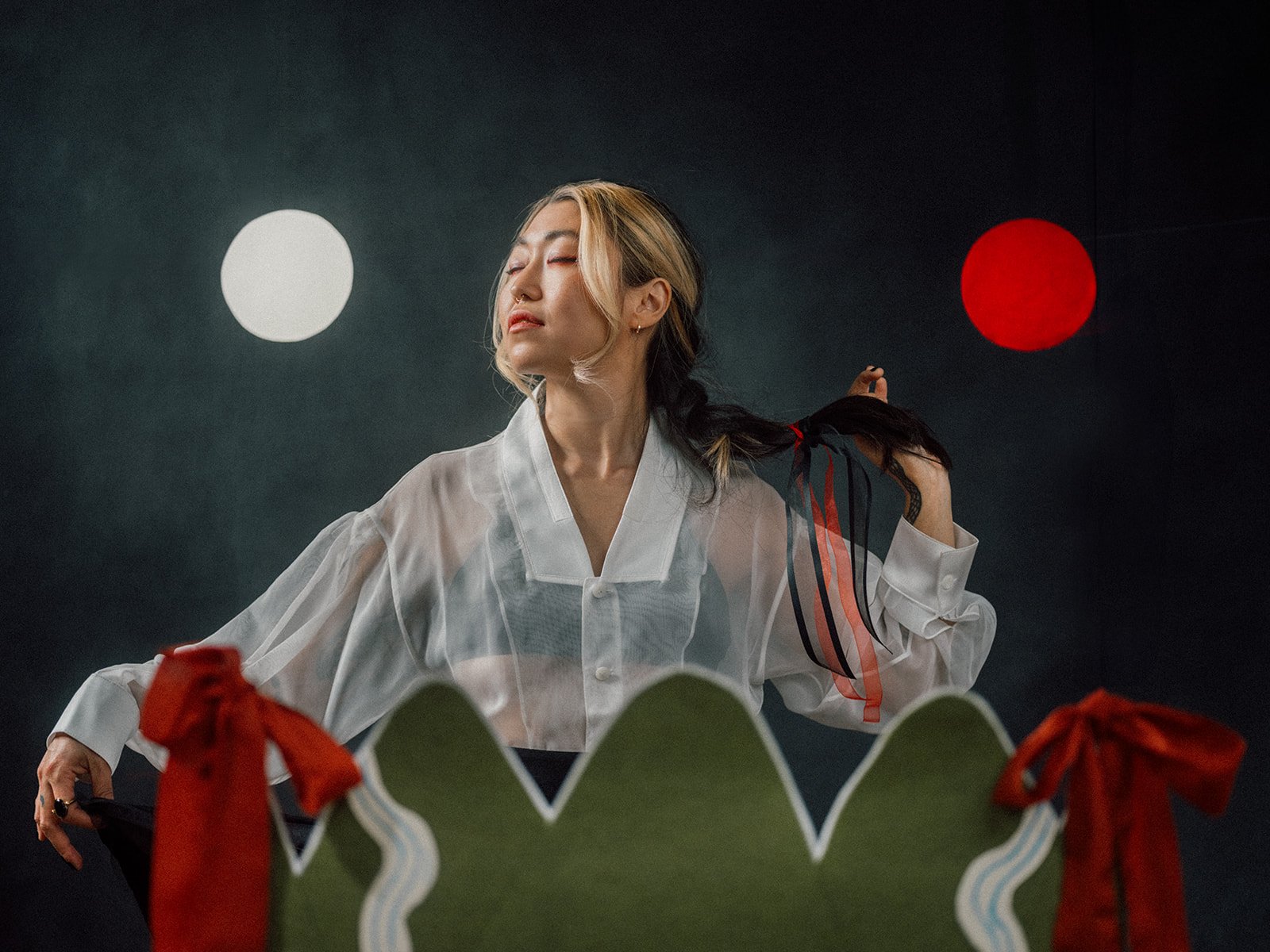
SOMETIMES YOU HAVE TO BURN EVERYTHING DOWN BEFORE YOU CAN FIGURE OUT WHAT WAS WORTH KEEPING. For Lee Emi — singer-songwriter, longtime member of indie folk quartet The Crane Wives, and Korean adoptee raised just north of Detroit — that process wasn't metaphorical. It played out across a global pandemic, a rare kidney disease diagnosis, a crumbling long-term relationship, and a life-changing trip to South Korea, the country she left as an infant. DESTROY EVERYTHING, her debut solo record due October 2, is what came out the other side.
The album's title sounds like demolition, but Emi is quick to reframe it. This is less about tearing down and more about clearing space, for the parts of herself she spent years suppressing, the Korean heritage she was afraid to claim, the queer identity she learned to downplay in predominantly white folk spaces, the grief and rage and tenderness she'd been tucking beneath the surface of someone else's band. Even the name she's releasing it under is an act of reclamation: Lee Emi, drawn from her original birth name Lee Sang-Eun, a name she once couldn't bring herself to pronounce correctly, let alone own.
Written across some of the most isolating circumstances imaginable and produced alongside Crane Wives bassist Ben Zito, DESTROY EVERYTHING is darker and somehow shinier than anything in her catalog: a collection of songs that confronts uncertainty head-on and arrives, against all odds, at something that feels like hope. "I finally feel like I have the experience and the confidence to just do the job well," Emi says. After everything it took to get here, that might be the most radical thing she's ever said. Read on to learn how Lee Emi dismantled everything she thought she knew about herself — and built something truer in its place.
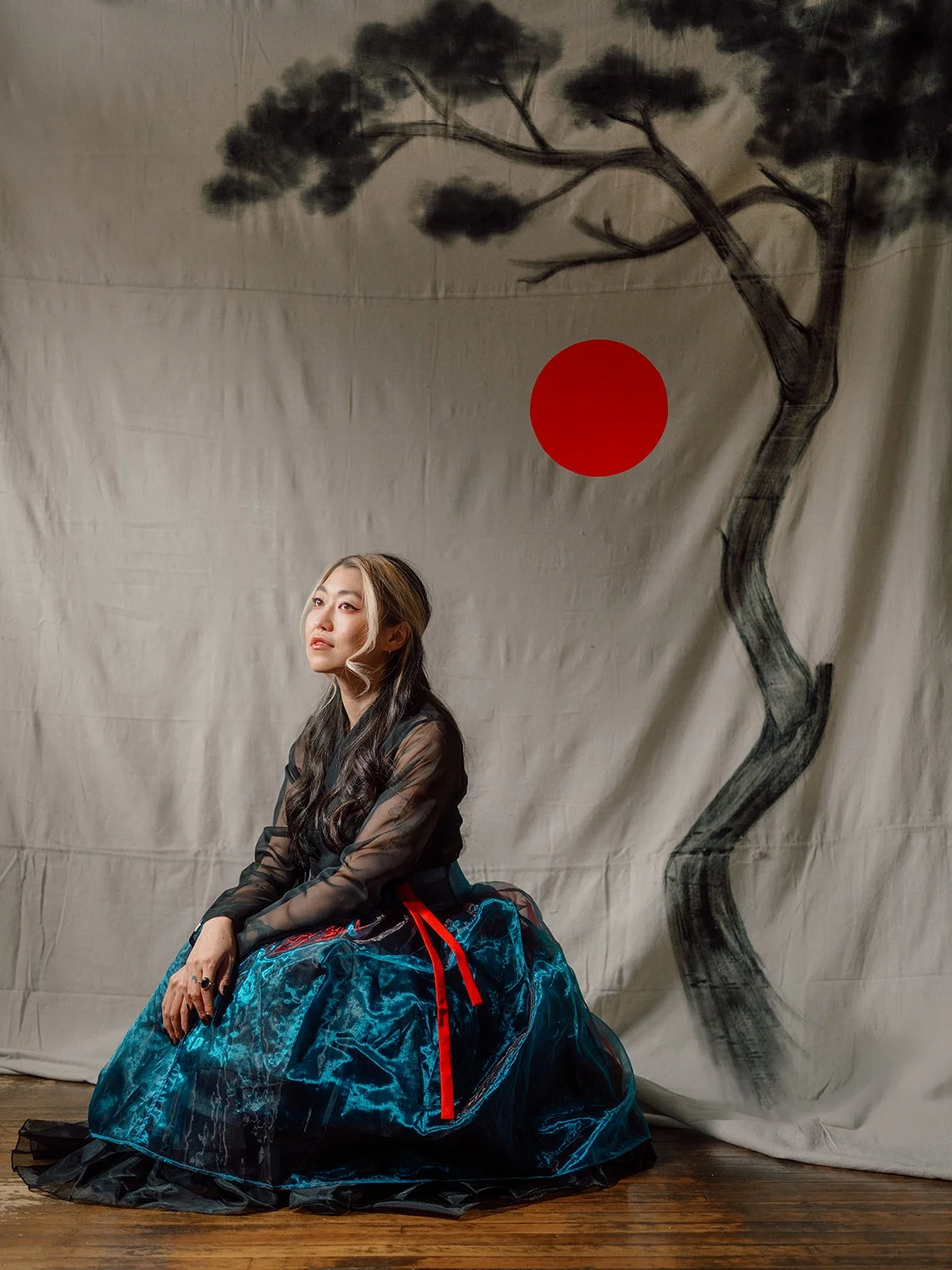
LUNA: The name Lee Emi is itself an act of reclamation, taking your original name Lee Sang-Eun and making it yours on your own terms. What did it feel like to finally step into that, and how did it change the way you approached the project?
EMI: For years, Lee Sang-Eun felt like a costume. It never felt like something that belonged to me, even though it was the name from my original birth certificate. I wanted so badly to just be Emilee, to fit in with everyone else in my community growing up. It took years of adoption-informed therapy to start on the path to reclaiming that part of me. The decision to rename myself for this project came after a trip back to the city where I was born (Suwon City in South Korea), and letting myself finally reckon with all of the parts of my past that have made me who I am today. In some ways, reclaiming my Korean name has given me permission to start writing about how adoption has shaped my life. Sometimes the name still feels like a costume, but I no longer feel like I don't deserve to wear it.
LUNA: 'DESTROY EVERYTHING' was written across some of the most isolating circumstances imaginable: a pandemic, a rare kidney disease diagnosis, and a lifelong search for belonging as a Korean adoptee. Can you share the journey of turning these events into this project?
EMI: I've always tended to write about my big, vulnerable feelings as a form of catharsis. Though many of the songs on DESTROY EVERYTHING come from many years before the pandemic, it's been very healing to reinterpret them through a more current lens, and to realize that a lot of the songs still speak to the parts of me that have felt like they're struggling. Being isolated while going through a health crisis forced me to reckon with a lot of things I didn't know about myself (including my family medical history), and I did my best to put those feelings of frustration, grief, and hope into this record.
LUNA: The album title sounds like demolition, but you've described it more as reinvention. Where's the line between tearing something down and building something new? Did you always know which side of it you were on?
EMI: The line between destroying and creating is razor thin, and I feel like I've been dancing on it my entire life. Part of unraveling the narrative of my adoption was accepting that a lot of the mental health struggles I've dealt with my whole life were a byproduct of that initial separation trauma, and realizing that the destructive parts of me came from a place of grief and hurt. Letting those feelings have their own space instead of suppressing them has allowed for healing to happen in ways I didn't realize were needed. A big part of this album is leaning into all those ugly feelings that we normally want to push down, the feelings that we're ashamed of, and holding them to the light. Beneath all of that rage and ugliness is usually something softer and lonelier and easier to connect to, and it's in that in-between where I tend to do my best creative work.
LUNA: Which track from the album was the most difficult to write?
EMI: It's hard to pick just one! I think Clean Slate was the song I toiled over the longest, trying really hard to get it to feel just right, especially when it came to the production. I wanted it to feel like a transition between the softer, more traditionally-acoustic sides of the record and the grittier, rockier parts. It took a lot of trial and error to find the right percussion sounds, the right guitar tone, and the right amount of overall texture.
LUNA: You've been the primary songwriter for The Crane Wives since 2010, quietly accumulating these songs the whole time. What made you finally know this material belonged to you alone?
EMI: I've been a songwriter for the Crane Wives for a long time, but part of the beauty of TCWs is that the foundational structure balances two (occasionally 3) primary songwriters. A lot of songs on this record are songs that didn't fit what we were collaborating on as a team, and they got put on a backburner. It felt good to reclaim them for this project, leaning into what resonated with me the most when building the tracklist for this album.
LUNA: You've carried a sketchbook through every tour you've ever been on, and 'DESTROY EVERYTHING' comes with an accompanying artbook. How does making visual art change the way you understand a song, or does the song change the art?
EMI: I think it works both ways. I'm often inspired to make visual art based on the music I'm listening to, and as some of these songs have evolved, so has the visual art that I'd associate with it. There are infinite ways to express a feeling, and giving the visual a soundtrack or the soundtrack a visual helps to deepen my connection with that feeling.
LUNA: Being a Korean adoptee raised in Michigan is woven into the DNA of this record. How much of 'DESTROY EVERYTHING' is about belonging, and how much is about deciding you don't need permission to belong?
EMI: I think there's a lot of reflection about what it means to belong in this record, with emphasis on the complexity of finding belonging within yourself, embracing yourself as a whole instead of suppressing the parts of you you're ashamed of.
LUNA: The album ends with "Don't Wake Me Up." What do you want the last thing a listener hears to feel like?
EMI: I really wanted this song to feel like putting down something very heavy after carrying it for a long time. I wanted it to feel like a deep sigh. This record touches on some intense personal feelings, and so I wanted to leave the listener with an acknowledgement that healing takes hard work, and hard work deserves rest.
LUNA: What intentions do you have for the coming months?
EMI: DESTROY EVERYTHING comes out on October 2nd, so most of my intentions have to do with manifesting a smooth, successful release. I'm rehearsing hard with a bunch of my favorite musicians so we can perform full-band versions of the record at my album release show on October 3rd, as well as on my first-ever solo tour in November. I'm so excited to see everything come to fruition after so many years of hard work, and I'm doing everything in my power to stick the landing well enough to keep going.
