
Q&A: Liam Horne’s Single ‘Again’ Captures the Moment Friendship Turns Into Love
INTERVIEW
INTERVIEW
☆ BY KATHERINE CHUNG ☆
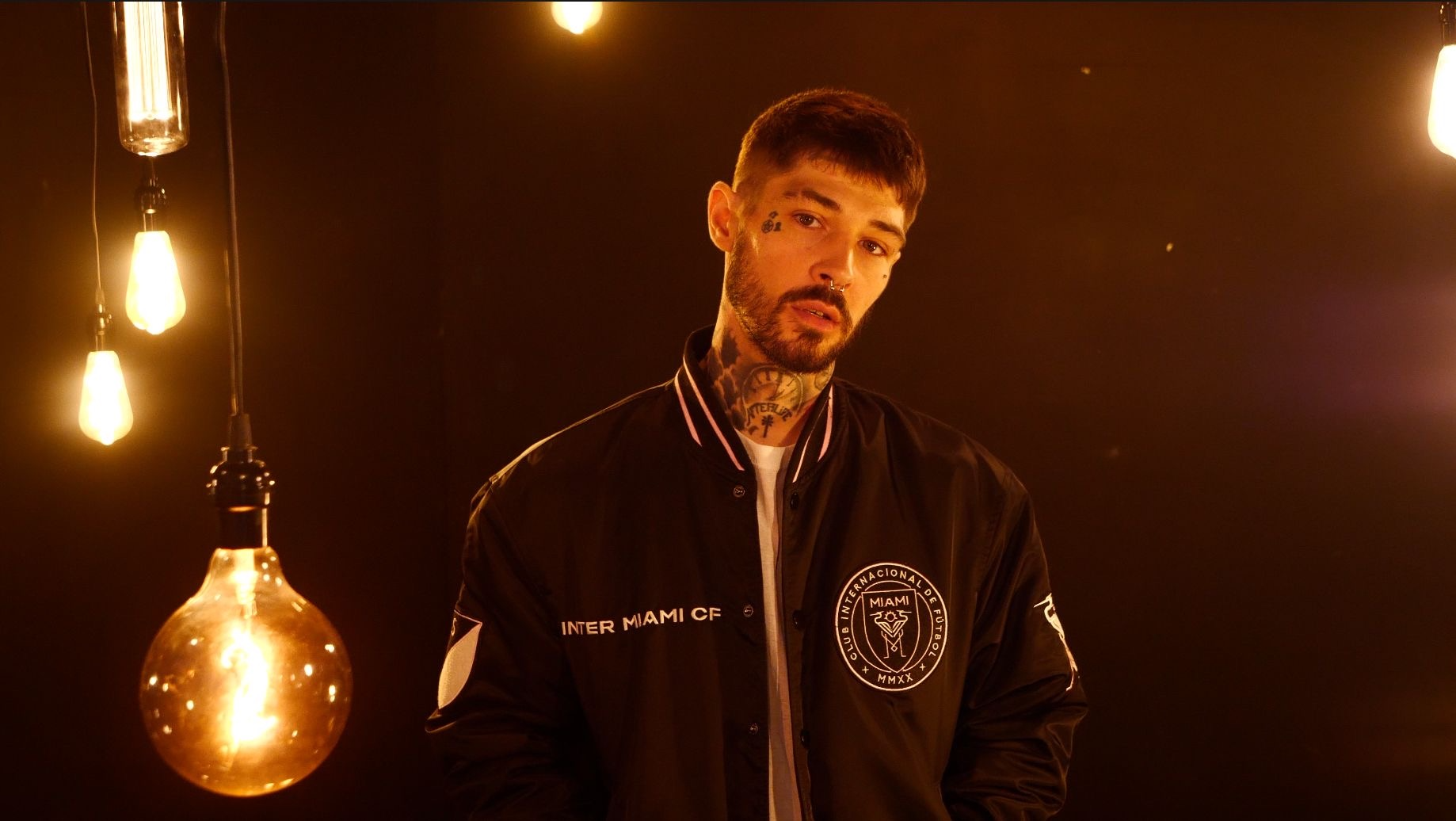
Photo by Pat Clark
DOES EVERYTHING IN LIFE HAPPEN FOR A REASON?—R&B and pop singer Liam Horne's newest single asks that very question, exploring what it feels like to realize that the love you've been searching for has been right in front of you all along. The lyrics embrace the beloved friends-to-lovers trope while the warm, laid-back rhythm and beat production create a sense of comfort, making listeners feel safe, grounded, and in control as the story unfolds.
Horne’s journey began when he moved to Los Angeles at age 12. Late nights in the studio eventually led to his first major songwriting cut, "Out of Town Girl," on Justin Bieber's Believe album. That was only the beginning of his songwriting journey, a time that gave him that boost of confidence. After lots of rejections and working with collaborators, he learned that making music was not paying his bills and keeping his lifestyle going.
“There is a body of work in the works. I recently finished a nine-song project with Brian Kennedy and James Fauntleroy, two amazing Grammy Award-winning musicians. Brian Kennnedy wrote a handful of songs for Rihanna. He wrote, “Disturbia,” and James Fauntleroy is one of Bruno Mars’ primary writers. He wrote “Dying with a Smile” for Bruno Mars and Lady Gaga.”
As a young musician, James Fauntleroy had been Liam Horne's biggest inspiration for years, making their collaboration on “Again” a true full-circle moment. Looking back, Horne says experiences like this have taught him that patience is a virtue. Great songs rarely come together alone, and sometimes the best idea isn't your first one. Being open to collaboration and trusting the creative process can turn a good idea into something even greater.
Read below for Luna’s conversation with Horne.
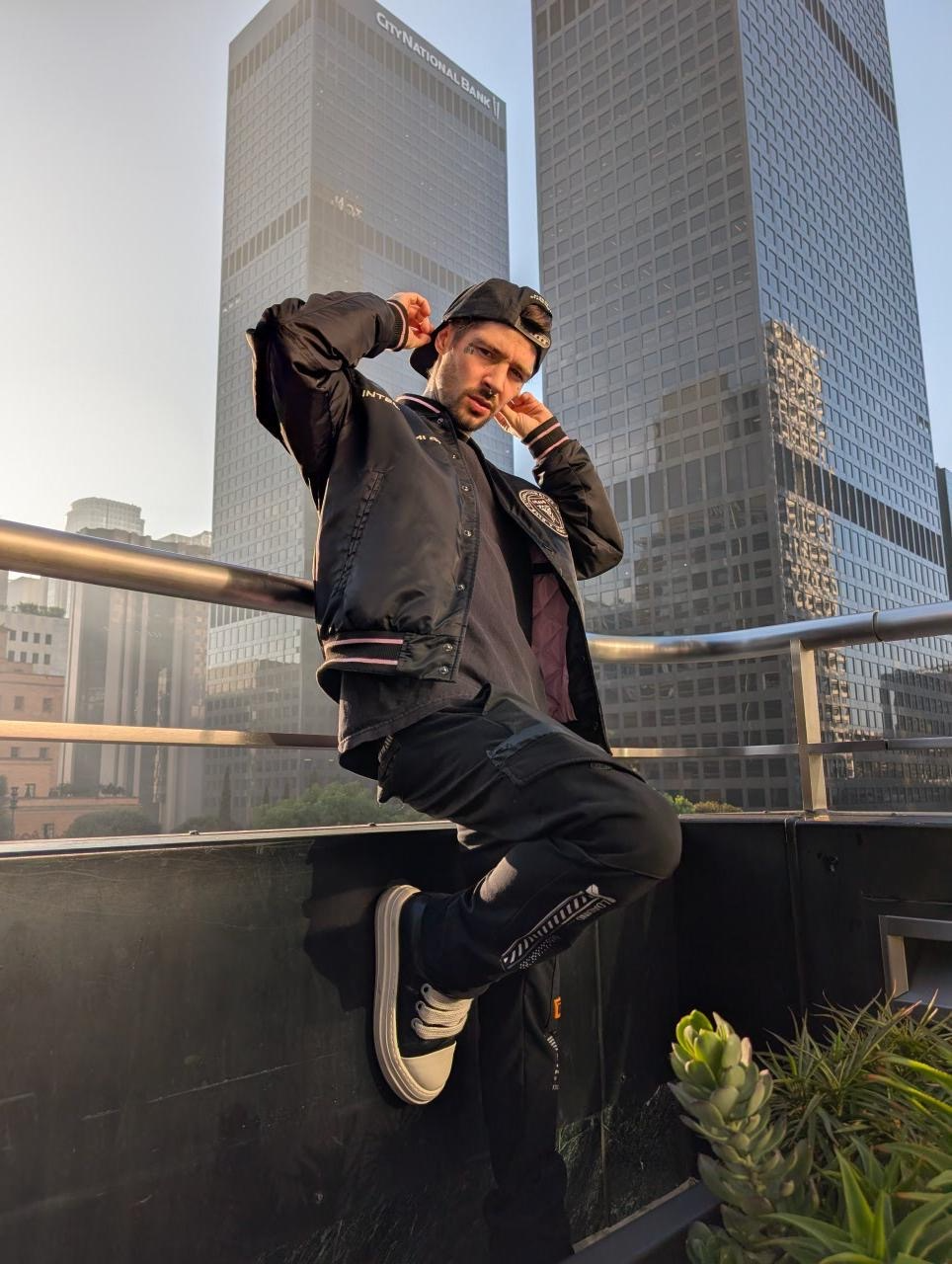
Photo by James Glover
LUNA: Can you describe the exact moment the inspiration for this song struck? What was that moment like? Was it one moment or a bunch of moments leading up to one?
HORNE: Well, it is, but it is also a mixture of being in that moment with these feelings. One: not being afraid to take chances. You have to take the fear factor out and leap into the unknown. Two: taking that chance with someone you trust, like what I said in the song. At first I was just a friend, y’know; then, the friend turned into a lover. It is not a stranger. It is a friend you already know, which makes you feel safer—doing it with someone you already trust.
That was the embodiment of the song. I tried not to make another song about meeting someone randomly on the street, or in a club, or about falling in love. What if that person you have been looking for has always been in your life, just not in the light you thought you were?
LUNA: There is a lyric in the song, “No one saw it / I don't have a reason.” Was there a specific experience or realization that inspired those words, or did you really not have a reason for that feeling?
HORNE: Sometimes we get lost in trying to find the reason why. People are always trying to find the reason why they have to do something rather than just acting on impulse. For me, the lyrics mean that, not acting on impulse, not having a reason to do something. Because you don’t need a reason to do something. If it is right in front of you, just grab it.
LUNA: Both of your previous singles, "Paradise" and "Everywhere," have this late-night atmosphere. Was that intentional?
HORNE: I have been writing for a long time. Over the years, my perspective on life changed. My time of day changes too. For instance, now I am married and have a one-year-old daughter. My writing sessions and studio time tend to be at night. When I’m in the studio or in a session, there are neon lights. The topics I write about are more about how I am feeling or when I’m in a nighttime environment in the studio. But, there are of course those days when you hit the beach, you have your acoustic guitar and sunshine. Then, hey, you come up with a pop song, record it into your voice memo and take it home. Then, you have a daytime song. I try not to focus on whether I am writing for a specific moment, at night or at a club; I just write in the moment.
LUNA: That’s so cool! I also wanted to talk about transitions. How did moving from Scotland to Los Angeles influence not only your music, but also what you wanted out of life personally?
HORNE: I have always done music for as long as I can remember. That music discovery started in Scotland. I was singing way before I came to Los Angeles. But I do believe that Los Angeles gave me the “cool” factor—that up-to-date modern feel for my music that was not being translated back in Scotland. In Scotland, I was singing songs my parents, grandparents, and family listened to. The music I listened to was influenced by people I was related to since I was at family parties and functions. Everyone where I lived was musical and creative. I was not branching out into my own music. I did not have any of my original songs under my belt.
When I came to LA, I was 12 years old, so I was influenceable and young. I was looking at everyone to see what was cool. And I was fortunate enough to get into some sessions with amazing artists I look up to. I believe those artists shaped how I saw the music industry, how I write, and how I perform.
I really believe that everything in this world is influenced by something that came before, or something that happened before a specific moment. Whether it is consciously or subconsciously. We are always influenced by something. And a huge part of my musical influence is America in general—not just America, though, Los Angeles specifically, and the artists I grew up working with there.
LUNA: That’s so cool. Since you have co-written for some of the biggest names in music and collaborated with incredible producers throughout your career, how do you feel now after everything that has happened to you in Los Angeles?
HORNE: It didn’t happen by not doing anything. I have been in the music industry for 20 years now. I am exhausted. I am so burnt out and tired. But that feeling lasts only a day or two, then you get rejuvenated and jump right back into it. I was 12 years old when I came out here to LA and I am nowhere near where my goals are to be in the music industry.
I was fortunate enough to be found by a successful music production company called The Matrix. When I was in Scotland, my uncle, Graham Edwards, who is a member of the Matrix Production company, wrote songs like “Sk8er Boi” and “Complicated” by Avril Lavigne. They were huge songwriters in the music industry. They flew me out here to LA when I was 12 years old. They put me in the studio with all the professional people at a young age and they raised me out here in music.
It is through them that I got to work with a lot of great people. As I started to gain a name for myself, I started working with them out here in LA, I ended up writing a song with this producer. The producer sent the song to Justin Bieber and, next thing you know, I have a Justin Bieber cut. But those moments came from me spending countless and sleepless nights in the studio, writing 20 songs so that I could get one song played.
I came out here to LA and my entire family stayed in Scotland. If you are not willing to be out in a city like .A to continuously work on your craft and put all the fun aside, it is not going to happen. Especially in this day and age where artists are required to do a lot more work themselves than they were required to do 10 years ago. A lot of the things I did came from hard work and perseverance. It might not take a month, two years or five years. But a lot of people quit before they even see the silver lining. You cannot quit. You’ve got to keep grinding. And then maybe you will be lucky enough to have a door open and you get to step into one of those rooms. That is not even the end of it. Once you are in that room you have to utilize it and prove that you have a right to be in a room with the top people in the industry.
LUNA: So, what came first: your dream to be a solo artist or your collaborations?
HORNE: I came out to LA to pursue a solo career. I was meeting with Disney, Nickelodeon, William Morris, Warner Brothers and even Universal. At the same time, I was always writing. And since I wrote my own music and songs, the first songs that ever got cut was a song I wrote for myself. That song got pitched to another artist. The artists ended up loving that song and asked to record it. Next thing you know, I have my first cut on their record. It was not because I knew I was writing for this specific artist—I was writing for myself. He happened to connect to the song and it turned into a song.
After that, I ended up signing a publishing deal and songwriting deal, which pulled me into the songwriting world. That was only because you have to pay bills, and also because my solo career was not making as much money as my songwriting career. Songwriting was always something I did on the back burner. But my solo career was always in the center of focus.
LUNA: What advice would you give to emerging solo artists? Do you think it's important to spend time collaborating first, or is there value in waiting until you've found your own voice before taking that leap?
HORNE: You have to wear every hat. You are going to become your PR, agent, director, editor, filmer, and Instagram manager. You are going to become it all. That is not necessarily a bad thing, though. Giving the control to the artists, I don't see a problem with.
I believe that before you jump into the bigger view—and you decide to jump into the tours, selling out arenas, and shows, even before you think about making money from your music—I really truly believe that you have to put in the work to make sure that you have a core audience and fanbase. Creating that fanbase is probably the most important thing you could do, and that does not come from jumping on stage and going on tours. It comes from connecting, being relevant, consistent, and having knowledge of what is trending on social media.
My advice to artists working with so many people and collaborators is that you have to differentiate collaboration from self-work. They are two different things. Collaboration means that you have to have an open mind and not be so quick to shut down somebody else’s opinion. Also, to collaborate, you have to be a little thick-skinned. There are going to be times when you are in a room, and you genuinely think you have the most amazing idea; you tell it to the room, and people do not think it is that great of an idea. Then, somebody else might come up with a line. That might hurt your feelings, but that is not a reason to get upset. That is your ego. You have to keep that intact. There is a lot that comes into collaborating. My biggest advice is to be patient, be kind to yourself, and understand that not every bad idea is a wrong idea.
