
INTERVIEW
INTERVIEW
☆ BY LENA FINE ☆
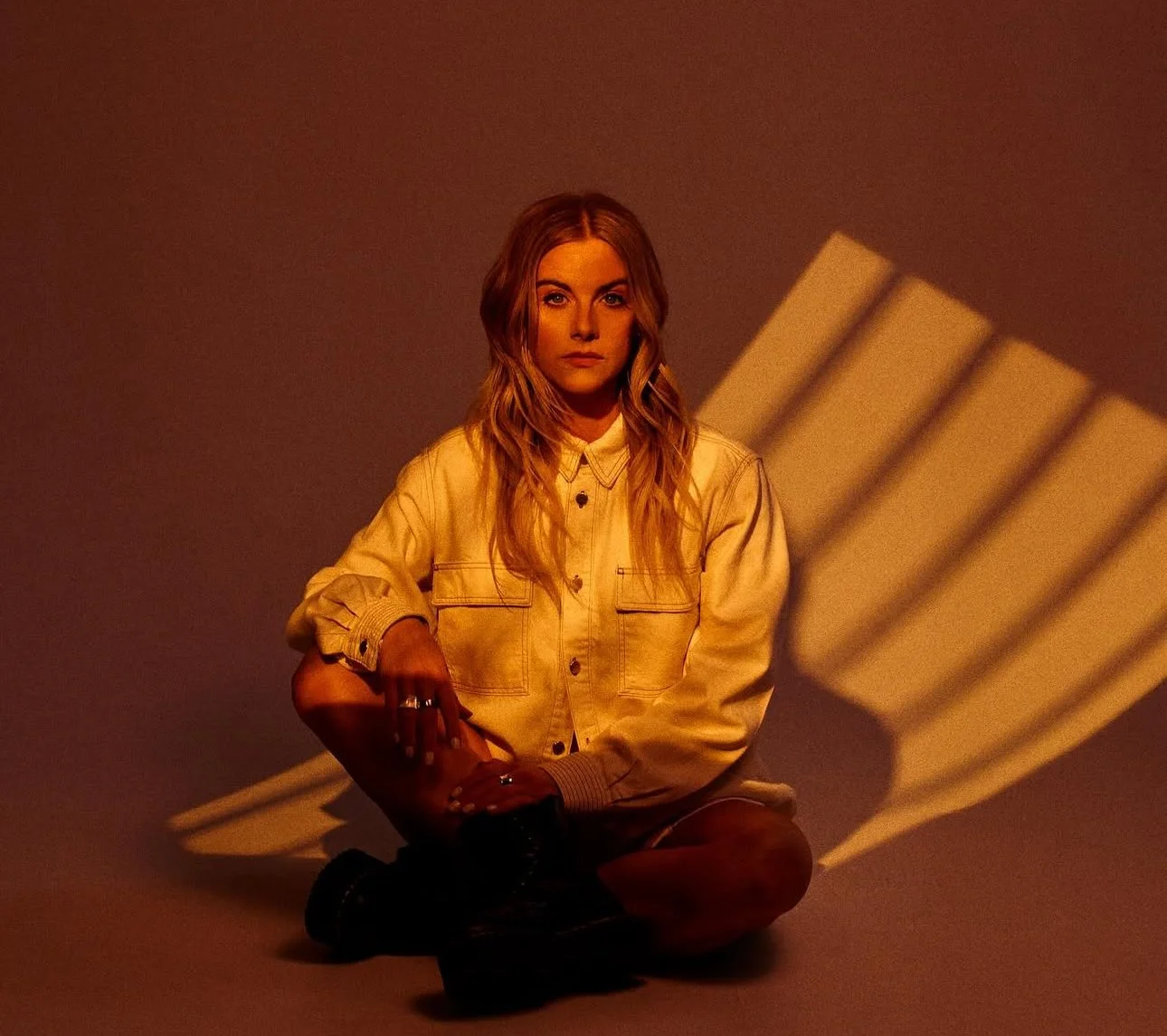
Photo By Alyssa Lancaster
Canadian powerhouse and mutli-hyphenate Lindsay Ell returns with new EP fence sitter. The vulnerable and uplifting project comes a year after her debut EP, love myself, and serves as an extension and reflection of her previously explored themes of love, self, and success. Fence sitter boldly goes a few tender steps further, opening dialogues of how women weigh family and career and tether themselves to their goals, while maintaining a true sense of self.
When she is not releasing her own hits, Ell keeps quite busy with a robust rotation of gigs. She’s been Shania Twain’s touring guitarist for just over a year and has been hosting Canada’s Got Talent for the past four seasons. Ell’s music is an exuberant and pop-forward expression of her multi-faceted career and a life rich with varied experiences. We caught up with Ell to discuss fence sitter and get to the heart of things.

Photo By Alyssa Lancaster
LUNA: Your recent single, “magic”, is a perfect pop song. You wrestle with these ideas of ambition and success – whether personal or professional – and if the magic really lies in the pursuit or in the pay-off. When you were writing the song, which felt more true to you?
ELL: I’ve always thought the magic was in the payoff, no question. There’s some joy in accomplishing some things you’ve wanted to for a long time and you’ve strove towards. There is magic in celebrating things that you’ve worked hard to do, but I feel like if I don’t find magic in the pursuit of it then oftentimes once I get there, things are very empty or the goal post just always moves. It’s like, “oh, I sold out this venue so now I just need to sell out this bigger venue. I sold out this bigger venue, I need to do 2 nights at this venue!” I don’t think it ever stops. Accomplishing something isn’t necessarily the juicy apple that you have been imagining it will be.
Through writing “magic,” I feel like I was just trying to articulate the joy and those little magical moments in the pursuit of something because I feel like the pursuit of something is what we would do for our entire lives.
LUNA: So do you think the song was you kind of giving yourself that space to celebrate and appreciate those moments, even though the next goal is kind of ever-evolving as you find your success in one thing, then the next kind of opportunity opens up?
ELL: Yes, for sure. I think that the song was trying to really celebrate that space of, “okay, let's find the joy in each little moment." You know, like, I really loved my breakfast this morning or I went on the most amazing walk or, you know, that stranger said hi to me and they were so kind. It's finding magic in all of the little tiny moments of your day. They really add up to a very magical light compared to just thinking, “once I win this award or once I go on this trip,” like, thinking that the big payoff is going to feel as magical.
What I really hope that people get from listening to the song is finding magic in the little things. I think that any time when you're in the pursuit of something that you want, it's so easy to get disheartened or discouraged or frustrated. I started touring when I was 10 years old and really started making money and making it my job when I was 15. I remember a family friend at the time was like, “Lindsay, this business is like an emotional roller coaster. You're on top of the world and then you feel like your world is over, maybe within hours.” So the goal is just to find a way to float in the middle. I think it is really important to stay connected to the reasons why you started pursuing whatever you're pursuing. The belief deep within my heart that I can tour around the world and I can write songs and I can play them in front of audiences and I'll get to hear them sing them back to me and all those dreams that I still have in my heart, I still believe that I can do it. I think the magic in that is so powerful. It's one thing to take inspiration from everything around you, but it's a whole other level to take inspiration from inside yourself. And that's the kind of inspiration that nothing else can take from you.
LUNA: That's really beautiful, and it's so healthy and balanced that now you've given yourself this song as an emblem of all of those things. You’ve just released your EP, fence sitter. What themes are you exploring on the project?
ELL: This EP has just gotten a whole lot more vulnerable, and when you step into a new form of vulnerability, you also access a deeper layer of confidence than you have ever felt. On my last EP, love myself, I was sort of scratching the surface. This EP I dove in deeper. Whether it’s talking about the ups and downs and navigating my career in “magic” or standing up for myself within relationships I've been in in the past. The title track, “fence sitter,” is about if I want to be a mother or not. In my 20s, that question was fairly loud, but when I turned 30, it was, like, blaring in my ears. All of my friends were getting married and having babies and I still didn’t know the answer. I know we're all on our own journey, but I feel like as a woman, that question is louder because we have biological clocks and we only have a certain window where we can decide if that’s something we want to do. I also have so many amazing female artist friends who are mothers and artists and who make it look so easy and so flawless. I just have so much respect for the decision to have kids that it just carries so much heavier of a weight. So when I walked into the room to write “fence sitter,” I really wanted to explore all the angles of that. My producer, who is a co-writer on the song, was like, “you should check out this Reddit board called ‘Fence Sitter.’ There's 80,000 people on this Reddit board, all discussing if they want to have kids or not.” For the next hour, we were just reading all these incredible viewpoints. It inspired me so much that we needed to write it into the lyrics, and then that inspired me so much that I was like, this is what the song and the EP need to be called! I feel like so many of my friends, so many fans and so many women that I've never even met come up to me and they're like, “I relate to this song so much. And I think it's a message that we just need to talk about more.” We need to be able to process with people who have decided to have kids and who have not decided to have kids and listen to both of their stories and be able to make a conscious decision.
LUNA: It's so amazing that the phrase is from a Reddit board. The song and the title itself are so provocative. I was curious if it was the song first that gave shape to the EP or did you kind of already have that framework in place and then just went on to write the song? It makes sense that you had this song and then the moment came of like, “this is what the project is about, this encompasses the whole thing.”
ELL: Anytime I'm putting together a project, I try not to get too ahead of myself with like, “this is the first song, this is the last song, this is what it needs to be called.” I try to really be in the creative process and write each song as it happens. But the day we wrote “fence sitter,” I remember walking out of the room that day being like, this is a special song. It just feels very cornerstone-esque of a project. And I even hold that lightly until the whole project comes together and all the songs are sort of sitting next to each other. Then it's usually just one that shines a little bit brighter in terms of titling or being the cornerstone behind everything and “fence sitter” definitely felt that way.
LUNA: I want to talk a little bit more about who you are as a whole. You've had quite an illustrious career in music and entertainment – you wear many hats. How do your varied experiences inform your writing?
ELL: I love this question, because I'm so grateful for the many hats I've been able to wear throughout my career and still get to wear. Being a singer-songwriter and getting to play my songs onstage is my absolute favorite thing to do on the face of the planet, yet everything else has been such an incredible learning experience and has taught me how to be a better artist. Being a TV host on Canada's Got Talent, being able to be there to support other incredible human beings and give them a worldwide spotlight to showcase their talent, it’s been really incredible being able to encourage and support and watch them excel to incredible levels. It's been really amazing to play guitar for Shania Twain, and I never thought I was going to be a side musician ever in my life. We opened for her or her 2023 tour, and then shortly after that she asked if I would play lead guitar for her and her band and I was like, “how can I say no to this? This would be such an incredible experience.” And now to be able to say that Shania is a friend of mine is very weird, and yet something I'm so grateful for. I feel like I am a better artist today having worked with her and having the opportunity to be around her aura and learn why she is the worldwide icon she is. I am so grateful for all of the hats that I've been able to wear because to me, everything filters back into the songwriting, and all of it gives me different experiences that I can then write about and put into my music, which is my number one.
LUNA: You've been performing as a lead guitarist for Shania for over a year. Has the experience of being onstage primarily as an instrumentalist specifically changed your approach to your own music?
ELL: Yes, for sure. Not only from just learning from her and the way she commands the stage, but the way she puts everybody on stage and her intelligence in a live aspect is so high. I grew up on those songs. Shania was the reason I started and wanted to be a singer. I wanted to move like her, and I would practice her moves in the mirror. And now, fast forward a couple decades and I am singing those same songs with her two feet away from her on stage and it's wild. It's one thing to like to listen to a song and know it, and then it’s another thing to know it so well that you can then perform it and essentially recreate it. I've gotten to learn so much of the DNA of the brilliance of that music that Shania and Mutt put together when they were recording and producing eight years ago. So many of the little intricacies in the guitar parts or the little intricacies in the vocals are brilliant. Each song happens very differently. Sometimes you just start in a write and the song just falls out, and a few hours later, you have a completed piece of work. Sometimes it takes months or years to finish a certain song. It's been a very wild experience really getting to study Shania's music and learn that it's no accident that she had, I think it was like eight number ones or ten number ones. It makes so much sense to me learning all of the thought and all of the intention that went into those songs. It's crazy sometimes, like years into my songwriting career, I have just been in so many writes where I'm like, would Shania think this is good enough? It sets a higher standard. It's really inspired me to become a better writer and to strive to say more vulnerable or clever things. All of those little tips and techniques that are so intertwined in her music, I feel like I'm becoming a better songwriter from just having to study it so much.
LUNA: That's so beautiful that she's so full-circle to you. She's both this emotional and technical throughline in your career. It's amazing.
ELL: It's so wild. I believe in my heart of hearts that manifesting is real, but sometimes, I'm just like, “whoa, maybe I’m really good at this or something.” If she didn't ask me to be in her band, I probably wouldn't have studied this music so deeply. And playing as many shows as we have, it's so in my hands and in my bones that I feel it differently. Before I released my first album, my producer at the time, Christian Bush, had me record Continuum. Before we went to the studio, he was like, "What's your favorite album?" And I was like, "Well, Continuum by John Mayer, of course." He said, "Okay, I want you to rerecord the whole thing, I just want you to learn what went into that music.” And so I did. I recorded my version of Continuum, never thinking that I was going to release any of it. And then it just sat on a hard drive and we went to go record my first album. Through talking about it, we ended up releasing it, which was so crazy to me because I never thought I was going to release it. But this whole Shania experience has really reminded me of recording that Continuum project and getting to learn why I loved something so much and getting to learn why something is so successful. I mean, when I study songwriters like Ryan Tedder or Joni Mitchell, songwriting is very unique and every song is very different, but there also is like an art to it. There are things that are not done by mistake and, I think the more you study the greats, you begin to understand that there's a beauty of creativity that is so fluid and so open and left to your own unique perspective. There are a few things that you should probably follow. I don't want to even say rules, but it's like, okay, your chorus is probably gonna feel better if you do these five things. And, it's really cool that through this whole experience, I feel that more in my songwriting.
LUNA: It's refreshing to hear almost a more academic take on it because it is. I mean it's part of your career, studying and learning every single day. I have one more question, which you kind of touched on earlier, but a follow-up to last year's EP love myself, what does fence sitter say and explore in contrast to last year's release?
ELL: Love myself was a very important EP because I was getting to make music for the first time that really felt like me. When I first moved to Nashville 15 years ago, I got offered a country record deal and hit the ground running and didn't look back. I just wanted to be on the road playing my songs and I was doing that at a pretty high level. About a decade into that, I got so intertwined in chasing what would be successful, that I really lost sight of what makes me happy and music that makes me feel alive. There are artists who lean to both sides of art or commerciality. It's like this constant teeter totter that, at perfect balance is sort of the sweet spot, but if you lean too much to either side, it's probably not sustainable for that long. And I think for a while I just got so focused on writing music that would be successful, that I lost myself in it. Love myself was coming back to who I am and talking about that story and that navigation system of music that I really want to play and I really want people to listen to. I'd say the contrast from love myself to fence sitter is digging deeper into that vulnerability and that sound. I hope that as an artist and a musician, I'll be always heading in that direction of coming back to myself. I don't think that is a destination, either, but the constant pursuit of trying to be more honest. If I'm so fortunate to have a long career as, you know, somebody like Joni, that's a beautiful thing to get to answer at different stages of your life, because you'll answer it differently every day. So, fence sitter is just like the next stepping stone. I hope it connects with a lot of people and a lot of women, specifically, who are maybe thinking about the same thing or have lived through the same thing. And I hope it makes them feel less alone.
