
INTERVIEW
INTERVIEW
☆ BY CHRISTINE BITONTI ☆
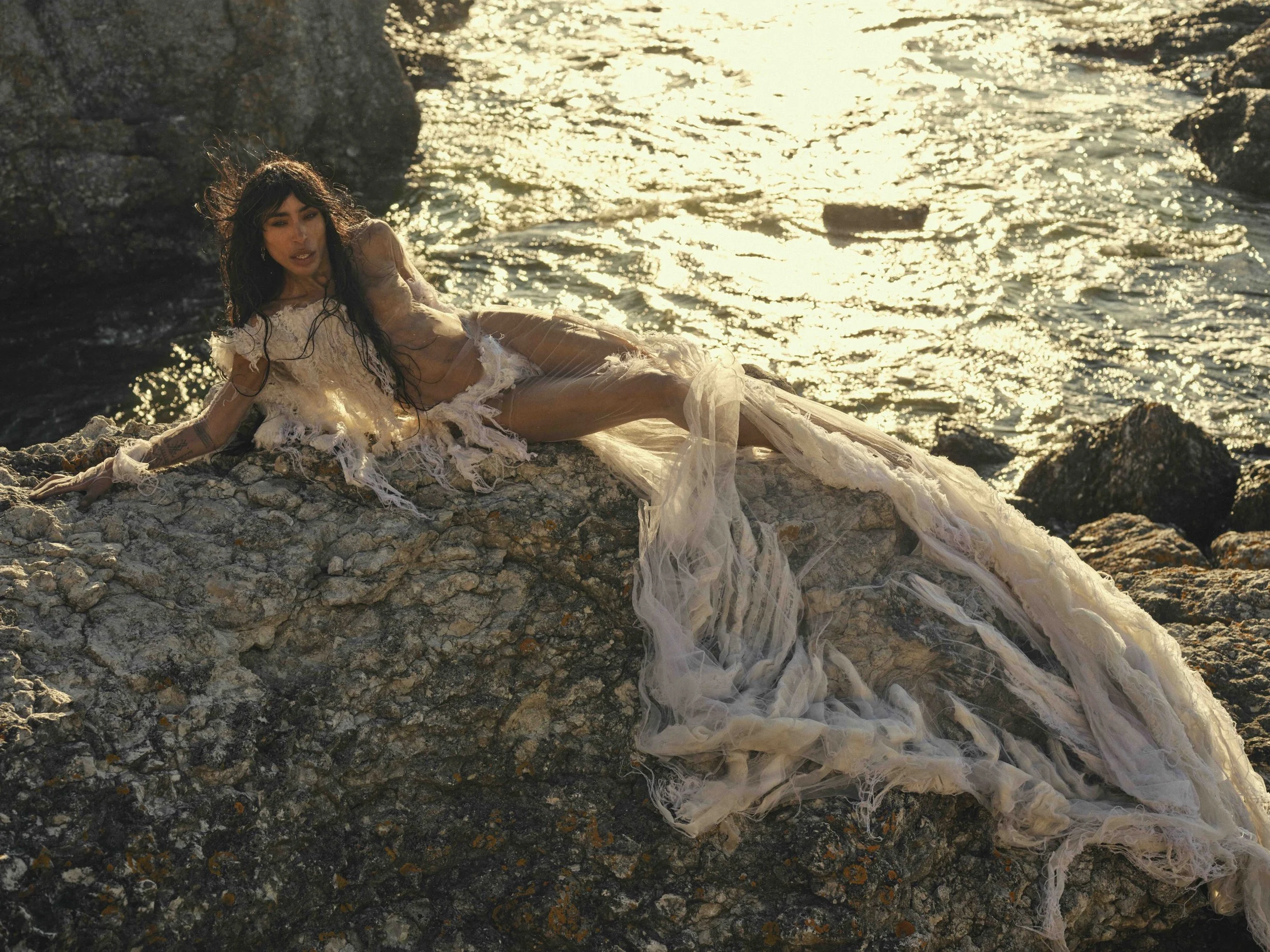
FOR LOREEN, EMOTION IS EMBEDDED IN THE ESSENCE OF LIFE—rather than caging her in, it acts as a guide in her creative process and personal evolution. “True Love (Ólafur Arnalds Version)” strips down the original track’s electro-pop timbre—featured on Loreen’s latest album, Wildfire—to reveal an intricate power ballad designed to tug at the heart strings.
In 2004, Lorine Zineb Nora Talhaoui appeared on the Swedish adaptation of Pop Idol, preceded by U.S.-based spinoff American Idol. Although she finished in fourth place, the Åkersberga-born singer later went on to sign a record deal with Mohito Music, releasing her 2012 album, Heal, to widespread commercial and critical acclaim.
Today, after more than 20 years as a singer, songwriter and creative, Loreen’s global stardom has scaled new heights. The Stockholm-based virtuoso clinched a sophomore Eurovision crown in 2023 with “Tattoo,” making her the first woman, and second person overall, to win the competition twice. After catapulting to the #2 spot on the Billboard U.K. singles chart, “Tattoo” remained in the top 10 for five consecutive weeks and, since then, has raked in over 900 million Spotify streams. Now, with two decades of industry experience, one billion views on YouTube and multiple Swedish Grammi nominations under her belt, the 43-year-old remains more in touch with her roots than ever.
Coming from a nomadic heritage, Loreen never viewed music as a product. She regards it as a divine, almost holy, artistic practice—honoring creativity as it flows, rather than trying to force it. Earlier this year, Wildfire explored the boundaries of love, embraced a full spectrum of emotions and pondered the fulfillment found in our own innate humanness. “True Love (Ólafur Arnalds Version)” embodies the core of that very framework, then expands upon it.
In an exclusive interview with Luna, Loreen detailed her journey to reimagining “True Love,” and the inspirations behind Wildfire. Ahead of her tour in spring 2027, the Swedish-Moroccon powerhouse reflected on her fluid artistic identity, the responsibility of possessing an innate gift and the spiritual, medicinal force that is music.
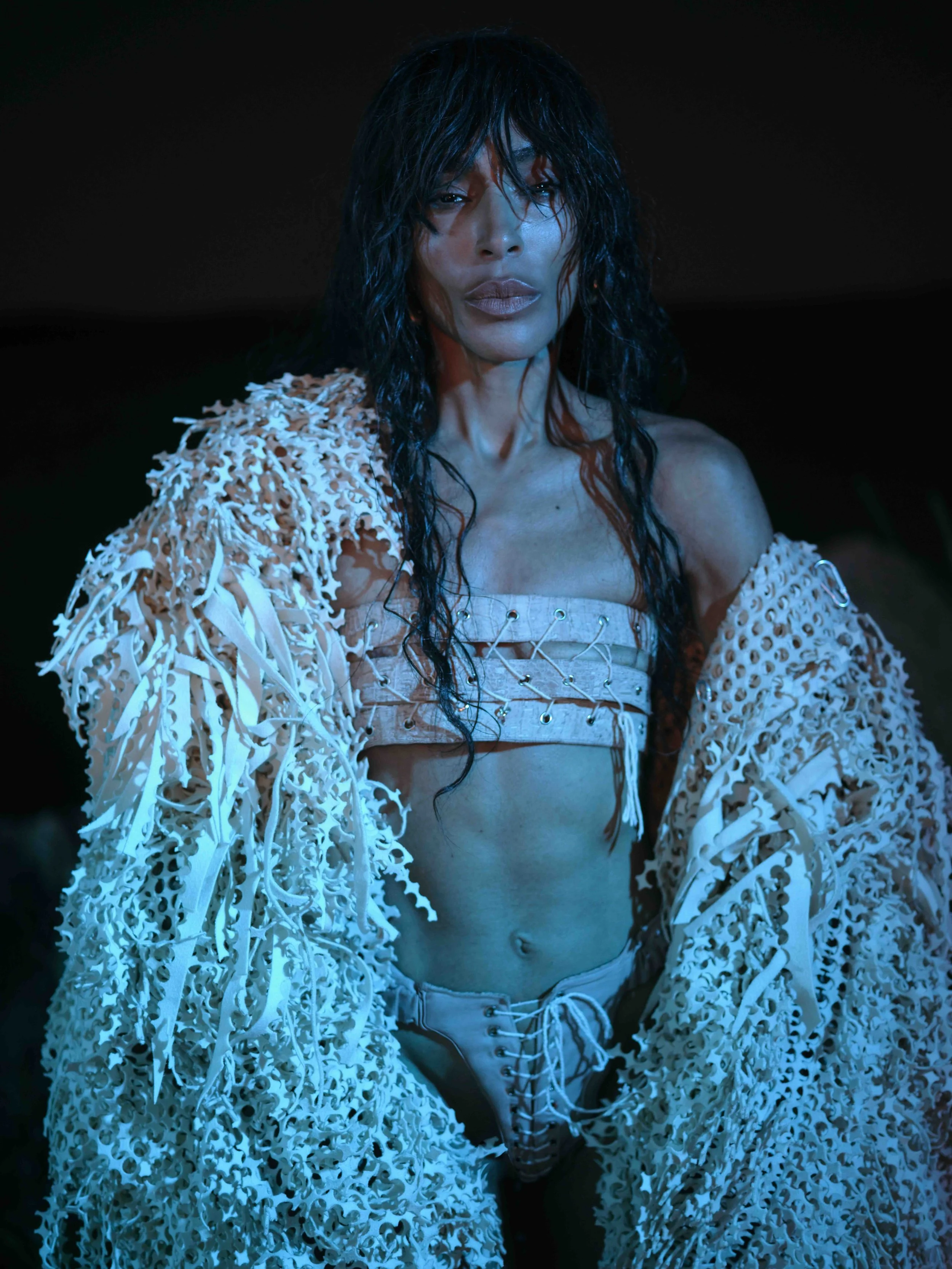
LUNA: For any of our readers who may not know you, how would you describe yourself and your music?
LOREEN: I don’t believe it’s my place to tell people what my music is. Some might describe my music as cinematic, others as pop, spiritual pop or indie. I find it far more interesting to allow people the freedom to discover their own meaning in what I create.
LUNA: In creating the reimagined version of “True Love,” what was your intention going into it or during the making of the record?
LOREEN: It represents a return to where the song originally began. Ólafur Arnalds, who is both a dear friend and an extraordinary composer, was part of the song’s earliest creative process. Whenever Ólafur and I enter the studio together, something rather beautiful happens. There’s an instinctive understanding between us that gives rise to a sound I find incredibly special. We decided to strip it back into something more simplified. So, rather than reimagining the song, this felt more like reconnecting with its original essence.
LUNA: Did taking the time away change anything about your approach to your work when making Wildfire?
LOREEN: I’ve never really looked at it as taking time away. For me, creativity is an entirely organic process—a form of divine flow. When you’re truly immersed in that state, you’re perhaps as close as you can get to the essence of love, to a feeling of absolute wholeness. There’s something beautiful about that. When it happens, I don’t question the timing. I’m simply in awe of what comes through.
I wouldn’t necessarily say that the years changed my approach to making Wildfire. If anything, they reinforced something I’ve always believed: creativity has its own intelligence, and our responsibility is not to control it, but to remain open enough to receive it.
LUNA: On past projects, you’ve really let your strong vocals be the centerpiece of the music, but with Wildfire it seems like you’re exploring and showcasing different aspects of your personal artistry. What was the process like?
LOREEN: Strength can manifest itself in so many different ways. I’ve never perceived my voice purely in terms of power or technical ability. To me, it represents an entire spectrum of colors, textures and frequencies, each carrying its own emotional and spiritual significance. None of these expressions is inherently more powerful or significant than another. They simply serve different purposes.
In many ways, I approach music as I approach life. We are multidimensional beings, and I believe every aspect of our nature deserves to be acknowledged, understood and expressed with equal reverence. With Wildfire, there was never a calculated intention to reveal a different side of myself. I don’t intellectualize what I’m creating while it’s happening. I allow it to emerge, and only afterwards do I begin to observe and understand what has come through.
LUNA: You’ve said that you feel as though this album has varying energies moving through it. What does that mean to you?
LOREEN: When I speak about the different energies moving through Wildfire, I’m essentially referring to the full spectrum of the human experience. Emotion is how we encounter existence itself. If we can no longer feel that, do we still, in essence, exist? That’s a fascinating thought to me. The album is a reflection of that emotional complexity—embracing sensuality, aggression, sorrow, joy, playfulness and vulnerability all at once.
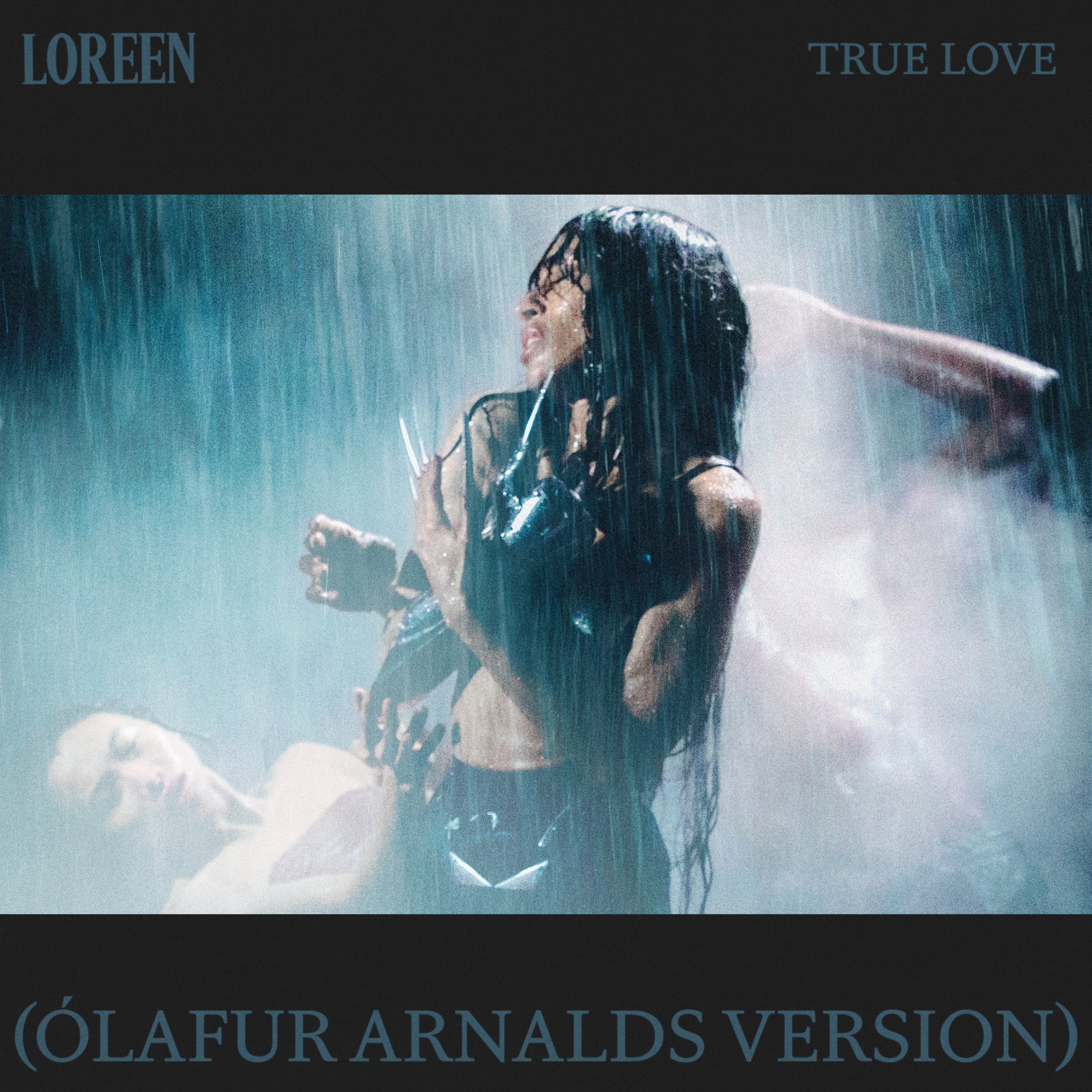
LUNA: It seems as though this album does incorporate a lot of diverse emotions. Some of them oppose each other yet exist at the same time, as highlighted on your song “True Love.” What was it like to take the yin-yang mindset and weave that into the songwriting process?
LOREEN: That’s a beautiful question. For me, it begins with a more fundamental inquiry: what is the function of sound in the human experience? What is its true purpose?
Coming from a nomadic heritage, I was introduced to an understanding of music as far more profound than entertainment. Sound is one of the most powerful tools we have for transforming our inner world, physically, emotionally and spiritually. It is a spiritual, almost medicinal force. Yin and yang, to me, isn’t about opposites in conflict, but about interdependence. Light and darkness, vulnerability and strength, sorrow and joy are all essential aspects of our evolution.
There’s a beautiful expression that says “we are not merely a drop in the ocean, but the entire ocean within a drop.” I find that meaningful because it speaks to the extraordinary vastness of our inner existence. We are simultaneously fragile and immensely powerful, and far more significant than we often allow ourselves to recognize. When these contrasting energies emerge in my songwriting, I don’t necessarily see them as artistic choices. I see them as expressions of the fundamental structure of human existence.
LUNA: You’ve described yourself as sensitive; you come across as very introspective and self-aware as well. How do these qualities help you channel yourself into your music?
LOREEN: I would say I am sensitive, yes, but perhaps in a more specific sense than the word usually suggests. I’m deeply attuned to what happens within my body. I notice its most subtle signals, and at every crossroads, I try to listen to what they are telling me, often before my mind has found the words. I believe we all possess this capacity. The more closely we listen, the closer we come to our own truth. And ultimately, I believe that living in alignment with that truth is where we find our deepest sense of fulfilment.
LUNA: When you’re in the music industry, I can imagine that so much of your time and energy goes into it, which can be really difficult. Long hours in the studio, rehearsals, travel and extreme vulnerability in front of a large audience. What would you say, for you, makes it all worth it in the end?
LOREEN: Of all the things I’ve experienced in life, nothing comes close to the fulfillment of creating something that has the potential to genuinely transform another person’s life for the better.
I’ve always considered myself, first and foremost, a servant of music. To be able to work with sound as a means of helping others reconnect with themselves is an extraordinary privilege. And for me, that is where the deepest sense of purpose lies. Beyond the ego, beyond success, beyond the idea of personal fulfillment.
Because, outside of everything man-made—the structures, the expectations and the noise—there is something infinitely more powerful. And that, to me, is the human spirit.
