
Q&A: Lost Grrrl Found Spotlight Queer Friendship on Single “Time To Grow Up” and Upcoming Debut EP ‘Pupal Phase’
INTERVIEW
INTERVIEW
☆ BY NATALIE D.C. ☆
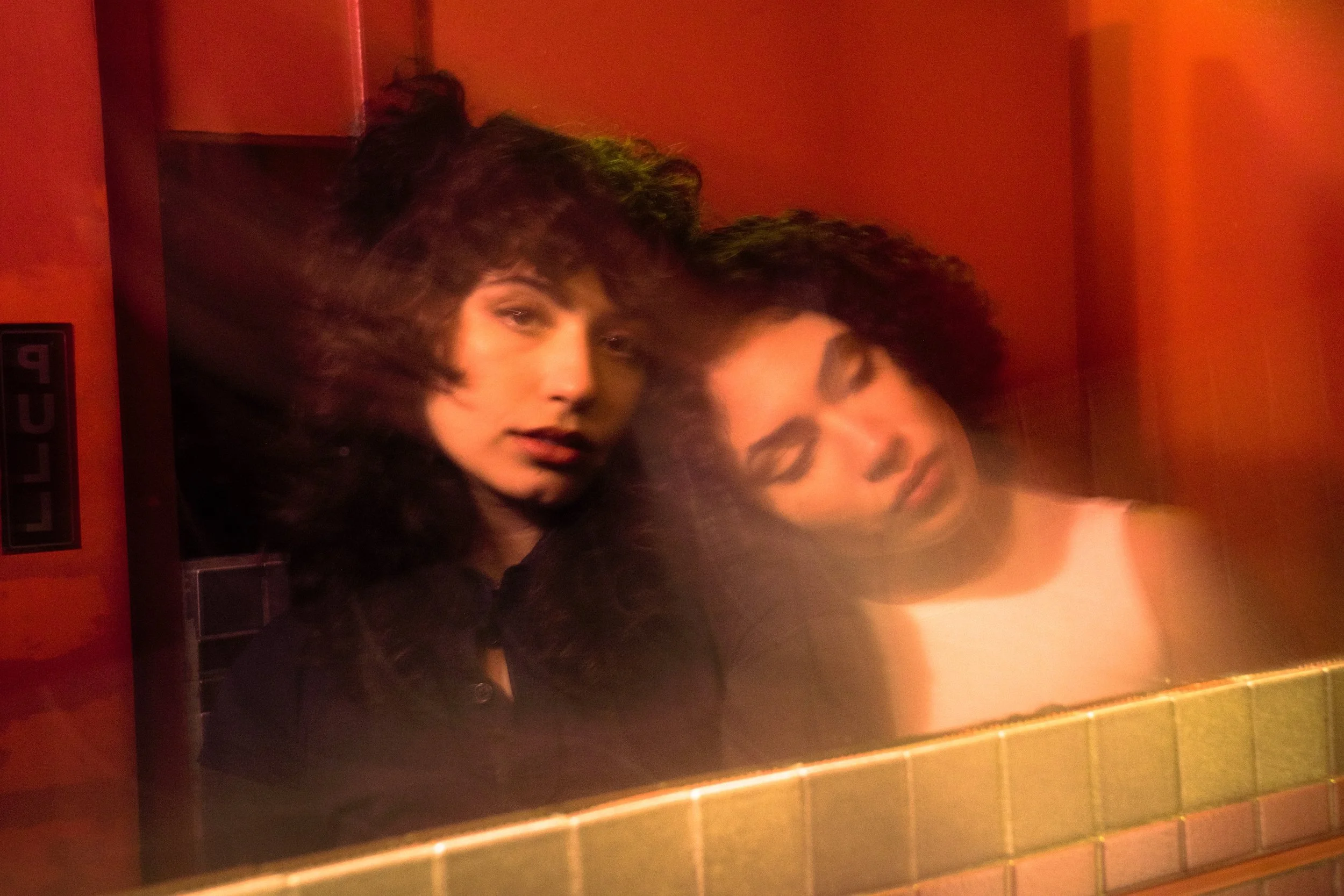
Photo by Chloe Fuller
AFTER A TWO-NIGHT COMEBACK IN MAY—Lost Grrrl Found, the “only play with a mosh pit,” is preparing for the release of their debut EP Pupal Phase on October 23 with ode to queer friendship “Time To Grow Up,” out today.
Composed of 22 original songs, Lost Grrrl Found (co-written by Queens-based musician Holly Nance and Brooklyn-based playwright Penelope Gould) is a one-of-a-kind musical stage production that follows Izzy, a college freshman living in the ‘90s who discovers the power of riot grrrl after joining fictional punk rock band Zipper Lips.
Pupal Phase is a four-track distillation of this coming-of-age story’s emotional core: the fractured friendship between queer best friends Izzy and Morgan. “Time To Grow Up” lovingly introduces these characters and their world. The lyric video, shot by NY-based theatrical director Marina Carlstroem, is a tribute to analog filmmaking with soft visuals, hand-drawn type and scenes passionately filmed on a vintage camcorder.
The trio is also getting ready for their two upcoming live shows, the Pupal Phase release show on October 24 at Stone Circle Theatre in Ridgewood, NY and a West Coast debut at Zebulon in Los Angeles on January 21, the latter excitingly featuring a DJ set from Bratmobile lead singer Allison Wolfe, a foundational inspiration for Lost Grrrl Found and the riot grrrl movement as a whole.
The week of their single’s release, Luna sat down with Nance, Gould and Carlstroem to discuss the thoughtful visual world of “Time To Grow Up,” the multifaceted origins of Pupal Phase and the importance of building community through live performance.
Read Luna’s conversation with Gould, Nance and Carlstroem below.
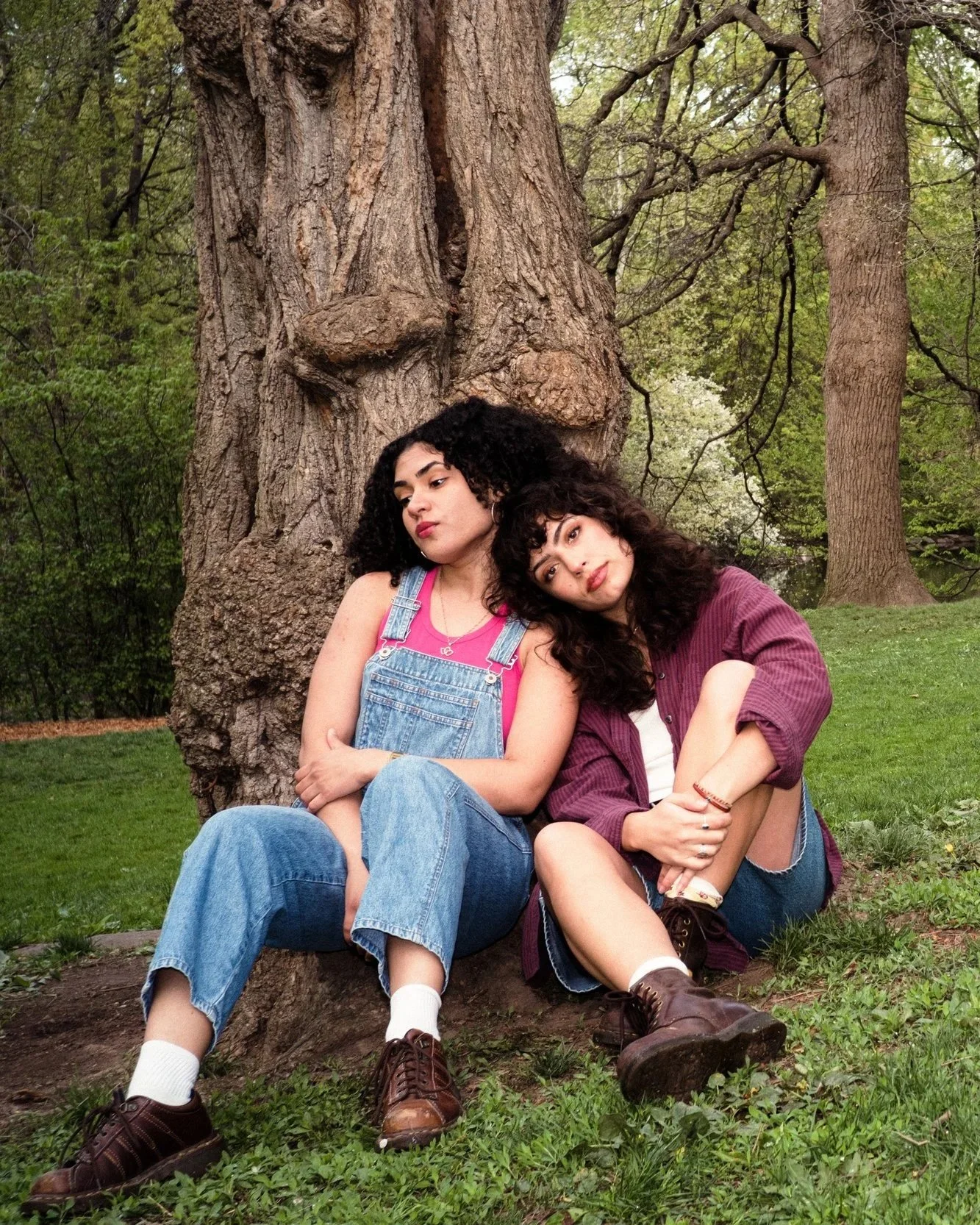
Photo by Chloe Fuller
LUNA: Congratulations on the release of “Time To Grow Up” and the upcoming release of your debut EP Pupal Phase! For readers who may be unfamiliar, can you each describe the sound and style of Pupal Phase from your own perspectives as writers and musicians?
GOULD: Pupal Phase [is] our first EP ever with Lost Grrrl Found, a musical theater/punk project. What we're really excited about with this EP is that we're introducing the storytelling of Lost Grrrl Found into our recorded music. The songs before [“Happy Home” and “Do Ya?”] both masqueraded more like traditional songs that you would hear just from a band. With “Time To Grow Up” on Pupal Phase, it's very clear that this is a narrative project. You're hearing [a] plot happen within a song. So that's [what] it's going for—a storytelling perspective.
NANCE: Thinking about these in relation to the other two songs we've released—these two characters are not musicians, yet at the start of the EP they don't know anything about riot grrrl. It was really fun to think about what music they listened to and what their references would have been. It's super different than what Zipper Lips, the fictional band, would have been listening to and what they would have loved. It was really fun to take a more amateur approach to writing these songs. Which was also a tough exercise because we actually wrote the Zipper Lips songs a lot earlier and when we were much more amateur songwriters.
“Time To Grow Up,” for example, was one of the last songs we wrote because we found it really, really hard to write. Part of that was thinking about a song that two people who have not yet been introduced to the world of music would be singing. So it is, musically, completely different but it does follow their journey through learning about riot grrrl culminating in “Lesbian Spinsters,” which is a punk song and very much influenced by riot grrrl.
LUNA: Lost Grrrl Found’s live shows feature 22 original songs which outline a ‘90s sapphic coming-of-age story set in the Pacific Northwest. What was the process of creating Pupal Phase like, and how did you decide which songs to include in this four-track distillment of the musical?
GOULD: It was something that we all talked about a lot. It was definitely a confusing conversation. At first we were like, “What if we just each choose one that we like a lot?” (laughs). There's a lot of ways that this could be approached, but we decided to figure out a frame that would be related to our storytelling.
This EP really focuses on the friendship between Morgan and Izzy, best friends who have a falling out and then an eventual rekindling after lots of drama between the two of them on tour. It really follows that friendship arc, in part because we wanted to emphasize in this story that it's not just a coming of age with queerness as a romantic part of your life, but also the way that queer connections are built through friendship. What felt really exciting to us was focusing on four songs that related to their relationship. That was the container.
CARLSTROEM: When we've posted snippets online in the past, there have been people asking, "When will this be released? When can I listen to this song?" But there's so much storytelling in the show that we felt really excited about the idea of, “Okay, what is the sampler of Izzy and Morgan's arc that we can give to somebody who hasn't been able to make it to a live show yet and may not be able to make it to a live show for a while?” So I think we really put our heads together to figure out, “Okay, how can someone who's never seen the show listen to this and not feel like, ‘Okay, and what happens next?’ but still have that curiosity?”
GOULD: There's also balance in some structural ways [on] the EP. There's two songs that both characters, Morgan and Izzy, perform on, and then there's one song that each of them have solo. “Time to Grow Up” is one of those duets, and then “Pupal Phase,” the titular song, is an Izzy song, and then we have “Spiraling Down,” which is a Morgan song, and then both of them again on “Lesbian Spinsters.”
LUNA: “Time to Grow Up” follows college freshmen Izzy and Morgan in the messy aftermath of their friendship breakup and its lyric video portrays the pair facing their fractured relationship head on at the library and in the middle of a forest, all in a nostalgic camcorder-shot style. How did you decide on the soft visual identity of this video compared to the flashy punk live shows of Lost Grrrl Found and its riot grrrl inspirations?
NANCE: It's so interesting to try to make a video, period. It's so hard, timing-wise and everything. So in a practical sense, we're like, “What is something we can do that evokes feelings of school and growing up and nature?” We live in New York, so it was, for us, very much [the] park and library. That obviously serves this idea of watching [Izzy and Morgan] grow up together. You feel immersed in it. We wanted to illustrate Izzy and Morgan pre-learning about Zipper Lips, pre-going on this tour and how starkly different it is from when we eventually see visuals for “Lesbian Spinsters.”
CARLSTROEM: One thing we talk about sometimes with the live shows is that the project is about looking backwards in history for what inspires Lost Grrrl Found. I've often directed an actor that the live show is a physicalization of reading those journal entries from the time or the zine that Izzy makes at the end of the show. Are we experiencing that in real time? Maybe with [this] project.
One thing that felt exciting to us about making this video was that nostalgic soft wash. When we see [Izzy and Morgan] in the forest together, [it’s] us getting to see as an audience member what their friendship looked like before this rupture, before this moment. We felt really excited by the idea of, “What can we not show on stage? What do we get to do now that's really different from what we get to do in the punk club space when we're doing our live show? And how can we paint this relationship that they have in a way that's different than what we get to show on stage?”
GOULD: It's a real camcorder, so no edits. It's Marina's grandfather's camcorder.
LUNA: That’s so cool. Lost Grrrl Found is a family business!
GOULD: You couldn't even imagine how true that is (laughs).
LUNA: Pupal Phase outlines the emotional core of Lost Grrrl Found: protagonist Izzy and Morgan’s fractured relationship. Was this EP created as a love letter to Lost Grrrl Found fans, an introduction for newcomers or a little bit of both?
GOULD: Definitely both. “Lesbian Spinsters” is a song that, when we play it live, people are like, "So when am I going to be able to hear it?" We feel the same way! That is an amazing song to listen to when you're down, that can really change the whole vibe, bring you right back up. We also wanted it to be something that people could discover and start being curious about the project from.
CARLSTROEM: We felt excited by different frames to be able to view this narrative and this world within, from the live show [versus] the video. We didn't talk about the fact that every lyric in that video is hand-drawn.
GOULD: These are the two hands that drew them (laughs)! Marina shot [the video] and Holly edited it. Marvelyn Ramirez and Abby Mohaddes, who play those two characters in the stage production, are featured on the EP itself. So really, it's all in the family again.
CARLSTROEM: In our quest for analog, that also felt really exciting to us with these songs “What kinds of things do we get to play with in a recording studio that are different than the things we play with in a live show, how a band plays together and the energy that we feel with a group of people in a room? What are the things that we get to add?”
That was also a lot of what felt exciting to us about getting to imagine these songs for recording spaces and bring[ing] a level of intimacy in listening to them [with] people, both our fans who've heard it maybe five times in the live show—as we've done the shows in New York a bunch—or people who have maybe seen some of our stuff online but have not gotten a chance to want to get more than just a snippet and get to actually immerse themselves in the same emotional world that we get to bring people in the live show.
LUNA: Are there plans for future EPs that expand upon other aspects of this multilayered musical?
NANCE: We're always ideating, so the short answer is yes, of course. We have to figure out what we can do. In a dream world, it's LGF Original Soundtrack, all 22 songs.
CARLSTROEM: The Lost Grrrl Found-track.
NANCE: That's good (laughs)! We definitely are going to release more music. I wonder if it will be thinking of another framework for it, the same way that we did for this one. Maybe the next one charts a different character, a different relationship or a different story. Definitely more music, but no specific plans yet.
GOULD: Our next big focus is taking the show to more cities, connecting with fans outside of New York that way. We're going to start meeting all of them through this EP and then hopefully meeting them in person.
CARLSTROEM: I’m the one, of the three of us, who comes with the most musical theater background. I hope that doesn't scare any of our fans that know and learn about the show. When I was a teenager, there were musicals that were not Broadway musicals that I learned about through Tumblr and Twitter. I was watching slam tutorials of Heathers Off-Broadway being like, "OMG, this is amazing. I can't wait to hear more of the music." I feel really excited by the idea of people being able to do that. That is definitely a big hope of ours in terms of doing a full soundtrack is somebody being able to understand the world of this show and imagine a DIY punk musical is possible through getting to hear it, even if it's not in [their] backyard yet.
We're also really excited about being able to not be so New York-centric in the Lost Grrrl Found verse. We're excited to start that journey with LA in January and hopefully continue to bring it [to] many other places in the near future.
LUNA: You have two upcoming live shows on October 24 in Ridgewood and on January 21 in Los Angeles, the latter featuring Bratmobile lead singer Allison Wolfe. What are you most looking forward to as you prepare for these shows?
NANCE: I have different things that excite me about both of these shows. I'm really excited about the Ridgewood show because we're actually featuring a new cast member for one of the roles, which is always very bittersweet, but is also really exciting, especially for me as music director and for Marina as director to work with someone new on these songs. It revitalizes them and just gets me thinking about the songs. Having to reteach someone these parts, I'm like, "Is that the best part? Does this part make sense? Or should I rewrite this?" I think it really forces you to take a step back and look at the project, which is fun. Sometimes we have people switch in and switch out for different roles. It's always fun when that happens to shake things up.
For LA, obviously I'm so excited to have Allison Wolfe DJ. I love [the venue] Zebulon. We're all also from California, so it feels very perfect to have family be able to see it, who maybe can't see it in New York. We're also debuting a new cast on the West Coast. Casting this in LA is really fun, teaching it to new people and seeing the way that new people interpret these roles will be really interesting.
CARLSTROEM: [At] the shows that we did at TV Eye, after we had recorded this EP, we got to bring some more of the new music parts that we had brought for the EP back into the live shows. As Holly was saying, having new people on the team is always such an exciting moment to be able to think about the way that different energies play off of each other.
We are so grateful for our long-time cast members who have put so much energy into building these characters. I think that it's really fun to have somebody new create new chemicals in the room. With a cast of only six, it really is an ensemble cast because everybody's playing music, everybody has engagement with each other, so it can totally change the energy in a room in really fun ways.
We started to get more choreography-heavy over time. There are some really fun dance moments that were happening [at] the TV Eye shows. We did our first non-workshop show at Stone Circle [Theatre] in fall of 2024, which is crazy to think that it's been two years since that show. I love that space—there's this really cool balcony space that we're definitely going to utilize. It's a big space so there's definitely going to be more dance.
We've been talking a lot for LA. We bring in community partners for all of our shows to table. We've been getting excited about who we can call in LA as community partners that would be a different set of people than we might engage [with] in New York who are more focused on hyperlocal issues in LA, in that community.
GOULD: I'm super excited that we're returning to Stone Circle Theatre. Out of all the spaces we've done, it's so aligned with what kind of spaces the riot grrrls were performing in, in terms of finding a space to perform [in] and really making the most out of something that might be less traditional. Doing it in a church feels amazing.
About folks leaving, what's so cool about Lost Grrrl Found is that all these artists have these amazing, vibrant solo projects. It feels like, in some ways, people come to Lost Grrrl Found,
grow from it, take what they need from it and then figure out how they can pursue the riot grrrl lifestyle to some degree, which feels really special. We feel super lucky to be part of that and to have the best group of collaborators—as it grows it just feels better and better.
For LA, are you guys kidding? Allison Wolfe's gonna be there! That's the craziest thing in the world for us. When we were researching and thinking about how we wanted this story to be structured, we were so inspired by the way that Allison Wolfe talked about forming Bratmobile and being in that band, the relationships and friendships that exist within a band and how complicated they can be. Obviously, musically, Bratmobile is a huge influence on the sound of Lost Grrrl Found, so this is a dream come true.
LUNA: Finally, what are some pieces of media (music, film, literature, etc.) each of you’ve been drawing inspiration from recently?
CARLSTROEM: I have been devouring Jamie Fisher's new book about Elliot Smith, a biography called Nobody Broke Your Heart. It's a really lovingly researched piece that talks to a lot of people who have been important in his life. I've been super inspired by that book because the scenes in his life are very adjacent to the work that we do now. A lot of the work that he made really believed and engaged with DIY values. Hearing about his early tours with collaborators who continued to be a big part of his life—like Joanna Bolme, who is in Calamity Jane—it's amazing to think about these people who have been such a formative part of my understanding of what a song can be and also their relationship to their communities really being a core tenant of how they engaged in their music.
NANCE: In the last few months, thinking about this EP, I've returned to loving a lot more introspective, softer stuff. I am obsessed with this album called Highway to Hell by Star Moles. It’s so good—I sent it to like 50 people. I was like, “Everyone needs to listen to this.”
On a similar note, the Aldous Harding record, Train on the Island—I was obsessed with that. Thinking about music that is more sparse and pulled back, but just hits so hard.
GOULD: Because of this EP, I've been thinking a lot about what it's like to be an early days college student because that's where Izzy and Morgan are during the EP, so I'm rereading one of my favorite books, The Idiot by Elif Batuman, which is about a young girl who's very intellectual and very cerebral trying to understand herself. A lot of times when I'm reading that book, that character reminds me of Izzy. It feels really comforting to think that there’s more and more stories of young women who don't necessarily know exactly what they want, but have strong and big ideas about the world regardless. I find that very inspiring and comforting.
CARLSTROEM: I think we often forget to talk about plays. The Potluck by César Alvarez that went up at Soho Rep in New York this summer was completely revelatory for me. It was an interesting experimental musical about the playwright grappling with their experience of their parents’ engagement in an American Nazi Party and KKK-organized act of violence against labor and racial justice protesters in the ‘70s, and grappling with the legacy of that experience in a really beautiful way that was both about acknowledging that history and hoping to catalyze people in the present. That felt really exciting and connected to LGF. I feel excited that we have similar aims and there are other folks that we can watch do that work in [this] space.
