
Q&A: Organic Strings and Digital Dreams: Luna Luna Talks New Single “Sola Esta”
INTERVIEW
INTERVIEW
☆ BY SAMANTHA SORIA ☆
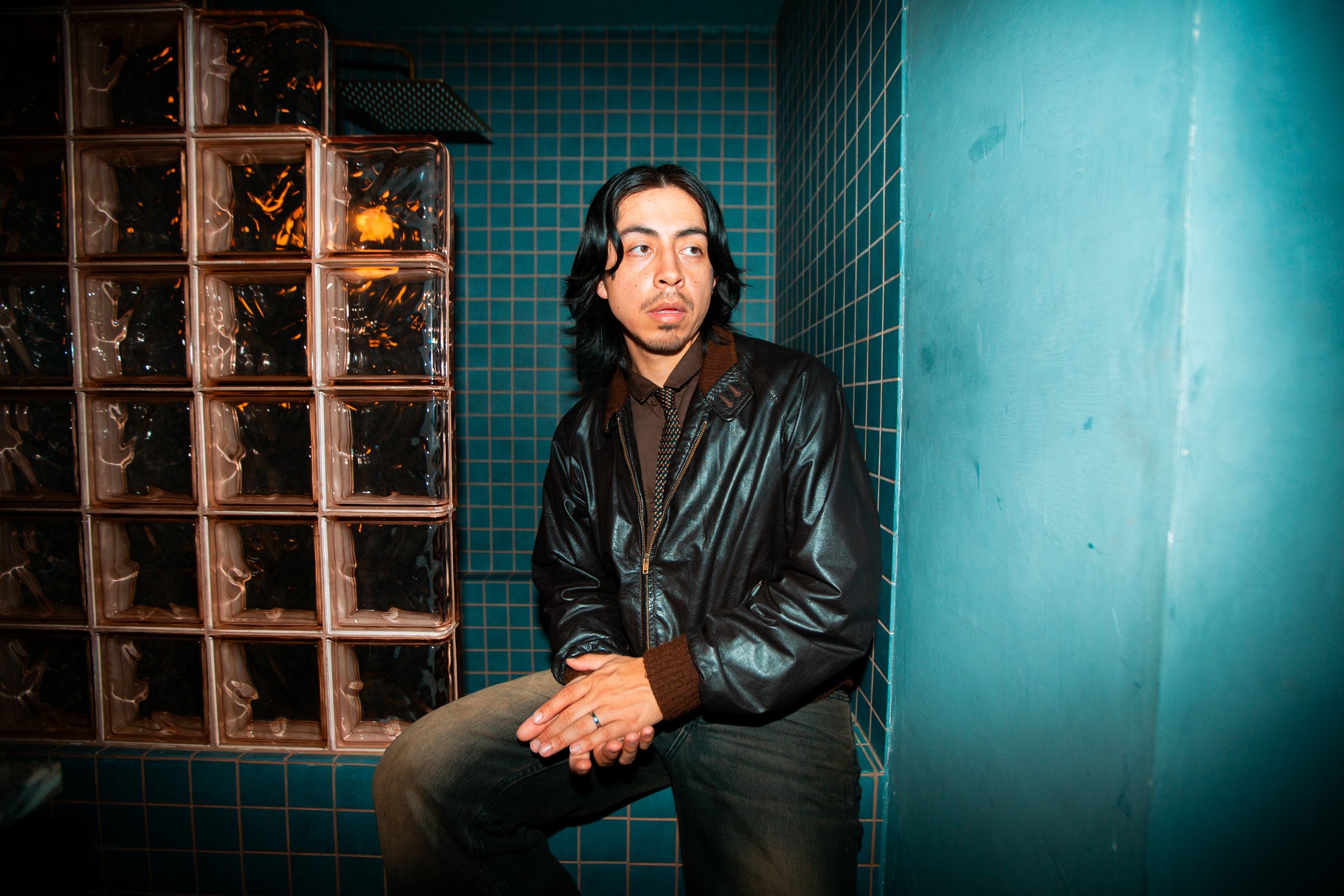
WITH HIS NEW SINGLE “SOLA ESTA,” COLOMBIAN-AMERICAN ARTIST KAVVI—better known as Luna Luna, doesn’t just alternate between English and Spanish; he thinks and creates in both. While the lyrics are entirely in Spanish, the sound leans into pop territory, and as Kavvi describes it, “English pop.”
Focusing on the loneliest person in the room—the one who is loud, an outgoing extrovert who feels most alone once the party is over—“Sola Esta” combines digital textures with organic elements, including acoustic guitar. The single marks a return to the dreamy synth-pop that put Luna Luna on the map and introduces an exciting next chapter.
The Luna Collective spoke with Kavvi about “Sola Esta,” the first single from his upcoming EP For Siempre Pt. 2, going back on tour, and much more. Read the full conversation down below.
LUNA: Your mom was the one who introduced you to a lot of salsa, merengue and cumbia. Which artists or traditions from your childhood have shaped your solo sound the most?
KAVVI: I think it's just Colombian music. I don't know if you know Vallenatos, but that's basically our staple. I don't think any other country really makes that kind of music, but it's very melodic. Listening to it when I was a kid and listening to it now; now I can kind of hear it more in a songwriter's brain, where I'm trying to dissect it, and I feel like, with the way I write, I always try to write in a melodic way. So yeah, vallenatos, salsa, and all those Latin genres.
The first music that we dropped, For Lovers Only, I think some of the people really connected with more of the sad music from Luna Luna. But growing up with all the music my mom showed me, I feel like I've always wanted to make something people can still move to, so I’ll drop a sad song every now and then, but I still definitely like having songs with energy that people can move to.
LUNA: When you think about your relationship with the music you grew up with and were surrounded by, what parts feel inherited and what parts feel reimagined?
KAVVI: I think the inherited bits are the rhythm-based things. I don't play drums, but I really understand rhythm. I'll program the drums when I make music, and I think that comes from being able to dance. I feel like that's something inherited. I learned to dance from my mom, but I feel maybe sometimes you either have it in you or you don't. For some people, it's just easier to dance than others and that comes from your culture, but the parts that I feel that are reimagined are what I'm trying to do, to blend the more English pop sounds from people like Tame Impala, Frank Ocean or just English pop, but put Spanish lyrics over it and combine the two, which I feel is something that “Sola Esta” is kind of doing.
I think most of the production sounds like English pop, but obviously, the lyrics are all in Spanish. What I'm trying to do with this new wave of music is always include an organic instrument in each song. For example, I have an acoustic guitar, and it kind of doesn't sound like one on this song, but it is. I just want to combine an organic element versus the more electronic digital side.
LUNA: In your last interview with The Luna Collective, you mentioned how you’re always going to be bilingual in how you think and create. During your creative process, when you find yourself hitting a block, do you keep pushing or do you lean on that other language to express what you’re feeling or trying to say?
KAVVI: Yeah, it's been interesting switching over to writing in Spanish, because the first couple of albums were all in English, and sometimes I still get ideas. I guess maybe I told myself or my brain that now I'm gonna write in Spanish. So I think when I get ideas, I'm already thinking in Spanish, but sometimes there'll still be songs that just hit me, and it feels like an English song. I'm not choosing it; it's just that the thing I'm coming up with sounds English, or this thing that I'm coming up with sounds as it should in Spanish. I don't know if that answers your question [laughs].
LUNA: No, it does! It made me think of when I'm talking with my mom or someone else in my family. Have you ever seen the movie Past Lives?
KAVVI: Yes, actually!
LUNA: I can't remember her character's name right now, but her husband tells her that she dreams in Korean, and he wishes he could speak Korean fluently so he could understand her dreams when she sleeptalks. I feel that can kind of be related to how sometimes, when we're trying to express ourselves, or we're trying to say what is in our inner thoughts to someone else, but we get tongue-tied in English, so then we have to switch to Spanish, but then it's kind of hard when that other person doesn't speak Spanish. So it's like, can they get what I'm saying?
KAVVI: Each language has some things that are best explained in that specific language. Some things don't translate for some reason.
LUNA: That's the thing that I love about what you're doing with your music. You're not afraid to switch between English and Spanish and explore that duality of the two languages; and have them come together, but then also stand out on their own, and then play with these different sounds and genres.
KAVVI: Yeah, you know what? I think when I was writing in English, it felt easier, like I didn't have to put as much emphasis on the lyrics. I feel like some English songs you can kind of say whatever and it'll still work, but in Spanish, I have to be more careful with what I'm writing and make sure it makes more sense. I'm writing the words with more intention or with more care than I was when I was writing in English. I don't know if that's just the language thing, but it feels like I have to work harder at the lyrics or give them more care in Spanish.
LUNA: Would you say that’s the case for this song?
KAVVI: Yeah, I feel like I was trying to make everything work and be intentional about every line, and in English, I don't know if it would have been that way.
LUNA: Let’s talk about the new single “Sola Esta.” What’s the story behind it, and when did it first come about?
KAVVI: It started in Austin, I think, in 2024. I had my friend Julian come over to my apartment, and we were just working on something. It was random, and we worked on it for a bit. The song's been in the background for a year and a half, just sitting there, but whenever I had to share demos with people, this was a song that people always kept pointing to, like, “Oh, I think this is the best one that you have that's unreleased.” I was iffy about even finishing it, but every time I showed it to people, they're like, “Oh, yeah, I like this one the best.” So I finally just had to put the finishing touches on it for this second part of For Siempre Pt. 2.
We made the beat and everything at first, and [with] “Sola Esta,” that's what came out. I basically tried to make it about someone who maybe goes out and seems like they're outgoing, an extrovert. Somebody will be out at a place, like a club or party, and seem like they're the most friendly, outgoing, extroverted person, but once they're not there, they feel alone and stuff. I feel like sometimes the loudest person can actually be the loneliest, so it was more about that.
LUNA: As for production, walk me through the instrumentation. You’ve got synth, obviously. But at first before you said it was guitar, I thought it was a sitar. It kind of almost mimicked that sound.
KAVVI: Every sound in that song is all digital, except for that acoustic guitar. It's just a regular acoustic guitar played up to a microphone, recorded raw. But after that, I added effects and everything to make it not sound like a plain old acoustic guitar. I don't know what else I can tell you about the instrumentation besides that. I'm just trying to blend the digital stuff with at least one organic element. That's what I'm going for right now.
LUNA: How do you approach balancing synth textures with Latin rhythms without losing the essence of either?
KAVVI: Yeah, I think they're just standalone things and just combining things that haven't been combined together. I think that's what creates something new. For example, I think if I took away the acoustic guitar, you could point to more artists who have made productions like this song. I think once you add that element, it becomes more unique.
LUNA: For Siempre Pt. 1 came out October of last year. Was part two already done when you released part one or was it something that was developing?
KAVVI: It was developing. There were long song sketches, but it's still taking shape to this day, honestly [laughs].
LUNA: You’ve also got a tour coming up soon. You've got a show in late March, and then the following month, you’ve got shows from mid to late April. How are we feeling? Setlist already done?
KAVVI: Yeah, I think it'll be an extension of the first part of the For Siempre tour, but there will be new songs. It’s gonna be different. It’s not gonna be the same as what the West Coast got. [East coast] is going to get an updated, refined version.
LUNA: “Sola Esta” is our introduction to For Siempre Pt. 2, but without giving away too much, is there another song on the EP that you’re excited for fans to hear?
KAVVI: Yeah, hopefully it'll be the next one that comes out, but it's a song that I came up with on a whim during an Instagram Live way back in 2019. I went live, had a guitar with me, and started playing something. Then half a song came out of me, and I've been holding on to that song since then.
I've always liked it, but something was telling me that it was the right time to release it. Not that I had full lyrics when it was written, but I originally wrote it in English and sang it in English, but maybe it was always meant to be in Spanish. I switched it, and I think I do like it better in Spanish. It feels better, so maybe that's why I held on to it for so long. So I'm working on that one now, and hopefully it comes out the way I want.
LUNA: Wait, can you say where on the track list that'll fall?
KAVVI: It'll probably be the first track.
