
Q&A: Madi Diaz & The Unlikely Heavy Metalness of Folk On “Fatal Optimist”
INTERVIEW
INTERVIEW
☆ BY CHLOE GONZALES ☆

Photo by Allister Ann
“YOU CAN ALWAYS ASK FOR HELP”— Madi Diaz elaborates, “I have a couple of people that I will always turn to when I need help. This was kind of an experiment, how close can I get to me first?” Escapism is very prevalent nowadays: Buying into consumerism in person or virtually and scrolling through social media the minute those hands touch the phone. To escape what exactly? Maybe feelings, a bad day, the news. Madi Diaz escaped civilization and lent herself a shoulder to lay on, dissecting her heartaches and pushing her boundaries on what she could handle.
Luna got to sit down with Madi Diaz to talk about her newest album, Fatal Optimism, and the workings around it.
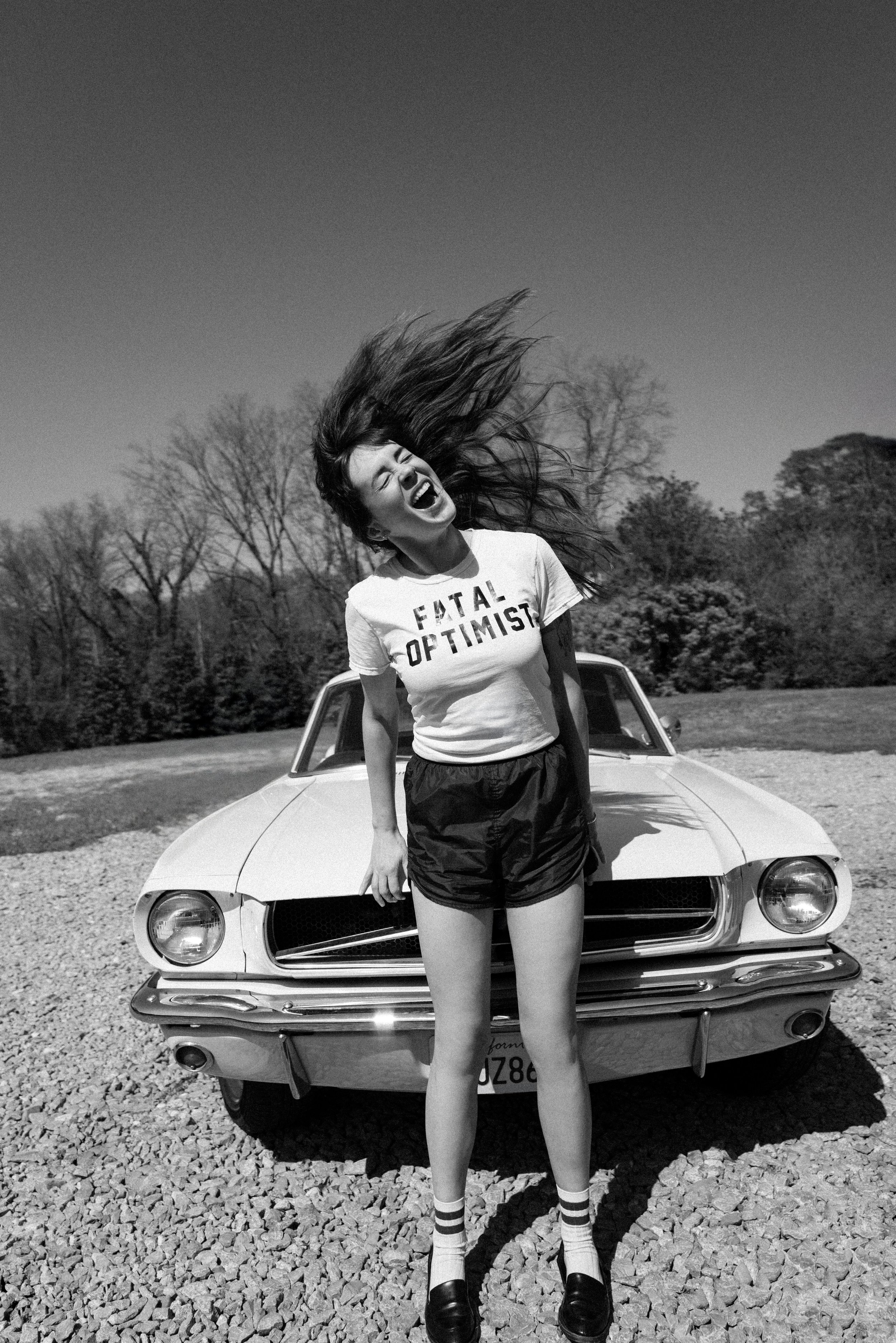
Photo by Allister Ann
LUNA: Do you feel like these albums are a trilogy?
MADI DIAZ: I hope that it’s a trilogy. I would love for this to be like The Return of the Jedi like the last in the series of going through shit, but I mean in reality, I have no idea what’s gonna come next. It’s a beautiful thing to not know and it’s a curse to not know.
LUNA: No absolutely, because I was gonna ask if it was closing that chapter or an open-ended story, but I guess it’s up in the air.
MADI DIAZ: I use songwriting to process my feelings and figure out why I’m experiencing what I’m experiencing and try to say it in the most direct narrative as possible. But you know, I was talking about this to a friend the other day. We were talking about new feelings, new people, and falling in love. And I guess that’s kind of the gift of starting over again, is that you get to feel all those beautiful first time feelings. But, yeah, I have no idea if this is the last.
LUNA: For sure, and you never know you may find new love, fun breakup, round four…
MADI DIAZ: Yes, exactly, what if there’s a secret fourth season? I don’t know.
LUNA: I was reading another interview where you said that lyrics kind of come to you, do you still feel like that’s your process?
MADI DIAZ: Yes! I guess you know when I’m in a writing process, I try to pay attention to what words are kind of recurring or what phrases start to bounce around and in my heart. I think, specifically when it comes to this record, I think ambivalence was a word that kind of kept coming into my space. And I thought ambivalence meant more of an apathetic sort of feeling, but it's kind of like the opposite, like the polar opposite of apathy, kind of you care in every direction but you can’t move. I guess I was unraveling that feeling, trying to metabolize it and make sense of what I was feeling.
I think about finding a word, phrase, or recurring moment, like flowers, “why do you have to bring me flowers?” Another song coming off the record was just like this moment that kind of kept replaying and replaying in my head until I wrote it down, So I guess I use the words and the lyrics to kind of free myself of repetitive thinking.
LUNA: Were there any songs that were kind of hard to find lyrically, that you had to pull them out of you?
MADI DIAZ: I wrote “Good Liar” a few years ago, and it’s funny, the hook of the song is, “I’m a good liar.” And for a while, I couldn’t really tell if that song was for me because I’m actually a really bad liar to other people, like a really horrible liar. I have the worst poker face, there’s just nothing I can do about it. But when I’m talking to myself, I can really tend to gloss things over or try to make the best out of a really shitty–make a bad thing better. You know what I mean? Make a shitty situation feel better than it does. So yeah, I think that one was like, I knew that I loved the song, melody, and lyrics, but even if I tried to change the hook of it, I’m not a good liar. But that definitely didn’t feel right either, And then, once I was able to process that, that this song is really about me talking to myself and putting shine on things, I was like, “Yeah shit, I really am a good liar.” I had to walk myself all the way back into my own honesty.
LUNA: That’s really funny, I’ll think of that when I listen to the song now. When you wrote this record, did you feel isolated at all when you were making it as you were hopping around locations?
MADI DIAZ: Yeah, I think travel can be pretty…like when you’re just sitting in the center of a place while humans are moving through you like streams and you got your headphones on. You kind of are just walking through a crowd of people, being a part of everything and absolutely nothing at the same time. Yeah, it was very isolating.
LUNA: What did being isolated teach you that collaboration or community couldn’t at the time?
MADI DIAZ: There was no community, I was by myself. I was going through something pretty intense and really needed to do a lot of cataloging, I had a lot of explaining to myself to do and wanted to do that by myself, because it felt very hard and ugly and scary and I was feeling a lot. I was feeling it at a volume that I didn't really want to expose anybody else to. That was kind of why I isolated to the extent that I did. I had a couple of friends around, I have one collaborator and she’s like a little sister to me. Her name is Savannah Santos, she’s a really special person. And you know, there are certain people that you can trust, showing all of these parts of yourself to, you know what I mean? Sharing these inside-outside thoughts, where even when I say things that scare myself, I can rest knowing that this person is going to know how to sit in this hard moment with me and not like needing to be soothed by anybody. I don’t need to be told everything is going to be okay. I just kind of need somebody to sit with me sometimes or sometimes I just really need to be the person sitting with me. I mean like I need to be my own comfort blanket in that zone when some of the hardest things find their way to the surface and onto paper.
Previously with my other records, I’ve been able to kind of take a lot of things to people and have them help me finish my sentences or finish the sonics of a record. And this one really was just different so I leaned into it being hard and different and let it kind of come out like that. Because it felt like, “why the fuck not?” There is no time like the present to really go hard on myself and see what is just there without relying too much on someone else. You can always ask for help, you know what I mean, I have a couple of people that I will always turn to when I need help. And this was kind of an experiment, how close can I get to me first?

Photo by Allister Ann
LUNA: That’s super cool, almost like pushing the boundary.
MADI DIAZ: You know, I do think that culturally we’re in a place where it’s like don’t isolate. Like, always call for help. Like when you need help, when you’re feeling this, when you’re feeling that, I want to know myself well enough to know that I can trust myself to say I need somebody to come in and be in this with me. But also, I am strong enough to carry myself in some of these moments. And it’s really important to me to do the work of knowing what my words are like, knowing the intensity of my words, knowing what I’m saying before I walk into the world and try to give that to somebody.
LUNA: I was also wondering in these past two albums, especially given your experiences with this album, how does it sonically reflect now? How have you evolved or have you stayed more consistent with the sounding?
MADI DIAZ: This record is completely different than the last couple of records. It’s not an easy listen, it’s not a pop record or has a lot of bells and whistles. It’s pretty raw and pretty direct. Sometimes I’m kind of talking into my breath, sometimes screaming in your face. It’s definitely a lean in record, it’s not a passive listen. I think this record specifically I wanted to make sure that the songs could stand by themselves on their own two feet without relying on a lot of production or other musicians or musical moments. I think that we did a really good job kind of really only using what was necessary and keeping only what was necessary. I think we were actually pretty brutal about what was kind of allowed to go in on the scene and be a part of these songs.
I want to think that it's kind of hardcore, you know? I want to think, speaking specifically to the song “Heavy Metal,” when I was a teenager, all through my 20s and a little bit into my early 30s, I loved and still love going to basement, like, punk shows. That’s not sonically who I am, I always kind of felt like, “Well, mine sounds prettier and comes out sad girl.” I want to think that with the words being as intense as they are, that there’s a little bit of the heavy metal genre in some of the songwriting and in some of these recordings, because it’s just intense and direct.
LUNA: What non-musical inspirations did you have for this record?
MADI DIAZ: Traveling, whether I was a part of a band or on my own tour, or moving in the world in whatever way like riding a train or plane or in a car with a friend. I think just kind of moving through the world in my body was strangely inspiring and just kind of trying to hop from place to place just singularly alone was a lot of what inspired this record. But you know, I also read a fair bit. I was reading Maggie Nelson’s Bluets, which is a collection of short stories, essays, all about her love affair with the color blue. I really leaned into the intensity and drama of that. I love her storytelling. I was also reading this other book called Couplets, which is another collection of short stories.
LUNA: What would be the most ideal transportation for this album?
MADI DIAZ: I love that. One of my favorite things to do is walk through any major city with noise cancelling headphones, and just play out your own drama. I feel like when you’re just going for a long walk with headphones on, or like standing in line waiting to go through baggage claim at the airport, that kind of stuff. Or you’re just standing in a really crowded shop, waiting for your coffee order to come up. Like just these kind of passing through moments, hitting all of these major checkpoints, but kind of always moving on to the next one in that way.
