
Q&A: Mae Krell on “The Burden,” Healing and Learning to Live With Yourself
INTERVIEW
INTERVIEW
☆ BY INDI TEJEDA☆
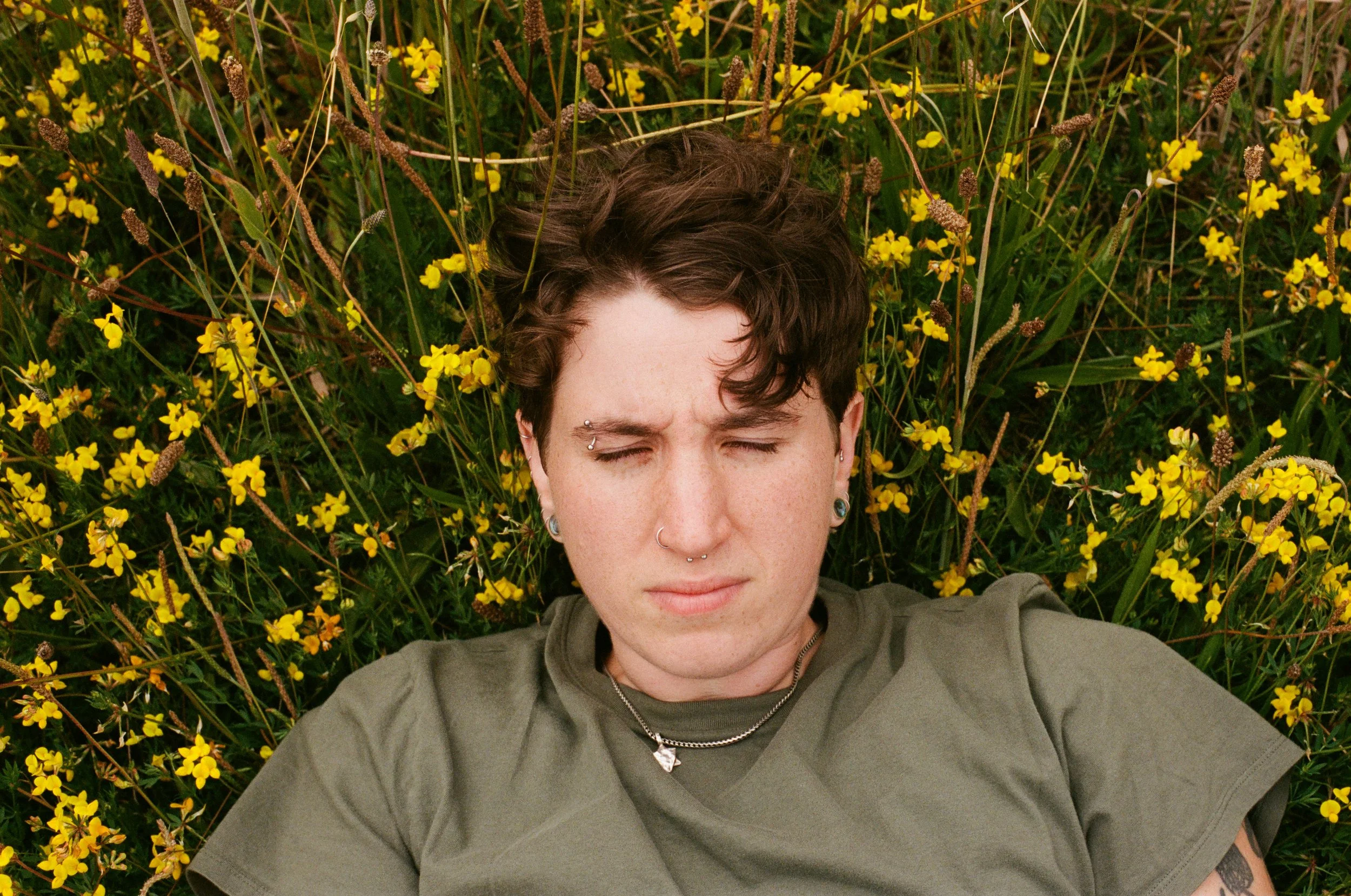
ON HER SOPHOMORE ALBUM LULLABIES FOR THE SOUL THAT STUCK AROUND—Mae Krell moves beyond the coming-of-age narratives that defined her debut and into something more complex: living with the parts of yourself that don't simply disappear once you've grown older. Rather than offering tidy resolutions, the singer-songwriter explores the reality that healing is rarely linear. Old insecurities can return in unexpected ways, mental health can shift shape over time, and self-forgiveness often arrives long after the moment you think you've moved on.
That perspective is at the heart of her latest single, "the burden," a deeply vulnerable reflection on body image and the quiet ways those struggles continue to shape everyday life. What began as an abandoned idea eventually transformed into one of her most personal songs, sparked months later after an episode of sleep paralysis and culminating in a closing lyric that reframes the song's meaning in its final moments.
In conversation, Krell reflects on the evolution of "the burden," how her understanding of healing has shifted since her debut, and the balance of creating deeply personal music that resonates with listeners while preserving the boundaries that allow her to continue telling those stories.
LUNA: You describe “the burden” as a song confronting body image issues you thought you had left behind. What surprised you most about revisiting those feelings as an adult? Did writing the song change your relationship with them?
KRELL: When I think back to my childhood and early life, my (often rocky) relationship with my body is one of the first memories I have. Those issues really came to the forefront in my teenage years, and as I got help and got older, the ways in which those struggles manifested changed very drastically. When you’re so used to something looking one way, it’s really easy to think you’ve left it behind when it hasn’t shown up that way in a while. But mental illnesses are shape-shifters, and I don’t think I truly realized that.
I think the main change in my relationship with body image issues has come from realizing that there still is a relationship. My life has become so full and beautiful since I was a teenager, so it’s often easy to forget about these things, and I think that alone is a sort of healing and recovering.
LUNA: You mention that “all roads lead back” to your relationship with yourself. Looking back, when did you first recognize that your body image was influencing other parts of your life, beyond just how you saw yourself?
KRELL: It was a super recent realization for me, surprisingly. I think that influence has kind of always existed, but I didn’t put the pieces together.
LUNA: The final lyric, “I think the burden of being me weighs less when I do, weighs more when I do,” completely reframes the song in its closing moments. Did you always know that would be the ending, or was that realization something you arrived at during the writing process?
KRELL: The closing lyrics and the realization of what the song is truly about came to me at the same time, during the writing process. “the burden” went through quite a metamorphosis before it became the song you hear now. I originally wrote a whole other version, scrapped it but tried to keep the general concept in mind, and then I forgot about it. It wasn’t until a few months later, after waking up from an episode of sleep paralysis, that I wrote the song you hear now.
LUNA: Your debut album centered on coming of age, while lullabies for the soul that stuck around seems to focus more on living with what remains after those formative experiences. How has your definition of healing evolved between those two records?
KRELL: Growth and healing is such a non-linear process. I think I've begun to come to terms with that more with this record, compared to the last. For a long time, I thought I had to find meaning in every hard thing that has happened in order to grow from those experiences, but I don’t know how true that actually is. Sometimes hard things just happen, sometimes life is just hard, sometimes you feel things so deeply, to an extent that you can’t truly express and that’s just the way it goes. The important part is that you land somewhere, or with someone, or both, that makes you feel like you’d do it all over again if you had to, just to get to where you are now.
Both records close with a sort of acceptance. “grown“ was me accepting that I’m older than I ever thought I’d be, and there’s a lot of life ahead, and while that’s scary, it's also beautiful. “cottonwood canyon (older)” is arriving at a sort of self forgiveness. The closing lyric is: “I haven’t grown beyond regret / but i’ve begun to understand / i think i’d do it all again, now knowing where i land / on your chest, in our home / driving cottonwood canyon road / with signs along the side, telling me I know where to go.”
LUNA: Your music doesn’t just tell personal stories—it often gives language to emotions that are difficult to articulate. When listeners connect deeply with songs like “the burden,” how do you balance feeling seen by your audience with protecting your own emotional well-being?
KRELL: I think separating my feelings from their causes, for lack of better word, is a huge part of that for me. I’ll write about my body image issues and emotional dysregulation, but I won’t share specific diagnoses. I’ve written about my time at a residential treatment center, but I won’t share the name of the place I was sent to. It sounds like small details, and I'm sure if someone really wanted to find out they could, but those things being just mine is important to me. I know I write music that can be very sad at times, so it may seem like there’s a concern about the emotional well being in connection to my music, but I also have a lot of joy in my life! Connecting with people through music is one of the most special parts of being a person.
