
Q&A: Michael Bradford Steps into the Spotlight with ‘The Man Behind the Curtain’
INTERVIEW
INTERVIEW
☆ BY STARLY LOU RIGGS ☆
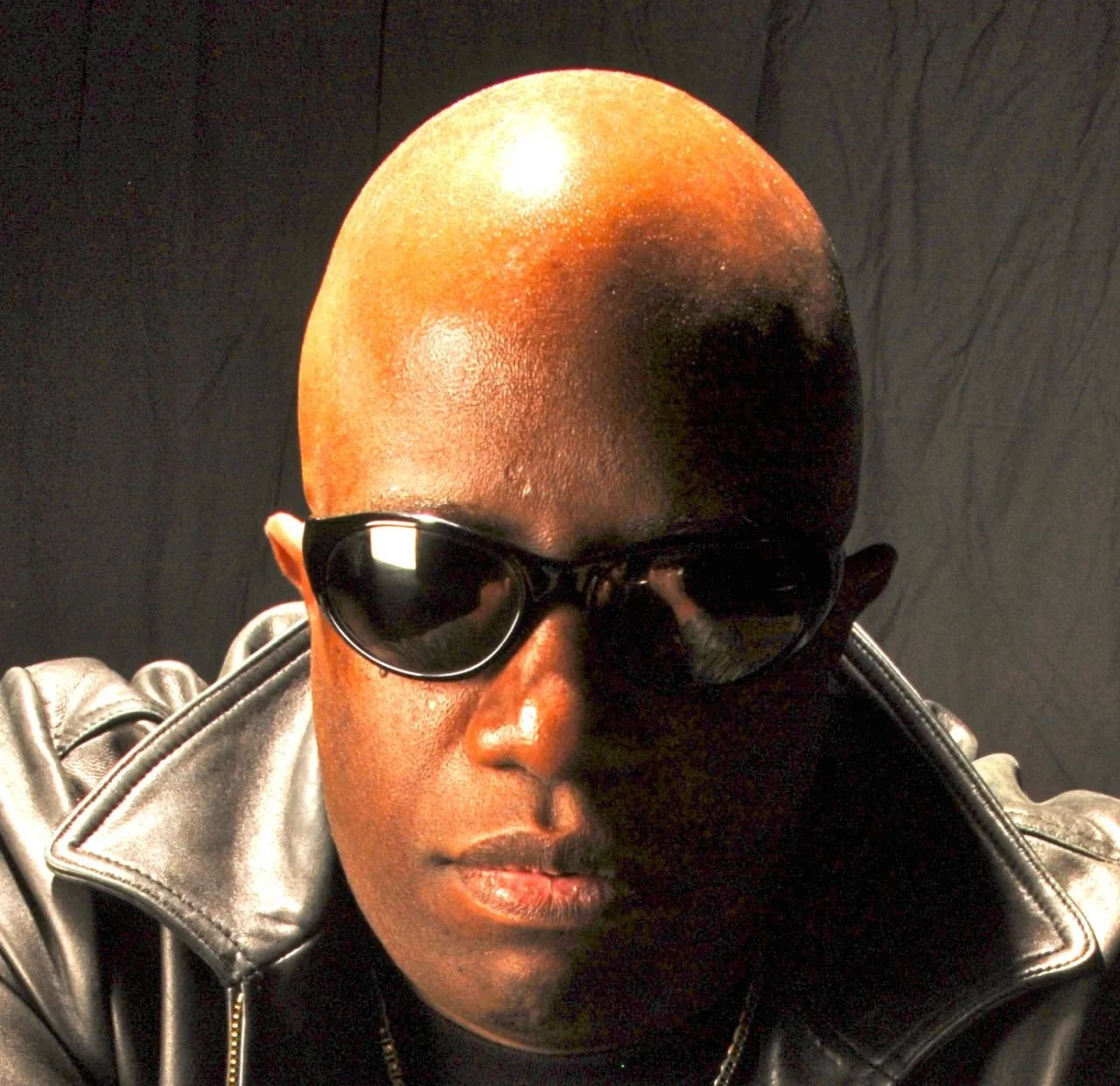
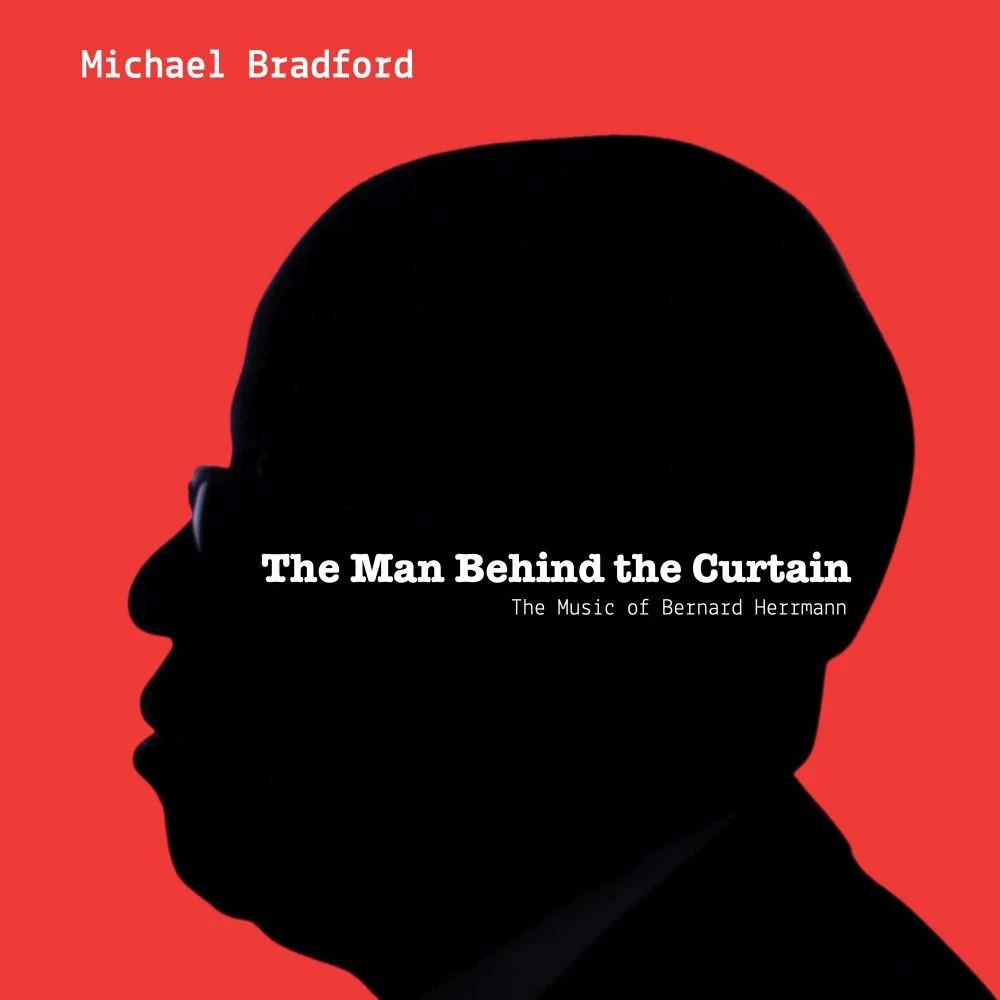
RENOWNED MUSIC PRODUCER AND SOUND ENGINEER MICHAEL BRADFORD—steps out from behind the scenes, showcasing his latest musical project The Man Behind the Curtain. An homage and reimagining of the iconic composer Bernard Herrmann (who wrote horror soundtrack classics for films like Vertigo and Psycho), Bradford puts his skills and passions together to create something entirely unique: a twisted terror of trip-hop noir. Collaborating with the likes of Creed Bratton (The Office and Alicia Witt (Longlegs and Orange is the New Black), Bradford’s remix of Herrmann’s culturally pivotal instrumentals takes on a whole new life.
When Bradford was starting out, he worked with Paul Buckmaster, who was crucial in shaping the orchestral sounds of icons like Elton John and David Bowie. Eventually, Bradford went on to work with Ringo Starr, Anita Baker, Madonna, and later contributing to a handful of musical scores. In Bradford’s latest, he brings together his life’s work—a love for music and film, and reverence for the legendary.
Luna had a chance to chat with Bradford about his musical origins, his unique production process and what he’s cooking up next.

LUNA: You have quite a varied background in music. When did you start playing music?
MICHAEL BRADFORD: I started playing when I was six years old. Guitar was my first instrument. I picked up other instruments along the way. My older brother played in local bands in Detroit, where I grew up. I learned other instruments on my own by tinkering with his band’s gear when no one was around.
LUNA: Did you grow up watching a lot of films or listening to a lot of musical soundtracks?
BRADFORD: Yes. When I was a kid, film music soundtracks were very popular, and theme songs from hit films and Broadway shows were on the radio. It’s hard to believe that music with so much texture and harmonic sophistication was considered “pop” music. Songs like “Goldfinger” or the theme from Shaft were larger than life. It was a great era to grow up in and it really gave me a wide perspective on what music could be.
LUNA: “The Man Behind the Curtain” is a unique blend of cinematic sound and contemporary production craft work. What inspired this specific mix? How did you come to blend trip hop and electronic with Bernard Herrmann’s dark and striking organic sounds?
BRADFORD: Bernard Herrmann is hands down my favorite composer. His music was strong enough to carry entire scenes with no dialogue, while still helping to tell the story. But I also love Massive Attack, Portishead and the others in the downtempo / trip-hop world because their music evokes the same “theatre of the mind” aesthetic. The link between the two worlds is Pink Floyd, especially albums like The Dark Side Of The Moon and Meddle. Another influence has always been the spoken word record of people like Ken Nordine and The Last Poets. It all adds up to groove-based music with a cinematic sound that really wants you to put everything aside, find a comfortable spot, and get lost in the vibes.
LUNA: It does seem fitting to have actors voicing the parts in the tracks, though I’m especially curious how you ended up collaborating with Creed Bratton and Alicia Witt. Where did you meet and how did these features come together?
BRADFORD: I wanted to include some key lines of dialogue from the films that were the source of the music. That’s part of the Pink Floyd influence, but rather than sample dialogue from the films, I wanted to have a new take on the lines. Creed and Alicia both have voices that are quite distinctive. They are great voice actors. But they are also both very accomplished musicians, which made me think that they could recite their lines with an innate, but non-obvious sense of rhythm. Interestingly enough, I met them both through musical situations. I wrote a song with Alicia called “Already Gone,” for her album “Revisionary History.” Creed and I started out working on a spoken-word project with music along the lines of Ken Nordine’s “Word Jazz” series. I don’t know if all actors can play music, but I do know that oftentimes musicians make great actors. Also, both Creed and Alicia are truly creative artists who are not motivated by things like money or status. They only want to do work that is artistically satisfying. I suppose that’s why they have had such long careers. I love them both.
LUNA: “Psycho Prelude (feat. Creed Bratton)” is so eerie and charming at the same time. You really slowed the track down, giving it a very smooth and almost dancey vibe (it even almost gives me The Shining vibes, another cinematic reference). What was your production process like and how did you decide what changes to make from the original songs?
BRADFORD: The main musical motif of “Psycho Prelude” always stood out to me as something that was strong and evocative. The minute it starts, you know you are about to go on a journey of some sort. But there were other supporting elements that I really dug, even though they were more relegated to the background. As a remixer, I am always looking for the elements that can be brought into the spotlight. Another area that I wanted to pursue was to make it less of a nightmare and more of a surreal dream. Alfred Hitchcock taking a drive with Fellini, with Dali behind the wheel, and Miles Davis on the radio. That combo inspired the more relaxed tempo. Plus, Creed sounded so good in that vibe. It’s one thing to be scared, like Norman Bates. What Creed did was to use his voice to make Norman sound seductive. In a way, that’s scarier.
LUNA: Going along with that, what was your thought process in pulling lines to include in the feature tracks?
BRADFORD: I wanted lines that summed up each piece, but in a minimalist way. Vertigo is really a story about what people will do for love, even if it’s wrong. The desperate bargain invoked by the simple line “Will you love me?” is heartbreaking. I just asked Alicia to say it in a variety of ways, each one giving the same words a different meaning. Creed’s good-natured but eerie reading of Norman Bates’ lines makes being a serial killer sound almost reasonable. I also wanted lines that were possibly overlooked, like “Am I acting as if something is wrong?” from Psycho. Again, it’s a line that a great actor can transform in many different ways, just by the way they say it. In “Marion,” I used the lines that Marion says to her lover about having dinner and living a respectable life together, because she was describing a future that she dreamed of, but could never be, So in my version, it’s really the ghost of Marion that we are hearing. My thought process was simply to create a more multidimensional and immersive listening experience.
LUNA: You’ve worked with some pretty big names in the music industry. In what ways do you feel the industry at large has shaped you as a person and an artist?
BRADFORD: What I have learned is that great artists are successful for some really good reasons. They work hard, they are objective, they want to deliver something that they can live with forever and they have faith in their vision. No one can guarantee whether or not a particular project will succeed, but if you are doing things for the right reasons, you will be able to do it forever. Do it for you and it will last a lifetime. Do it for “them” and it will last a lunchtime (shout out to The Rutles).
LUNA: How did you choose which songs to include for this album? What songs called to you the most, and why?
BRADFORD: I specifically wanted this album to be a tribute to Bernard Herrmann, not film music in general. Once I decided on that, it was a matter of finding the pieces that were recognizable but were also strong enough to handle my remix-style approach without sounding somewhat diminished. They also had to have some inherent rhythmic characteristics that would work well in a more beat-oriented musical environment. And finally, they had to be beautiful. “Vertigo” really spoke to me. It’s so dreamy and yet it has a tension that keeps ratcheting up and never really letting up. I also love “Carlotta’s Portrait.” The combination of the downtempo beat with the horn and clarinet evoked the cool jazz era teleported to now. But the one that gets me the most is “Farewell” from Marnie. It’s a beautiful theme, and it held up especially well when reimagined.
There is one piece on the album called “The Man Behind The Curtain” that I actually wrote. It is my tribute to Bernard Herrmann. I relate to him, because most of my career has been spent in service to helping artists achieve their goals, rather than being the one out front.
LUNA: There’s a visual component to this album as well, alongside a national Performing Arts Center tour. I’m curious to hear more about your visual identity and the multimedia pieces along with the album.
BRADFORD: The live experience will have me playing my synthesizers and electronic instruments, along with an orchestra, the size of which will depend on the size of the venue. I have made a series of videos and projections which accompany each piece. The idea is to create an immersive experience, both sonically and visually. I will be the audience’s guide throughout the evening, but Bernard Herrmann’s music will be the star of the show.
LUNA: What can our readers expect next?
BRADFORD: I am working on an album of eccentric covers, from REM’s “The One I Love,” to The Beatles’ “Helter Skelter” and Pink Floyd’s “Comfortably Numb.” They will all have a hybrid electronic/orchestral hybrid vibe, and sound very little like the original. I am also writing a book of short stories called “Dog Trouble.” It’s a bit surreal. If you want to hear something from my recent past, I ask you to consider my album After The Ashes. It was inspired by the tragic war that has ravaged Ukraine, but with total respect for their perseverance. “A new world is born as a tired one passes. A garden will grow, after the ashes.”
