
INTERVIEW
INTERVIEW
☆ BY DANY MIRELES ☆
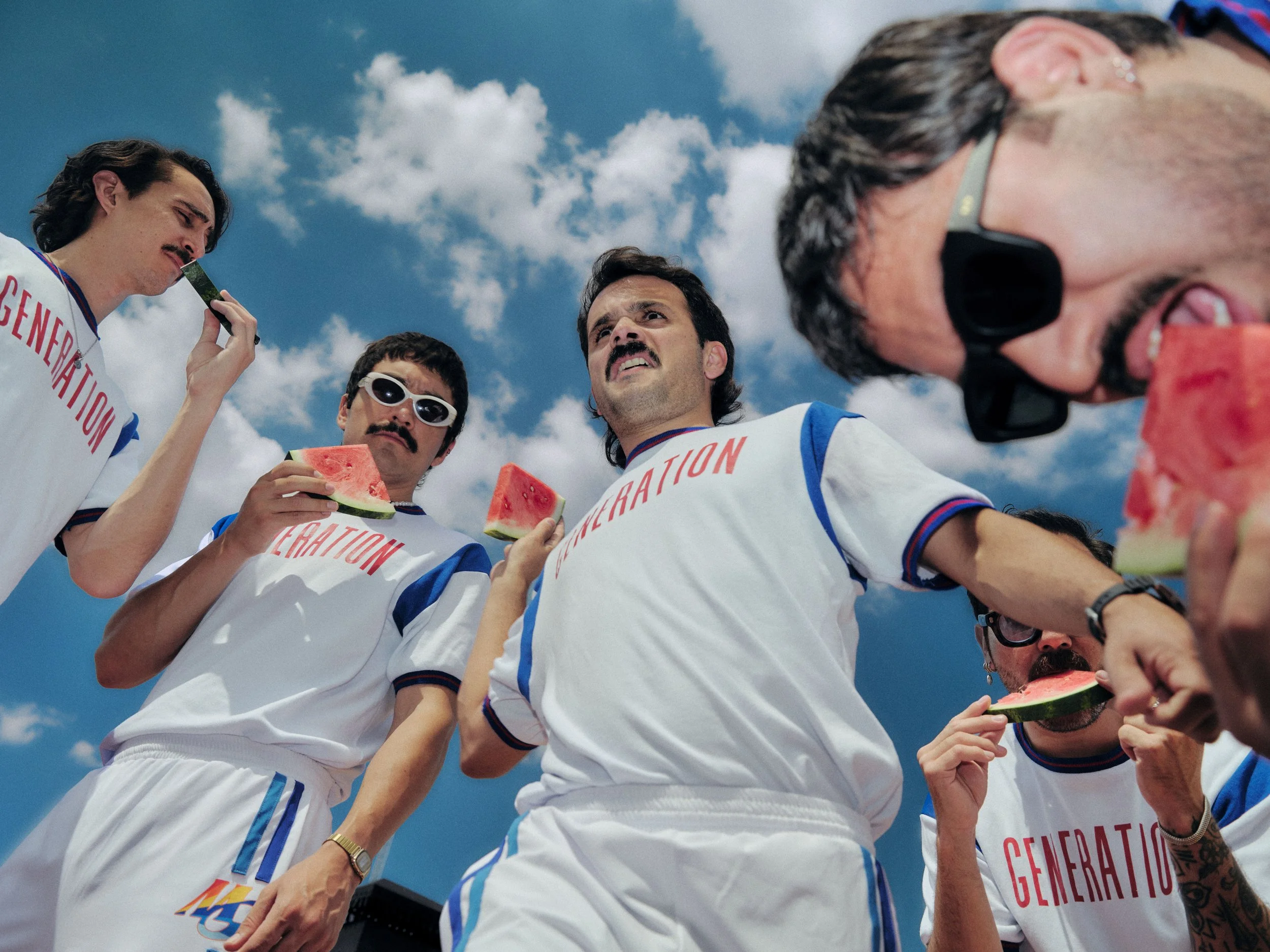
Photo by Rebeca Cusi
“NO MATTER HOW MUCH YOU TRAVEL OR HOW FAR YOU GO, YOU ALWAYS FEEL CONNECTED TO THE PEOPLE WHO ARE YOUR ROOTS”—There is something compelling about a band that can make you dance while giving you something to think deeply about. For Midnight Generation, that balance has become an essential part of their musical identity. Built around infectious grooves and shimmering synthesisers, their sound has always carried an invitation to move. But with their brand new album, Rooted, the band is making room for something more introspective.
What began as an open-minded creative process gradually developed into a celebration of gratitude and connection, shaped in part by the band’s experiences touring, meeting new audiences and reconnecting with the people who have supported them along the way. That sense of appreciation runs throughout the album, from the emotional perspective of “To Be Someone” to the playful experimentation of “El Rap de Piter Pan,” each track offers a different perspective on the band’s evolving sound, allowing humor, vulnerability and movement to coexist. Rather than following a predetermined formula, Midnight Generation lets the music lead, finding new ways to experiment while remaining connected to their musical identity.
In conversation with Luna, Fernando Mares and Carlos Amaya discuss the making of this brand new record, their creative evolution, the expectations placed on Mexican artists and the freedom of creating a sound that makes you dance and cry at the same time. Ultimately, this album serves as a reminder that growth doesn’t always mean leaving things behind; sometimes, it means understanding what has kept you grounded for so long.
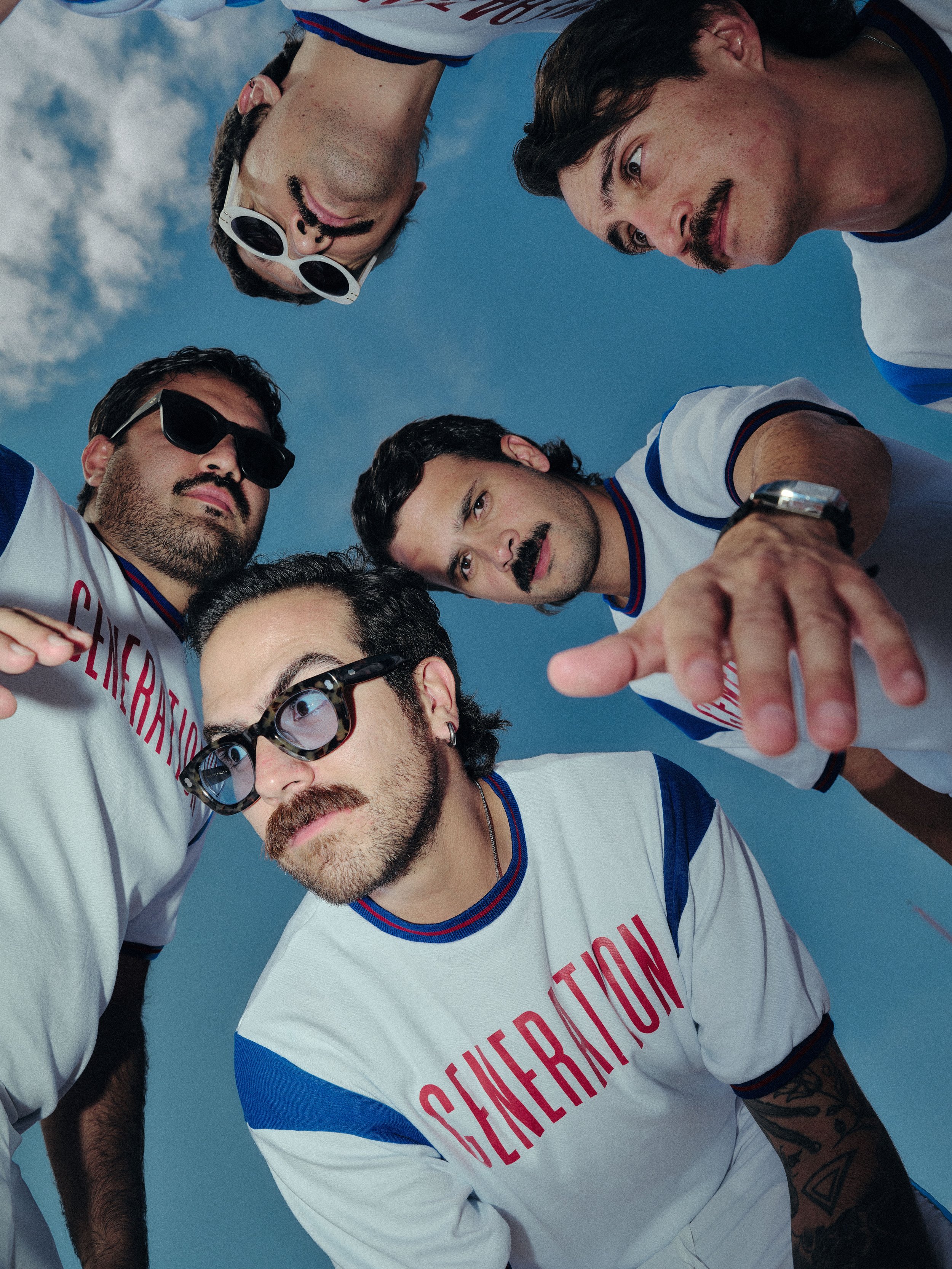
Photo by Rebeca Cusi
LUNA: The album, Rooted, moves between disco, funk, synth-pop and more introspective sounds. When you first started developing it, what sonic direction did you want to explore, and how did that vision evolve throughout the recording process?
MARES: When we started working on this album, we honestly didn't have a specific direction. We simply wanted to make music and start working on a new record. We were experimenting with new songs and new beats.
We had a new studio, and what happened was that we started recording videos and jam sessions, sharing them online. We just kept doing that. Once we had around five or six demos, we suddenly started touring again. That made things difficult because working on music while you're on tour isn't easy. You don't have access to the same resources, the studio, synthesizers and all the [other] equipment you're used to having.
Eventually, as we accumulated more songs, we started thinking about what the album's central theme could be. It made sense for it to revolve around that experience because, at the time, we had been playing all over the world, meeting different people and feeling increasingly connected to who we are and the people we love. It's about all the people who support us and represent our roots. This album isn't necessarily about making music that comes directly from our roots; it's about saying thank you and celebrating the people closest to us, our families and everyone we love. That's essentially how we arrived at the album's title.
Sonically, there are some differences compared to our previous record. We experimented with different instruments and percussion, and we also bought a new vocoder that we incorporated into a few songs.
LUNA: One song in particular, "To Be Someone," takes a more reflective lyrical approach, touching on identity, love and the idea that material possessions don't necessarily bring fulfillment. How did you translate those themes into the song's arrangement and production, and what made it the right focus track for Rooted?
MARES: When we started writing that song, the music itself felt really hopeful. You could feel happiness and a sense of celebration. That's why we decided to write about how we don't need a new house or a new car. Instead, we appreciate the people around us and feel incredibly grateful for them. Essentially, "To Be Someone" is about being someone to the people we love. It's not about fame or material possessions.
That's a huge part of the song. It's also about becoming a child again and learning to enjoy life's simple moments. When you're overwhelmed with responsibilities and everything else happening in life, you can easily lose sight of what's important.
LUNA: Tracks like "Norway," "Runaways," and "Almost My Own" each explore different textures within your signature sound, from shimmering disco influences to talkbox grooves to indie-inspired melodies. How do you make sure every track develops its own sonic identity while still feeling cohesive within the same album?
AMAYA: I think there's a certain limit to the sonic space we explore. With each instrument, we already know the kinds of bass sounds we like, and we allow ourselves to push those boundaries a little further each time. But everything still exists within that same sonic space. That applies to every instrument. We love the talkbox, for example, and it's become one of our signature sounds, so we like incorporating it whenever we can.
I think the cohesion has happened organically. We weren't necessarily trying to follow a particular set of rules or make sure everything fit into a specific formula. It's simply about the sounds we enjoy making.
LUNA: The talkbox has become such a recognizable part of your musical identity, particularly since "Don't Wait Up." How did you approach bringing the talkbox back on "Almost My Own?" What makes it such an expressive tool within the production of this album?
MARES: It's actually funny because we've received messages from people saying, "Awesome, now you know what we like, and you're giving us a little bit more of that." When I approach the talkbox, sometimes I want to sing actual lyrics, but other times I just want to improvise and create funky sounds. I like playing around with different vowel sounds, almost like singing “A, E, I, O, U.” The talkbox sounds incredible, especially when you use it almost like a guitar and play it as an instrument. It's really fun. It's become a signature sound, and that's what we did with "Almost My Own." I think it's the only song on the album that uses it in that particular way.
LUNA: A lot of your music pairs upbeat, dance-driven instrumentals with lyrics that explore more complicated emotions. On Rooted, that contrast comes through in songs like "Almost My Own" and "Runaways." How do you approach writing lyrics that add emotional depth without losing the energy that makes people want to dance?
MARES: That's an interesting question. I think it's similar to the feeling you get when you hear a song that makes you want to cry while dancing. It's about that contrast. Crying isn't necessarily a good thing, but crying because you're happy is something completely different. That's the beauty of contrast in music. Sometimes you can express something deeply emotional, something that comes from a place of love, but also reflects missing someone or wishing things were different. That combination can become really powerful and beautiful to listen to. I think that's what it's about. "Almost My Own," for example, explores that particular feeling, while the rest of the songs are generally more straightforward.
The feeling of the music usually matches the message we're expressing through the lyrics. Then you have songs like "Premium Delivery" and "El Rap de Piter Pan," which are simply funky and fun.
LUNA: I'm glad you mentioned "El Rap de Piter Pan" because that's actually my next question. What inspired the musical and lyrical direction of this track? And how do you decide when a song calls for a different style of writing or performance?
MARES: For me, this was really interesting because I love rap, but we don't actually know how to rap! That's part of the fun. We definitely don't know how to do it, so we thought, "Okay, let's make something funny." If it's funny, maybe it'll be interesting. That's how "El Rap de Piter Pan" came about.
We also wanted to address something else. Last year, when we released "Don't Wait Up," we reached a lot of new listeners and received a great deal of attention from around the world. But with that attention came criticism. We started receiving comments from people who didn't like what we were doing, saying things like, "You guys are white, privileged and have so many synthesizers. Why do you need so many synthesizers?" We thought it was funny, so we decided to address that criticism and make fun of the whole conversation in the song. That's why we have lines about how people think you're not Mexican if you don't sing in Spanish. We're making fun of that mentality.
LUNA: Moving on to your creative process, when you're building a track, what usually comes first? Is it a bassline, the drums, a synthesizer idea, a vocal melody or something else entirely? How does that initial idea develop into a finished song?
MARES: Usually, it starts with either a drum loop or a bassline. Then, of course, the drums get reworked. There's a lot of back and forth. That's the foundation. From there, we start adding synthesizers, guitars and all the little finishing touches, like the talkbox and other interesting sounds. Then it's a matter of constantly revisiting things. There's a lot of tweaking, rearranging and moving elements around. That's generally how the process begins. By the end, we work on the vocals and lyrics. That's usually how we approach it, although things can develop differently depending on the song.
AMAYA: The music usually sets the tone. When something sounds fun, funky and a little crazy, we naturally end up writing things that are hilarious and entertaining.
MARES: Exactly. That's generally how it works.
LUNA: Your track "Rumba!" embraces celebration and movement. How do you feel it explores uncertainty and the need for change? Also, how did you approach the sequencing and arrangement of Rooted to create contrast between its more upbeat, forward-moving tracks and its darker, more reflective moments?
MARES: I think it addresses the lack of awareness that exists in human beings. Personally, I see so much of it in the way we interact with the world around us. Whether it's failing to treat animals the way we should, neglecting our environment or simply not taking care of the world we live in, there's a lack of awareness about how easily we can destroy the place we call home. On the other hand, you have songs like "Rumba!" and "To Be Someone," where I'm genuinely happy and having fun. Then there are songs like "Maybe My Lover," which has a really fun music video that you'll get to see soon.
There's so much happening throughout the album. I think it's important for a record to have different moods and directions. At the end of the day, though, it all comes together as one album. That's one of the most exciting things about making a new record: discovering what comes out of the process as you're creating it.
LUNA: When you're producing a record like Rooted, how do you know when a track has reached its final form? Is the biggest challenge knowing which elements to add or knowing what to leave out?
MARES: It's really difficult. Honestly, nobody can give you a definitive answer to that question. You never really know when something is ready. You don't know which direction is the right one or which elements belong in the song. Sometimes something simply feels right to us, and sometimes it doesn't. When that happens, we look for something different.
It also depends on the day. You can wake up wanting to do one thing, and the next day you might want to do something completely different. So we try not to overthink things and instead focus on continuing to work.
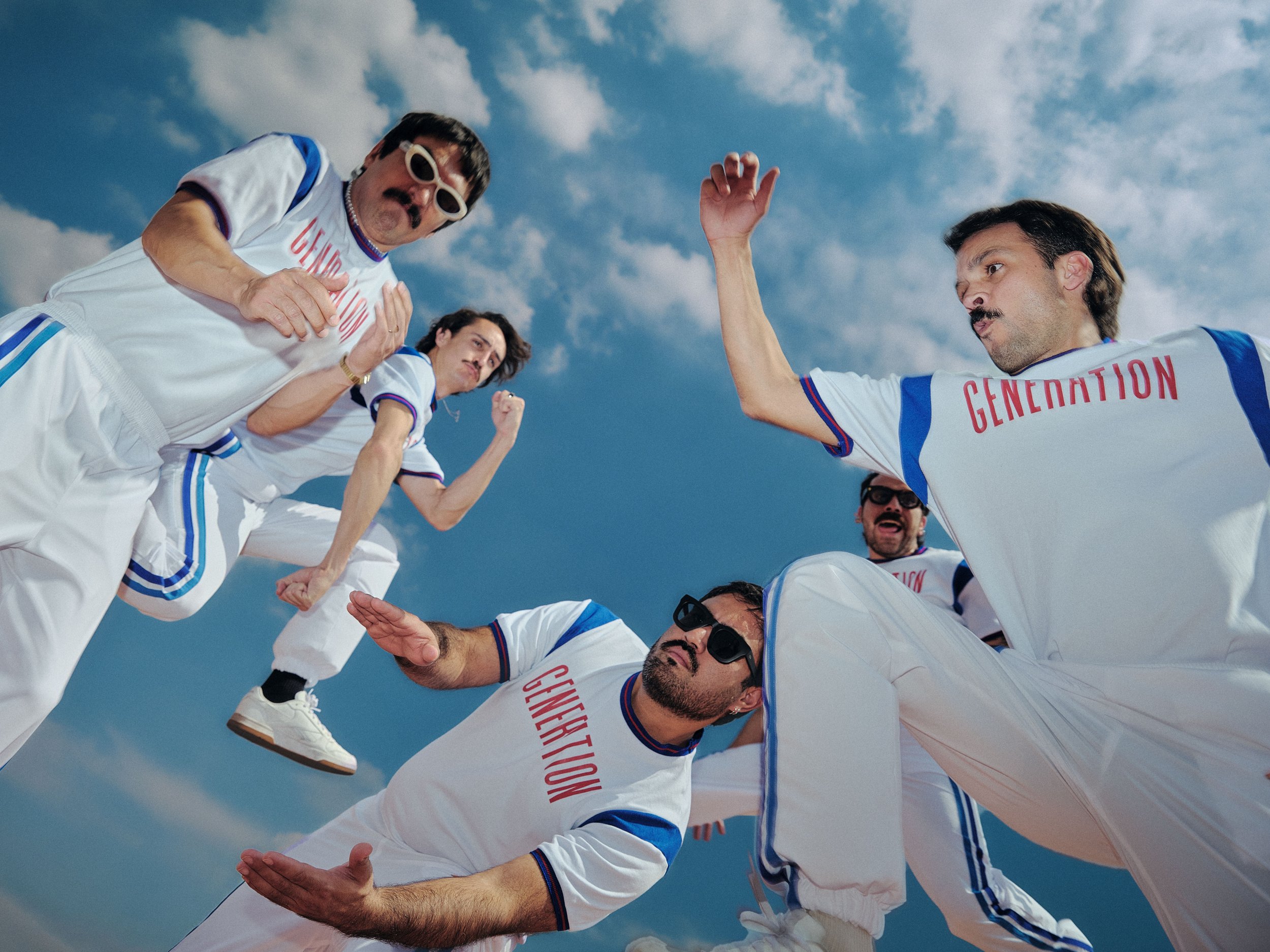
Photo by Rebeca Cusi
As Rooted makes its way to listeners, Midnight Generation is also preparing to take the new record on the road with an upcoming world tour! From festival appearances to headline shows, the band is ready to kick off another exciting chapter. Check out the tour dates below and find a show near you!
November 6–8, 2026 – Rio de Janeiro, Brazil @ Rock the Mountain
February 4–10, 2027 – Miami, FL / Ocho Rios, Jamaica / Grand Cayman, Cayman Islands / Cozumel, Mexico @ Jam Cruise
February 18 – San Luis Potosí, Mexico
February 19 – Querétaro, Mexico
February 20 – Guadalajara, Mexico
February 21 – León, Mexico
March 4 – Panama City, Panama
March 6 – Santo Domingo, Dominican Republic
March 12 – Buenos Aires, Argentina @ Lollapalooza Argentina
March 14 – Santiago, Chile @ Lollapalooza Chile
March 19–21 – Bogotá, Colombia @ Festival Estéreo Picnic
March 20 – São Paulo, Brazil @ Lollapalooza Brasil
April 20 – Denver, CO @ Summit Music Hall
April 23 – Dallas, TX @ The Echo Lounge & Music Hall
April 24 – Austin, TX @ Scoot Inn
April 25 – Houston, TX @ House of Blues
April 27 – Atlanta, GA @ Masquerade – Hell
April 29 – Washington, DC @ The Howard Theatre
April 30 – New York, NY @ Irving Plaza
May 3 – Boston, MA @ Brighton Music Hall
May 4 – Montreal, QC @ Le Studio TD
May 6 – Toronto, ON @ The Opera House
May 8 – Chicago, IL @ House of Blues
May 12 – Salt Lake City, UT @ The Grand at The Complex
May 14 – Portland, OR @ Revolution Hall
May 15 – Vancouver, BC @ Commodore Ballroom
May 16 – Seattle, WA @ The Crocodile
May 19 – San Francisco, CA @ The Fillmore
May 21 – Los Angeles, CA @ Belasco
May 22 – San Diego, CA @ Observatory SD
May 23 – Phoenix, AZ @ Crescent Ballroom
May 27 – Monterrey, Mexico
May 28 – Torreón, Mexico
May 29 – Chihuahua, Mexico
May 30 – Ciudad Juárez, Mexico
June 9 – Mexico City, Mexico
June 11 – Puebla, Mexico
June 12 – Xalapa, Mexico
August 31 – London, UK @ Village Underground
September 2 – Düsseldorf, Germany @ zakk
September 3 – Paris, France @ Alhambra
September 4 – Amsterdam, Netherlands @ Melkweg OZ
September 6 – Berlin, Germany @ Metropol
September 8 – Zurich, Switzerland @ Dynamo
September 9 – Milan, Italy @ Magnolia
September 11 – Barcelona, Spain @ Razzmatazz
September 12 – Madrid, Spain @ La Riviera
September 14 – Lisbon, Portugal @ LAV 2
September 16 – Istanbul, Turkey
