
Q&A: Mija Brings Berlin Dancefloors to Your Speakers in “On the Floor”
INTERVIEW
INTERVIEW
☆ BY STEWART SHORT ☆
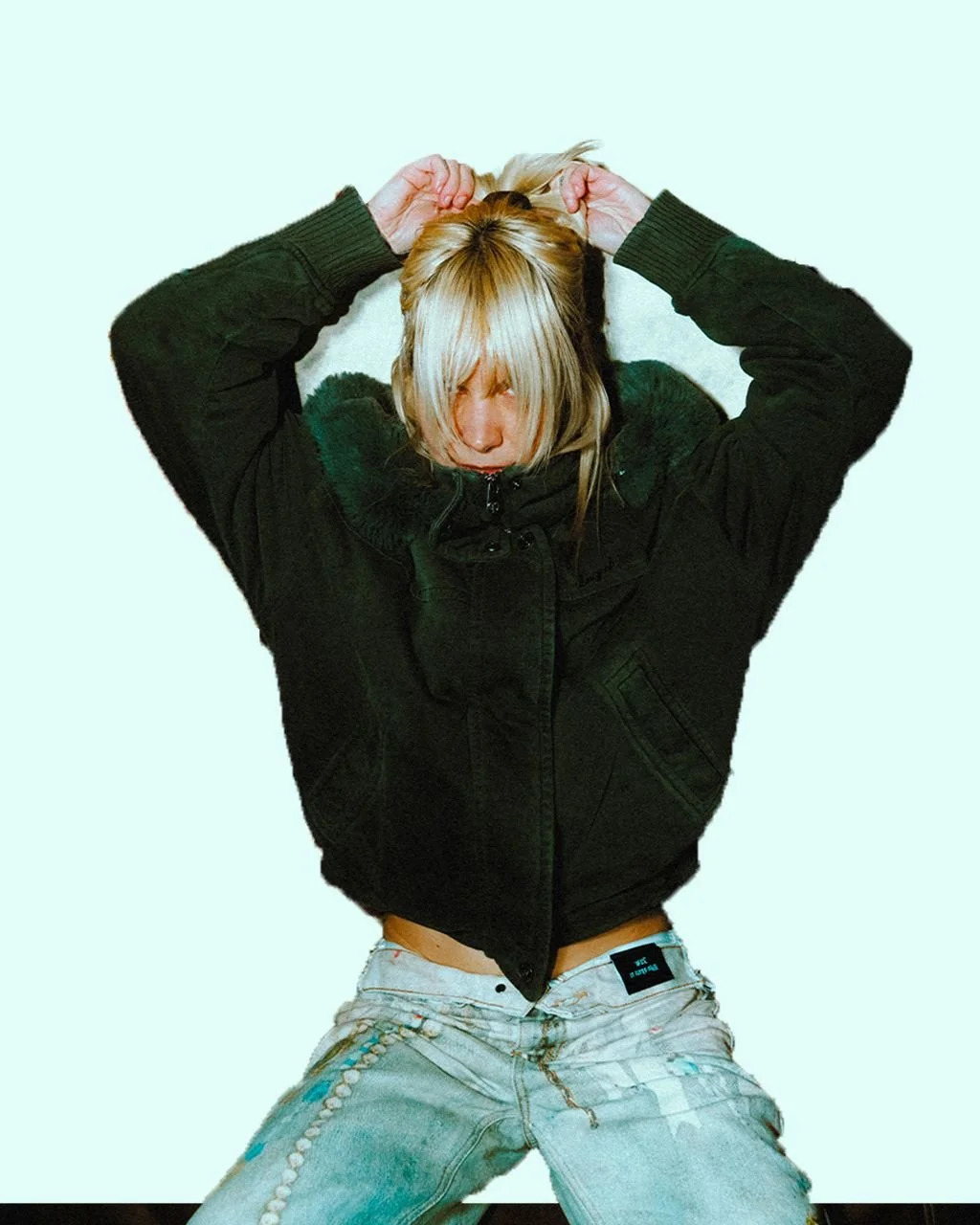
MIJA IS DRAWING ON THE PAST AND LOOKING TO THE FUTURE — Perpetually exploring, Mija is a master of integrating an eclectic collection of sounds and stylings into her tracks, and that experimentation is on full display in her latest single “On the Floor” off of her upcoming EP Hard Disco. As the name of the EP implies, this latest work invokes the sound, feel and soul of disco in a blend of hardgroove, techno and Eurodance to create an intricately constructed, stirringly upbeat track that brings the dancefloor atmosphere right to your speakers.
“On the Floor,” features a uniquely arranged variety of samples and instrumentals, woven into a sonic tapestry that could light up dancefloors in eras past, present and future. With a backbone of propulsive hardgroove rhythm elevated by warm, euphoric disco-inspired accents, and tied together by an earworm vocal chain, the track is another breath of fresh air from an evolving artist, reflective of years of sonic exploration and artistic growth.
“On the Floor” was released August 7, and Hard Disco will be released in its entirety September 25 via Hot Meal Records. Luna sat down with Mija to break down the style and construction of the single, get a preview of what listeners can expect from Hard Disco and learn more about her artistic growth amidst the backdrop of the European DJ scene.
LUNA: You just finished up a run of shows in Europe. How has the energy been at those? Have you been able to debut some of the new tracks from the upcoming EP yet?
MIJA: Yeah, it's been really fun. Summer is always slammed with festivals, and it's always the most fun time to test all the new tracks from everybody. I've been doing that a lot, keeping busy with the tour schedule, also trying to get all of the last minute things put together for the EP, like all the visual aspects and everything that goes along with that.
LUNA: The name of the project itself and a genre descriptor you've been using on social media to describe some of the music is the term “hard disco.” What’s the vision behind that term, as well as the ethos behind the upcoming EP?
MIJA: I think “hard disco” to me is basically taking all of my inspirations from early house music when I first started DJing and repurposing it in a more of a modern way to coincide with a lot of the European influences that I've been experiencing since living here and touring out here. To me, it's just supposed to be a little bit cheeky, a little nod to the references that I'm influenced by, but also making it more applicable to the dance floor.
LUNA: There is that commonality between the two. You mentioned early house and disco; conceptually, they're both dance floor ready genres. When you incorporate elements of both, does that come together naturally?
MIJA: Super easily. I feel like disco and disco house in general, those two genres and cultures, coincide with each other from back in the ballroom days, so I think it's very easy to mix the two and infuse them with more dance heavy or dance progressive sounds, and it's super fun. A little bit of nostalgia meets a little bit of a modern twist.
LUNA: Creatively, when you look to something from the past like disco and incorporate that, is that something you can just integrate smoothly into the framework that you've been working in, or do you have to meet it in the middle?
MIJA: I think at the end of the day the most important part to me is the feeling of soul on the dance floor in productions, having that essence of something that feels good or feels sexy or feels raw or feels personal, whatever that piece of soul is, which I think you find in a lot of house music, and then also in a bit of disco as well, adjacently. Having those elements in the track, it doesn't really need to be Frankensteined into anything in order to make it work. I think it just needs to feel good and make people dance, and that's my goal with a lot of the music that I'm making these days. I do want it all to be dance floor applicable, but I want to do it in a bit of a sneaky way, where you can hear the song, but you don’t realize how fast it is because it's not over the top. It's not trying to be super EDM or super aggressive by any means, but it's touching it. It's able to live in both worlds.
LUNA: You can go high octane with it, but at the same time, you can have a nice little groove going.
MIJA: Yeah, you can listen to it in multiple different places.
LUNA: This EP, as is the case with a lot of your work, is top to bottom DIY; you're taking on every aspect of the process. Can you talk about that sort of independent artistry, both in your career more broadly, but also in this EP?
MIJA: It's funny. I don't choose to be hyper independent. I think it's just naturally who I am. I really do love working with people, and I love collaborating with others; that's usually where I have the most fun. But sometimes you just have a vision and you just execute it. I think I've gotten to the point in my artistic career where I feel comfortable and confident enough to execute all of these different parts of making a song happen, and sometimes it's just easier that way. For this one in particular, everything came straight from me: production, vocals, mixing. I did have someone master it—shout out to my masterer. I think sometimes it just works out that way, but it's not always my approach. It was in the beginning of my career for sure. I felt a lot of pressure to do everything in order to prove myself. I felt that for many, many years, but I don't really feel that way anymore.
LUNA: With the single you just released, “On the Floor,” I really love the feeling you've crafted in the song because you know it feels progressive, but it's also nostalgic. Can you talk about approaching a track like that and creating that feel and atmosphere?
MIJA: I was trying to make a totally different song when I started that one. It was the last song that I made on the EP before I ended up selecting the songs, and it was everybody's favorite, and I was like, “Guys, I was just being silly.” I was trying to just sing something punk, and then I accidentally put the robot mode on my voice, and it turned into this Daft Punk vocal type of thing, so I just went with it. That one's actually the standout track on the EP because it's the only one that feels more European than the rest, with the offbeat bass and being a bit more dancey, so I think that actually helps embody the EP as a whole. It's more of the influence from the European side that I've been getting more recently.
LUNA: You mentioned the vocal chain you were working with; the vocal hooks on this one tie the whole thing together. Can you talk about the production that went into those and finding that right sound for that centerpiece of the song?
MIJA: Again, it was a complete accident. The original vocal is me trying to sing something punk-sounding, and I think originally the track was meant to be more of a dirty electro bloghouse type thing, and that's where I was initially going into the the vocoder voice, because a lot of those early bloghouse tracks have the same similar style. Then I accidentally just fell into that one where it's just one note the entire time, and that changed my entire perception on what the song could be, so it ended up becoming a lot more happy instead of aggressive, and I just went with it full send. I was like, “Yeah, that's what accidentally happened, and my ears like that, so I'm just going to keep dialing in and see where this takes me.”
LUNA: There's a lot of interesting instrumental touches on it; listening to it with headphones on, there's this light and upbeat guitar strumming on the left side throughout. Can you talk about those individual touches that give it this upbeat euphoric feel?
MIJA: It's always different. The meat of the songs is always done in MIDI, but then I ended up having these little disco packs with the little guitar riffs, and so I'll take them as little ear candies and pan them; some will be to the left, some will be to the right, and when you're wearing headphones, it's like a little treat to be able to hear all those little special pieces on each side. When it comes to sample selections and just having the ear, I have a really, really extensive music catalog as well from all the years of DJing in all of the different genres that I've played. So when it comes to disco, I have a lot of good tracks that I can reference from; I also have a lot of sample packs with various disco stabs and guitars and stuff, so I'll listen to the music and I'll try to be like, “How did they make that? What instrument is that?” Then I'll go try to find something in a sample pack or try to recreate something to give it that more disco flair to it, like the guitars for example.
LUNA: You have the main loops of the song, but then they're sort of punctuated with these staccato horn sections that give it that disco flare. Was that always something you wanted to bring in?
MIJA: Yeah, I love those big fill moments where it's big band, big drums, big horns, just for a moment, and then coming back into what the song is. I think it lets the song open up, have a silly, lighthearted moment. I'm not really a big build-up person, so I try to find alternative ways of having a breakdown/build-up moment without it being a riser for however long, or a fake out drop or anything. I really like songs where what you think is going to happen happens. Those are my favorite.
LUNA: It sort of has that same tension and release, but in a more fluid way.
MIJA: Yeah, a little bit more of an ear candy way.
LUNA: There's this atmosphere to the track. It recreates the feel of being in a club, being at someone's set, on the dance floor; there's this tangibility to the mix. Is that something you keep in mind when you're putting a track like this together for an EP release, translating that feeling?
MIJA: That's the exact feeling that I wanted to convey across the entire EP. That's why in “On the Floor” that little breakdown part feels like you stepped out of the room for a second, but you can hear the crowd in the room. I really did want that to come to people's head visually, even if they weren't at the club listening to it.
LUNA: I’m glad you mentioned that idea of being in different spots in the room. During the intro, as the layers are coming in and the vocals drop out a bit, my first thought was “Oh I'm hearing the song from the bar or the bathroom or something, then running back out to the dancefloor.” What was your approach to introing a track like that?
MIJA: That's so funny. That's literally exactly what I was intending on doing. One of my favorite songs from many, many years ago is by this band called Tennyson, and they did a similar thing where halfway through the song, it sounds like they're walking out of the studio down the stairs. You can hear everything, and it sounds like they're walking around the whole building. So I did have that in mind, and I was trying to incorporate that into the song a little bit.
LUNA: Earlier you mentioned some of the European house elements in this track and how those influences have shaped some of your work. You've been based out of Berlin for the past year or so; can you talk about being embedded in that scene, and some of the other European scenes while going on tour, and how that has shaped your artistry?
MIJA: For the past two years, I think I've tried to become as niche as I possibly can be, which isn't really saying much because I feel like if you ask anybody else that's here, they wouldn't call me niche at all. But for me, this is the [most] niche I've ever been, and it's been really, really fun to get to explore all of these different subgenres inside of the world that I'm living in and to have the opportunity to experiment with different things, try different sounds. And while I have done that, I went a little bit bouncy, I went a little bit trancey, I went a little bit groovy—at the end of the day, I realized I can do all of that and still integrate it into the soul from the house music that I'm mostly inspired by and where my foundation is. I've been able to touch on all these different styles and subgenres, and try to incorporate them into the music that I'm making. I think that's fairly obvious in the EP, and even more in the music since the EP, because artists always like the most recent things they've been working on. I think it's really helped me get into a solid flow as a producer and as an artist in general, so I think niche-ing down a bit for the first time is one of the greatest things that I've been able to do in my career, now that I have a solid idea of who I am, where I want to go, and how to get there.
LUNA: The EP is coming out September 25. What do you hope people can take away from it? What do you hope the reactions are when that project gets out into the world?
MIJA: I just hope that it makes a few people happy, that it makes a few people dance. I've never really had high expectations when it comes to music; I think that I would be making music whether or not anybody listened to it, so if I can touch a few people, I think that'll make me happy. I want to make music that has more of a timeless feel to it, so hopefully they feel like it's something that they can listen to on repeat, that it's something that will stick around for the years to come.
