
Q&A: Momo Boyd Introduces Herself on ‘Miss Michigan’
INTERVIEW
INTERVIEW
☆ BY SHEVON GREENE ☆
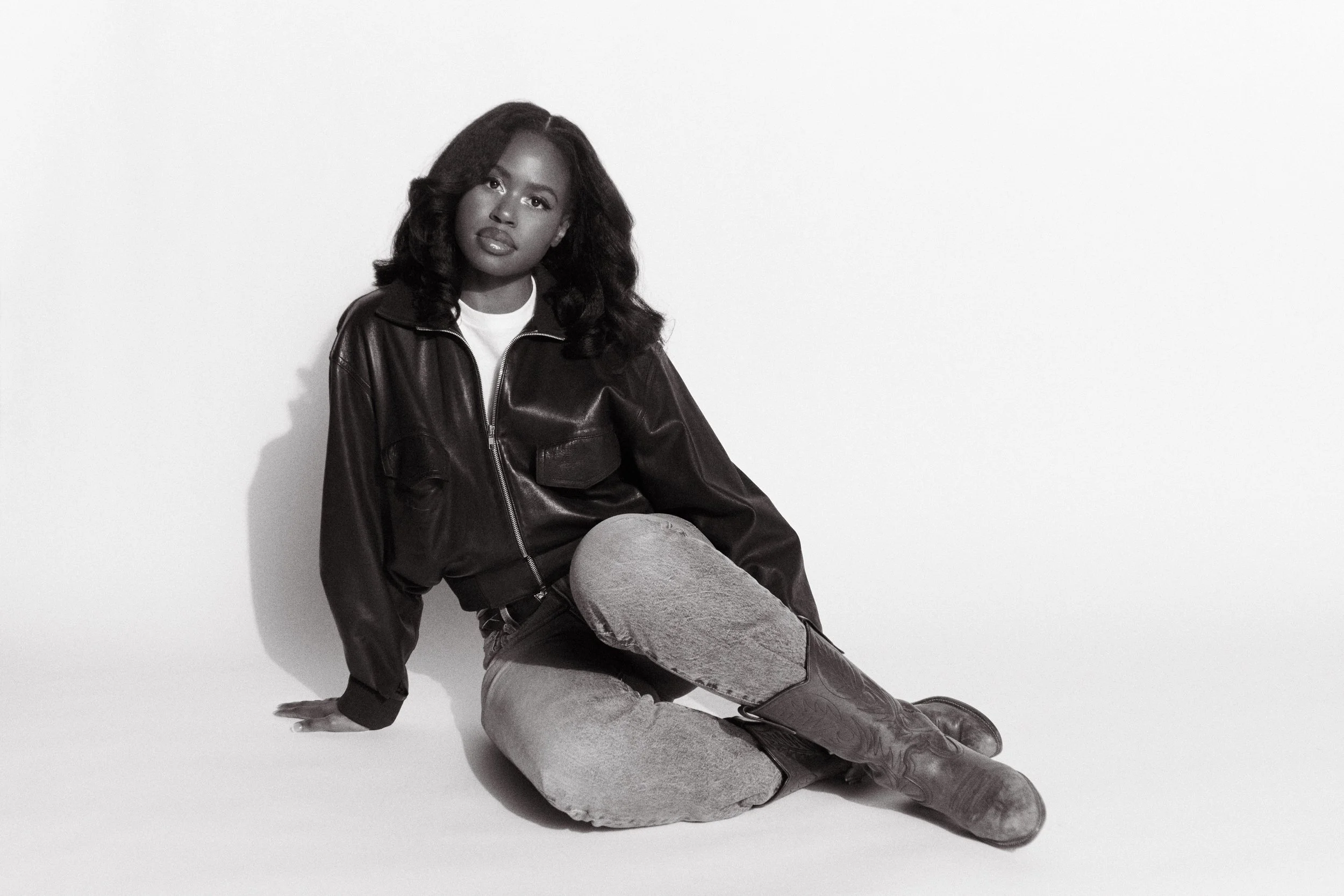
Photo by Xavier Marshall
WHILE MANY LISTENERS FIRST DISCOVERED MOMO BOYD—through Infinity Song, her debut solo project Miss Michigan is truly a moment where she’s stepped into her own voice, carefully and intricately handcrafted from her own experiences and emotions. It’s the first introduction we get to who she is outside of the group, and she’s fully embracing this new path.
Released in April, the project has its own unique way of storytelling through an emotionally instinctive blend of folk, soft rock, R&B and singer-songwriter vibes. Every detail of Miss Michigan feels intentional in various ways, and her emotional honesty stays as the center of the project. Across the album, Boyd explores the quiet emotional contradictions of wanting love, validation and closeness while still struggling to fully trust it. Songs like “She’s a Sweetheart” and “Second Best” wrestle with people-pleasing, self-sacrifice and a kind of self-awareness that comes alongside realizing you’re settling for less than you deserve. Even during the vulnerable moments of the project, it still feels profoundly observant, reflective and emotionally precise.
The more time spent with Miss Michigan, the clearer it becomes that Boyd is establishing herself as one of the most emotionally compelling rising voices in contemporary music, and she’s doing it all by simply being herself and storytelling through her own experiences and emotions.
We caught up with Boyd to talk about heartbreak, self-awareness and the emotional through-lines she only began noticing after Miss Michigan was finished. Keep reading for more on vulnerability, Americana imagery and the emotional world behind Boyd’s debut album.
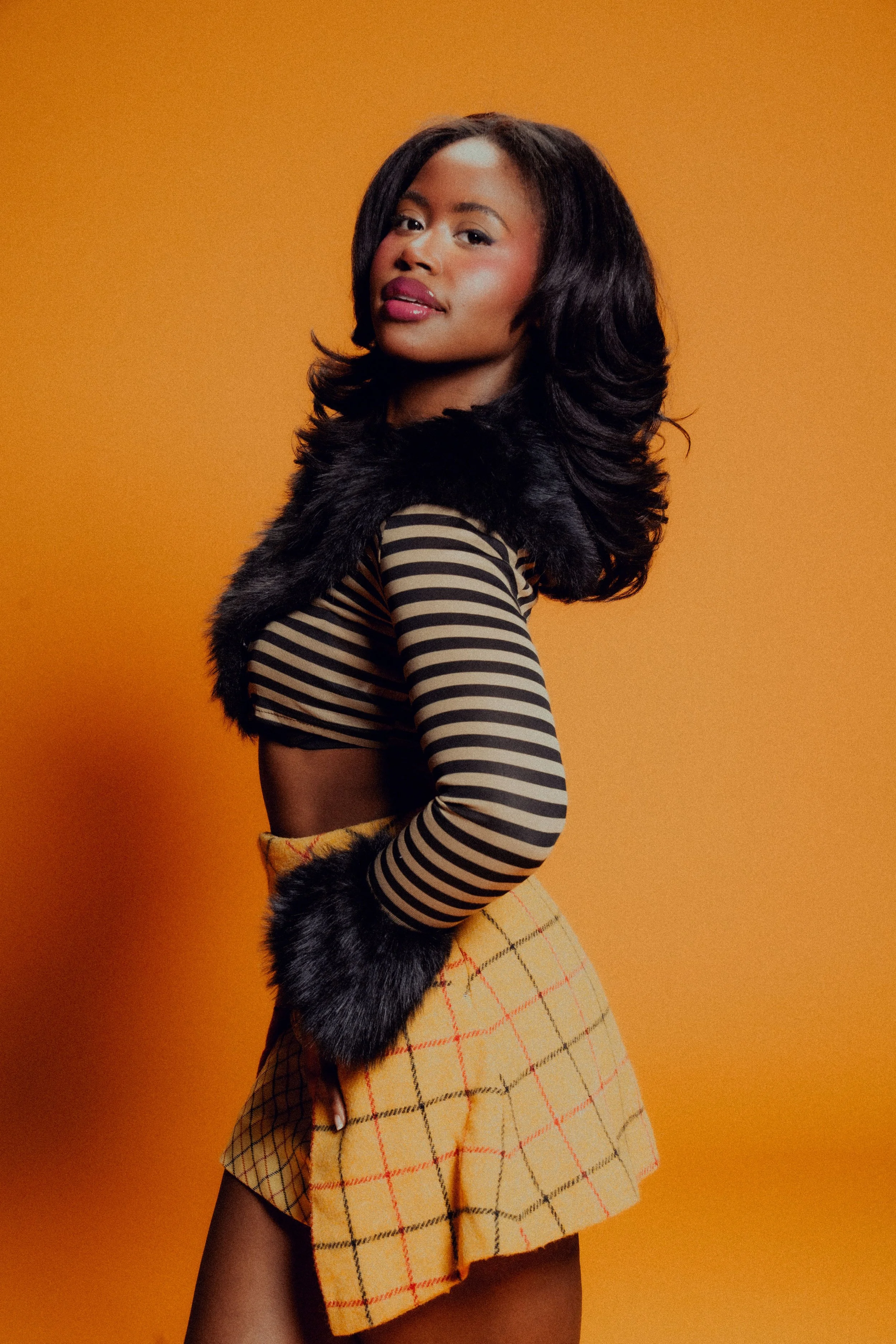
Photo by Emmanuel Porquin
LUNA: The title of the project sticks out instantly and makes it feel super personal. At what point did Miss Michigan become the emotional center of the album, and how did that title come about?
BOYD: It was just a way for me to acknowledge my roots. Since this is the beginning and foundation of my solo career, I felt it was important to pay respect to where everything started for me and where my family comes from. My parents were both born and raised in Michigan, and even though we moved when I was very young, I still have really vivid memories of being there. Michigan was the birthplace of so many of the big dreams I’m pursuing today, so it felt really meaningful to honor that part of my story.
LUNA: I love the lyrics of “She’s a Sweetheart.” Some even feel satirical at points, especially with lines like “Miss perfect princess with a big smile.” How did it feel to write that song and how were you emotionally processing it?
BOYD: It was a tough song to write because I was really trying to process those emotions in real time. For me, songwriting isn’t always something where I can just sit down and finish a song in one session. Sometimes it takes a long time because I’m still actively working through the experience while I’m writing it.
This was definitely one of those songs. I had to fully live through certain realizations and face certain truths before I even had the vocabulary or self-understanding to put those feelings into lyrics. So yeah, it was definitely a lengthy process, but I think that’s what made the song feel so honest and personal in the end.
LUNA: I also loved the “She’s a Sweetheart” music video with the football field setting, cheerleader sequences, tiaras and the banners. What inspired that visual world, and how did it connect back to the song’s themes?
BOYD: I really wanted all of the girls in the video to look like me and to shine a light on Black women and our specific experience in the world and in society. I think women of all races, religions and backgrounds can relate to the lyrics and the pressures that are placed on us, but it felt especially important for me to highlight darker-skinned Black women like myself and give us a real spotlight in the video. I wanted to create a space where we could feel centered, celebrated and individually seen.
The video also touches on the idea of pageantry—being the cheerleader, being on the sidelines rooting for everyone else’s success, always having to maintain this picture-perfect image and sometimes being taught that your purpose is to constantly put others before yourself. There’s a real complexity and duality in that experience as women.
But at the same time, I still wanted the video to feel fun, fresh and nostalgic, almost like the peak of girlhood. Because it is nuanced and layered there’s definitely a double-edged sword to a lot of the culture that’s created for women. Some pressures and expectations that come with it, but at the same time, there’s also beauty in the way women continue to make the most of it. We still make it fabulous, we still come together, and we still bond over beauty, fashion, and feeling confident and beautiful. So I really wanted to touch on both sides of that experience and show the complexity of it in an honest way.
LUNA: Although it was hard to decide because I loved them all, “Second Best” was my favorite from the project. The line “I’d rather have a piece of you than my own peace of mind” especially stuck out to me. How did you decide that was something you wanted to admit out loud in a song, along with your other more vulnerable lyrics?
BOYD: I don’t know if it was necessarily a conscious decision. With that song specifically, it was really just the truth of what I was feeling at the time. I don’t think any songs are usually necessarily conscious decisions, as much as they're just a duty to relay the honesty of my emotions at any given moment.
Everything is always in service of emotion and the song itself. That particular line and bridge just felt like the emotional core of the record—it felt like it was summing up where I was taking the song and what I was trying to specifically sum up the sentiment and the heartbreak, the specific type of heartbreak, because there are many different forms of heartbreak that we endure in life.
I think it’s almost a rite of passage that everyone goes through at some point. It’s just part of living, and honestly, part of what makes love and connection so beautiful when feelings are reciprocated and things do work out. You’re able to fully appreciate it because you’ve experienced the other side of it too. It's a part of what makes it so beautiful when feelings are reciprocated and when things do work out, you're able to experience, you're able to, you know, really understand the beauty of it all. I wouldn't say it was necessarily a conscious decision. It just was the emotion.
LUNA: I loved the line “I’m a child of divorce, I’ve seen the war, I’ve seen it end” in “Cold Hands.” How did family dynamics and the way you learned love growing up shape this record?
BOYD: I think I’m still processing that, honestly. During the writing process, I don’t think I fully realized how cohesive the themes were. A lot of the songs revolve around love, or even acceptance — like with “She’s a Sweetheart,” there’s this underlying desire for validation and wanting to feel accepted. But at the time, I don’t think I was consciously thinking about these deeper dynamics within myself.
It was only later, when I looked at it all together and looked at it in front of me did I realize like, oh, there's kind of a through line and of connectivity in these songs. I knew from the beginning that “Cold Hands” needed to open the project because it really lays the foundation for where I’m at emotionally and the realizations I keep having. I’m still processing it all and still working through a lot of it.
My music is always a direct reflection of how much I’ve uncovered about myself at any given moment. As I continue to understand myself more deeply, put language to my emotions and dig further into my subconscious, I think more answers will continue to reveal themselves. Right now, though, I feel like “Cold Hands” represents as far as I’ve gotten emotionally.
I also think there’s still a level of emotional unavailability present throughout the project. Even though the music is vulnerable and emotional on the surface, if you really listen to the lyrics, there’s still this subtle emotional disconnection running through it all. And I think a lot of that traces back to the model of relationships I grew up seeing.
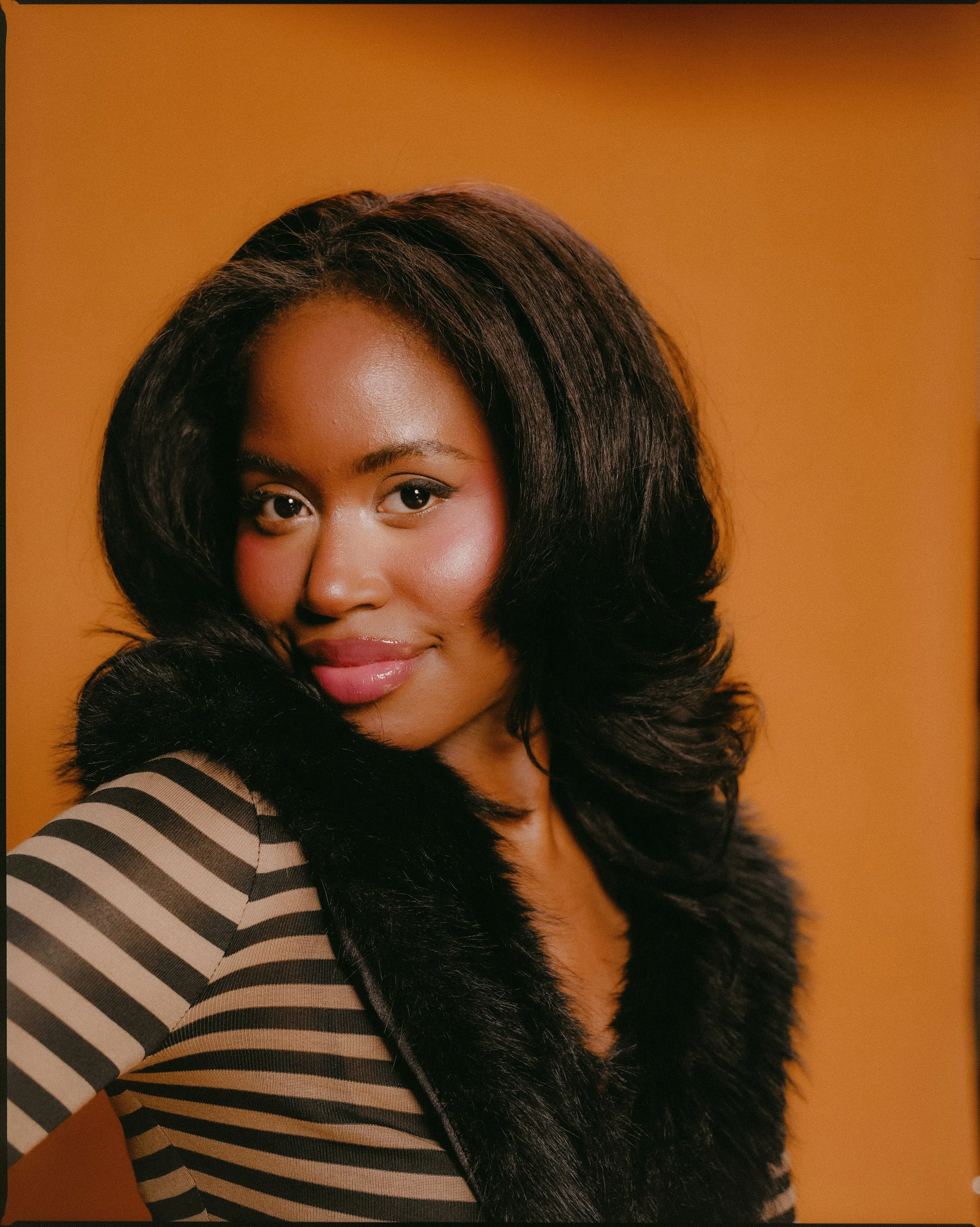
Photo by Emmanuel Porquin
LUNA: I was really struck by how often the album balances emotional intelligence with a brutal type of self-awareness at times, especially on tracks like “Oops.” Do you think that songwriting has made you more honest with yourself, or just more aware?
BOYD: I’ve always been pretty self-aware and honest with myself, maybe even to a fault. I don’t really let myself sit in delusion for too long. Songwriting is more about putting those feelings on paper and being unashamed to share them. I think we all feel like our heartbreak or our emotions are so unique, like no one has ever felt this exact thing before, but songwriting reminds me that we’re all human. The more I express those emotions, the more I realize other people have felt them too.
Even with “Oops,” which is probably the least sad song on the project, there’s still this level of honesty there. It’s confident, but it’s also me flipping the narrative on its head and admitting, “Wait, maybe I’m kind of the problem too.” You can be both the victim and the villain at the same time. That’s just real life. Nobody is perfect, and nobody is completely evil either. I think the album really lives in that gray area.
LUNA: I noticed a bit of R&B, folk and even singer-songwriter vibes throughout the project. What made this blend of sounds feel like the right home for these stories?
BOYD: Honestly, the sound just felt right. I didn’t go into recording with some master plan or a strict sense of cohesion. My main concern was making sure each song was represented in the best way possible, whether that meant the production, the instrumentation or the overall feeling.
Some songs came together really spontaneously. “Big Country” was literally just me and the producer vibing and deciding to make something random together. Then a song like “She’s a Sweetheart” started from a completely different direction before naturally evolving into what it became.
A lot of my process is very instinctual. I know what I like, and I know what I don’t like, so I just follow that feeling. There’s never really a calculated plan to pull from specific genres like folk, R&B or pop in order to tell the story. It’s more about asking myself, “What feels right? What sounds excite me? What serves the emotion best?” Even if it feels slightly uncomfortable, I try to follow that instinct.
LUNA: There’s such a strong sense of “American” imagery throughout the album (diners, gas stations, parking lots, motel rooms, football fields, pageantry). Was that aesthetic something you intentionally built into Miss Michigan from the start?
BOYD: I genuinely just really love the 70s. There’s something about that era that people naturally associate with Americana, even if that wasn’t necessarily my intention at first. With visuals like “She’s a Sweetheart,” I wasn’t specifically thinking, “I want this to feel American.” I was more drawn to nostalgia, vintage glamour, big hair, dewy makeup, certain silhouettes—all these things I associate with that era.
A lot of my inspiration comes from women from that time period, so I think those influences naturally started coming together in a way that people interpreted as Americana. Obviously with “Big Country” or even a title like Miss Michigan, those themes became a little more apparent over time. But it wasn’t like I started with a mood board that said “Americana.”
I think my creative process is very organic. I tend to follow what genuinely interests me in the moment and trust it before fully understanding it. I’m kind of a “do first, think later” person creatively. Then afterward, I can step back and recognize the through lines and shape the bigger picture. That was true for both the music and the visuals on this project.
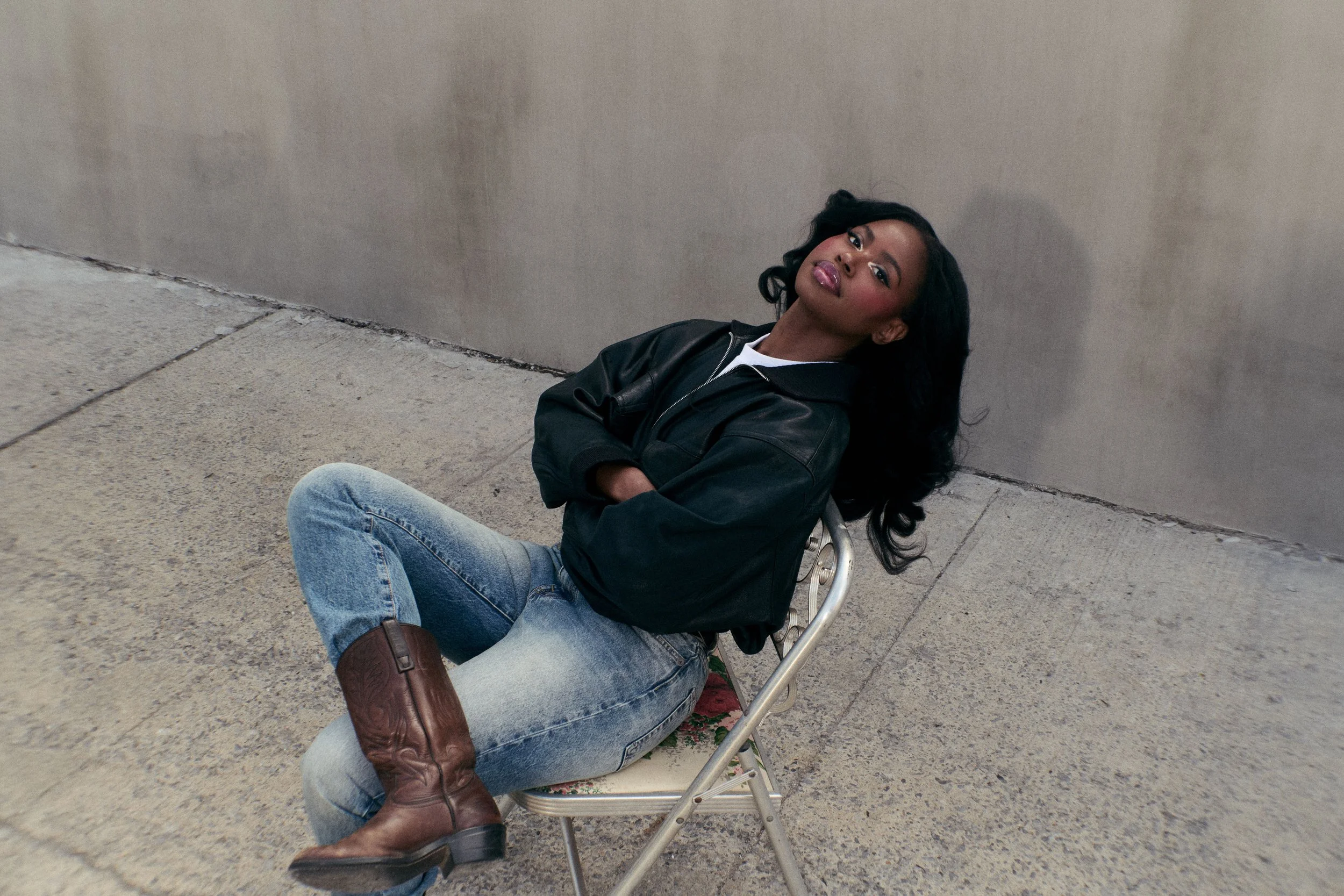
Photo by Xavier Marshall
LUNA: You’ve spent years creating music with your siblings in Infinity Song. What has surprised you most about stepping into your voice more fully as a solo artist?
BOYD: I don’t know if “surprised” is necessarily the word, but what’s definitely been different is realizing just how much more I have to carry as a solo artist. With Infinity Song, the four of us create the identity together. We all play different roles that make the band what it is.
As a solo artist, everything rests on me more directly. If I want a different sound or a different creative direction, I have to fully step into that vision and execute it. So I’ve really been stretching myself creatively in order to make this feel larger than life and feel like something people can truly connect to and root for. That process has required a lot of growth and a lot of discomfort. I’ve had to cringe at myself, roll my eyes at myself, be embarrassed sometimes—all the things that come with evolving creatively. It’s necessary work, but it’s definitely tough on the ego. I’m learning that becoming a solo artist means constantly expanding who you are.
LUNA: After finishing the album, do you feel like you understand yourself any differently now than when you first started writing it?
BOYD: At the beginning of anything, there’s always fear and uncertainty because you never really know how things are going to land. Even when I first started, I was confident in what I wanted to do, but I was definitely nervous too.
Now I’d say I’m more self-assured, but the nerves never really go away. There’s always something new to be nervous about, especially when you’re constantly pushing yourself into new territory. I feel more confident in what I’ve created, but I also know the things I still want to do are going to challenge me even more.
I used to hear artists I admired talk about being scared when they released projects, and I’d think, “How could you possibly be nervous?” But now I understand it more. The people who keep evolving and growing are usually the ones who are constantly living in some level of discomfort or uncertainty because they’re always reaching for something new. I’m learning how to accept that feeling instead of trying to escape it, even though it can definitely be scary sometimes.
LUNA: Now that the album is out, what do you hope to accomplish next? Any upcoming plans?
BOYD: I really just want to continue establishing myself. It feels like the conversation is only beginning. I’ve had a really beautiful introduction so far, but my biggest goal this year is to keep building on that and let people get more familiar with who I am as an artist.
I’m looking forward to releasing a deluxe version of the project before the end of the year so I can continue telling the story and experimenting creatively. More than anything, I just want to keep making strong work that helps deepen the conversation and gives people a clearer understanding of me and my artistry.
Infinity Song just announced new dates for World Tour II that kicked off on April 27 in Los Angeles and we’re touring through November 21, with stops in New York, Florida, Australia, the United Kingdom, and more which has been very exciting for us!
I’ll also be playing a few solo tour dates of my own beginning August 21 in New York, with additional stops in Denmark, Germany and the U.K. I’m also joining select dates of Bleachers’ Forever Tour as a guest artist in Chicago, Montreal and Toronto.
