
Q&A: NOUR Crafts Odes to Love, Loss and Home on Debut Single “Josephine” and Upcoming Debut Album ‘When I Had Hope’
INTERVIEW
INTERVIEW
☆ BY NATALIE D.C. ☆
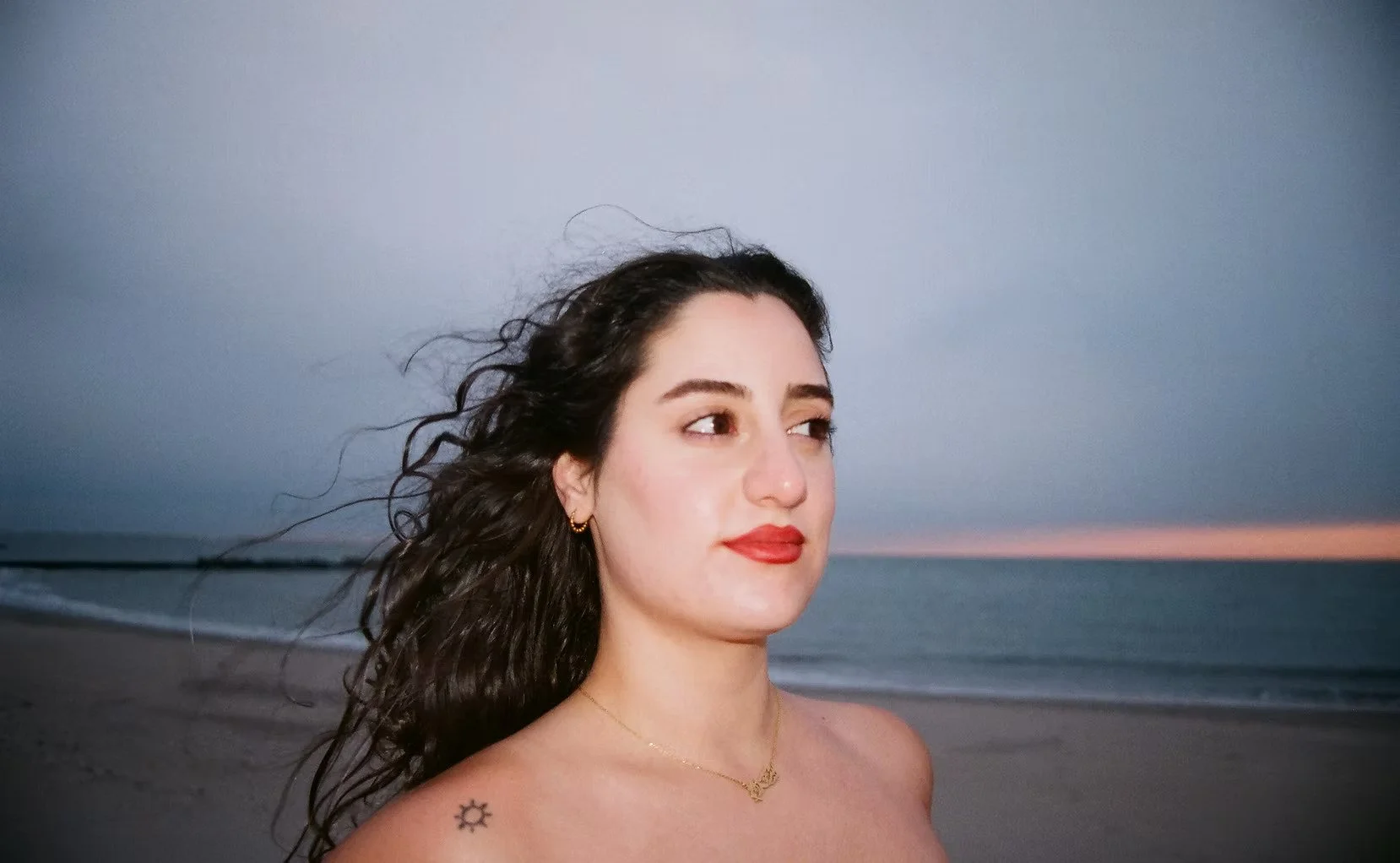
IN A WORLD BEING INVADED BY AI, HUMAN CONNECTION TRIUMPHS—on Palestinian singer-songwriter NOUR’s debut single “Josephine,” out now. It’s a melodic, lighthearted track inspired by a split-second encounter with a stranger, whose whimsical visualizer is backdropped by the greenery of a public park in New York City, where the indie artist currently calls home.
Growing up in Palestine and Jordan before moving to New York to pursue musical theater at New York University as well as a career in personal training, NOUR began writing her debut album When I Had Hope after the passing of her mother. Upcoming singles “Plain Sight” and “Endlessly” off the seven-track project act as heartbreaking, yet relatable odes to belonging, grief and unconditional love for those gone too soon.
The week of her debut single’s release, Luna spoke with NOUR about healing through music, artistic collaborations in NYC and the importance of human connection now more than ever.
Read Luna’s conversation with NOUR below.
LUNA: Congratulations on the release of your single “Josephine” and upcoming release of your debut album When I Had Hope! For readers who may be unfamiliar, could you briefly introduce yourself?
NOUR: Yes, I would love to! My name is Nour Habbash, but I go by NOUR, just for my artistic name. I’m a Palestinian artist and I'm based in Brooklyn. I write music about love and loss. That's the most concise way I can put it—love, loss, what it feels like to experience life away from home.
LUNA: When I Had Hope explores a variety of universal themes, including grief, love and the meaning of home. What is the origin story behind this project?
NOUR: I've always written music, but I never wrote music, since I was younger, in order to produce it or put it out there. I always used it to process my feelings. I went to school for musical theater. I went to NYU. It was a great experience, but in 2021, my mom passed away.
There was a huge shift in my life about everything, honestly. I wrote this album not thinking that I'm writing an album. Every time I would feel overwhelmed by anything, I would sit down on the piano and I would write to process feelings I didn't understand or to express things that felt too small for words. I wrote the album about grieving someone you love, but also about loving while you're grieving. Because it's a different experience after you lose anyone close to you. We all know what that feels like. It doesn't need to be a parent—we've all lost someone or will. You start to love people differently and there's a huge loss in the back of your mind.
I just felt really changed by my mom's passing and I felt changed in how I feel and also how I love other people. Also, because I grew up in Palestine and Jordan, I was completely by myself in New York. I don't have any family here. So I also was dealing with this pain in an unfamiliar environment and the album is how I make sense of it.
LUNA: That's so beautiful that this album was born out of that need to process those complex emotions. What do you hope listeners take away from your lyrics?
NOUR: I hope people find comfort in the album, because I feel like when you're at a low spot in your life, at least I tend to feel like no one else understands. So I hope people find comfort in knowing that other people have felt this way.
I also would love anyone who hasn't grieved to this extent to understand what that does to a person. Even if they have someone in their life who is grieving, it could give them an insight.
The last thing I hope people look at is my mom. It gives me joy to think that someone could listen to “Endlessly” [upcoming single] and just see my mom's picture or hear her voice in the beginning of the song and know that she was someone really important in a lot of people's lives.
LUNA: After growing up in Palestine and Jordan, you moved to New York to pursue a passion for musical theater and a career in personal training. How have these life experiences shaped your artistic journey?
NOUR: There's a saying that my voice teacher/life coach always says, which is “Lean into the joy.” That's what I'm all about in my life. If you look at my career, I act, then I sing and then I train because genuinely I don't want to get to 50 and think, “What if I didn't do this?” I'm really trying to experience everything that brings me joy. That is my compass in life. Anything that's bringing me joy or happiness, I lean into it.
From that, I truly found myself loving the arts and even personal training. I want all women to be strong and I don't want people to keep telling us to be skinny. I think something that really shaped the album and something that connected me to musical theater, to the album, even to training other women is somehow my whole life [I] have felt the desire to connect with other people and I learned through working in the arts and studying and being an artist that, the more vulnerable you are, the better the connections you have. I think that's something that I've recently been trying to work on and, through that, I wanted the album and the music to be really vulnerable and honest. That was also a focus point in my brain as I was making it.
LUNA: That's just such a beautiful way of putting it!
NOUR: When you're growing up, we're definitely pushed to pick a path. There's this path in the Arab world that a lot of people are taught that you're going to grow up and be this or this or this.
Coming to New York, people here don't care. They do 40 billion things. That's honestly something I really respect and admire about Americans. A lot of people think “Oh, Americans are lazy and blah, blah, blah.” That's not the vibe I get from any American I've met in New York! My friends here do like 50 things. So this is possible for me too. It's like, “Shit, free will!”
LUNA: The visualizer for “Josephine” pairs your melodic voice and warm lyrics with lighthearted shots of people watching in a public park. Similarly, the music video for your upcoming single “Plain Sight” explores belonging as you are seen struggling to fit in among romantic couples in New York. What was it like filming these visual companions, and how do they inform the meaning of When I Had Hope?
NOUR: Because it's my first album, I really wanted the visuals of the album to truly reflect who I am without any putting on. I tend to have two parts of myself or in my personality. The more joyful self, which is the one I usually present to people, looks like the “Josephine” visualizer. Then I have my introspective sad girl and that is “Plain Sight.”
I felt that it was really important that in “Josephine” I can lean into the green, lean into the joy, lean into all the hopefulness because that is the happiest the album gets. On the other hand, with “Plain Sight,” it was both scary to film and really exhilarating. I was looking around like “All of these people are here for my song? I'm so grateful right now—this is crazy.” That day I kept looking over to my best friend and being like “I'm literally from Palestine. How is this crew in the West Village filming my song?”
The goal of that video was to be New York-heavy. I wanted it to be brownstones, brown, red, New York couples. A lot of the people in the video are my friends and they're real life couples. I really wanted the visual album to reflect my life honestly because I know there will be some time and some music that's gonna be a vision, a vibe, but that's not here yet. What's here is I truly sometimes feel like I’m so hopeful, I'm in the park, I'm in New York City, life is so green and beautiful. And then seasonal depression hits and I'm in the West Village, thinking “No one here understands how I feel.”
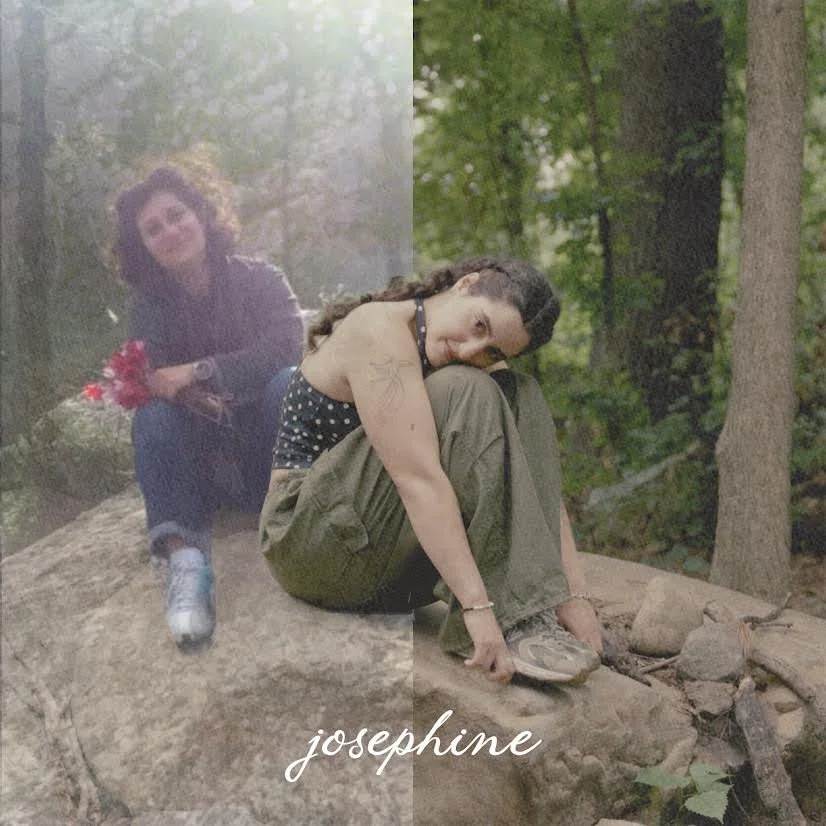
The singles’ covers all have a picture of my mom in the background blended into the cover somehow. For “Josephine,” I found a picture of me on a rock and then I found a picture of my mom 20 years ago sitting on a rock. We blended it in, half and half. Then [for] “Plain Sight”—same situation. I'm finding parallels of pictures that I took unintentionally with pictures that my mom took years ago on film. Each of the three singles will have my mom's face in it to commemorate her.
LUNA: In your upcoming single “Endlessly,” your heartfelt lyrics are interwoven with beautiful voice memos, in both Arabic and English, from your late mother and other family members. You’ve also teamed up with New-York based illustrator Suejee Lee to create an animated visualizer for “Josephine,” stating “Real art is not AI.” How important is it that your music centers real people and their stories?
NOUR: Last September, I played through all the music that I have written and picked out the seven songs that I want[ed] on the album and when I decided that I was going to make it I also was hoping that, a year from last September, I [could] look back and say I’ve grown as a person, as a musician and as an artist. I've also met other people who believe in what I'm doing and I also will then believe in what they're doing. That was one of the reasons that I wanted to create the album in the first place: to find collaborators and artists I can work with for the rest of my life.
There's something so beautiful about watching people like Raye or Olivia Dean or Lizzy McAlpine put out their first, second, third, fourth albums or sell out MSG or go debut in Radio City with the same people they were playing with since they were 17. I'm very much someone who grew up with friendship being one of the most important things in my life and in my parents' lives and my sister's life. That's always something I'm looking for. I have friends who, when I moved to Jordan in the seventh grade, are still my best friends. I really was looking for that collaboration when I decided to create the album.
I feel really lucky that my producer, Sandro Bevilaqua, and Suejee and the people I ended up creating the album with. I would work with them 10 million more times. As much as I love the music, half of [the joy] was spending time with them and making something cool with someone else.
I definitely feel a sense of connection and pride after I share my music, even with just one person. When I sent “Endlessly” to my family, everyone was going through it. My family [members] were crying. They were like, “We haven't cried like this in a moment,” but at the same time, in a feel-good way.
I just feel like if we lost that aspect of creating art—the sharing, the vulnerability, the human connection—and it's ChatGPT, what's the point? Why is it there? Genuinely, I don't want to hear an AI song. I just can't look at the last year and see all of the artists who I became friends with and worked with and look at this album and I'm like, “Oh, wait, this is our child” and think that a robot could have made that. Then I don't really want it anymore.
LUNA: I'm so glad that you have a support system that you can maintain throughout your artistic journey. After all, “Josephine,” as you mentioned, was based on a split second encounter between another person, but it's all the same spotlighting that very real human connection.
NOUR: When I think of the album, it's either about a connection with someone or it's about the lack of connection with someone. I feel like a lot of people end up not creating stuff because they think “I can't afford it” or “I don't have anyone to make this with.” But, I think every single person who worked on the album and I cut a deal. We're all trying to pay each other a fair amount—“You help me and I'll help you.”
The person who made the “Josephine” animations is my neighbor's friend. The person who shot the “Plain Sight” music video, I met on TikTok. Even my producer, [I met] on Instagram. Sometimes you just gotta ask and people want to do it.
LUNA: Finally, what are some pieces of media (music, film, literature, etc.) you’ve been drawing inspiration from recently?
NOUR: A book that I always go back to is The Forty Rules of Love by Elif Shafak. It's about Rumi and his spiritual partner/best friend/companion Shams’ spiritual awakening and their relationship. The Forty Rules of Love is about the 40 rules of Sufism, which is the religion of love, a different take on Islam than I've ever heard before. I always go back to that book whenever I need grounding. I really love it.
For music, Raye's newest album. Oh my goodness, I'm a die-hard Raye fan. Raye's newest album, Naïka’s latest album, ECLESIA, and Jessie Reyez. Those are my three favorites—24/7 getting blasted in my ears. I'm heavily inspired by the authenticity, the precision and the truth that they have in their music.
And then one last answer—musical theater in general has influenced the way I write a lot and “Josephine”—my inspiration behind it was a patter song style. A lot of things [in the album] are inspired by classical or musical theater pieces.
