
Q&A: Patrick Wolf Traverses the Celtic Wheel of the Year on Single ‘The Beast’ and Biopic ‘WOLF’
INTERVIEW
INTERVIEW
☆ BY NATALIE D.C. ☆
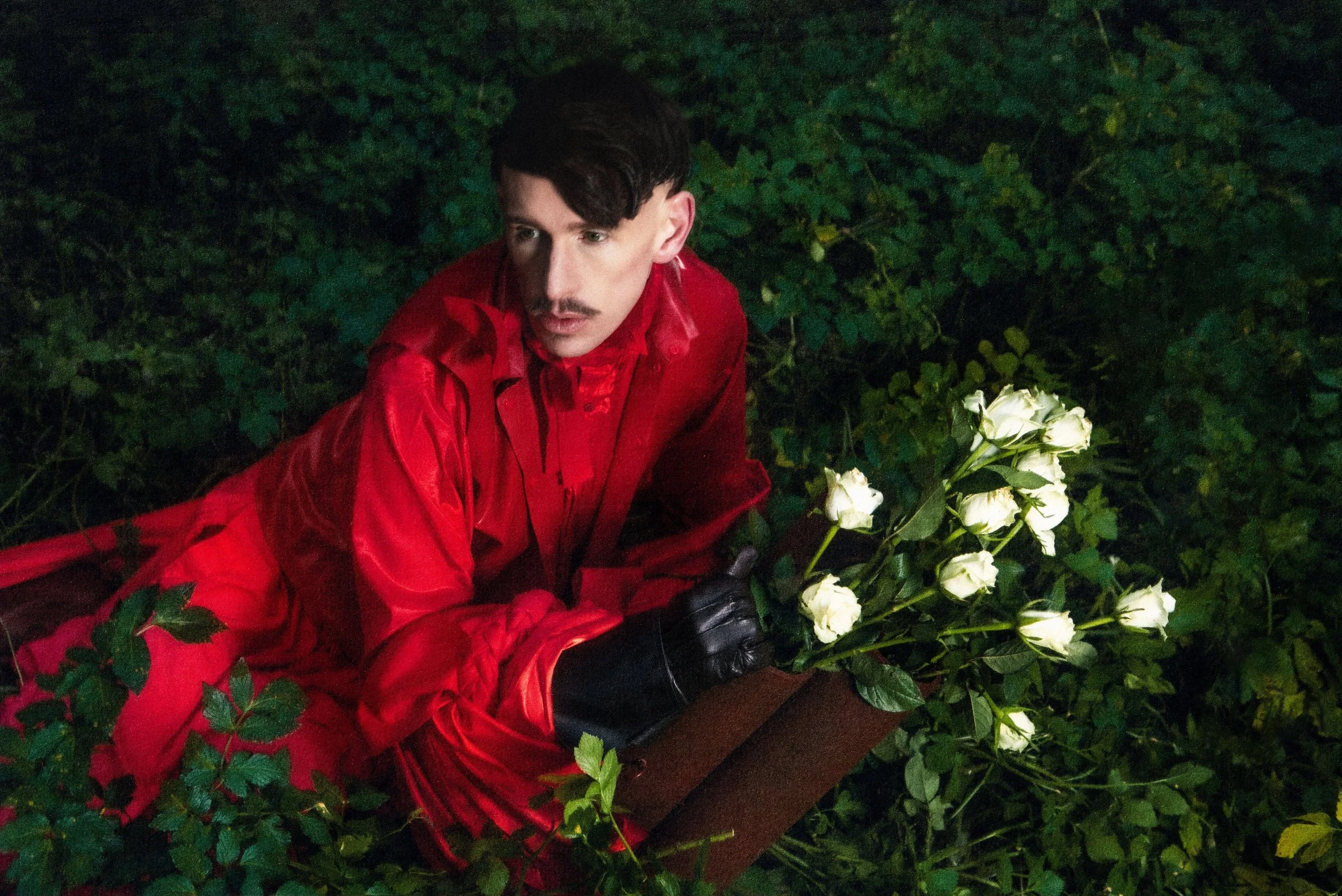
Photo by Emma Jones
PATRICK WOLF IS THE BEAST—In 2025, the English singer-songwriter returned to the music industry after a 13-year-long hiatus with his seventh studio album Crying the Neck. This year, Wolf is back and better than ever as he releases two singles, “The Beast” and “The Laughing Dove,” in preparation for his North American Tour of the Beast beginning June 5 in Washington D.C.
His years-in-the-making biopic WOLF—narrated and produced by the artist’s longtime friend and Academy Award-winning actress Tilda Swinton—is set to premiere at the Sheffield DocFest on June 11.
In the days leading up to his highly-anticipated return to the States, Luna sat down with Wolf to discuss his prolific career, seasonal inspirations, queer collaborations and his hopes for his recent and upcoming projects.
Read Luna’s conversation with Wolf below.
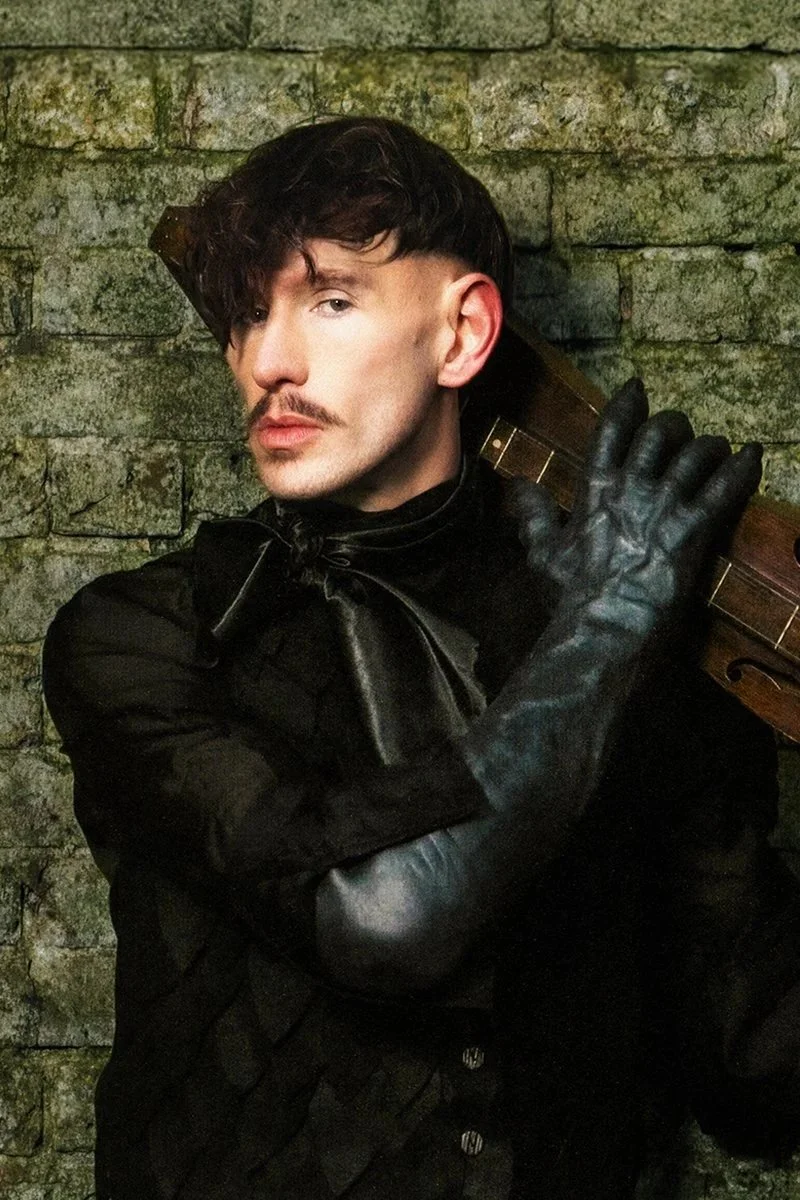
Photo by Emma Jones
LUNA: Congratulations on the release of your upcoming projects, including singles “The Beast” and “The Laughing Dove,” Tour Of The Beast leg one and documentary WOLF! For readers who are unfamiliar, could you briefly introduce yourself?
WOLF: Oh gosh, about myself, I never know where to start. Even after 23 years, I find it really hard. People always want to know what kind of music I make. I'm a folk singer, in the tradition of folk music as a story. My work has been so many genres, and I hope for the rest of my life, it keeps on pushing to new places. I have a core world and essence, which I've built up over the years, which I like to think is the metaphorical door in your wardrobe to the other world, whenever you need it, and you can live there safely…in your spirit and in your imagination. I hope my work gives people another world to live in that they feel most themselves in.
I've never worked with any co-writers—I'm a traditional singer-songwriter on a path of…Joni Mitchell or Kate Bush or PJ Harvey or Bjork or Laurie Anderson. That extends to the visual as well. I've always made my own outfits and a lot of the time I'm directing my own videos, unless there's someone I want to collaborate with. The visual is definitely another way of communicating in my world.
LUNA: That is a perfect introduction. How would you describe the sound and style of this new and exciting era compared to your previous project Crying the Neck?
What I wanted to do was create aesthetic whiplash on what I was doing last year. The release of my first album in 13 years, [Crying the Neck], was the first of a four-album project, which is my way of working around the old Celtic wheel of the year. In a way, each album [is] two or three spokes of the wheel, so this one was basically the end of summer, just before Samhain, or Halloween—that strange period between July and September, end of mid summer, harvest period. It was paying tribute to my mother, who was an artist. I didn't realize at the time, but I was harvest-colored blonde for the whole year. Sometimes my cousins came to see me in Ireland and they were like, "Oh my god, we thought it was your mother up on stage.” I'd imagined a boy working out in the fields in harvest, so he was tied to the god of light, Lugh, in Celtic mythology. A visual manifestation comes to me…of straw and corn and harvest and the god of light and my mother and all these things to the point, but the album was very heavy for me to perform because it was all themes of, well…The Reaper, Death. It was a lot to carry with me.
I realized the next album as I reached the end of my last American tour. I had…driven myself for the first time ever from west to east coast, and on that journey I had the vision for the next album, and what time of the year it was going to be. I knew that [it] was not going to come out until next year, ‘til 2027. So I was like, “What am I going to do in 2026? I know I have to go back to tour America, because the last tour was a success.” I suddenly got this idea of this…Old Hollywood Clark Gable kind of prince. I, naturally, have the Clark Gable gap in my mustache, and I thought, “What could be the most visual whiplash [from] last year?” and it's what I'm doing right now. I started working with this photographer in January [Emma Jones] to come up with some tour art and, as we were working together, I knew that I wanted to release something.
When I saw the photos, I was like, “Oh, I know exactly what the song for the tour should be.” Because we had uncovered this Vincent Price/horror movie prince character, it made me think of the pariahs and the outsiders and the monsters, the hunchback of Notre Dame, the beast in the tower. A lot of it tied into the stories I was hearing in the meet-and-greets last year from people who, say, had escaped a Quaker upbringing and found my work, and it had given them liberation to escape. The black sheep of society kept on coming to my meet and greets and giving me these really inspiring stories, so I was like, “It's a song for them.”
There was nothing more thrilling than to have a complete tangent of imagination and follow through right from the artwork to the video to the set to the seven-inch, which is going to be on the table of the tour. That whole thing of “Nobody asked for this, Patrick, but you wanted to do it.” I hope it inspires people. Making things and creating things, it all comes down to “Nobody asked you to do it, but you wanted to do it so badly that you followed through, and you delivered something to the world it didn't have already.” It never gets old for me.
LUNA: You wrote, produced, engineered and recorded these two empowering singles using the harpsichord and an instrument you invented yourself, the Kantalyre. What is the origin story of these queer anthems and what was the artistic process like?
WOLF: I like that, in a way, they could be played on a loop. They answer each other's questions. At the end of “The Laughing Dove,” the lyric is “No one is as cruel as I am to I / I know why, but I'm too kind to say.” I was thinking about…this feeling of trying to keep the peace so much [so] you don't call out injustice that has happened to you. The toxic element of “live and let live.” It's like, well, how about we don't let them? I think a lot of the time, if we're too scared to rock the boat and say, “Actually, what has happened to me is not right,” it's knocking away at your self-worth. Rather than saying “I refuse to be treated that way,” you end up treating yourself that way, and it creates a schism with life.
When I was at school, I had a growth spurt, and everyone started turning on me because I was the tallest person in the school. The bullying would start: “Oh, you're so tall.” What I would do is, the week later, turn up in platform shoes and be like, “Well, I found the thing that offends you, and I'm going to do it more.” I think that happens a lot with us in the margins, from queer identities—we mutate and we have to weaponize parts of ourselves, which we'd rather leave gentle. The beasts that we become in order to navigate life…can come from suppressed rage [over] an injustice. One [song] is solace, and one of them is rage. There's sometimes a lot of peace in being angry.
LUNA: The music video for “The Beast” is directed by queer filmmaker, artist, activist and drag performer Joseph Wilson and features an electrifying performance from cabaret singer and drag artist Joe Black. What was it like starring in and collaborating with these two multidisciplinary voices on this enchanting visual companion to your song?
WOLF: I had worked with [Joseph Wilson] on my first return to work after 13 years. We made a short film out of two songs back in 2003. When we did that, I had not been on camera for 13 years. I had set up a private Instagram to follow filmmakers and designers and people that, if I [came] back to work as Patrick Wolf, I'd like to work with. Joseph was on my list, and we actually end[ed] up meeting through recovery, strangely enough. So, fate brought us together. When we did those two pieces of work, the crew was something like 20 people, and Joseph was very young, and I was incredibly unsure of how to use my body on camera. We were just two people feeling our way through this actually quite big production, and I'm really proud of what we made.
I approached him for this—I said, “How about we work together with no production and no crew, and it's just you and me and a camera?” We're both so much more powerful artists since 2003. I wanted it to be…about intent and trust and spontaneity again. We were in my car driving around the countryside—no permission to film anywhere, but we were just out there. I wanted that energy back. I've missed it so much in my life, and I think that that came through in the final version—the wildness and the spontaneity done by two people that know themselves very well. I know my body, I know how to perform and I know how to communicate how I want to look, and he knows exactly what he wants with his camera and what story he's trying to tell. When you have a combination of two people trying to tell the same story, it's really magical.
There's a sample of Joan Crawford at the beginning of the song from her movie Rain—she's this sex worker in the 30s, and then a priest comes along and tries to convert her to Christianity—where she's basically saying, "You're disgusted at me, you hate me, and be damned with your hate.” I thought that phrase could work for so many people right now in the world. Joseph wanted to highlight that, and my friend Joe [Black who] I've known on and off for four or five years—I sent him a message and he created out of various different Joan Crawfords this character that, for me, also represents the death knell on Crying the Neck. We gave him the scythe that I hold on the front cover, and it's the ending of that chapter. I actually had shivers when he was delivering his speech. The whole thing felt like we're doing exactly the right thing with our time and our money—or lack of money—and making this because we really love telling stories.
Photo by Ingrid Z
LUNA: WOLF, a documentary chronicling your artistic journey, is narrated and produced by your longtime friend Tilda Swinton and is set to premiere at the Sheffield DocFest on June 11. What was it like working with Swinton and director Christian Cargill on this 90-minute recounting of your life?
WOLF: It's almost one of the hardest things to talk about…and I'll tell you why. What I allowed to happen and allowed myself to let go of was…to be documented and not documenting, to be directed and not direct. For instance, every single music video I've done, I sit in on the edits or I ask to be involved right up to the last edit. I knew if somebody was going to make a film [of] this magnitude about me, that I would have to trust them. If it was going to be an actual documentation of me, then I would have to almost forget that it was happening. I would also have to not see the edit until it was the very final edit, and then I could say “Emergency: that can't be in here.”
I did on about edit three. I came in and I was like, “This might upset someone in my family, we can't have that.” It was more about setting boundaries of things which I knew were not conducive to being inspiring to people. I wanted to not be part of the inputs, but I wanted to help with the outputs. I just opened the doors to Christian for two years, basically. The thing about the film is it captures me in a state where I'm not ready for camera: I've sometimes got really big bags under my eyes, and I'm in the garden, or I have come straight from a show, and I look really rough. I had to keep challenging myself to hopefully give people an insight into a part of me which I don't normally communicate to the world.
Day one or two, when Christian started filming, I was talking to the camera. I was telling him a story about my life while I was painting, and he was like, "Oh, can you not say anything, just paint?” and I was like, "Well, what film are we making? This is really strange.” Then he explained to me [that] he was just going to film me…without talking, just doing things as I normally would, the gardening, writing, my day-to-day life as an artist. Then, when it came to the right point, he wanted me to have a conversation with somebody that would meet me on an artistic level and a human level. Somebody that I trusted. It just seemed that Tilda would be the right person for that, because she's a voice that is connected to my work. The only spoken word on any of my work is on my third album [The Bachelor] where she does a narration throughout the album, so she's already a narrative voice in my work. All the dialog [in the film] is excerpts of a conversation between us based around prompts from Christian.
At that point, it was…still a 20-minute film. We had booked studio time for two hours, and he ended up recording about four or five hours of conversation. My father handed over about 25 hours of footage filmed over childhood from [his] VHS camera…He'd gone around and got something like 45 hours of footage from the early 2000s and then he had filmed me for two years. [Christian] went back to the British Film Institute, who had initially commissioned the short film, and he was like, "What am I going to do [with] this?” and they said, "We'd love to commission it to be a feature film.” So, the project went from being this portrait of me as a gardener talking about my next album into this biopic.
What I don't want the film to be is PR for me. It's not coming from a place of ego, which might make people laugh, because the film's called WOLF, and I'm on the poster and it's about my life. But, it has topics of grief and recovery, and it goes in-depth about sexuality. I want it to be, hopefully, not about me, and be a mirror for people that they see themselves in.
LUNA: Your North American Tour Of The Beast kicks off this week. What is one thing you’re most excited for?
WOLF: I don't think there's one thing, really. First of all, the only place I've been to on this tour are D.C., Atlanta and LA, so it's a new experience for me as a human being. At 42 years old, being in the music industry for 23 years, for there still to be places you've never played before, it's like I get to feel young and experience that first chemical reaction with the place—it's so magical for me.
Towards the end of last year, I started really enjoying playing two keyboards at the same time, because there's harpsichord on “The Beast.” I got a MIDI keyboard and reversed all the colors of the keys, so my brain is happy to think it's a harpsichord. I'm going to be playing the piano on one hand and the harpsichord on the other, so I guess that makes Tori Amos my mother, and she doesn't even know. There's a lot on this this tour, musically—there are some songs I haven't done for 15 years, because the concept of “The Beast” opened up so much gothic imagery throughout my work, and the power of the song has led me [to] all these songs, which I've completely forgotten about. I think it's going to be quite cathartic for everybody, myself included.
I think I'm going to feel great on the last night of the tour in Los Angeles, because it's my birthday. The last half an hour is gonna be songs that I'm only ever gonna play one more time in my life, like a song I wrote for Britney Spears that got rejected from her Circus album, and ultimate fan favorites. It's going to be a birthday special. I think the next album might be more of sit-down theater, so this Tour Of The Beast might be the wild energy before I say, “We can all sit down now for a bit.”
