Q&A: Reine Orelia's ‘Please Be Impressed’ EP and Short Film are Radically Honest Love Letters to Creativity and Self-Acceptance
INTERVIEW
INTERVIEW
☆ BY NATALIE D.C. ☆
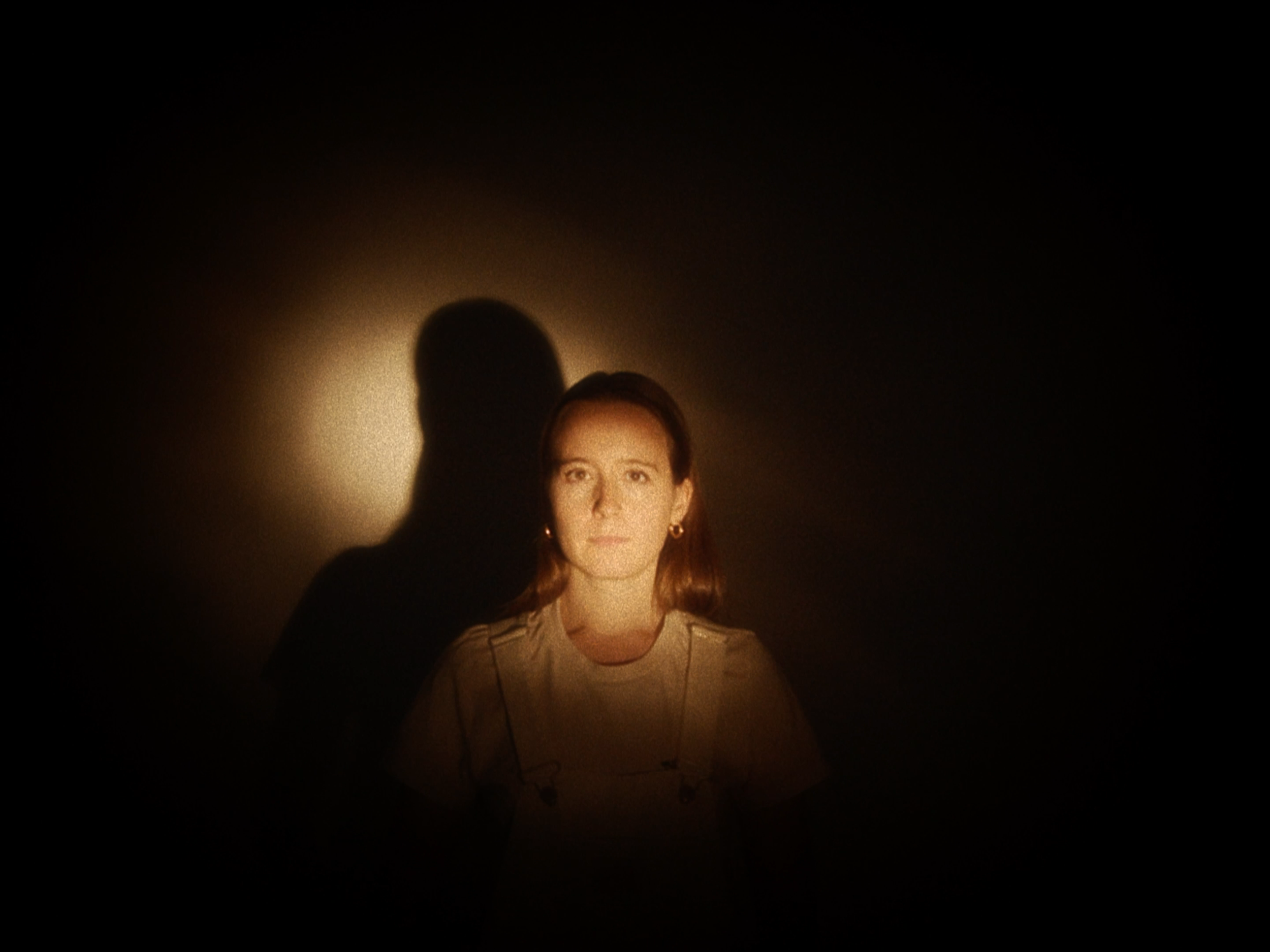
REINE ORELIA IS WEARING HER EGO ON HER SLEEVE—After nearly a decade of healing, self-reflection and experimentation, Paris-based artist Reine Orelia is preparing for the release of her self-produced EP and companion short film Please Be Impressed on May 15.
With twinkling melodies and honest lyrics, Orelia weaves a 5-part narrative arc throughout her synth-pop EP, singles “The Void” and “Empty Cup” acting as the punchy climax and vulnerable final act, respectively, needed for this carefully-crafted love letter to creative expression free from judgement. This sonically-cohesive project is thoughtfully brought to life in the Please Be Impressed short film, starring Orelia herself and directed by Paris-based filmmaker Briac Cramer.
As Orelia and Cramer ready for the project’s fast-approaching release date, Luna spoke with the pair of creatives about Please Be Impressed—from its one-of-a-kind sound and style to its niche inspirations to its decade-long process fueled by introspection, desire for truth and love of the arts.
Read Luna’s conversation with Orelia and Cramer below.
LUNA: Congratulations on the upcoming release of your EP and short film Please Be Impressed! For readers who are unfamiliar, can you each describe the sound and style of this project from your own perspectives as musician/songwriter and director?
ORELIA: My goal was to create an existential synth-pop record on the individuation process I underwent throughout my twenties. I wanted to combine highly introspective lyrics with larger-than-life melodies, as a way to represent how simultaneously deeply hidden and personal, yet massively life-altering this introspective journey can feel.
CRAMER: When Reine presented me with this project, it was understood from the get-go that this was a story of rebirth, of being trapped in a certain emotional place and the process of reckoning with that fact within oneself, until finding a way to break out of it into a new chapter of one’s own personal and creative journey.
From a visual standpoint, it was clear that we would be representing an internal torment, visualising the arc of the story via a singular liminal space and dressing it according to the chapters in the EP.
In the early stages of development, we realized that setting any of this outside of that space would go against the intention of the story, and creating a claustrophobic feeling that served to externalize an interior dilemma far better benefitted the cerebral themes of the project, all of this ultimately building to an escape.
LUNA: This self-produced EP features a lovely blend of soft, dreamy melodies and vulnerable, relatable lyrics. What is the origin of this 5-song project and its whimsical narrative visualizer?
ORELIA: This project was really born out of a dark period I went through in my early-to-mid twenties, what I like to call my “cave years.” I hadn’t yet learned to regulate my emotional sensitivity, which led to a lot of nervous system dysregulation and, ultimately, an intense bout of chronic fatigue that made everyday life more challenging and kept me increasingly isolated from the world. Anyone who has been through a chronic illness of any kind will know the existential state of mind it puts you in, to feel so trapped in your own body. Part of healing from that involved me being radically honest with myself, about my imperfections, my emotional addictions, and my limiting beliefs keeping me stuck. It also involved being willing to take ownership of all aspects of myself without shame or judgment. Each of these songs represent one aspect of the inner work I needed to do in order to recover and re-enter the world as a social being and not just an introspective one.
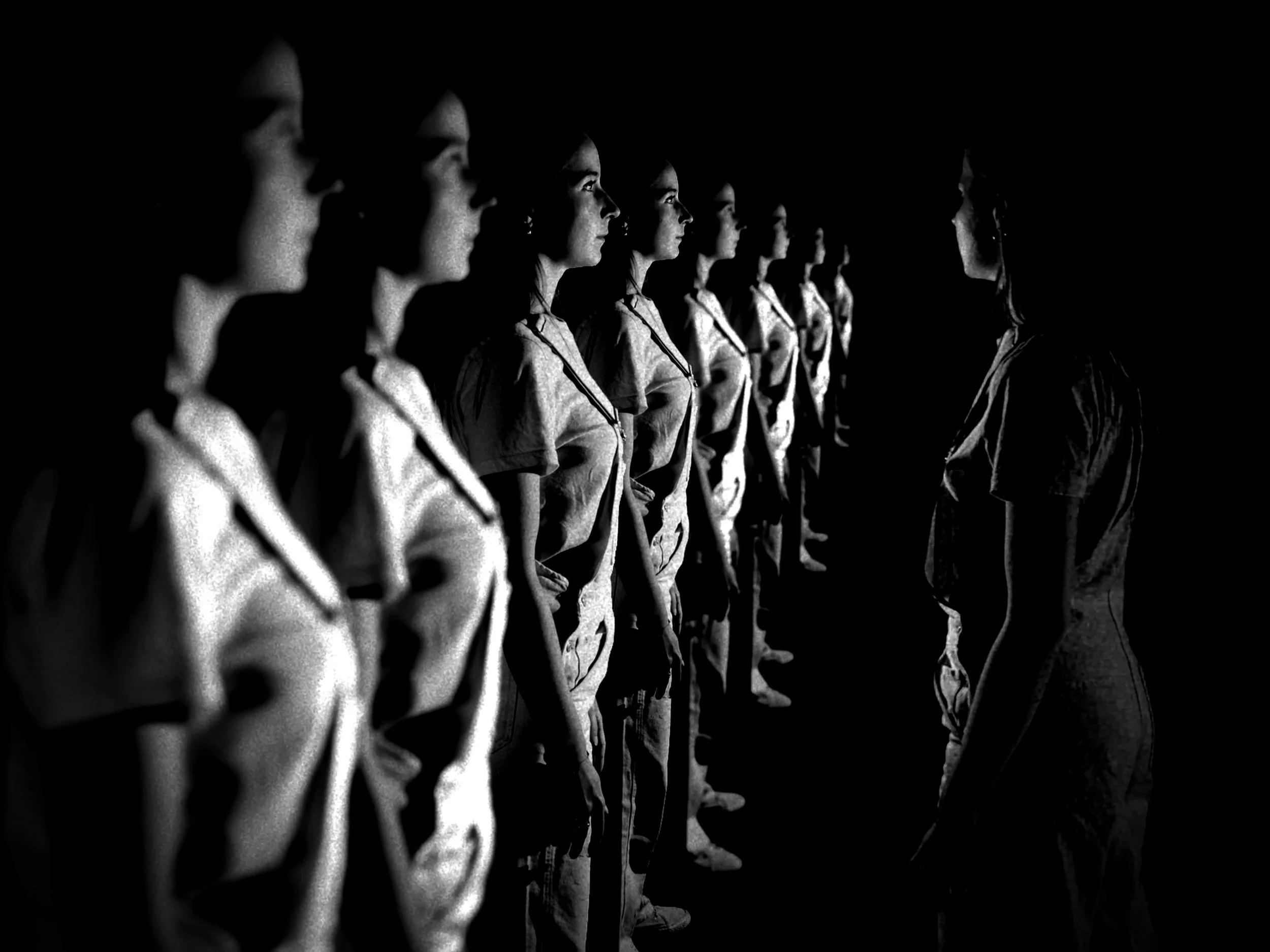
CRAMER: Reine and I both share a love for ethereal sounds and surrealist visuals, [so] this project was the perfect avenue to combine our respective strengths and creative ambitions. The opportunity to create five videos that were both parts of a larger narrative arc, and unique visualisers in their own right was something that very much appealed to me. Being able to dive headfirst into blending abstract expressionism and narrative symbolism was a really unique experience.
LUNA: Reine, how did it feel to star and have your introspective lyrics come to life in the Please Be Impressed short film? Briac, what was it like directing this coming-of-age story to life?
ORELIA: Full transparency: I was quite nervous at the idea of being on camera. I’ve always considered myself more of a writer than a performer, so the idea of putting myself front-and-center in a five-part musical film was intimidating. But it [was] still something I really wanted to do, and I don’t think I could have with anyone but Briac. We’re so similar that I knew he’d know just what to do with the material, and he’s such a calm and creative presence that I knew he’d make experimentation really effortless. I’m pleased to say I was 100 percent correct in all my assumptions.
CRAMER: Reine and I had evoked the idea of collaborating on a music video a few times in the past, bringing her musical and my cinematic sensibilities together, but the timing was unfortunately never right. This time around we both had the space to make this happen, although going from hypothetically making one music video to suddenly putting together an entire five-part narrative music video arc was certainly a rapid shift in tempo.
That being said, I’m always one to jump at a challenge. I’ve never shied away from ambition, and Reine was such a wonderful collaborator throughout. We both share similar sensibilities which benefited our creative collaboration [and] was going to be important in a near month-long shoot, to say nothing of the pre- and post-production process.
It was a very organic process. We had ample time to plan and storyboard the entire production prior to the shoot, which allowed us a great amount of latitude to try new things and improvise on set, seeing as we were both on the same page.
LUNA: While each song of Please Be Impressed is musically cohesive, each part of the short film is visually distinct. Can you each discuss what the filmmaking process was like and how subtle differences in acting and creative direction gave each song its own unique style?
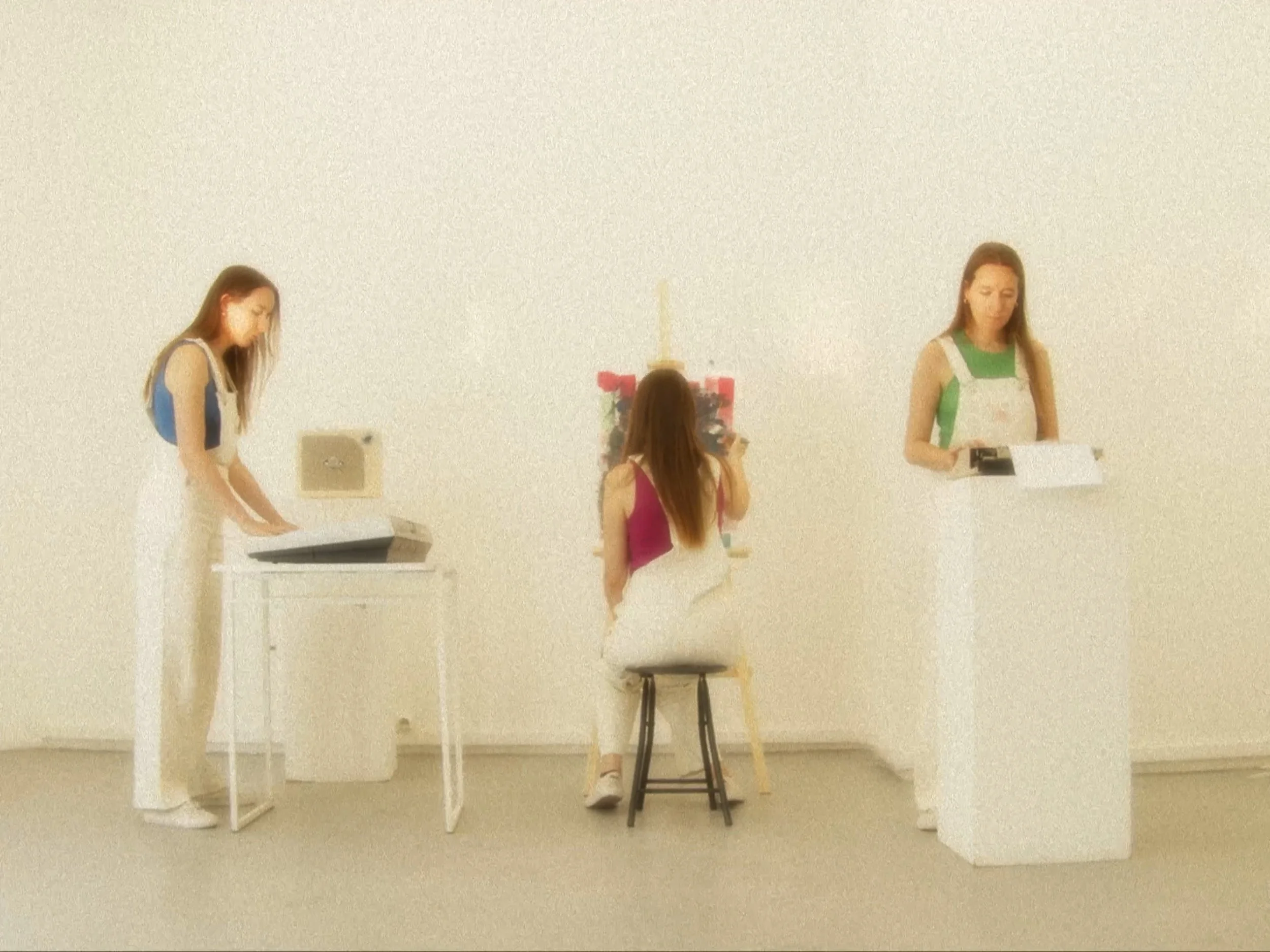
ORELIA: It’s true that we went into this shoot with the idea that each music video should be able to stand entirely on its own, all while making sense in the context of a larger story. All 5 songs were filmed in the same small Parisian gallery space, with all its walls painted in white and void of any furniture. This gave us a lot of flexibility to create a unique visual fingerprint for each video, all within the same introspective universe.
“Purposeful” and “Empty Cup” mirror each other visually, as they bookend the story, with “Purposeful” being all about manic creation and “Empty Cup” more about creative surrender. “The Void” is the only music video that was shot on a green screen, to help create this image of being totally submerged in the pitch-black darkness of one’s own shadow. “The Very Best” and “Lifecycles,” both serve as transitions into, and back out of this deep inner world, and therefore have a dream-like quality to them.
CRAMER: I’d say that as much as the EP is cohesive, each track absolutely has its own identity, which definitively guided the visuals to follow the same approach. As I saw it, the EP had a clear five-act structure, much as the Greek tragedies of old.
“Purposeful” serves as a setting of the stage for where our narrator finds themselves. “The Very Best” serves as a rising action, contrasting the desire to match one’s childhood expectations for oneself in “Purposeful,” with one’s ambitions to live up to our creative inspirations in “The Very Best.” “The Void” is the emotional climax, with our narrator swallowed up and overwhelmed by their fears and anxieties. “Lifecycles” is the narrative climax, visualized by the various creative ambitions of our narrator turning against her. “Empty Cup” is our descending action, in other words our epilogue, [where] our narrator finds peace within their past and present, accepting the beauty of a chaotic journey and anticipating an uncertain future without expectation.
Each part needed to feel just as coherent as they did distinct. I allowed myself to be absorbed by the tone, pace, and scale of the music to guide the visuals, along with building the rising and falling action of the story.
LUNA: After this multimedia collaboration, what does the message behind Please Be Impressed mean to each of you? Reine, what do you hope listeners take from these lyrics?
ORELIA: I hope listeners leave this project being more self-forgiving of their own messy human nature. I find there’s so much to gain from doing deep introspection, but it inevitably means having to confront so many ugly aspects of our humanity that we’re often too ashamed to accept we’re vulnerable to, from selfish desires to victim narratives and delusions of grandeur. My goal with this project was to wear my ego on my sleeve, so to speak, to be transparent about having one, face it with curiosity rather than judgment, and tell the story of what it has taken for me to integrate it as an aspect of myself, one I can choose to listen to, or not, rather than a small dictator quietly governing my life that I’m too scared to admit having, let alone stand up to.
CRAMER: Please Be Impressed is many things, but, above all, it appeared to me to be a story that many artists can empathize with. It’s a story about reckoning with the often naive hopes we had for our future as children. It’s about accepting where we are in life, but crucially not about saying that giving up is the answer, but rather adapting and moving forward and finding new ways to express [ourselves].
LUNA: Finally, what are some pieces of media (music, film, literature, etc.) you’ve been drawing inspiration from recently?
ORELIA: The song “Lifecycles” was named after a book of the same name by Christopher Bache. He was a professor in Philosophy and Religious Studies at Youngstown State University. I found myself very drawn to his work when I was recovering from chronic fatigue and writing this EP. In this book specifically, he explores the concept of reincarnation. It was a fascinating read, and felt very fitting with the theme of the song, which is all about preparing to exit a cycle and re-enter a new one.
Other than that, I’m always very inspired by the Australian music scene, artists like GUM, Pond, Tame Impala and Skeleten. I don’t know what they put in the water over there, but they just know how to make a good groove. Also, lots of 80s music! Kate Bush and Belinda Carlisle are never too far down my playlist.
CRAMER: Majority of my inspirations are painters. I have deep admiration for the unsettling abstraction of Francis Bacon, the gothic darkness of Zdzisław Beksiński, the quiet isolation of Alex Colville and the dreamlike surrealism of René Magritte.
I’ve definitely been a very narrative-driven storyteller, but I’ve always had a strong desire to create carefully designed shots. The power those artists have to be able to evoke entire worlds and stories in your mind from just one frame is something I’ve heavily gravitated towards.
I’ve always believed that you should be able to watch a film with the sound off and still understand the intentions of the characters, motifs, and themes of a story. If the visuals and sounds of an audiovisual creation can’t stand on their own, there isn’t much purpose to it being in that format.