
Q&A: Renny Conti on his new record ‘Split Second’
INTERVIEW
INTERVIEW
☆ BY LUCY BULLINGTON ☆
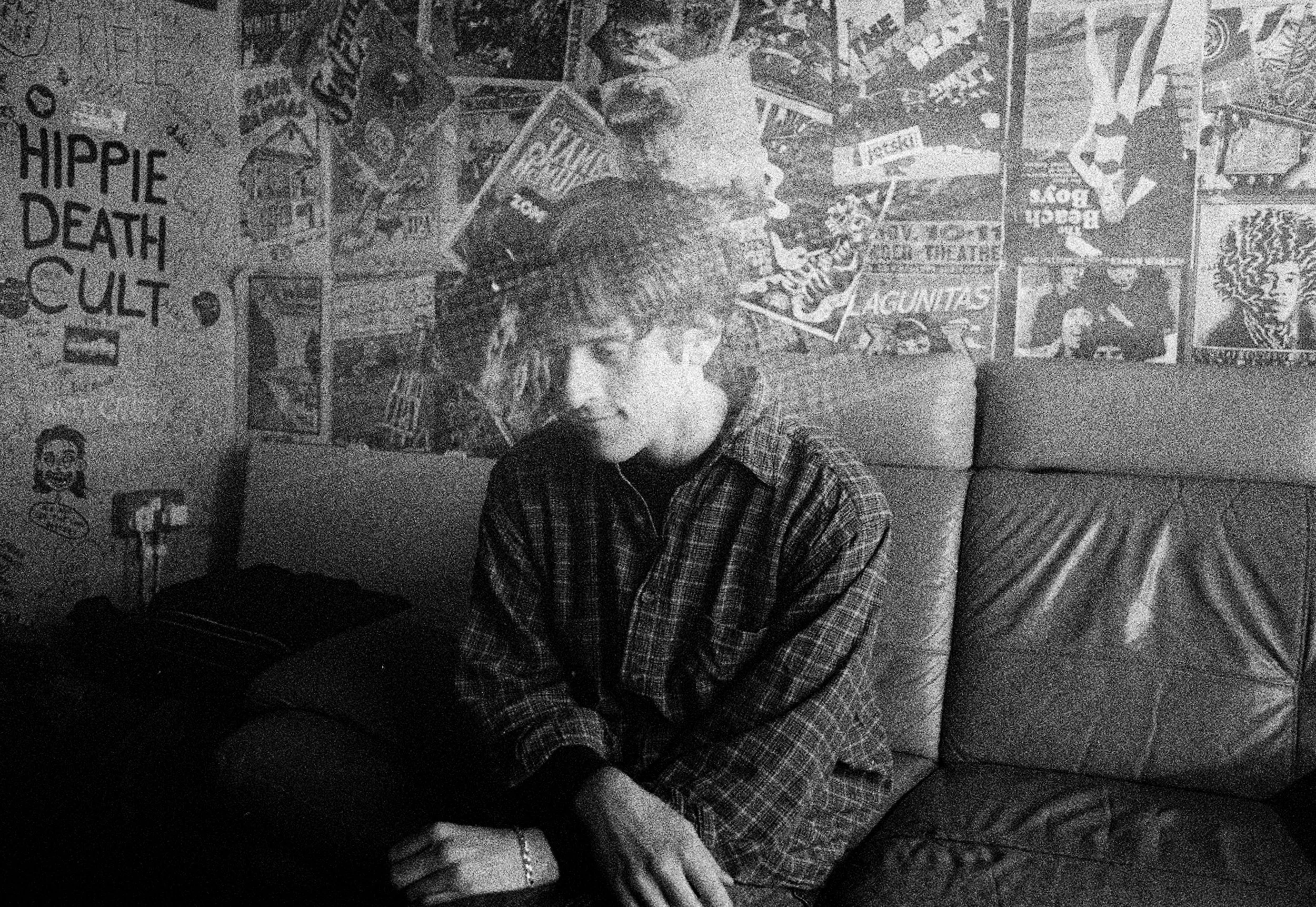
Photos By Lucy Bullington
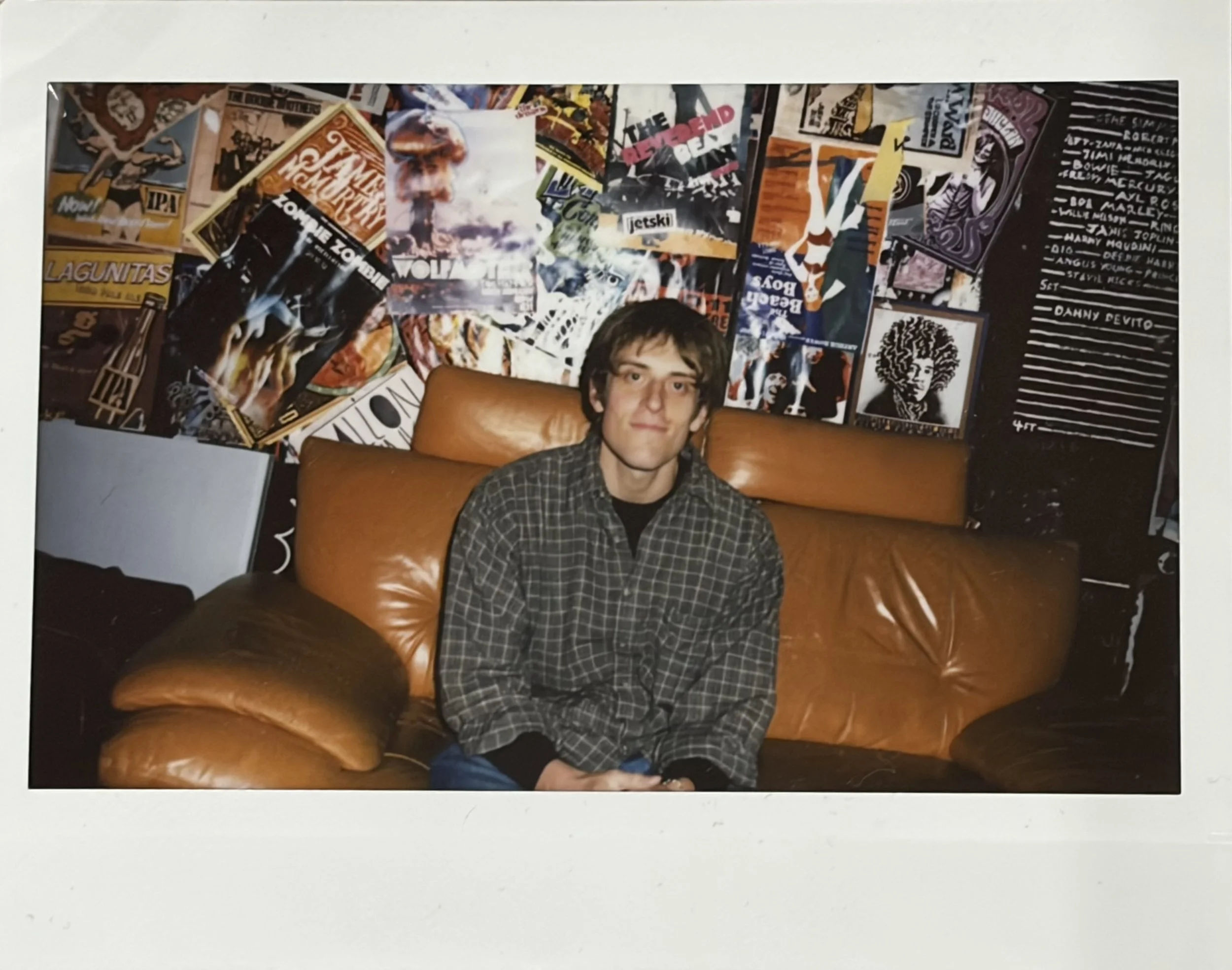
I MET RENNY CONTI RIGHT AFTER HIS SOUNDCHECK AT THE LEXINGTON IN LONDON—When talking, it didn’t feel like I was interviewing someone on their brilliant record. Rather, it felt like one of those deep and wonderfully random conversations you have in the corner of a party that became the highlight of the night. Conti stands on zero ego, and his ability to talk about his intimate relationship with music is boundless. He is completely relaxed, yet entirely dialed into conversation.
When I ask him if the idea of stardom appeals to him, Conti denies it quickly, following it up with, “What appeals to me is the freedom to keep making music…My biggest interest is just being able to make records forever”. I bring up his past in punk music to inquire if he’d ever “return to form” and he tells me that he actually posted on Craigslist this past year looking to put together a punk band.
Following the release of his self-titled record in 2025, Renny began his next project with the intention of looking further outward in his lyricism; writing more about the natural world around him. The amalgamation of this approach with his personal introspection is superb. He transcribes visceral, corporeal experiences and flips them into piercing metaphors. You hear it in lines like, “Prospect Park and I am sitting up straight / with the knowing posture of a monk / it’s May of 2024 and I am writing / to get myself out of a death-induced funk” in “San Francisco, 2005”.
Conti’s second studio album, Split Second, is out today. The title, as he describes it, is “about boiling life down to moments; how everything can change in a single instant.” Each track feels searingly nostalgic as Conti reminisces on the past experiences that brought him to the present. It’s a push and pull; a haunting body of work moving through a museum of past decisions and loss. It’s a marvelous punch in the face.
Read the rest of our conversation below.
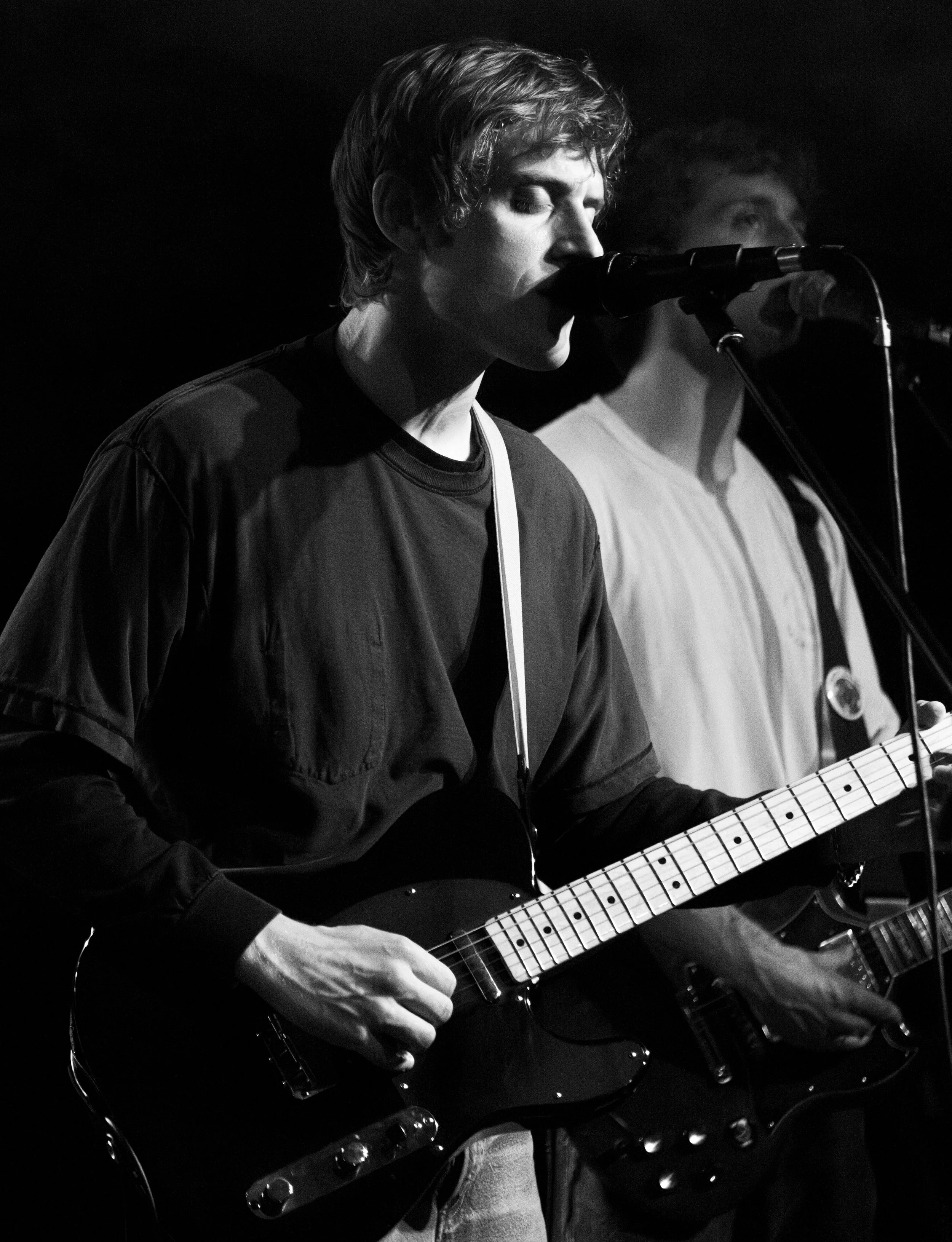
LUNA: What’s your favorite New York venue to play?
RENNY CONTI: Probably Baby’s All Right.
LUNA: Really? That’s my favorite too. Do you find touring monotonous?
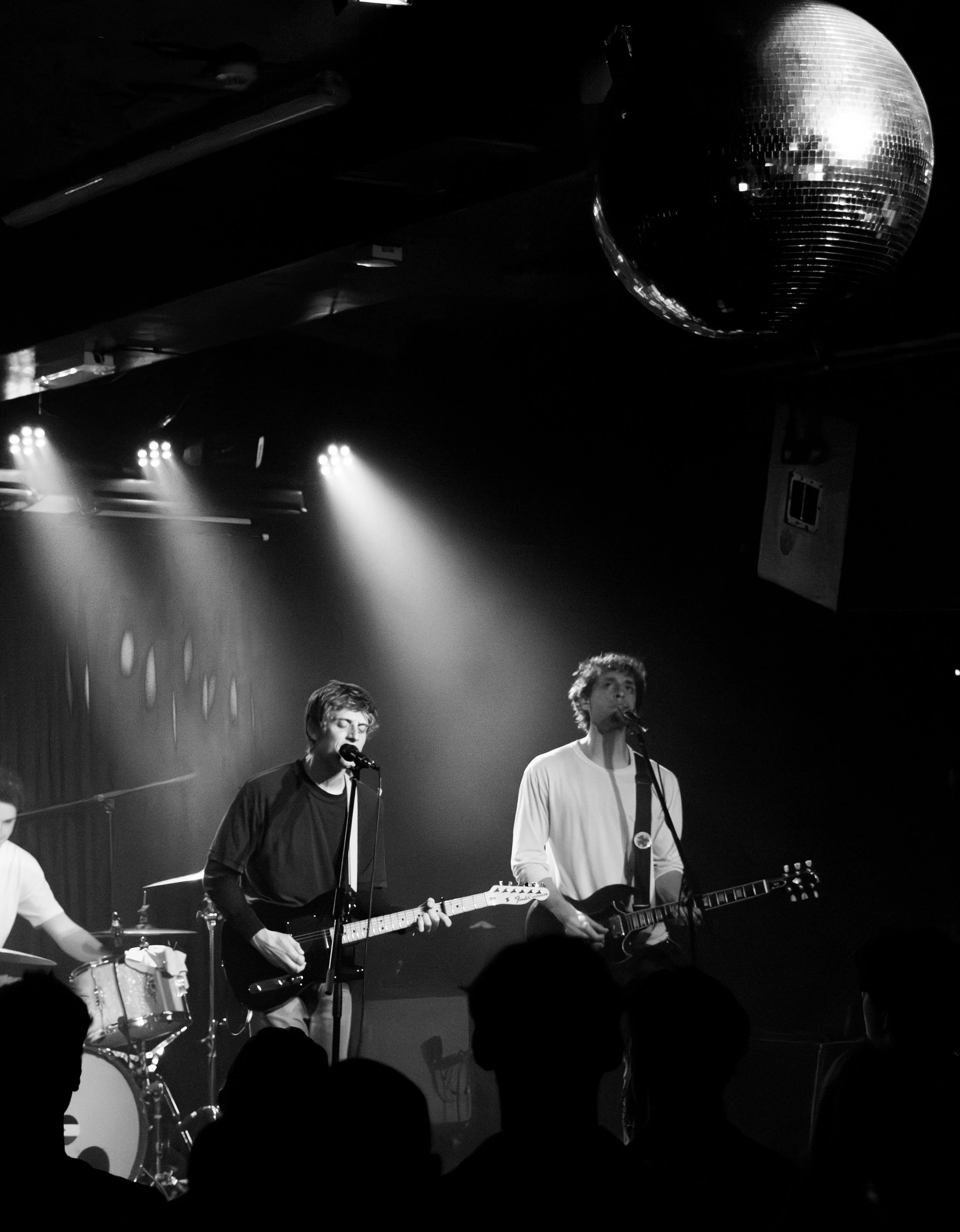
CONTI: No. It feels kind of nuts—like a constant adventure. This tour especially has been like that. I’ve had some weird experiences that keep it exciting.
LUNA: Like what?
CONTI: Meeting a lot of weird and interesting people everywhere, and shows either going really well or really badly. Last year in London I fainted at a show.
LUNA: Really? During what song?
CONTI: “Mona Lisa.” That was pretty crazy.
LUNA: By the way, I love the record. It’s so good. One of my first thoughts listening to it, especially “Water’s Edge,” was that there’s a lot of gothic imagery. What inspired that? You use the word “moors” as well in the song.
CONTI: I kind of lifted that from a song “New Partner” by Palace Music. I covered that song once and had to learn all the lyrics. I never knew that was the word he was saying. When I figured it out, I thought it was so cool. I Googled it because I’d read the word so many times but had no idea what it really meant.
It’s basically a plane of dead, yellow grass. I loved the image and thought it was such a cool word. I wanted to use it, and it fit when I was writing the song. A lot of my imagery comes from whatever I’m thinking about when I’m writing. I’ll also steal things from books. If I’m reading something, I’m kind of in that world and looking for metaphors.
LUNA: What are you reading right now?
CONTI: Right now I’m reading All Fours by Miranda July.
LUNA: What were you reading or listening to while you were writing this album?
CONTI: I was listening to a lot of Tom Petty. I was also listening to this guy, Little Wings. His lyrics are super funny and lighthearted, which I love. It kind of gives you permission to get really weird. I’m always trying to find songwriters who feel completely immersed in whatever they’re doing, with super thorough discographies you can just dig through record by record.
LUNA: If you had to steal one songwriter’s entire discography, who would you choose?
CONTI: Leonard Cohen. It’s a ridiculous answer because his early records, like the first four or five, are incredible. Then later on there are some weaker ones. But if you’re thinking of taking a whole discography, maybe it’s actually cool to have that full span of a life in song.He’s obviously one of the best.
LUNA: How do you feel about people often comparing you to Elliot Smith?
CONTI: I love Elliott Smith, but I’m not a massive Elliott Smith head the way some people are. He has certain songs I’ll listen to over and over and throw on playlists, but I’m not super deep into his full body of work. Still, I’ll absolutely take that comparison. He’s one of the best ‘90s songwriters for sure.
LUNA: One of my favorite things about your album is the lyrics. Most of the songs, I felt like I could get the general idea. But “Leaving the Zoo” left me a bit lost in a good way. What is “the zoo”? What’s going on in that song?
CONTI: Totally. The zoo started as a metaphor. I wrote an entirely different song where “the zoo” was the chorus, and it was more about New York. Then, when I was working on it again, it became more about Earth and the world itself. The song ended up being about dying.
LUNA: I read in the press release that after your last album, you wanted to start writing more about the world. Why?
CONTI: I started to feel like every time I was writing, it was hyper‑personal. That’s not necessarily bad, but in my life I’ve become more interested in looking outward.
LUNA: Do you feel like you lost any sincerity with this record, since it leans more outward? Does it feel less personal than the last one?
CONTI: It actually feels more personal. Which I think is part of why doing press and talking about it has been hard. It’s very vulnerable. I don’t want to make a less introspective record just to dodge vulnerability, but I could see myself eventually writing more outward‑facing songs—not to avoid questions, but to experiment with not being so diaristic.
For a while, I wanted to make a bunch of fun music, songs that felt more outside of myself. Songs not necessarily “about” anything, where the tone isn’t so heavy. This record feels super existential to me. I was in a weird spot when I was writing it. I honestly don’t even know what a lot of the lines are about, one by one.
LUNA: What do you mean by that?
CONTI: I was writing in a really stream‑of‑consciousness way and not editing much. I’d write the song and basically leave it alone. Or I’d edit immediately and then leave it.
LUNA: So a lot of them are basically first drafts?
CONTI: Yeah. Or close to it.
LUNA: Which song came out the fastest?
CONTI: “Split Second.” I wrote that one really quickly.
LUNA: Is there a moment where you felt like you grew out of your youth in a split second?
CONTI: Yeah, I think so. There was a whole summer right before I started writing this record where I lost someone super close to me. It was a long time coming, but learning about it and going through it really changed everything for me.
Split Second is about boiling life down to moments; how everything can change in a single instant. That period made me grow a lot. There were a lot of small moments afterward that will stick with me forever. I had never experienced such a short amount of time feeling so massive.
LUNA: One of my favorite lines on the album is, “Maybe grief is the thing I need to bring me back into everything.” Do you remember the moment you wrote that?
CONTI: I remember realizing that idea more than the exact moment of writing it. Outside of songwriting, I realized how much the experience of losing someone close can bring you back into the present and out of anxiety. For about six months afterward, I felt incredibly clear every day. There might’ve been some shock in there, but I felt a lot of gratitude, and reality felt like a veil had lifted. I thought that feeling would never go away.
LUNA: Did it?
CONTI: Yeah, totally. It went away.
LUNA: Do you think that veil lifting changed the way you wrote?
CONTI: I think so. Coming out of that, I felt like, “Fuck it.” Writing the songs for this record didn’t feel as high‑stakes as before. Life felt really fragile, so the stakes of making music felt smaller. It gave me permission to just write.
LUNA: Another thing I love about the record is how many of the “split second” moments you describe feel so visceral—like sitting on a park bench in Brooklyn. Where do you write, and what does that process look like?
CONTI: I write a lot at home. Usually in my room or the living room at a desk. I write with Logic open, a little drum machine going, my speakers set up, and I type all the lyrics into notes. I’m not a pen‑and‑paper person. Then I usually demo the song immediately if I like it.
LUNA: As someone into music and New York, I feel like you’re part of this Brooklyn sphere of small indie artists who collaborate a lot. People like Samia, Annie DiRusso, Hank Heaven, and so on.
CONTI: They’re the best. I met a lot of them through Noah and Ned, who are Samia’s drummer and bassist. I met them at a show at Union Pool. Noah sent some of my music to Samia, and that’s how I ended up opening for her, which I was so stoked about.
She’s a great lyricist. We talk a lot about lyrics. I feel like our styles of writing are pretty similar. There’s some vagueness, which I’m actually trying to move away from a bit. I’m trying to be clearer now, both in writing and in life.
LUNA: Like lifting the veil again.
CONTI: Exactly. I still want the writing to feel free and creative. I don’t want to take the fun out of it by over‑explaining everything.
LUNA: Would you change your approach for future music? Or do you feel like you’re in a groove?
CONTI: Right now, my idea is to go into a studio with some ideas but no fully finished songs. Then write and finish them in the studio and record immediately. I think that would make a really fun record.
LUNA: What lyric are you most proud of on the record?
CONTI: There’s one that comes to mind. It’s about dreams.
LUNA: “Dreams always hold cards to their chest / but reality sticks like a cancerous vest”?
CONTI: Yeah.
LUNA: That’s my favorite. It’s so good. In high school you were in punk bands. Would you ever return to that?
CONTI: I actually tried. About six months ago I made a Craigslist ad to start a hardcore band. I’d love to do it, but I’m pretty outside of that scene now. It feels like everyone in hardcore starts bands with their friends, and I don’t really know anyone who plays hardcore guitar or drums.
LUNA: What did you learn from touring with Samia?
CONTI: Samia taught me about work ethic and performance. She stays up late writing, always writing. That influenced me to carve out time to write on tour; before that, I wasn’t really doing that.
She also performs in a way that I hadn’t before. She has certain recurring moments in her set, little rituals, that she returns to every night. It made me realize how helpful it is to have some visual or physical language on stage to communicate parts of a song, not just musically but physically.
LUNA: What’s your favorite song to perform right now?
CONTI: “Leaving the Zoo.” It’s super fun. The verses are really small and intimate, and then the instrumental sections are huge. I love that dynamic.
LUNA: There are a lot of sounds on the album, especially on “Water’s Edge” and “Leaving the Zoo”, that are hard to place. What are we hearing?
CONTI: There are a lot of synths tucked behind everything, especially drum‑y synths laying a foundation. Our producer worked a lot with that, creating these beds of sound that sit under the guitar and vocals.
LUNA: If you had to place this album somewhere physically, where would it be?
CONTI: Probably a mountain. Which is kind of what we tried to do with the album cover. My friend Tate made the painting. He didn’t necessarily see it as mountains, but when he sent it to me I immediately thought, “These look like mountains.” The peaks and valleys felt like the dynamic shifts of the record.
LUNA: Does the idea of stardom appeal to you?
CONTI: I can’t say the idea of being really famous appeals to me. I think that’s probably what everyone says, but it’s true. What appeals to me is the freedom to keep making music. To make records, play shows, have time and resources to do it properly. My biggest interest is just being able to make records forever. The more resources you have, the easier that becomes.
My goal was always to get signed because I wanted that support. When it actually happened, I was like, “What the fuck?” I’d been making music throughout my teens and 20s. Getting signed felt so far away for so long.
LUNA: Did you ever feel like stopping?
CONTI: Yeah, for sure. Not stopping making music entirely—I’ll always make music because I love it—but stopping the pursuit of it as a career. When I was 23 or 24, I quit working in film. I’d been freelancing on sets. I stopped that completely to pursue music, and I got service jobs instead.
After a few years of that, around 26 or 27—right after I made the self‑titled album—I was sending the record to labels and not getting much response. I didn’t have touring opportunities. I didn’t know how anything was going to change. I knew I’d keep making records, but I figured I might have to find another way to make more stable money.
LUNA: I think it’s really great that you stuck with it, and now this record is almost out, and it’s such a strong body of work. What are you most excited for people to hear?
CONTI: Now that “Leaving the Zoo” is already out I’d say “Longing” and “Water’s Edge.” I really love those songs. They were all written right before recording, which might be why they feel so alive to me. A lot of the other songs were a little older.
