
Q&A: SASAMI Live in Santa Cruz
INTERVIEW
INTERVIEW
☆ BY NICO CHODOR ☆
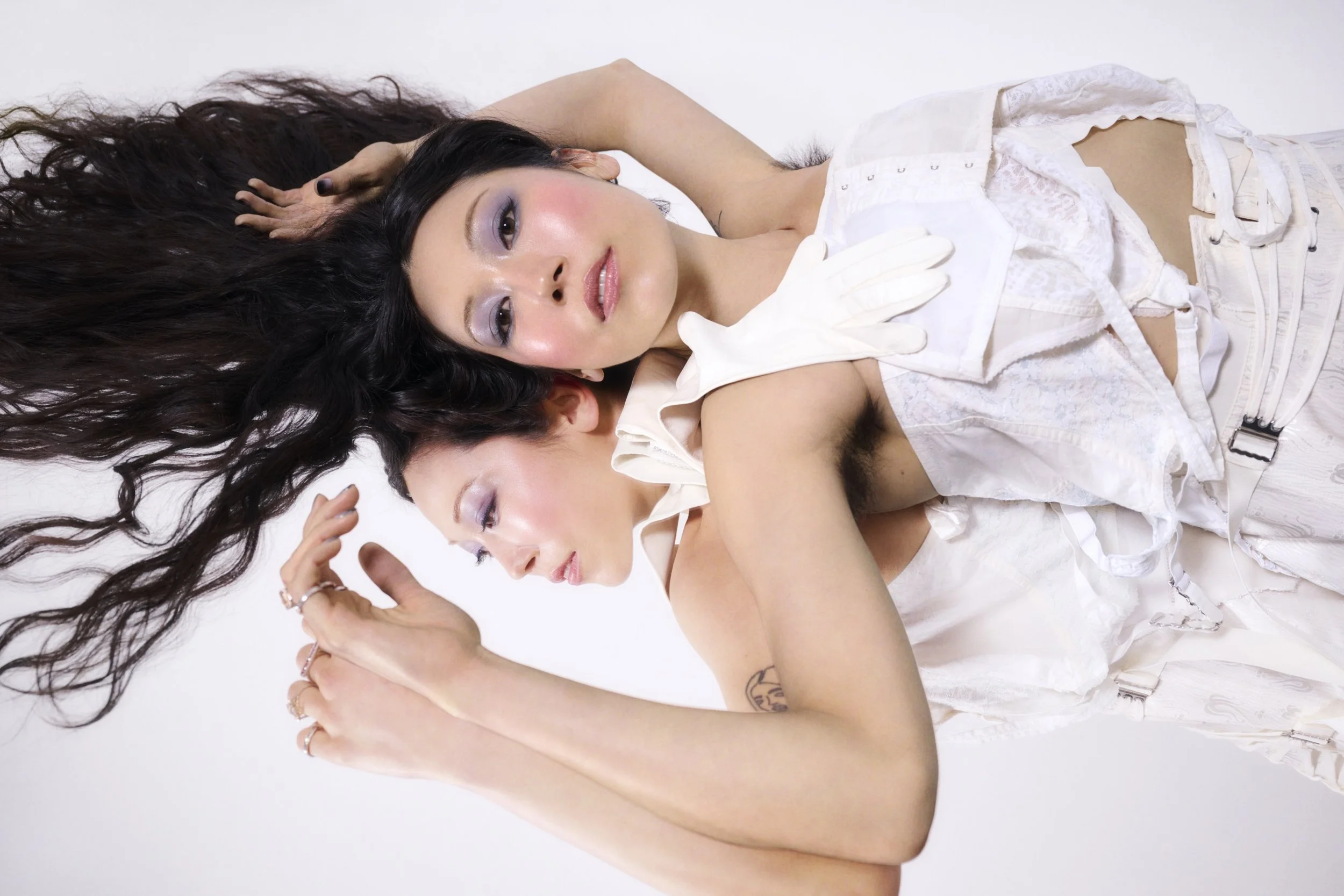
SASAMI ASHWORTH IS A CLASSICALLY TRAINED SHAPESHIFTER—who brought the same wild-haired alien, femme fatale poise to her show at The Crepe Place last week that can be felt and heard throughout Blood On the Silver Screen: Director’s Cut, this time sporting polka dots and a killer bob.
In between a slew of shows with Sonic Youth legend Kim Gordon, Ashworth tapped the up-and-coming “nonbinary girl indie rock” stars of Swell Foop to open this last-minute, intimate performance. Singer-songwriters Sophia Shen and Miranda Loyer were the perfect match for the evening, harmonizing to the beat of crystalline drumming by Tiena Elias, as the sun set in Santa Cruz. They have been riding the high of their first two EPs, Don’t Spare Me and Dead Weight, with an upcoming shift toward more grunge-sounding Momma, SASAMI and Mitski-inspired music dropping soon. Maybe it was the crepes, or maybe they were feeling particularly generous that night, but half the setlist was unreleased, and, frankly, their next record will likely be a pivotal moment for this supremely talented group of three.
Following Swell Foop’s final (unreleased) track “Ever Been Worse,” there was a shuffling in the crowd before SASAMI’s drummer and long-time collaborator Juan Diego Patino hopped on the kit. Ashworth graced the stage soon after, immediately working the crowd, in particular razzing the youngest part of her audience, three elementary school-aged boys who’d been headbanging through Swell Foop and moved right up close to SASAMI for the start of her set. They had the best seat in the house as she took us through everything from “Take Care” to Blood On the Silver Screen (B.O.S.S.) with her heart on her sleeve and nothing short of bad bitch prowess.
Originally from Los Angeles, Ashworth grew up surrounded by music, albeit within the confines of a traditional Korean Christian household. She selected the french horn in middle school and took her talents all the way to the University of Rochester’s Eastman School of Music for classical training, after which she worked in music education while playing in different LA-based groups such as Cherry Glazerr. Next came her solo career and self-titled debut album in 2019 (thank god), followed by Squeeze, which she names her “favorite iteration of performing ever.” Squeeze is this sawtoothed, nu-metal and Kim Gordon-inspired body of work that she brought on tour with Japanese Breakfast. “I felt the most aligned with my spirit and how I like to perform, but it's the least sustainable physically,” Ashworth tells me, “because I was screaming the whole time, and I do want to be able to sing still.” This catalyzed the making of Blood On the Silver Screen, her most daring pivot yet.
B.O.S.S. is so pop, it's punk, with lyrics that personify the full spectrum of love. Lead singles “Honeycrash,” “Slugger” and “Just Be Friends” crack the pop code for their campy, sometimes folk pop, always melodramatic lyrics and sonic structure. SASAMI dances with love like it's the devil across the rest of the album, but—never one to be pigeonholed—she returns to classical form on the more recent director’s cut, featuring Angie McMahon, Sarah Kinsley and others.
Her Santa Cruz set was completely dynamic, spanning the whole breadth of her discography. The crowd swayed through “Honeycrash” and a heart-wrenching live rendition of “Call Me Home.” Ashworth played “Need It To Work” off Squeeze in between demos that she’s never played live before and nodding to her most devoted fans in the audience with “Take Care.” Diego thrashed with unabashed devotion to his craft for her dips into metal, and the two closed the evening with Blood On the Silver Screen’s final track “The Seed,” my personal favorite. This last track is gritty and more rock-leaning in its discussion of lust, growth and most importantly trust, the seed for new life and beating heart of this record.
There is something so effortlessly cool about SASAMI, not just the denim-clad alien she plays in her music video for “In Love With a Memory,” or the siren/demon-like persona she takes on during live performance, but her as an artist and human being. Not every headlining act records the opening band with a camcorder-like Amy Poehler in Mean Girls, let alone invites one of the young boys mentioned earlier to play drums for her midway through the set (yes, it happened and it was legendary). The way she displays Asian-American female rage, yearning, care and shredding is so completely metal, especially for someone who did not have queer Asian rockstars to look up to as a kid.
Read below to meet the silver slugger popstar and conservatory-trained legend who loves her mom, mycology and music-making in every form.
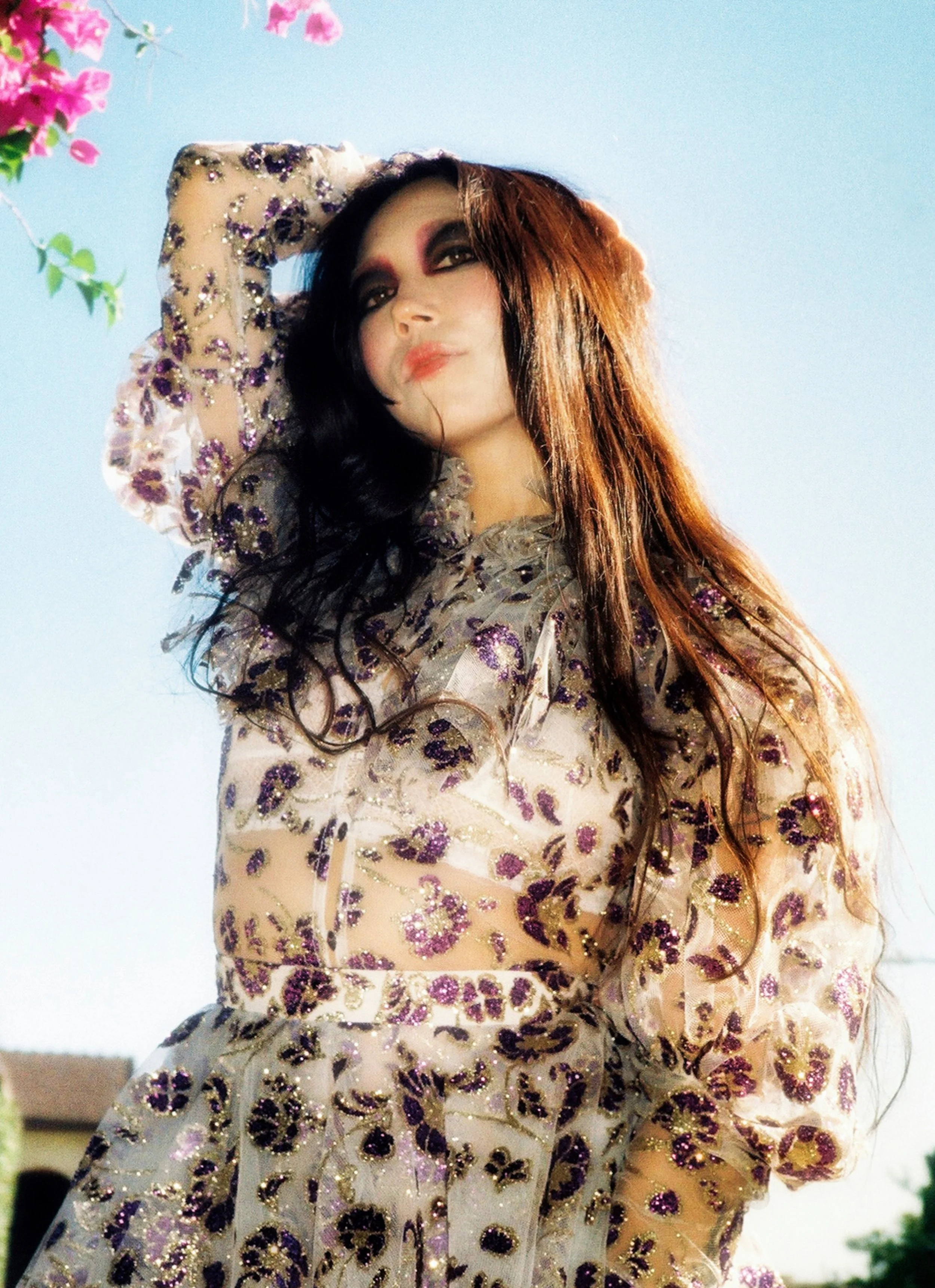
LUNA: In your interview with Synth History, you mentioned “the little invisible gremlin fairies” that live inside of the music you make, your “celestial musical overlords.” Do you feel like they were in the crowd last night at The Crepe Place?
SASAMI: I feel like when I said that, I didn’t even understand the neurological justification for that, which is that humans are so obsessed with knowing our inner selves and knowing our essence, when in fact we’re just kind of reflections of society, our ancestry, DNA and everything that’s around us. It’s not so deep. It’s not about us as individuals, but more so how we play out all these gremlin-like behaviors. So, definitely. Always. Gremlins are always pulling the strings, and I’m just the puppet along for the ride.
LUNA: How was your Cancer season professionally versus personally, and how do you feel about the shift into Leo season?
SASAMI: I feel like professionally, it was very Cancer-coded because I was at home the whole time, which is where Cancers belong professionally, just at home building their nests, and then personally, it was also good because I was at home (laughs). Everyone was talking about some sort of retrograde, and I was like, I'm having a great time personally. So I'm sad to see Cancer season go, frankly.
LUNA: Last night, you mentioned that Kim Gordon and Sonic Youth inspired you. What have you learned from being up close and personal on tour with her?
SASAMI: I think she just really commits to the bit, and I respect that so much. She basically invented a-melodic, as in non-melodic punk/post-punk music, whereas my background is melody- and harmony-based. Her music is purposefully, not predictably melodic, and lives within its own tonal center. And a lot of times, her vocal melodies are just spoken and not even sung. She focuses more on the negative space around melody and harmony, which has definitely opened my mind.
LUNA: How did your tour with her come to fruition?
SASAMI: I guess she must have just heard my music at some point, or you never know—the gremlins are probably having business meetings, gremlin Zoom calls where they make these arrangements.
LUNA: Which pop star hero of yours do you think should go metal or vice versa?
SASAMI: Oh, cool. Obviously, I love Lady Gaga’s era where metal and guitars were such a big part of her sound, and I could see her having a return to form there. But I don’t know. I feel like a lot of pop musicians embrace rock and electric guitars more than ever because people are way less obsessed with just one genre of music, and that's all I listen to. I think there's a lot more blending of these things already happening. Wherever it pops up, I'm happy to see it.
LUNA: What catalyzed this reimagining of Blood on the Silver Screen?
SASAMI: Blood on the Silver Screen was meant to be an exercise in trying to study and understand pop music despite its massive, undefinable form. But then, after learning we were gonna open for Kim, I was like, “Okay, I wanna bring it back to its guitar- and drum-based roots, and lean back into manning the guitar.” It’s been fun to have my weapon back in my hands.
LUNA: It is a bit of a weapon.
SASAMI: Honestly, when I did Squeeze—which was an album that was definitely super inspired by Kim, specifically Kim’s new music—I toured with a metal band, and I think that was probably my favorite iteration of performing ever. I felt the most aligned with my spirit and how I like to perform, but it's the least sustainable physically, vocally for me, because I was screaming the whole time, and I do want to be able to sing still. So, I think I was secretly like, “Oh, I'm excited to just tap into my demon side for a little bit.” Just a couple shows, and they're only 30 minutes, so I'm allowing myself a couple of screams every night.
LUNA: What was the name of the metal band you were touring with?
SASAMI: I toured with a metal band called Barishi, and they were an existing Vermont-based metal band. They had been a band for 10 years, and I asked them to be my backing band. So we toured the whole U.S. for my Squeeze headline tour, and then we opened for Mitski in Europe, and then opened for HAIM in the U.S. We played to a lot of different crowds.
LUNA: That’s incredible.
SASAMI: Even last night at the Santa Cruz show, a lot of people were like, “Oh, I found out about you opening for Japanese Breakfast when you had the metal band, and it was very shocking at the time, [but] I’ve grown to understand your music more.” So, I think a big part of that era was bringing metal tonalities to audiences that normally don’t hear that.
LUNA: It’s funny because the last show I saw at The Crepe Place was this white guy quartet that pretty solidly embodied Santa Cruz. And that just makes it so much more special that Swell Foop was opening for you. I assume most of the people who bought tickets were direct fans, but I’m really stoked that anyone who just happened to be around or got tickets without maybe knowing what exactly they were getting into got to see the combination of you, Diego and Swell Foop.
SASAMI: Oh, me too. Personally, I live in the Bay now, even though I’m from Los Angeles, and I’m always trying to connect more with local artists, so it was really great to meet them and hopefully the beginning of a long friendship.
LUNA: Your mom's Japanese ladies' choir opened for the March show in LA earlier this year. Was that amazing, and how does your family or upbringing bleed into this current iteration of your sound?
SASAMI: Yeah, I mean that was a dream come true. I think it's interesting because my mom is Zainichi Korean, so she's ethnically Korean, but was born and raised in Japan, so culturally very Japanese, where the adults are the adults and the kids are the kids. It's not like normal white American families where you confess about your crush to your mom and she takes you bra shopping. It wasn't really like that for me. My mom did her thing as the adult, and I did my thing as the kid, but over time, as she's become more Americanized, we've gotten a lot closer and a lot more open. So to be able to, you know, just see how much joy she gets from singing and spending time with her ladies choir friends has been amazing to witness. Also not everyone can say their mom has opened for them at a show!
I've had so many experiences in my career where, if I drop dead tomorrow, or have to quit music, I lose my hands or whatever, I've already experienced so many things that are peak life experiences, and that was definitely one of them
LUNA: You talk a lot about world-building for your different bodies of work. Does the B.O.S.S. world have a distinct smell, taste or feel?
SASAMI: It smells like sweat and dirt, and maybe stale beer even. Sweat, tears, stale beer, dirt, old Chevy exhaust pipe. It’s got on-the-road Americana vibes to it for me.
LUNA: Yeah, I feel like those are definitely the vibes of the music video for “In Love With A Memory.”
SASAMI: Totally.
LUNA: Would you consider the whole album to be in conversation with the ghost of Love, or was that specific to “In Love With A Memory?”
SASAMI: I mean, I had built this lore that Love is this alien character, and it's shape-shifting into different forms throughout the album; different songs are almost like different film genres where love is taking a different shape. On “For the Weekend,” it's got this more CW, One Tree Hill situationship-type version of love, as compared to the ghost of Love, and “Honey Crash” is this big action-thriller, bleeding-heart version. So yeah, every song to me is a shapeshifted, different version of love that's being explored.
LUNA: I’ve been watching a lot of Killing Eve lately, and the music video for “In Love With A Memory” feels super in line with the all-consuming, sometimes mutually beneficial and sometimes mutually destructive, intimacy between Killing Eve’s two main characters.
SASAMI: I need to watch the newest season. I feel like I’m a little bit behind, but I do love that show. She [Villanelle] is very shapeshifting, playing different characters, and same with the dynamics between her and Eve—who’s alpha-ing, who’s topping and who’s bottoming in their relationship. They’re always flipping around, and you’re right. It is very aligned with “In Love With A Memory.” I should go back and watch.
Maybe I do a show at the Four Star Theater where I’m performing different scenes of Killing Eve x Blood on the Silver Screen.
LUNA: That would be incredible because I live in the Bay, and I love what Four Star puts together.
SASAMI: Oh my gosh, me too. The people who own The Crepe Place own Four Star. What they’re doing for the Bay and indie art is so cool.
LUNA: I had no idea they were connected at all. That’s awesome. How do you maintain your mental and physical health in this job or just on this tour? And what advice do you have in that regard for up-and-coming bands like Swell Foop or the little boys in the crowd last night?
SASAMI: (Laughs) I think different eras of your life necessitate different needs from your body on tour. When I was younger, I was partying a lot, and that facilitated me going into the town that we were touring in a lot more. After the show, we'd be going out to a bar with locals, or staying at a random person's house. Because of that, I got so much exposure to different types of people, ways of living, and so many different parts of America or parts of the world that I was touring in. That was such an integral part of touring when I was younger, but as I've gotten older, you know, a lot more of touring is just like drinking water and saving my voice and working out so that I can perform as hard as I can. Right now, I’m definitely more focused on keeping my body healthy so I can shred as hard as possible. But when you’re young, you gotta intermingle with the people and places you go to.
You can perform a lot harder with a lot less sleep when you’re younger. Hangovers aren’t really a thing in your late 20s.
LUNA: Are there certain things that make you feel more alive here in the Bay, versus LA? I know mushroom hunting is probably one of them.
SASAMI: Yeah, I think two things. For one, there’s the anonymity of living in a place where I don't know anyone. Sometimes people will recognize me in a coffee shop or something. But in LA, because I'm from there, I can’t go for a coffee without the possibility of seeing someone from elementary school or middle school or high school or college or my 20s. The odds of running into someone I know are so much higher, which makes it harder to maintain this anonymous experience. Whereas in the Bay, nobody really knows who I am, and I can just kind of be an observer more than be observed. I really like that.
And then also just the access to nature is so much more immediate in the Bay, and the connection to the seasons is a lot more vivid here. I've been really appreciating that. Growing up in LA, so much of the plant life is not native and not really connected to the seasons. The food that you eat there is a little bit more likely to be imported. So being in the Bay, I get to have much more of an attachment to the changing of the seasons. The way they express themselves is really different than, say, the East Coast, and because I’m interested in mycology, I’m really in tune with how seasons affect the coming and going of different Bay Area mushrooms.
LUNA: What’s next for you besides mushroom hunting once this tour with Kim Gordon wraps?
SASAMI: Writing a new album. I’m gonna start recording in the fall, so I have a lot of work to do. I played a couple demos last night, and I was like, “Okay, I gotta work on these, for sure.”
LUNA: I think they were very well received.
SASAMI: Yeah, it's kind of fun to have dynamics in a show. There can be these bigger, more lush pop moments, and then more spontaneous kid rock moments—literally kid rock. And then of course the more intimate, vulnerable, unfinished demo moments. It's fun to include peaks and valleys in a set.
