
Q&A: Ritt Momney’s ‘BASE’ is an honest homecoming
INTERVIEW
INTERVIEW
☆ BY GABBY MACOGAY ☆
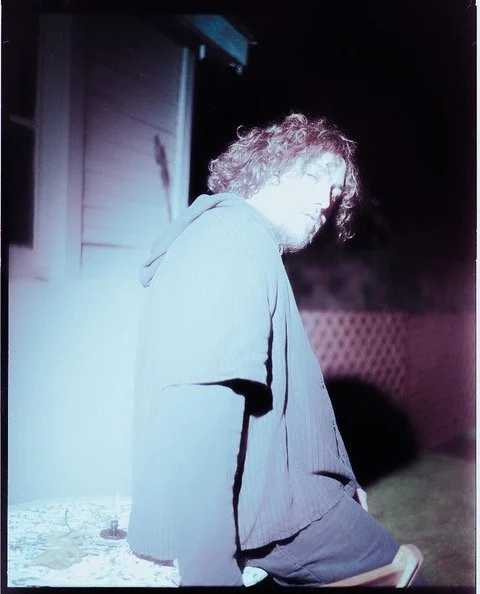
Photo by Sam Angeletti
RITT MOMNEY’S JACK RUTTER RETURNS TO HOME BASE – with his latest project, BASE, documenting his journey of falling back in love with the world of music making that only years ago, was starting to wear him down.
“I think it's been important to me to treat it like a hobby,” Rutter tells Luna. “To really try to fully commit to it just being a hobby, integrating creativity and writing into my normal life as opposed to trying to make it my whole thing.”
BASE is Rutter’s third release as Ritt Momney, and although it remains consistent in his discography’s sense of hypnotic bedroom pop beats intertwined with Rutter’s gentle vocals, it brings a new sense of honesty and freedom to the table that serves as both a refreshing change of pace and a warm welcome home for his earliest fans. Those who haven’t followed Rutter’s musical journey as closely may also recognize his vocals from his 2022 viral cover of Corinne Bailey Rae’s “Put Your Records On.”
Even the BASE cover art, black and white, resemblant of a home’s blueprint sketch, brings us back to the basics. Back to the values that have not only shaped this album, but have shaped Rutter’s relationship to music and to himself – what “home base” means.
Read more below to learn about how taking time away from Ritt Momney, indulging in new interests and returning back to Salt Lake City has influenced Rutter’s triumphant return to making music.
LUNA: How do you feel being able to share BASE with the world?
RUTTER: It feels pretty awesome. It maybe matters less to me than one might expect, than it did with the last couple albums. A lot of the time when I'm making music, the destination is the release, like I'm making this just to put it out. With this, releasing it kind of feels like the epilogue of the chapter. I'm excited for people to hear it. I'm really proud of it, and I think people will like it. It's really nice to not feel anxious about it at all. I don't have any expectations for it, numbers wise, or reception wise, whereas that was an anxiety of mine with previous releases. I’d be looking at the analytics and the Spotify for Artists stuff. And I'm like, “Oh yeah, this amount of listens in the first week, that's pretty good, right?” or, “Oh no, it's not doing quite what I thought it would.” Obviously, that just makes you feel horrible no matter what. Releasing this, it feels more like a cherry on top than what the goal is.
LUNA: Absolutely. It's nice to not have the analytics on your mind. Doing it for you, releasing what you want to release. Can you walk me through a bit of your creative process for coming up with this album and the concept behind it?
RUTTER: It's been a really long time. There's been some songs that I've basically been working on for three or four years. I think it's been important to me to treat it like a hobby, to really try to fully commit to it just being a hobby, integrating creativity and writing into my normal life as opposed to trying to make it my whole thing. The process has been really, as far as writing, really chill with how often I do it, when I feel inspired to, not really forcing it. I've made sure that I’m spending enough time doing other stuff that I’m interested in and exploring other hobbies. It’s helped me write from the perspective of just a person and not from the perspective of a writer or a musician. By nature, it's a really slow process.
In terms of getting the songs done, it's been important for me to bring in other people. My friends Rick and Chris really have been an important part of the album and the making of it, keeping me excited about it.
LUNA: How was the experience like getting to have your friends with you there, creating the album together?
RUTTER: This is definitely the most collaborative I've been with a Ritt Momney album. It was really necessary to separate myself from it a little bit and take the ego out of the process, be comfortable losing some control. It was so much more fun and enriching to not only work with other people, but to work with people whose taste I really respect and love and also who are just really awesome guys and friends. In the past with my music, I've spent time like, “I’m going to sit in front of my computer for like 10 hours straight and try to figure this out myself.” I think a lot of that maybe made sense for that point in my life, but a lot of that was kind of about me and not about the music. Releasing a lot of that control, I think I've put the music higher on the priority list than my ego or the feeling of “Oh yeah, I did this all myself.” I used to take pride in that and I just have realized that really doesn't matter at all. I want to make the best songs that I can and have the most fun doing it that I can.
LUNA: Yes, you've already had this experience working as a solo artist, and now coming back to collaboration, that's a cool dichotomy to see in your career. I saw this album described as a record of intuitive music, where you're writing what you know best, which I think is such a great principle. For example, “THE TANK” is inspired by the Utah Jazz, is that correct?
RUTTER: Yeah.
LUNA: What led you to choose “GUNNA,” as the leading single for this album?
RUTTER: That one actually really encapsulates the kind of intuitive feeling throughout the album. Especially on that song, I really made it a point to try not to overwrite. I think with my earlier stuff, part of that ego thing, I was trying to come up with the cleverest line or was trying to prove how good of a writer I was through my music, and that tends, I think, to serve the writer, but not the song. “GUNNA” specifically, I've really let my subconscious write those lyrics and write the melody. It feels really honest in the sense of, it would be way cooler, for me as a musician if I was dealing with a drug addiction or something, or I was a raging alcoholic and I was writing songs about how hard it is to deal with this stuff. But what I've been struggling with it's like, doing something today. Or trying to eat a little healthier, or maintaining my focus on my relationships, my marriage. Those things are pretty unsexy, they're not really romantic in the same way that some other struggles can be. It just was what I was feeling, and it felt nice to get it out there and be pretty honest. That's the kind of song that I would start writing if I had just been sitting playing video games all day instead of… I don’t know.
LUNA: Those feelings, this song, it’s about things that so many other people are going through, too. I feel like a lot of people will definitely resonate with that. Aside from making music, what else is important to you in your day to day?
RUTTER: I just got married a few months ago.
LUNA: Congrats. That's so exciting.
RUTTER: Thanks. That's obviously been a big focus. Preparing for the wedding was really big, [it was] in her parents' yard, it was really awesome. I was spending a lot of time working on that and getting everything ready. And then continuing that work in our marriage. I got a truck. I've been learning how to work on car stuff, I was becoming a car guy. I've been really into the Jazz - “THE TANK,” I wrote after everything else. I was kind of out of music mode. I was like, I feel like I want to write a song, but I don't really have anything to write about because all I've been doing is bowling and paying attention to sports. And then it's like, okay, I just need to write about what I care about right now. Yeah, I've had a pretty hobby-filled last few years and it's been really awesome in terms of expanding my identity from just a musician.
LUNA: Hobbies are so enriching, you can pick and choose from a lot of different mediums. Another random personal question. I was on your website, and I saw one of your merch items is a t-shirt with a dog on it and it's called the “Perry shirt.” Is that your dog's name? Because that’s my dog’s name.
RUTTER: Oh, really? Perry? Wow. That's insane, I've never heard of another dog named Perry. That's awesome. Was yours kind of inspired by the platypus?
LUNA: Yes, actually, yeah. That's so funny. I've never seen that either, I was like, I have to ask because that’s not just a random dog name.
RUTTER: Yeah, we just got our second dog a couple years ago. We've had Perry for like five years and then we got another dog named Pillow.
LUNA: That's so cute! Are they friends?
RUTTER: Yeah, the unlikeliest. Perry's a pitbull type, like you saw on the shirt, and [Pillow]'s this little scruffy, mini Aussie toy poodle mix. So she's full grown and she's tiny and she just nips at his ankles and annoys him but then they play and chase each other around, they come and lay down together.
LUNA: You were raised in Salt Lake City and are now enjoying your married life there. How has your hometown helped shape your music over the years?
RUTTER: Initially, the first album I made before I had really left Salt Lake at all. I think it was pretty apparent in the album. There's just such an influence that religion and the LDS Church has here that seems to really influence people one way or the other. Sometimes it feels like half of the people in Salt Lake are LDS people and then half are people who aren't Mormon, but really want everyone to know that they're not Mormon and like it. It's interesting. It feels like on both sides, it gives this weird pressure to perform a certain way. I don't know. To answer your question, I think getting out of here and then coming back has been really important to who I am. I spent a year in New York and obviously, it's extremely different there. Not that a year is a super long time, but just spending some time out of the bubble of Utah and of Salt Lake and then getting some perspective on it and not feeling so claustrophobic or so influenced or so pressured by the culture around me. Coming back and just being able to see Salt Lake for what it is, see it for all the things that I love about it.
Both mine and Lindsay’s parents are nearby. The mountains are obviously so awesome. I love that there's four seasons. But yeah, a big reason why the album is called BASE is because it's the home base kind of feeling that I've developed, coming back here and feeling like I'm not in this religious turmoil or whatever. Realizing that it doesn't really matter what I label myself as. I think that settling down and settling in has been a big part of this album, and a big part of that is being around all the people that I love. I hang out with my high school friends all the time, and I hang out with my parents and Lindsay's parents all the time. Salt Lake is my home and my base, and it feels really important that I am here in terms of making something honest and being comfortable enough to be free to make what I want to make.
LUNA: Being close to all your loved ones, I feel like that has such a wonderful effect.
RUTTER: Yeah, it's been really important to me.
LUNA: Is there anything that you would want to say to any aspiring musicians who are looking to follow in a similar path to your own?
RUTTER: The sooner you can get the money and the numbers out of your brain, the easier it'll be to make stuff that actually feels right. I think there is some kind of spiritual aspect to creativity and you can't lie to your spirit or your soul. You can't fake it and you can't trick yourself into thinking that you're doing what feels right and honest when actually you're doing what you think will be the most successful.
Whatever creative spirit you have inside of you, it can be really worn out. I don't think it ever dies, obviously, but I think it's sensitive. Really sensitive to being taken advantage of for some kind of personal gain, whether it's attention or popularity or money, it knows if that's why you're doing it. I was struggling with that for a while, and with this album, I finally understood that, and I was like, I can't keep doing this compromise thing where I'm thinking about how people are going to receive it, thinking about what the smart thing to do for my career is. I just think making music with the hope of making money… basically music and capitalism need to not be involved with each other at all. Any kind of art, that stuff really just kills your creative spirit. I guess that would be my advice. Really try to separate the external and the ego and your desires from that really special kind of spirit that you have.
