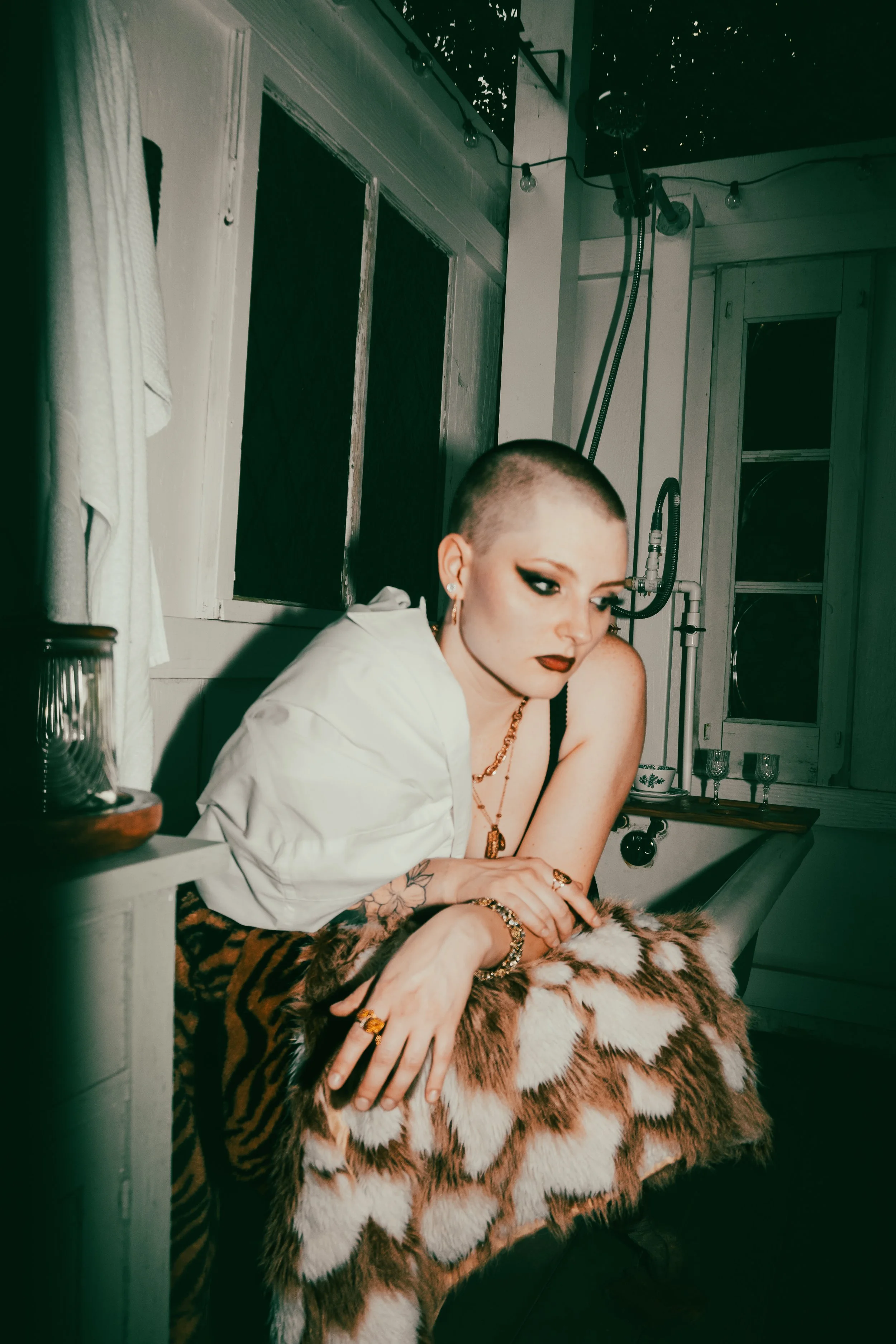
Q&A: Slow Funeral Explores the Illusion of Safety on “Give It To The Sea”
INTERVIEW
INTERVIEW
☆ BY KIMBERLY KAPELA☆
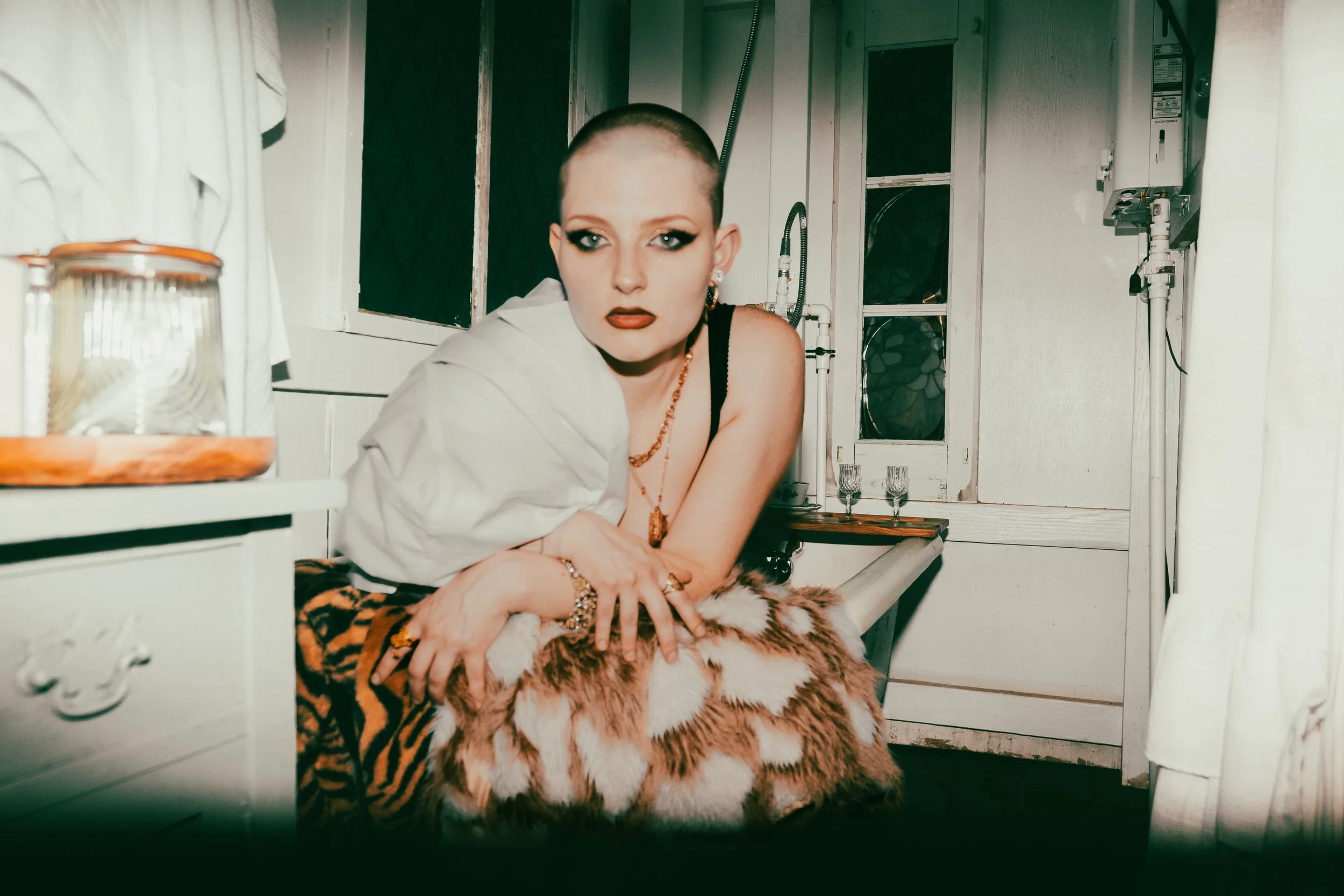
THE ILLUSION OF SAFETY — Some heartbreak comes from losing a person. Other heartbreak comes from losing the version of safety you believed existed with them. On “Give It To The Sea,” the newest single from South Carolina alt-rock artist Slow Funeral, Mary Norris captures the devastating realization that sometimes the spaces we turn to for comfort can become the very places where we experience the deepest wounds.
Following the release of her acclaimed debut album Conditions of Trust, Slow Funeral releases one of her most emotionally layered compositions built around the grief of misplaced trust and fragile intimacy.
The project of Norris, Slow Funeral blends the raw textures of 90s alternative rock with the emotional storytelling of Americana. Across Conditions of Trust, Norris explores themes of poverty, queerness, identity, and resilience, transforming personal experiences of survival into songs that resonate with anyone who has searched for belonging in uncertain places.
“Give It To The Sea” is a song about the grief that follows when someone you believed was a safe space reveals themselves to be something else entirely. It dissects the heartbreak of seeking comfort during a difficult chapter of life, only to discover that the connection you trusted was temporary, conditional, or even harmful.
“A big thing with the song and the overarching feeling of grief that comes with it is when you are going through something really, really hard, and you think someone is a safe space for you, and then they turn out not to be,” Norris says to Luna. “There's a specific heartbreak associated with that, where you're you're seeking a sort of comfort and intimacy that you don't have in other areas of your life, and that even are taken for granted or exploited — whether it be through sex work or through cruelty — and then you feel like that's given to you by a person, and it turns out to be temporary and fleeting, and also cruel, and you thought it wasn't.”
With the release of the “Give It To The Sea,” Slow Funeral reinforces what made Conditions of Trust such an evocative debut. Rather than offering closure, Norris allows those emotions to exist in full.
“I would love for women and queer people to take away from listening to my music is the separation between myself and them, artist and audience, is very illusory,” Norris says. “I want them to be able to see themselves in me.”
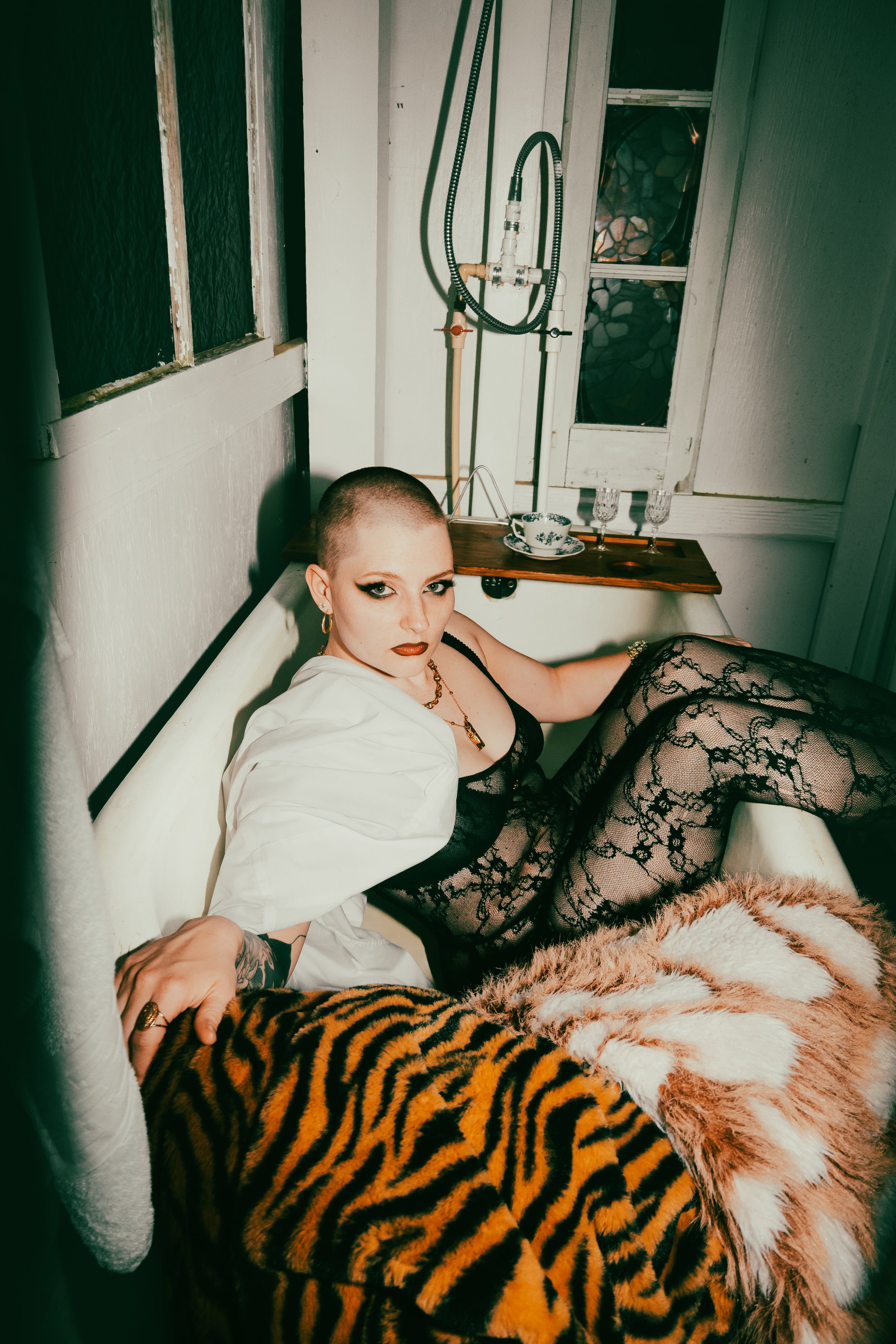
LUNA: Thank you for talking to Luna. Our readers would love to get to know you and your music more. For any readers who aren’t familiar with you yet, what inspires your artistic style and sound?
MARY: I'm very 90s influenced. I like a lot of Radiohead and Cranberries, but visually, I'm very inspired by a lot of European indie. I love what CMAT is doing. I love Fontaines D.C. I love Idols. I love Sam Fender. I love Wunderhorse. They're my blueprint visually for a lot of things.
LUNA: “Give It To The Sea” explores the quiet compromises we make in relationships. What emotions or experiences inspired this story that you felt compelled to explore for this?
MARY: I have this thing when I write where I struggle to hone in on one specific feeling in a situation, and I bounce around between a lot of themes, and this song definitely does that. The main thing is lying to yourself when you're saying things like, “Oh, I don't want anything more. I'm okay with only seeing you at night and never actually spending time with you during the day in meaningful ways.” And you’re saying, “Sure, I want it. It’s fine.” It's lying to yourself and coming to terms with it. The verses are confessional. The chorus is the lie you tell yourself, and the verses are the confessional pieces of what is meaningful about the situation. It's a situationship anthem. Unfortunately, the first situationship I'd ever had, I didn't even know what that was, and then I found myself in one, and I was horrified. I wrote the song out of that.
There is another bit that is important that I've been wanting to talk about. A big thing with the song and the overarching feeling of grief that comes with it is when you are going through something really, really hard, and you think someone is a safe space for you, and then they turn out not to be. There's a specific heartbreak associated with that, where you're you're seeking a sort of comfort and intimacy that you don't have in other areas of your life, and that even are taken for granted or exploited — whether it be through sex work or through cruelty — and then you feel like that's given to you by a person, and it turns out to be temporary and fleeting, and also cruel, and you thought it wasn't. That really is one of the biggest things with the song, with the grief associated with it, is feeling like you finally have a space and a place to put your care and your intimacy that you've had to to shield because it's been exploited and taken advantage of so much, and then it turned out to be an illusion.
LUNA: The official visualizer feels just as atmospheric as the song itself. What inspired its visual language, and what did you hope viewers would feel while watching it?
MARY: The biggest thing is I wanted it to feel like a composite of memories. Whenever any relationship or situationship ends, I know at least for me personally, I'm plagued by flashbacks of the weirdest shit. It's almost never the big things. It's the way the trees looked in a specific moment when I was talking to them, or it's very specific things. I really wanted it to have this dream-like quality, these little bursts of tiny memories. I wanted it to feel very fragmented. It's hard to place one thing together so that you're just getting these bursts of emotion. That really was the thing.
There wasn't a specific video or reference for it. It's just what I saw whenever I closed my eyes and listened to the song, I was like, “It needs to be Super 8 because it needs to feel like something from the past.” I want it to be black and white. The song is very inspired by Bruce Springsteen, and so I was drawing from the Nebraska cover art, in terms going for black and white, that was really the big thing there and making it feel vintage. I just want it to feel like a composite of memories and to evoke that feeling of grief.
LUNA: “Give It To The Sea” is one of your first releases since your Conditions of Trust record. Are you expanding your sound or experimenting with something completely different in this new era of music?
MARY: These songs that I'm putting out right now are an extension of Conditions of Trust. They're not related to my second album that I'm working on. The second album is definitely going to be an expansion. I'm going to be drawing and pulling from different influences for the second album that you're not really hearing on the first one. These singles that I'm releasing right now, “Freak Bitch,” “Give It to the Sea,” there's more coming. They're really an extension of the Conditions of Trust universe, and they stem from a lot of the same experiences that I was pulling from when I wrote those songs.
LUNA: It’s been a year since the release of Conditions of Trust. How has it felt to watch listeners connect with the record over time?
MARY: It has been one of the most rewarding experiences of my life, honestly, and completely unexpected in a lot of ways. I made the album because I wasn't ready to go back to grad school and try to live a more settled life. I guess making an album and touring; those are two things that I haven't done yet, and it's been a dream ever since I picked up an instrument when I was a kid. It's always been my life goal, and I'm not ready to try and do something else. I need to fulfill this and do this. I really went in with that mindset of putting my experiences out into the world and representing what it is to grow up a poor person in the South, and just release that for myself. For people to resonate with it has been amazing. It's been more people than I expected. It really has just floored me. The messages that I get about some of the songs and the way it's affected people and helped people and inspired people has really surprised me all the time. I don't know if I'll ever feel worthy of it, but I'm grateful for it.
LUNA: Looking back at Conditions of Trust as both a song and a record, how do you think you’ve matured as an artist and storyteller since its release?
MARY: I have matured and changed so much as a writer since making the first album and mostly because of studio experience. Being in the studio has changed how I write so much. I go into it with a new mindfulness of the parts that I'm writing, when it comes to my guitar, when it comes to my melodies, when it comes to like structural choices, when it comes to how I'm performing vocally — all of those things have changed so much because of the direction that my producer has given me throughout my time working on the album. I've seen him mature and grow as a producer as well. We've learned a lot in real time by trying stuff out and experimenting together. I definitely have been completely changed through the process of making the first album.
LUNA: How do you hope listeners — especially your femme audience — can connect with or find power in this new era of music from you? What emotions or messages do you want to leave with them?
MARY: I've already been so astonished with the ways that I've seen women and queer people connect with my art, and it's even been in ways that I didn't even intend. There's some songs where people see themselves, and I'm like, that actually makes so much sense, and that wasn't even what I meant to do initially, and that's really beautiful.
I would love for women and queer people to take away from listening to my music is the separation between myself and them, artist and audience, is very illusory. That's the biggest thing. I want them to be able to see themselves in me, not in the sense of I am a place outside of them where they can put their feelings and experiences, which I do think is important and beautiful. But they have a lot in common with me, and they are like me, and they can do whatever they want. If they want to create, they can also create because they can see themselves in me. I want the barrier between artist and audience to decompose a little bit. That's really what I would love for women to take away: is to feel empowered enough to know, I'm the same as this bitch. I can pick up a guitar. I can pick up a paintbrush. Whatever the fuck it is, I can do that.
LUNA: What is fueling your fire right now that’s pushing you into this new era of your career?
MARY: That's a really good question. I think the answer is patience and rest because I have never been patient ever in my life, and this year has challenged me the most to be patient because there's a lot that I'm working towards behind the scenes that isn't going to yield me anything that's immediately visually gratifying. There's a lot going on, but it's not one thing where I can be like, “Look at this giant thing!” I don't have a trophy. I have to be patient while I know that I'm working on a lot of things and building things. I've found myself with more time on my hands this year than ever because I have grown enough as an artist to be able to support myself more.
Last year I was working like 50 to 60 hours a week and self managing for most of the year, so I was slammed. I had no time to myself. I had very little time to socialize, to nurture relationships, to take care of myself. This year, I'm working out and I'm eating better and I'm nurturing relationships and building friendships and still growing as an artist and I think that is inherently motivating in a way because I know I have to trust that things can happen and that my artistry is still there if I'm stepping away from it for a little bit. To write good music, you have to have experiences, and so I'm allowing myself to have experiences. Connecting with people, being outside, being in my body, reading things, and that's been crazy. I don't know that I've ever had a lot of time in my life where I've been able to do that in a way that felt balanced. That’s my fuel right now.
LUNA: How are you feeling in this current era of your career and what does the rest of the year look like that you would like to share with Luna?
MARY: I'm feeling impatient right now, and working on feeling patient. I'm feeling excited. I'm feeling nervous, and I'm feeling a little vulnerable. I'm being perceived a lot lately these days. That's scary. Rest of the year, some stuff that I haven't announced yet, but probably playing some shows, and working on my second album a little bit more and recording, and really just preparing and building for next year.