
Q&A: Spring Term Reveals the True Meaning Behind ‘Hummingbird’
INTERVIEW
INTERVIEW
☆ BY KIERRA WHITE ☆
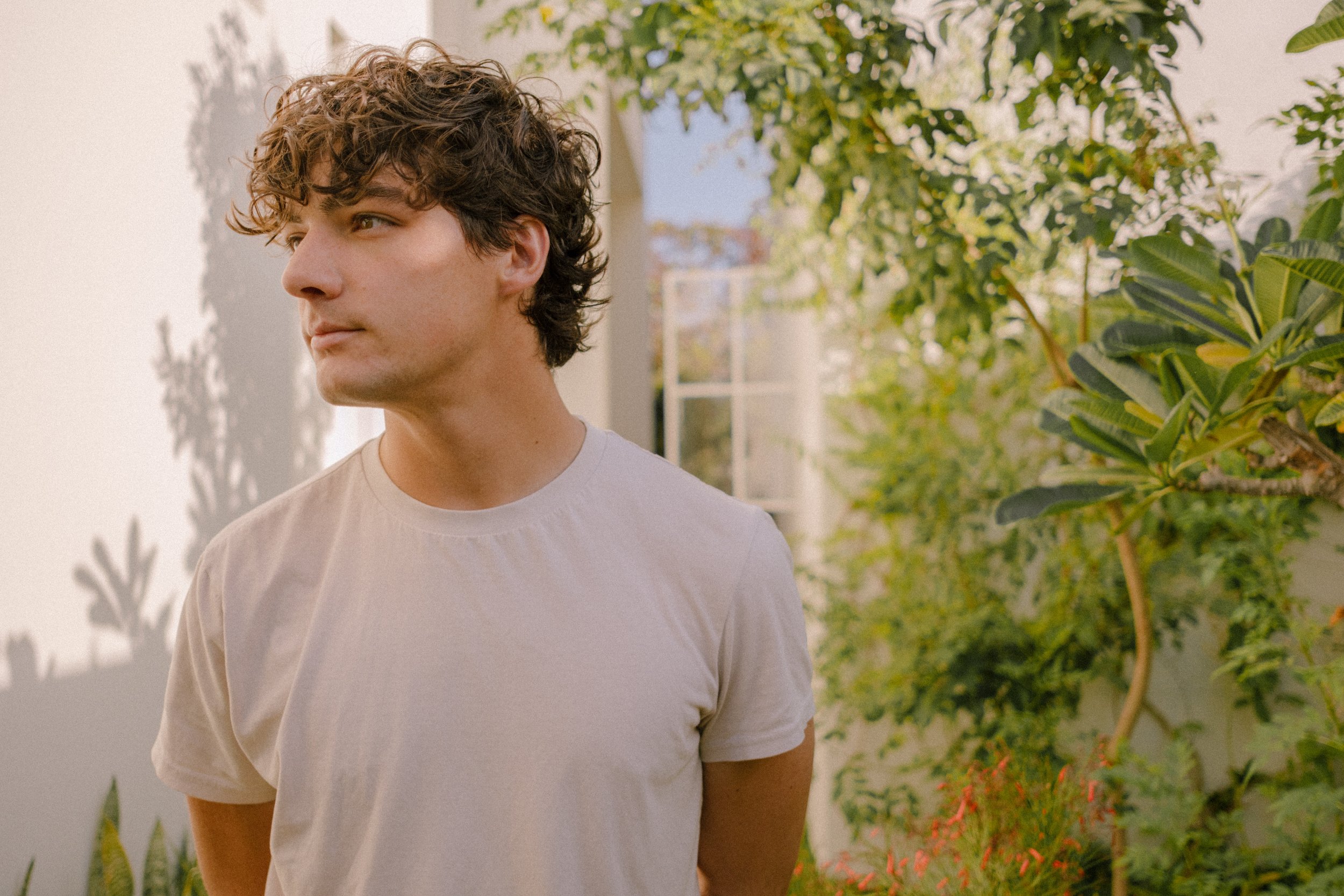
Photo by Claire Dorise
A HUMMINGBIRD CAN HAVE A DIFFERENT MEANING FOR EVERYONE—and for Spring Term that couldn't be more true. “Hummingbird” is a reminder of the warmth felt in the midst of a spring day while still having a deeper layer underneath for listeners to unravel each time. Following the release of “Jacaranda” and “Machu Picchu,” this new era for Spring Term is just getting started.
“Hummingbird” has inspiration from many pieces of art throughout time but one muse stands out from the rest. “The Humming-Bird” by Emily Dickinson helps paint the picture behind the craftsmanship of Spring Term’s song by bringing life into the piece in a whole new way. Just as the poem talks about the feeling of watching a hummingbird in its natural habitat, his song does the same, taking a spin from bird to human.
Luna had the opportunity to discuss the inspiration behind "Hummingbird" in detail and what’s next for the singer in his artistic journey. Read below to learn what “Hummingbird” means to Spring Term.
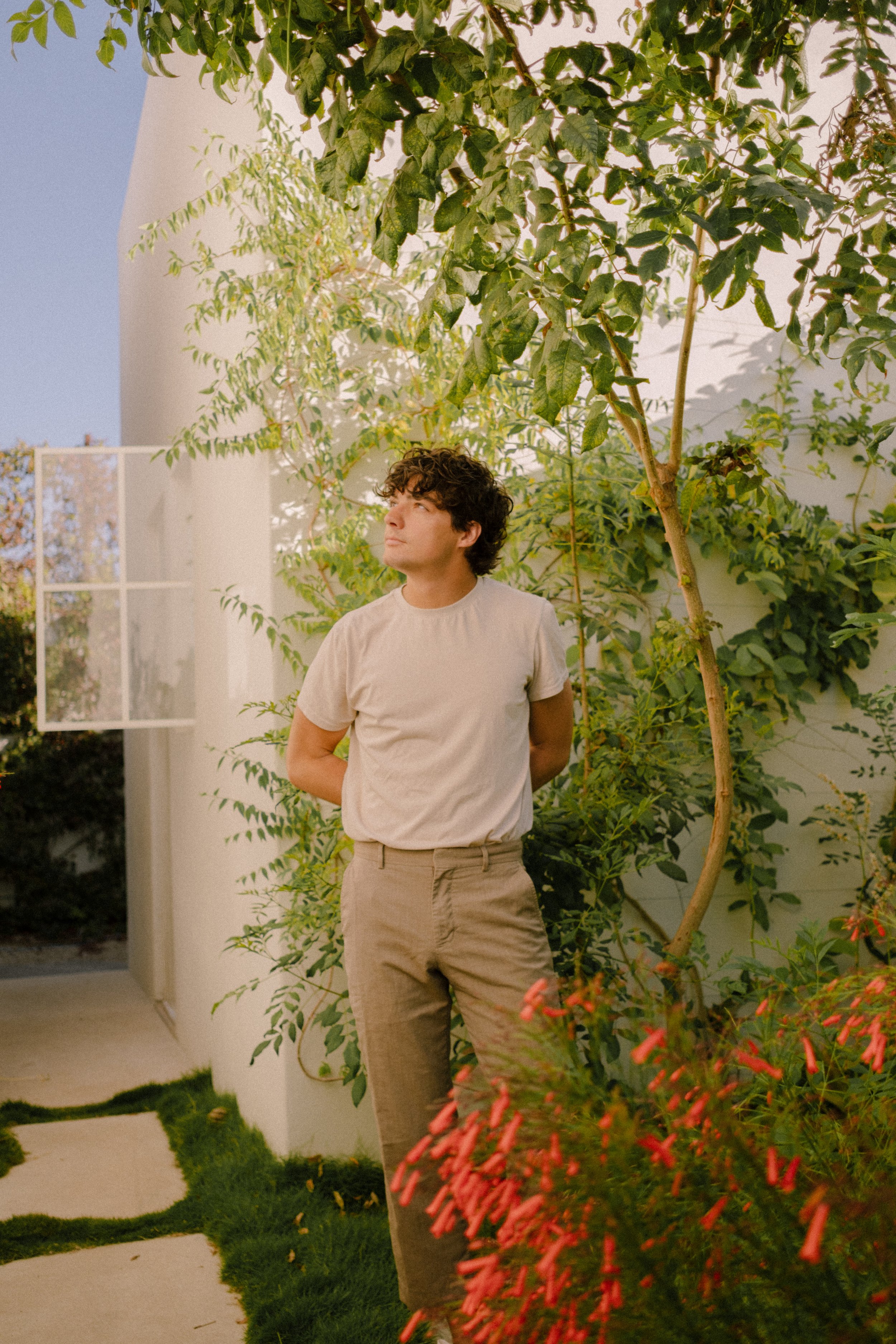
Photo by Claire Dorise
LUNA: In the past you’ve mentioned that your songs are akin to spring. Is that something you still feel like with this release of “Hummingbird?”
SPRING TERM: Spring's my favorite season. It's part of the reason why my artist name is Spring Term. Spring [brings] new life and the brightness of everything—remembering what warm weather feels like and all of that. I feel like all of my music, even if it's a sad song or a more melancholy song, still has an underpinning of hope in some way. So yeah, I think “Hummingbird” fits right into that.
LUNA: Ellsworth Kelly once said “When I see a white piece of paper, I feel I've got to draw. And drawing, for me, is the beginning of everything.” Does it ever feel that way for you when it comes to songwriting?
SPRING TERM: Ellsworth Kelly is amazing. My favorite part of being a musician is the making of the music. You're taking from things that existed before, from all of your influences, especially in this song—the lyrics of “Hummingbird” are based on a poem by Emily Dickinson. So, it's based on something, but to just be in a room with people and then something exists as a recording [from] before, is a magical feeling. That can communicate emotions and then mean something different to somebody that listens to it. I think there's definitely some magic to it, for sure.
LUNA: Hummingbirds are often meant to symbolize joy and good luck. What meaning do you want listeners to remember about your hummingbird?
SPRING TERM: The poem that this is based on sees a hummingbird as this thing that comes back every year and then migrates to some other land that's warmer and has a different culture and then brings back news. So I think that could be joy, that could mean a million different things. For me, it's bringing back a larger world than just the little one that I'm living in, or that the receiver is living in—that's what the hummingbird's role is. Maybe in some situations, you are the hummingbird. You're the one who's going and having these experiences and bringing it back to your community or your family. Hummingbirds mean different things to everyone.
LUNA: With both Kiddo and Kiddo Vol 2. reflecting on the past, when you revisit these EPs does it ever feel like looking into a past version of yourself? And have you learned anything new from these EPs that you would do differently in the future?
SPRING TERM: Yes to the first question on a few layers, because those are autobiographical about my childhood. They're definitely looking into the past. I think I've grown as a musician and a songwriter and producer, and hopefully as a human since then. I think, especially the first EP, I've been finding my voice as Spring Term along the way, and that's why I wanted to start with this autobiographical songwriting as a way of learning it with the audience. And now I feel like I’ve started to get a little bit more focused on what Spring Term’s voice is.
That being said though, I wouldn't change anything about my previous releases. There’s some little moments that I might be like, “Oh, I would record this differently or produce this differently now than I would have a few years ago.” But that doesn't show the growth and development that I think an artist's whole catalog should have. All those changes in taste make it a richer experience when you're going back and listening to the whole thing.
LUNA: When people look back at Spring Term’s discography, what’s something you want them to understand about the person from then to now?
SPRING TERM: I've been talking with people close to me recently about a legacy. Even in a small world, the people who are coming after me, if I have kids one day, I want them to be able to learn from what I was processing and how I developed as a human with my art being left behind. That's what I would love for other people to be able to do. To be present in their actual lives and what they're experiencing and their stories. By listening to my music, hopefully I can show a life well-lived, you know?
LUNA: With the release of three songs so far this year now including “Hummingbird,” what’s something we can expect from this new era of Spring Term?
SPRING TERM: Each of these releases is building out more of a world that I had a great time making and I've been very excited to invite other people into. So there's definitely more coming. There's a larger world that these songs fit into. I think that's what I'll say for now.
LUNA: What is something people would be surprised to learn about you when it comes to making music?
SPRING TERM: Probably the locations and the number of locations that these songs have come together in. Most of my music does not come together in one studio session tracking over the course of a few days and it's also not necessarily from my bedroom studio setup either.
With “Hummingbird” specifically, I recorded the piano parts with a collaborator of mine, Claire Pendleton. She has this beautiful grand piano that's almost 100 years old that she inherited, and it's stunning. So all the piano in this song is recorded at her home studio and then I recorded a lot of the programming and guitars in a basement practically. Then I recorded the vocals and some other things with Doug Shatt in his studio in Brooklyn. All those individual spaces and instruments, makes the song what it is. It's really unique and a fun process.
