Q&A: Stallion Dunquis Talks Forms of Creativity, Two New Tracks & NYC
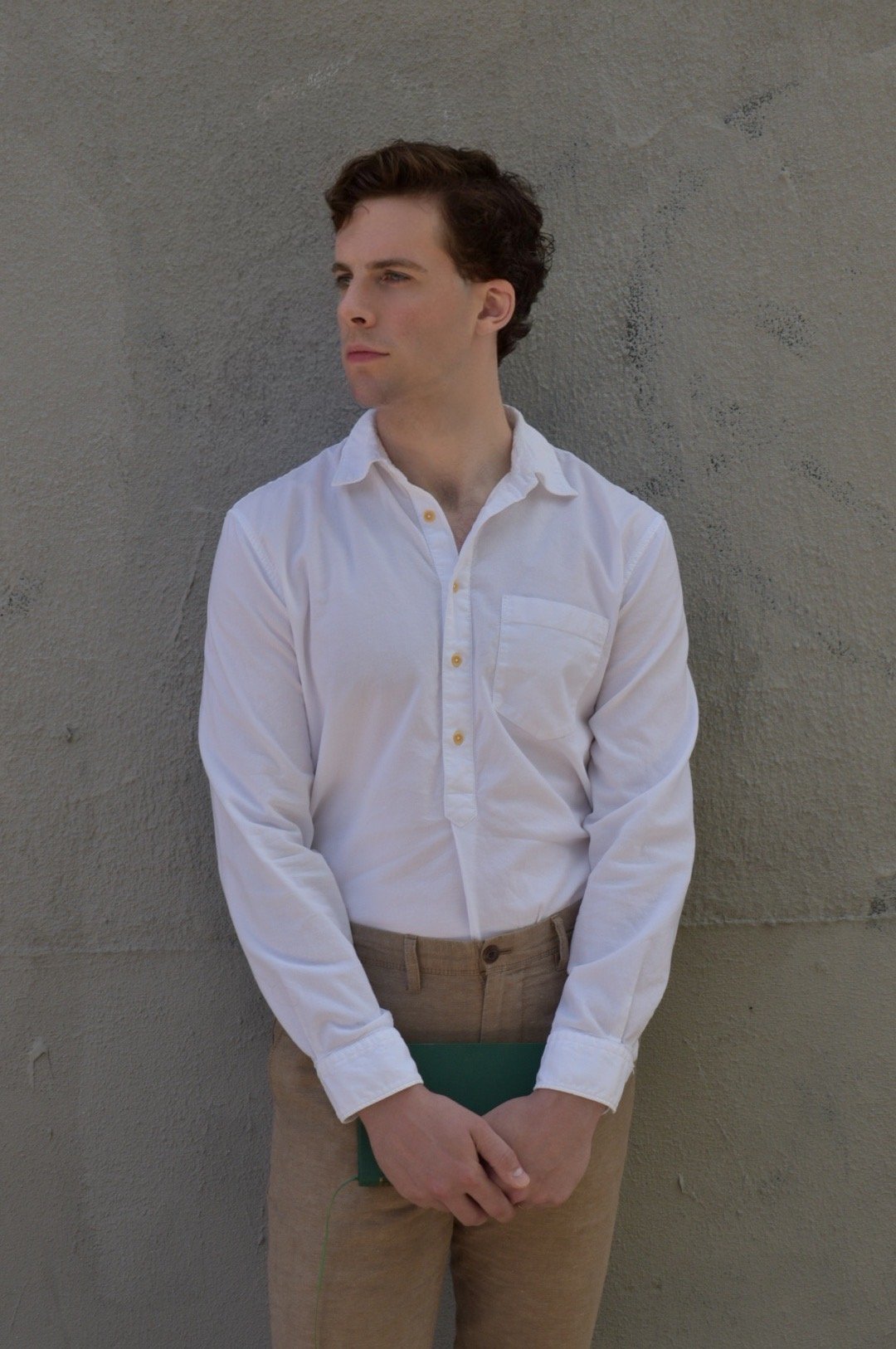
“SEE WHAT I’M ALL ABOUT” — Stallion Dunquis sings in his latest single, “New Morning,” a song that exhibits his ability to steer from one unique sound to another, that is completely contrary and yet still completely Dunquis. The single, along with “Sunday’s Gone,” are Dunquis’ entrance into a new, original musical phase.
Brooklyn-based Dunquis released “Sunday’s Gone” back in April, subverting the expectation of moving on from grief. The track comforts through experience instead: “You don’t gotta fight that fight, I’m not gonna dry my eyes. I’m just gonna live my life, right by her side.” The song communicates the permanent effects of loss and assures that it is just fine to continue loving someone: “Some tears are not meant to dry. I don’t want to live that life, I’d rather die.”
Accompanied only by piano, Dunquis’ vocals are exposed to the daunting unveiling of that which is so intimate. The harmonies contribute to the song’s intention of support and connection, as they remind of a shared experience, singing together through a difficult time. The song is soothing, and there is no strain to achieve anything beyond sincerity.
On May 12, Dunquis followed “Sunday’s Gone” with “New Morning.” The track starts off as tender as the preceding single, with a gentle guitar and drawn-out, hazy vocals, until the dramatic drop of drums takes the rock to level 100. Dunquis’ vocals are more muted in “Sunday’s Gone” than “New Morning” as the latter track’s fervent drums drive the song. A short lull toward the end is reminiscent of the unhurried beginning until a fading electric guitar concludes the song.
Read our conversation with Dunquis below as we discuss what goes into completing each project, his creative outlets, being honest through music, and more.
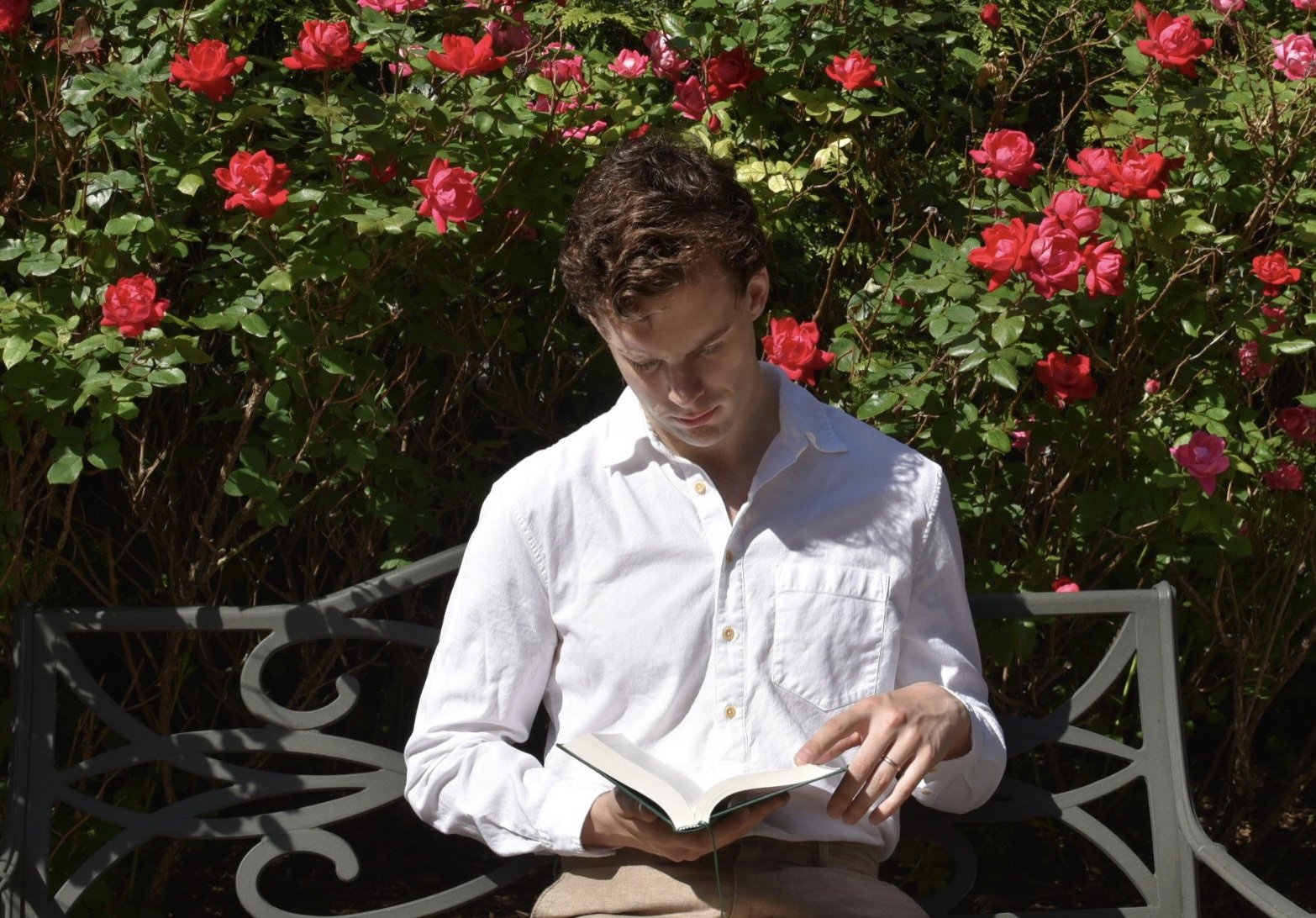
LUNA: From Illinois to Massachusetts to Pennsylvania and finally New York, “New Morning” mentions the Hudson River, and the cover art features the city as well. What is it about New York that captivates you, either as an artist or a person?
DUNQUIS: I love the diversity of New York. It was such an inspiring place when I came here from college — I was almost overwhelmed with inspiration. Even walking down the street, visually seeing all the fashion, the openness, how accepting the city is… it makes me feel safe and creative. You can wear and say anything — within respectful means, of course. I guess I always wanted to be here since I came of age, at maybe 16 or 17. I saw myself in New York. Both of my parents grew up outside of New York City, so there’s a [family] connection to New York State. I guess you just say there’s a lot of gravity that brought me here. And I love it here. I think as long as I’m in the US, I would want to live in New York City.
LUNA: Do you still feel that same inspiration since the initial move to New York?
DUNQUIS: Definitely. I’ve been here a few years now and I think what’s happened is I’ve been able to relax a bit. When I first got here, it was almost paralyzing, how much stuff was happening and how much inspiration there is. There was almost too much of it that it almost paralyzed me because I was like, “What do I even do? Where do I start?” Now I’ve been here for a few years, I’m a little older, and I’ve settled down a bit. I’m [now] actually able to communicate and create because I’m more relaxed. I think I was a little crazy when I first got here (laughs).
LUNA: More on “New Morning,” it has a powerful turn, turning it from a soft love song to a full-on rock song which is quite different from “Sunday’s Gone.” Could you talk about your decision behind releasing them in the order that you did?
DUNQUIS: I was waiting for the right time to release “New Morning” because I actually recorded it before “Sunday’s Gone.” I’m working on four or six things all the time, kind of figuring out what to put out, and I didn’t plan to record [“Sunday’s Gone”] at all. I was recording another song that I still haven’t put out, and “Sunday’s Gone” just kind of happened. I was like, “This is a nice little ditty that I’ll maybe work on.” But then I just kept working on it. I finished it, and it came at a time where it felt right to put it out. The emotion of it felt right. I thought, “Well, ‘New Morning’ would be great to put out after this because they’re so different, and if I put these out a month apart and people listen to both, knowing they’re both by me, maybe that’ll intrigue them to hear the next one because they’re so different.” I’m trying to release stuff every month or two, and I thought they were good to put out next to each other.
LUNA: I love the image of undrying tears in “Sunday’s Gone.” There are some very comforting lyrics. Could you talk about the process of creating that song? It’s beautiful.
DUNQUIS: Thank you so much. To be really brutally honest, it’s actually a really personal song. I had a loss in my family and I was pretty much writing it for my uncle who lost his son. I remember I was playing it on guitar originally, probably a year ago, so this adds to it not being planned as I was saying earlier. I had the melody in my head, I was playing guitar, but then I just forgot about it because I thought, “This is way too sad for me to do right now … I can’t even handle writing this.” But I started playing piano for another track, I tried the same melody, and I figured it out on piano. It worked even better. The lyrics came from me wishing that I could sort of write my uncle and my aunt a letter or a message to tell them how I felt about [the loss]. That can be really hard to do in real life because it’s just way too intense. I think that — while, of course, as a family we’ve been there for them — as an artist you’re most comfortable expressing the most difficult things through your art. It was only natural for me that it came out through a song or through a poem.
This is the world debut of me telling anybody this because some people have asked me what it’s about, [but] I haven’t really told anyone because it can be sort of embarrassing, too. It’s the same with writing a song about a lover. It’s like you’re sitting across from them having coffee while you’re listening to the song — it can be a little awkward. A lot of my music is really personal and I think it always will be. “Sunday’s Gone” is an example of writing from sadness and trying to transpose that to making someone else feel a little bit better.
LUNA: I think that song is very comforting and you can feel that it’s genuine. We were talking about how the two singles are quite different, so how do you work with genre? Some artists remain experimental while others are hyper focused in their specific sound. What’s your relationship to genre?
DUNQUIS: My relationship to genre is that I want to do every genre I can pull off. I’m not aiming to do every genre. I don’t sit down and say, “I did a folk song so now let’s do a rocker.” I think that I listen to so many different types of music, even more than I’m capable of making. For example, I listen to rap but I’m not a rapper, you know. I listen to a lot of African music, but I’m not making African music. I think I’m always trying to stretch my limits. I love the fact that with the new era of music, you can do a lot of genres because people are putting out singles on Spotify, as opposed to full albums. I miss albums, too, but I think more than ever, you can get away with being multi-genre. If you have 12 songs on Spotify that are singles of different genres, maybe you will cater to a wider audience. Maybe some of them only like two of your songs.
I’m still figuring it out, you know. There’s a lot of young hip-hop artists lately that have gone into punk, singing and guitar playing, and I love that. I kind of want to do that too, different kinds of genres, because I think people are so talented these days. We have so much access to world music — it’s only natural that we’re going to be making all types of different music. So my relationship to genre is that I would like to expand it as much as possible, while staying me.
LUNA: You have tracks up on SoundCloud, but when it came to your Spotify releases specifically, you decided on quality over quantity. What does life in the in-betweens look like in comparison to release times? You kind of talked about how you’re always working on a few songs at a time, but do you take breathers? Do you let the work sit, or do you move forward to the next project?
DUNQUIS: I would love to release stuff constantly. I think life in the in-betweens for me is all about the production process, which to me is always the most difficult process. I’m always writing songs and even finishing songs, but then getting a finished song that I can sit down and play through the production process and me being happy with it is by far the most challenging part for me. For example, I put out two songs around 2020 and I immediately started to plan to release more. I finished the [new] songs but I just didn’t love the way that they came out. So I didn’t put them out. I think I’ve been arguably overly cautious about not putting out stuff that I'm not a hundred percent behind.
In the end, I’m happy with that because I don’t want to put anything out there permanently that I’m not fully happy with. So the in-between process for me is figuring out how to not be too precious. But I also don’t want to put anything out there that I don’t love. I’ve become better at production, so I’m able to produce a lot of stuff myself which makes it easier to like it when it’s fully done.
LUNA: Well, to be fair, art is almost never done.
DUNQUIS: That’s really true (laughs). That’s what I feel like too. Even when I put stuff out, I still think it could have been slightly better but I think at some point, you have to put it out.
LUNA: Also, you studied English literature. Does your literary background have an influence on your approach to writing music, whether that be lyrics or otherwise?
DUNQUIS: Definitely. I think of myself as a writer first, by far. I’ve been a writer since I was, like, three years old. At my career day at school, I wanted to be like Shakespeare. Everyone was like, “What are you?” I was like, “I’m a writer.” I only got into music when I was around 20. I just love rock ‘n’ roll and I love music, so I’ve figured out how to write music but I’m still working on this. I approach everything from a literary angle. How is this going to be a good song? A lot of people [first consider] a vibe or sound or instrument, but I just think lyrics are super important. I’m a huge reader. I’m a lover of books and I like writing in my journal. So it all feeds into [music]. I think back to a lot of teachers, courses, and discussions I had about books when I’m writing so it’s a huge portion of it.
LUNA: You said you write creatively as well. Do you have any additional creative outlets?
DUNQUIS: Recently I started painting and drawing. Around September of last year, I was just in a weird mental state. I started drawing randomly and then painting. I [had a] six-month [period of] drawing and painting every day, then I got back into music. That just came out of nowhere but it was really calming. For some reason I think music for a little bit wasn’t calming me down, but painting and drawing put me in a serene headspace for a bit, and I got super into it. I’ll probably go back to that at some point.
LUNA: Do you find it all to be cumulative, as in one form of creativity must exist for another?
DUNQUIS: I think they’re all connected. I think artists can kind of do whatever they choose to do — like if I wanted to be a painter and really work at it, I think I could do it. Or if, you know, Adele wanted to be a novelist, I’m sure she could probably figure it out because she’s such a good writer of songs. I think they’re all kind of connected, and the drawing and painting really helps me with my music because it’s so immediate and it’s so instinctual. Then I’m reminded I should write songs this way. Why am I thinking so much about production? Just do it and make it innocent, make it childish, and it’ll be more pure. Like I said, writing, like journaling, really puts me in a good mentality to write songs because I’m writing from the heart as opposed to sitting there and [thinking], Are people going to like this line?
LUNA: It’s a good way to let one piece of your work breathe, like we were talking about before, when your brain is focused on maybe drawing. And then subconsciously, you’re thinking about lyrics, or at least your brain is.
DUNQUIS: That’s exactly how it works. When I’m playing an instrument, I’m subconsciously thinking about my life and what I have to get done and things I’m worried about. It’s all about activating what you’re saying.
LUNA: One last question for you: What should listeners expect next? Shows, releases?
DUNQUIS: Both! I’m torn between performing alone or with a band because a lot of people want me to perform solo, which I’ve done before, but I enjoy [performing] more with a band. I’ll probably do a combination of both in New York. Release-wise, I have to choose what I’m going to put out next. I have a couple of projects that are pretty much done. Some of them I’ve already debuted live. I want to put out more music and perform live this summer. So keep an eye out.