
Q&A: Stephanie Babirak Announces New Album ‘Rotten Fruit,’ Shares “Hey Cain”
INTERVIEW
INTERVIEW
☆ BY KIMBERLY KAPELA ☆
Johnel Clemente
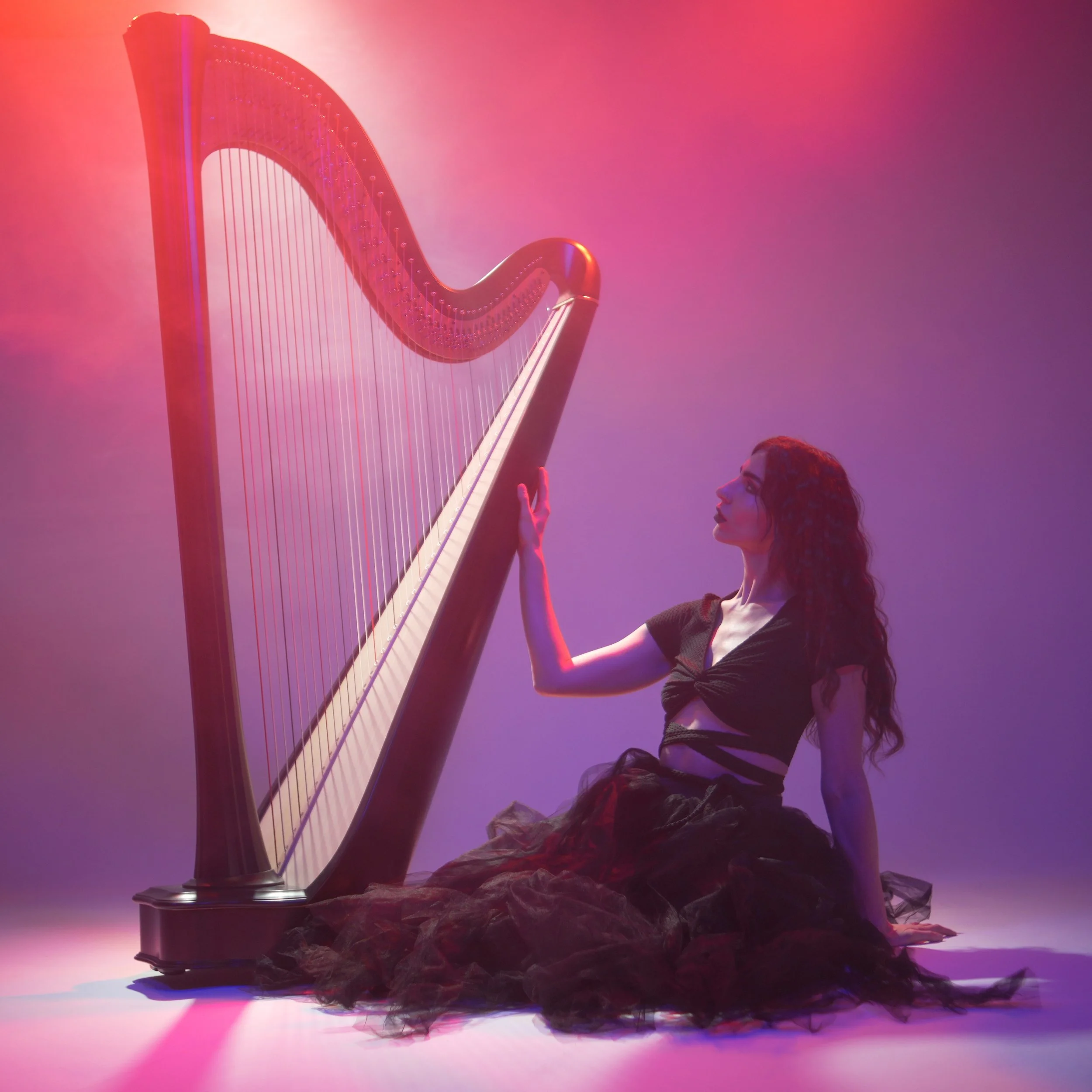
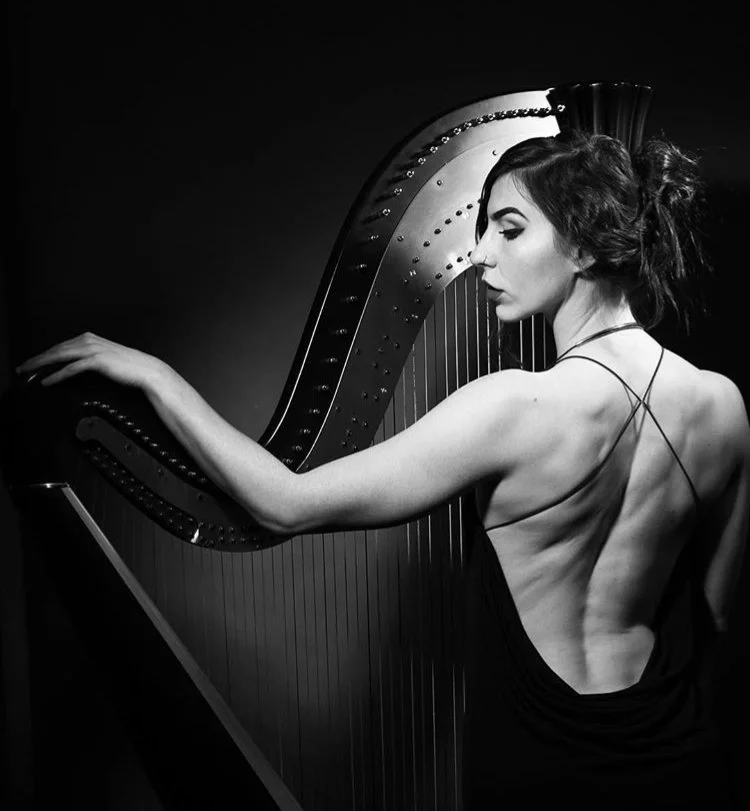
WHAT DOES IT MEAN TO BE BAD? — Stephanie Babirak has announced her sophomore album Rotten Fruit, arriving June 12, the New York City-based harpist, singer-songwriter, and composer leans further into the tension that has come to define her work: the space where classical discipline dissolves into contemporary vulnerability. In Babirak’s hands, the harp sheds its recital-hall expectations and becomes something far more intimate and unsettled, rooted in a contemporary folk-pop landscape that pulses with guitar, bass, drums and synths.Where her earlier work hinted at this duality, Rotten Fruit fully inhabits it. The album positions the harp as a central voice carrying weight and tension.
Drawing from biblical imagery, Babirak interrogates the binaries of “good” and “bad” throughout Rotten Fruit.
The lead single, “Hey Cain,” serves as the album’s entry point of the world Babirak builds across the record. Borrowing from the story of Cain and Abel, the track reframes one of the Bible’s most infamous narratives into something deeply personal for Babirak.
“This song borrows the story of Cain and Abel to explore the difficulty of accepting a very specific kind of loss,” Babirak says. “It’s about the grief, sense of betrayal, and disbelief that comes from letting go of someone who is ok with losing you, and how strange it is to mourn someone who’s still alive… someone you still love very much. I was thinking a lot about the First Corinthians verse ‘Love is patient, love is kind’ when I wrote this song, and about how untrue that can be — love can be incredibly painful even when it’s real.”
Throughout her own personal reckonings, Babirak discovered that there wasn’t a lot of music based around grief that’s centered around cutting people out of survival.
“I hope that if these songs do anything, they help to make people feel less alone, especially people that are dealing with grief or losing people, or choosing to cut people out of their lives for their own survival or well being,” Babirak says to Luna. “One of the things that I thought about a lot, as I was experiencing some of those feelings myself, was there's not a ton of music about this.”
Johnel Clemente
LUNA: Thank you for talking to Luna. Our readers would love to get to know you and your music more. For any readers who aren’t familiar with you yet, what inspires your artistic style and sound?
STEPHANIE: I am really inspired by Lucy Dacus, Phoebe Bridgers and also Modest Mouse. I Love Lucy Dacus. I love her voice, and I really like Boy Genius, but one of the things that I really like about them — individually as artists and their band — is that they're all friends. One of the things that I really try to do is collaborate with my friends as much as possible. I had a lot of friends play on the album or help me with the mixing and mastering and producing which makes music more fun and helps me to be less in my head.
LUNA: “Hey Cain” serves as the first single into your upcoming album. Why did you feel this was the right song to introduce listeners to the world of Rotten Fruit?
STEPHANIE: I love “Hey Cain” because it’s a good introduction to the world of the album. A lot of the album was made when I was reckoning with different relationships in my life. “Hey Cane” sums all of that up. I also think it is a good introduction into the sonic world of the album. A lot of the things that I've done in the past have been a lot more harp-centric, and this album has a lot more drums and guitar and has a really different sound. The harp is still front and center, and I write most of my songs on the harp first. Also some of the biblical imagery in “Hey Cain” runs through the album.
LUNA: Rotten Fruit feels like a pivotal expansion of your sound. What sparked the initial idea for the album? What emotional or thematic ground did you feel compelled to explore this time around?
STEPHANIE: I was reckoning with a lot of different relationships in my life, and there were some people that I was going no contact with. It was a painful period of my life, and as I was doing some of that reckoning, a lot of these songs tumbled out.
LUNA: Did you take any creative risks or experiment with new approaches on Rotten Fruit compared to your Pop album? What felt different this time around in how you expressed yourself?
STEPHANIE: This album feels a lot more vulnerable. It's all original music and all of my lyrics. The Pop album I did with an accordionist and a violinist, and it was really, really fun, and they're two of my really good friends. For Rotten Fruit, I collaborated with my friend Pete Scoma, who's a guitarist, and we shaped the songs together. This is my full length album of just original music, so really a different vibe, and a lot scarier too.
LUNA: Do you have a personal favorite song on Rotten Fruit — one that feels closest to your heart or most revealing of who Stephanie Babirak is right now?
STEPHANIE: “Waterline” because that one is extremely personal to me and is representative of where I am now. My other answer is also the song “Apocalypse,” which is about the state of the world that feels very relevant, unfortunately, every day.
LUNA: Were there any challenges or freedoms that came with placing the harp at the center of a band-oriented, modern production?
STEPHANIE: There are technical challenges recording the harp, it's really difficult, even in a studio environment. Getting the right sound is always difficult, because every engineer will try to record it differently or bring out different parts of the sonic range of the instrument. For instance, some people will record it, so it sounds really sharp and hollow. When you're in the room with a harp, it's a really rich, deep sound. That's very hard to capture. I think the harp can have a lot of bite to it. Everybody thinks of it as being so angelic and beautiful, and I’m trying to use it in a way that maybe challenges some of those conceptions. Some of it has taken the front seat and center direction for me. I'm always trying to shift that perception and use it in ways that are maybe a little bit surprising or sounding a little bit different than maybe people would expect to harp to sound like.
LUNA: What did you learn about yourself as a writer and composer through making this album?
STEPHANIE: I learned a lot about myself. Even now, after it's done, I learned to push through a lot of self doubt and to just get comfortable with the discomfort of sharing things that are maybe personal or asking other friends to play on it. I had to move through a lot of discomfort, but I am grateful that I felt compelled to do so anyways. I learned how vulnerable it can be to be a songwriter and to do like, one's own project. It's worthwhile to do things that are uncomfortable anyways.
I also learned a lot about myself in terms of the themes that kept coming up in some of the songs. There's a lot of themes that keep circling around, like the idea of badness and what does it mean to be bad and why is that always coming up for me in these songs? I wasn't quite conscious of how often that was rattling around in my subconscious, and whether the badness being am I a bad musician? Am I a bad composer? Am I a bad person? In all of its ranges.
LUNA: How do you hope listeners — especially your femme audience — can connect with or find power in this new era of music from you? What emotions or messages do you want to leave with them?
STEPHANIE: I hope that if these songs do anything, they help to make people feel less alone, especially people that are dealing with grief or losing people, or choosing to cut people out of their lives for their own survival or well being. I hope that they feel empowered to do so, and that there is another side to the grief that comes with that. I would love for anyone to feel a little bit less alone. One of the things that I thought about a lot, as I was experiencing some of those feelings myself, was there's not a ton of music about this. There's a lot of breakup songs and there's a lot of sad songs out there, but it's a really specific grief that goes with that.
Specifically girls that are listening to this music, there's a lot of instruments that are considered girly and put into boxes. I also hope that if there's anybody that plays the flute or the harp, they feel inspired to make whatever music is like in their heart, and not just what people expect of them.
LUNA: How are you feeling in this current era of your career and what does the rest of the year look like that you would like to share with Luna?
STEPHANIE: I feel nervous, but I do feel excited. I do feel excited for the music to finally be out, because I've been working on it for a long time. The next few months are really busy as the album comes out. The album comes out on June 12. I am playing at the New England Folk Festival that I'm really excited about in April. I'm just staying busy. I play a lot in New York City. I have a weekly residency at Apotheke Nomad in Manhattan. I'm just staying busy with playing and gigging and also starting to work on some new music.
David Zayas Jr.
