
Q&A: student 1 Explores Absence on ‘truant’
INTERVIEW
INTERVIEW
☆ BY SHEVON GREENE ☆
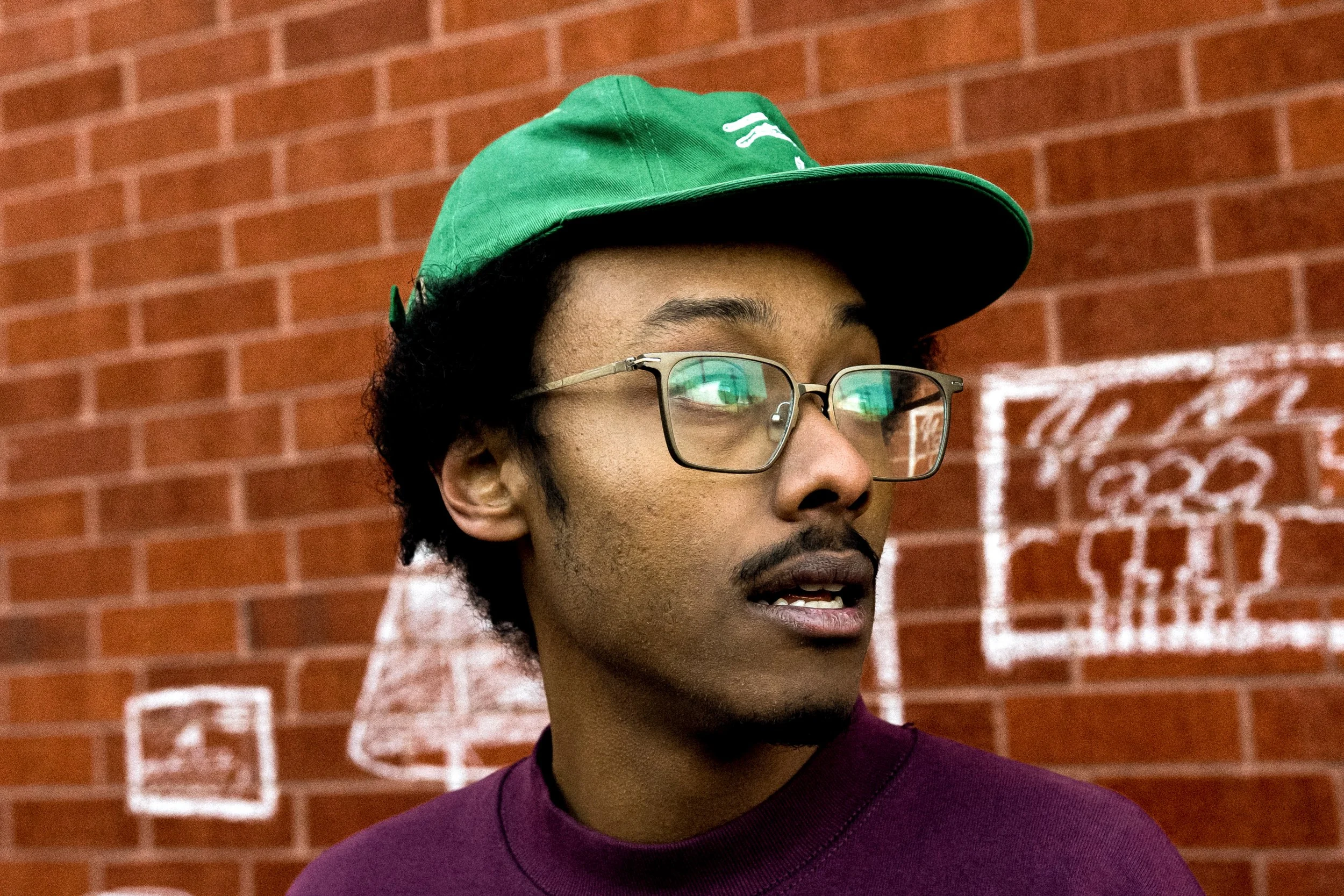
Photo by Justus Louisiana
GROWTH DOESN’T ALWAYS ARRIVE AS A MAJOR BREAKTHROUGH—but, instead, as the realization that you’ve been mentally somewhere else for a while. On his upcoming fourth album truant, out June 19, Minneapolis artist student 1 spends the majority of this project confronting that feeling face-to-face. Throughout 12 different tracks, he explores themes of avoidance, grief, addiction and the odd feeling of being physically present while mentally somewhere else.
Despite the unserious and comical title, “pissing myself” stands out as one of the most self-aware songs on the project. Underneath the origin story involving a friend’s road-trip companion and a bean bag chair accident lies something surprisingly reflective. It’s what student 1 describes as a “final evaluation” before attempting to become a more mature version of himself.
During our conversation, student 1 spoke openly about turning 30, reevaluating what the “student” in student 1 means and trying to move toward a mindset focused on growth. Instead of offering easy answers, truant is more interested in figuring things out in a realistic manner.
We chatted with student 1 about truant, learning when to let go of perfectionism, the Minneapolis music scene and why sometimes the funniest stories end up translating into track titles. Keep reading for more.
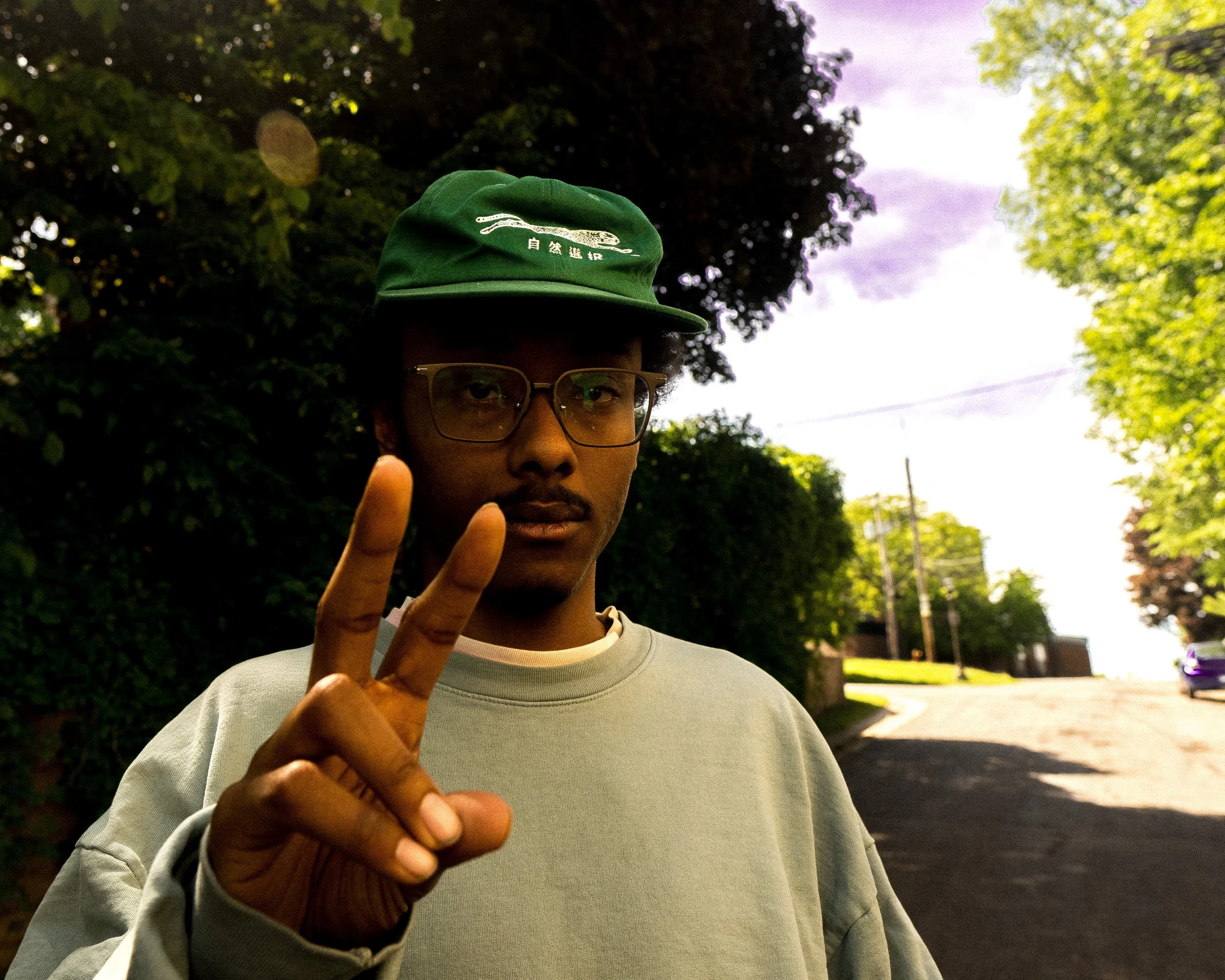
Photo by Justus Louisiana
LUNA: I wanted to ask about "pissing myself" first because when I saw the title, I immediately figured there had to be a story behind it. I'd love to hear more about how the title came about and why you decided it was the perfect fit for the song.
STUDENT 1: It was a night where my roommate was waiting for a friend to get to our house from Florida. They were on a road trip, and I was working on the song. It was probably around 7 p.m. when they got here. These two guys barged through the door, and they're on acid and a couple of other drugs. They're just like, "Wow, that ride sucked. It was like 25 hours."
There's a giant bean bag chair in the house, and one of them immediately plops down on it and passes out. He's asleep, flailing around, almost knocking stuff over. This goes on for about 20 minutes. Then he finally wakes up, looks at his lap, looks at me and goes, "Oh shit." I'm like, "What?" He stands up, and there's the biggest wet spot on this bean bag chair. Meanwhile, I'm still working on the song. While I'm working on it, he's in the shower, walking around the hallway naked. I'm really putting his business out there (laughs).
LUNA: I mean, you made it the title. The business is out there now (laughs).
STUDENT 1: I don't even think he spent the night there. But by the time he left, I had finished the song and thought, "Yeah, I think we're just going to call this one 'pissing myself.' It seems appropriate."
LUNA: That's amazing. You described the song as a kind of final evaluation before working toward becoming a more mature person. What made this feel like the right moment in your life to take a step back and assess everything?
STUDENT 1: I feel like a lot of the album is me coming to terms with a more responsible version of myself and wanting to become that. I've gone through phases where I tell myself that's what I want and that I'm working toward it, and then somewhere down the line I fail and have to start over. I'm not saying this attempt won't be like that too, but I feel like I'm trying extra hard to make sure it isn't. It feels different this time around. But yeah, I feel like I'm actively putting more effort into making the changes in my life that I feel are necessary so I don't piss myself (laughs).
LUNA: I also laughed reading that there were 29 versions of the song while you were teaching yourself how to mix and master it. What did that moment look like when you finally realized, "Okay, I need to let this song go out into the world now"?
STUDENT 1: I think it came down to overthinking really tiny things. Once we got into version 21 or 22, I had already listened to the song by myself probably 100 times in 100 different settings. At that point I'd hear it somewhere and think, "Does the bass sound out of tune?" And really, I was just doing it to myself.
Eventually I had to convince myself that whatever I thought I was hearing was a product of my relationship with the song. It takes me a really long time to make anything, and because of that, I'm listening to it over and over and over again.
I don't always think about the repercussions of that. I'm just like, "I'm working hard." But it definitely trips me up sometimes, especially when I'm trying to learn mixing and mastering, which is still a very new dimension for me.
LUNA: Yeah, 29 versions is a lot.
STUDENT 1: We'll try for 19 on the next album (laughs).
LUNA: I feel like a lot of artists get into that perfectionist mindset where they've heard the song so many times that they start questioning everything.
STUDENT 1: Yeah, it's a weird headspace. It reminds me of saying a word over and over until it stops sounding like it has any meaning. Finding a home in that mental space is kind of what it feels like.
LUNA: Exactly. That's where having people around you to give feedback becomes so valuable.
STUDENT 1: Yeah, that was definitely a saving grace. If I had less of that, I would've calmed down a lot later.
LUNA: I really like the album title truant. It stood out to me immediately. What drew you to that word specifically, and how does it connect to the themes of avoidance and feeling mentally absent throughout the project?
STUDENT 1: Initially, I was resistant to naming the album that because I turned 30 about a year and a half ago, and it had me overthinking the whole student thing. I used to wear a backpack on stage. I'm just like, I don't want to do that anymore. I was trying to reevaluate how to bring this into grown-ass-man territory. The best way I could think about it was to stop leading with a student image or aesthetic and instead lead with a student ethos. The emphasis is on learning more about life and whatever your field is.
As I started building that framework, I also noticed that my habits had put me in a place where I was constantly mentally removed and not very present. It's hard to be punctual, hard to show up, sometimes hard to show up at all. Those feelings spill into my interests, my passions, my career, my relationships. I didn't really have a word to describe how quickly all of it was happening. I just felt kind of gone. Then I thought, "Oh. Truant might actually be the perfect word."
LUNA: I think it makes a lot of sense. You're keeping the spirit of student 1 while still evolving.
STUDENT 1: Yeah. I just needed a different vantage point. It was starting to get stale from the one I had before.
LUNA: We touched on this a little already, but the album wrestles with being physically present somewhere while mentally being somewhere else. Do you think writing these songs helped you understand those patterns within yourself better?
STUDENT 1: I think so. There's still work I need to do. I feel like I chipped away at a lot of it on this album, but I didn't solve everything. A big hurdle was just finding a way to articulate the parts that felt foreign. It was my first real attempt at trying to articulate some of these things. I think that's healthy. It definitely made things take longer, but a lot of soul-searching happened while I was putting this project together.
LUNA: I think that's a feat in itself, honestly. Being able to finish the project and reflect on those things. I also loved the DIY energy of the "pissing myself" video. How did that come together?
STUDENT 1: The first things we shot were just us driving around Saint Paul, focusing on colors and little moments. After that day, my friend and I were like, "Yeah, let's just make it compilation-style. Let's just do whatever." Then we figured we'd bring it all home with a shot of me pissing myself (laughs).
LUNA: I'm not going to lie, I was debating whether I should ask about that because I was wondering how that worked.
STUDENT 1: I took my belt off and we poked a hole through a water bottle. I had the bottle hidden in my sleeve and was pretending my hand was shorter than it actually was, and then I just squeezed the water bottle.
LUNA: Well, it worked. I definitely couldn't tell while watching it (laughs).
STUDENT 1: I'm glad it looked believable. There's actually a shot in the video where you can literally see water shooting through my pants. I don't think anybody's ever pissed themselves that hard.
LUNA: It looked believable enough to me. Not that I have much experience judging that (laughs). Obviously there are a lot of heavier themes throughout the album like grief, addiction and avoidance, but your writing still has these moments of humor and lightness. How do you decide when to lean into that humor versus sitting in the discomfort of those heavier themes?
STUDENT 1: I feel like I want things to feel more spirited the more vulnerable they get. It depends on the context, but whenever it feels like I'm oversharing or digging deeper than I'm used to, I try to balance it out with something eccentric so it doesn't feel so daunting. I'm kind of shooting from the hip here because I don't really know the exact measurements of it, but I know that mix is important.
Something about the jokey element is disarming. It's disarming for me, at least. Maybe it helps me dig deeper. I feel like that might be what I'm prioritizing while writing. If it also allows the listener to take in more without feeling overwhelmed, then that's a win too.
LUNA: I think a lot of artists are in that same space where they're not necessarily masking vulnerability, but they want to create a balance. Humor is also a coping mechanism for a lot of people.
STUDENT 1: That's definitely one of my coping mechanisms, for sure.
LUNA: I know you mentioned that your father passed away during the making of the album. Without sharing anything you don't want to, did that experience change the way you approached writing or self-reflection throughout the project?
STUDENT 1: For sure. Especially on this album. I think a lot of that is going to carry over into future projects too. Some of the songs on here helped me get closer to closure on certain things, and I think that's good. I definitely wasn't writing like this on prior releases. A lot has changed, maybe not super explicitly, but I think I'm going to try and punch the pocket harder emotionally moving forward. It definitely changed some things within me.
LUNA: You’re now writing, mixing and mastering your own music. How has producing your own work changed the way you think about songwriting compared to when you first started making music?
STUDENT 1: It's been a net positive, but it definitely didn't feel that way at first. I started out writing in notebooks over random YouTube beats. That was kind of how I got my foot in the door. Then, when I started putting music on Spotify, I was still using other people's beats.
In between releases, though, I'd be in the studio trying to make my own beats. Eventually I got to a place where I was making stuff I liked, but there was still this barrier between making the music and being able to write over it. I couldn't figure out why I couldn't write over my own beats. Someone once described learning a craft as reaching a point where everything becomes technical. You start out just loving something, and then suddenly you're seeing all the matrix code behind it. Once I started making beats, I understood the foreground and background of production. It kind of messed with my perspective because now I was seeing everything from two different angles at once. I had to sit with that for a while and figure it out. Looking back, it helped a lot, but initially it was like, "Okay, I can make beats now. What do I do with that?"
LUNA: Yeah, definitely. It's like adding a whole new layer to the process and having to learn how to balance it all.
STUDENT 1: Exactly. Every time you level up, it's like somebody hands you a new bike that isn't conventional, and now you have to figure out how to ride it.
LUNA: That's such a good comparision. I always love talking to local artists about their relationship with the city. How has Minneapolis shaped the artist you've become, both creatively and personally?
STUDENT 1: It's made me want to try really fucking hard. I didn't really start paying attention until high school. Before that, it was just whatever was available: radio, TV, whatever. But once I got into high school, I noticed everybody was really tapped into the local scene, so I locked into it too. I started listening to Atmosphere, MF DOOM, Blueprint, all these artists. I remember hearing them and realizing, "Damn, people have so much shit to get off their chest." At first I just thought they were writing verses. Then I realized they were writing about real life. They were processing actual experiences, and I thought that was beautiful.
I still kind of have that relationship with the Twin Cities. Every time I engage with the local art scene, I'm excited. I'm satisfied. I feel like people here really respect art and approach it with integrity. The documents are alive here. I really feel something. The art here is cool.
LUNA: Do you have any favorite local artists right now?
STUDENT 1: Yeah. One of them is actually on my album. His name is Demon Marcus. papa mbye is incredible. He started out doing a lot of visual art—drawing, painting—and now he's making indie music. Nazeem & Spencer Joles have been in the game forever. They're veterans and make incredible music. The last time I went to New York, I met up with Nazeem and we made a song together. I've been sitting on it for a while, but it's so fire.
LUNA: You're heading out on tour this summer. What are you most excited for people to experience from these songs in a live setting?
STUDENT 1: Compared to the last tour, this one is going to be a lot less bare bones. Last time I didn't really have an album in my back pocket, and now I'm singing a lot more. I also finally have equipment that can accommodate that in a live setting. I have an Auto-Tune box and some other gear. I've also been thinking a lot more about lighting. My manager has footage from previous shows, and I didn't realize how much lighting changes everything. That sounds stupid, but it's true. For every stop on this tour, I'm going to be thinking about that. Between the lighting and the new equipment, I feel like it's going to bring the performances to another level. I'm really excited to share that with people.
