
Q&A: Talia Rae Pours Her Soul Into New EP “Julia”
INTERVIEW
INTERVIEW
☆ BY SAMANTHA SORIA ☆
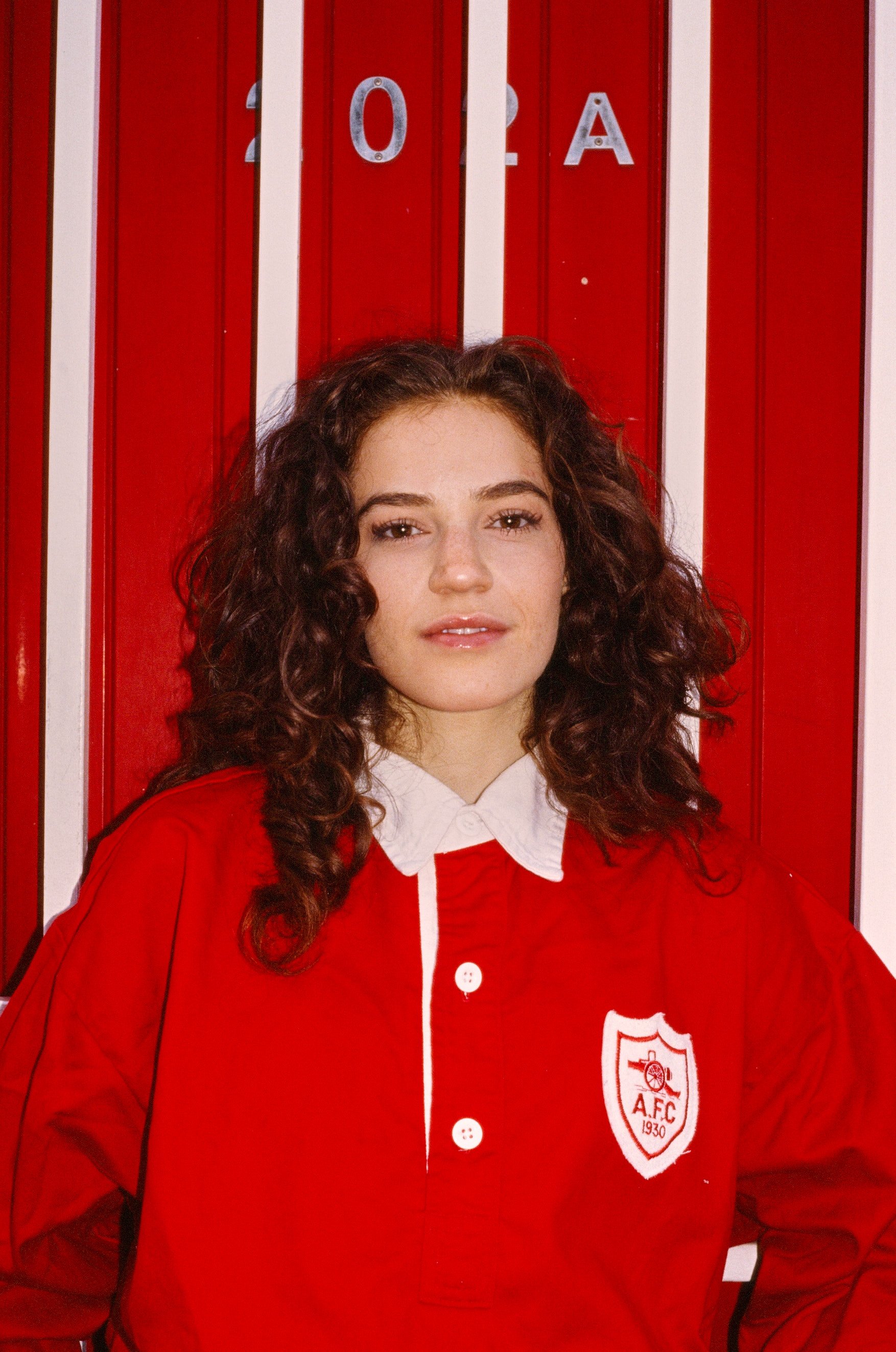
Kane Hulse
FOOTBALL, FAMILY AND REFLECTION—Before Talia Rae and I begin talking about her latest EP, Julia, we spend some time discussing how the summer weather has been treating us. Right on the spot, the singer-songwriter easily converts the sunny, hot London temperature from Celsius to Fahrenheit, which I note is just a normal day in Florida for me. But temperature aside, our conversation is one that’s bright as we finally delve into the EP.
Though it's been a little over a month since the release of Julia, the EP continues to be a standout listening experience. “Blue,” “Euphoria” and “Blind in Love” forever draw you in with its bold sonic exploration and production, and this only heightens when learning about the creative process behind the EP.
“I can vouch for probably almost every artist out there that making music is just trial and error,” Rae says. “I think we were at version 91 of '‘Julia’ before the version that you hear. It’s so much trial and error, just trying to get it absolutely right. Not perfect because I don’t think that exists in music, but whatever feels right for the song and to grasp that feeling is so hard!”
Serving as an ode to her father, “Julia” lyrically hits an emotional chord as she takes on her father’s perspective. The song paints a mural of their close-knit relationship as they spend the day at an Arsenal match, a tradition they’ve shared since she was little. That familial love and gratitude extend to “If I Were Your Mother,” another poignant track dedicated to her mother.
In an interview with The Luna Collective, Rae goes into further detail behind her second EP, overcoming the challenge of stepping into her father’s point of view for title track “Julia” and where she sees herself now since the EP’s release. Read the full interview below.
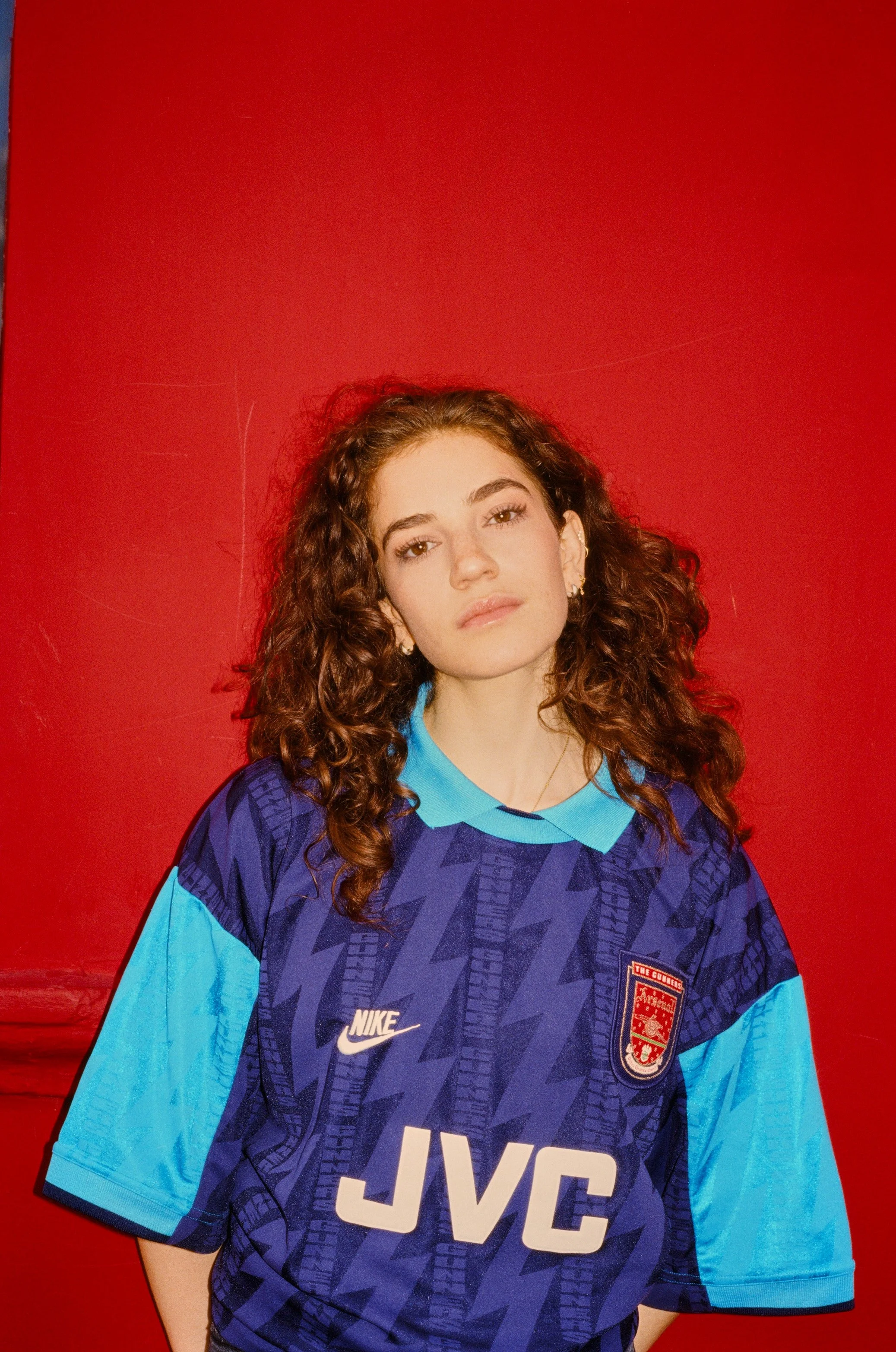
Kane Hulse
LUNA: This EP blends a range of sounds and styles with its smoky soul, cinematic pop and intimate lyricism. Did you have a clear picture from the start on how you wanted this EP to sound or was that something that was gradually developing as the songs were molded?
TALIA: Yeah, it was definitely more gradual as it went on. The concept of the EP as a whole kind of formed itself. The concept that's there now wasn't really there at the beginning when I decided what tracks were going to go on the EP, and it wasn't till after I started recording all of the songs in the studio and actually producing it that I realized the concept came from that. Everything was like a natural evolution when I started creating it, rather than before. It wasn't like, “This is going to be the EP, and this is what I want to put out.” It was definitely more “This is where I'm at in my life right now, and I want to encapsulate that moment in the songs that I'm going to put out.”It's kind of like a representation of where I'm at in my life at that time, and that just came naturally.
LUNA: With “Julia” specifically, you’ve talked before about how you thought it was more interesting to tell the story through your father’s perspective. Did you find this shift in point of view to unfold more easily than the standard writing about oneself or was it at times a little bit difficult?
TALIA: I think it was challenging, but in a good way, and that's the whole reason why I wanted to write it from my dad's perspective. I think I could have easily written the same song, explaining, "Oh, Dad, I know I'm growing up, and you know you're probably finding it hard to let me go, but no, I love you too.” I feel like that doesn't necessarily hit as hard as writing it from his perspective because I'm interpreting what he feels. He might not feel like that 100 percent, so it's two perspectives blended into one, through the lyrics of the song. But, to your last question, I always knew I wanted to write a song from his perspective; that was one thing I knew before creating the EP. It’s almost like an ode to him, all fathers out there, and people who just take care of people in general. That's kind of the crux of the meaning of the song for me.
LUNA: The visuals for “Julia” are so personal as you share your tradition of attending an Arsenal match with your dad. The DIY aspect of it brings such a perfect touch to show how rooted that father-daughter bond is between you two. Was that also always the idea from the get-go or were there ideas you had played around with?
TALIA: It didn't come instantly, but I knew that I wanted Arsenal to be involved in the video somehow, because it’s such a big part of my dad's and my relationship. He's been taking me to the matches since I was so small, so it's like our bonding thing. So from that, and knowing that I wanted Arsenal to be involved in it somehow, I was like, it would be cool just to literally replicate what our day's like going to Arsenal. It's so raw, there's just like a camera following us behind. Nothing is staged; it's all real. Obviously, we were at an actual match as well, so it was almost like we were just going about our day—going to the cafe before the match and having lunch—and then there was just a camera that happened to be following us. So I did know that I wanted to do that sort of thing, but the idea kind of formed a little bit later.
LUNA: I also love how the video touches on masculinity and the often overlooked place of women within football culture. How important was it that the visuals reclaim football as a family space rather than a male one?
TALIA: I didn't want to explicitly go, “Oh, this is now like a women's game”or whatever. It's just like, if I'm there and I'm a woman, I'm representing, hopefully, other women who feel like they can go to matches and they shouldn't think twice about it. It’s a normal thing that women do, as it's a normal thing that men do. It wasn't a really deep thing that I thought about, necessarily. It was just like football is for everyone. The whole thing was not necessarily about football specifically, but about spending time with your loved ones through the means of football, and through the meaning of being a part of a club, like Arsenal, as a community.
I think even going to the games… I've been going for years, ever since I was younger, and there are so many women now. I remember when I was really young, there would never be a queue for the women's toilet, but there'd always be a massive queue for the men's toilet, which is usually the other way around, but now there's a queue, and I'm like, “Oh, that's good!”because women never went. But you know, I think it's just for everyone, it's just a fun thing to do.
LUNA: “If I Were Your Mother,” is a tribute to your mom. The lyrics are so moving and powerful. Can you talk to me about this song and where the inspiration to write this one came from?
TALIA: You know, it was so weird the day that I wrote this song. I remember it so vividly. I was writing with one of my friends, Harry Stone, and we wrote it in his living room. He had the guitar, and I sat there with a notebook, and he was like, “What do you want to write about today?” I can't remember specifically, but I do remember my mum was going through some shit, and I was like, “I want to write a song dedicated to my mum and express my love for her,” and then we started writing it. And it wasn't from someone else's perspective, but we started writing it, and then the lyric "If I Were Your Mother” came, and we were like, “How cool would it be to write it as if I were her mother, like how I could help her?”
The exact thing that she says to me — she tells me I'm beautiful, she tells me I'm great — but she would never dare to say that to herself, so it's almost like stepping in her shoes as if I were her mother. That's kind of where it came from, but if “I Were Your Mother” was really — I know artists talk about it all the time — it was one of those songs we wrote, probably in about two hours max, and it just completely wrote itself. Harry was like, “Write the lyrics as if you were saying it to your mum, as if you were talking to your friend, don't think of it as a song.” That's why I think the lyrics are so poignant, because they're just what I'm actually trying to say, not even just what I'm trying to sing.
LUNA: Personally, I feel like it's so hard to pick a favorite off of this EP because each track stands so strong. “Blue” and “Blind in Love” are such perfect examples of that smoky soul you experiment with and “Euphoria” is that cinematic pop. Do you have a favorite amongst these three?
TALIA: “Blue” is probably my favorite.
LUNA: What about “Blue” do you love the most?
TALIA: The production on “Blue” is probably my favorite on the whole EP. That was so seamless. It’s not like an easy listen, but I can loop that track. I have to be in the mood for the other ones, “Euphoria” and “Blind in Love.” Once in a while, it's like, “Oh, that's quite cool!” but then other times I'm like, “No, no, turn it off.” I think a lot of artists are like that about their stuff, but I just love the production on “Blue.” I'm a bit of a nerd when it comes to production, so there are little bits that we did that are really interesting.
LUNA: “Euphoria” must’ve also been an exciting song to dive into given your collaboration with Max Wolfgang who’s known for his frequent collab with Olivia Dean. What was it like working with him along with Bailey Hopton in creating this song?
TALIA: Yeah, Max is great! He lives in Lisbon, in Portugal. He has a little flat/studio. I went there two summers ago. I was there for like three days, but I was with him for two days, and we wrote four songs, and “Euphoria” was one of them. It was fucking great. I hadn't worked with him before, so he literally just jumped straight into it, and “Euphoria” was the last song we wrote out of the four. We wrote it so quickly. It's always the quick ones that end up coming out, but we'd written some really intense ballads before then. We'd written one which was a bit Motown-y and then I was like, there's this wicked song that I'm obsessed with, this whole album and artist, Michael Kiwanuka, and it's a song called “Love & Hate,” and I was like, “Mate, it's just so good, I love it!” and then Max came up with this little drum loop.
“Euphoria” was the only song on the EP that was production-first. We came up with this little drum loop, then I kind of just started singing background vocals. We put it in and then, literally within half an hour, we kept looping it and the song was pretty much written. Bailey wasn't in the session that day, but maybe six months later, the chorus that Max and I originally had, I thought, could be a bit better and rewritten. Bailey and I rewrote parts of it, and then he ended up producing it. I work with Bailey a lot, and he's great. He did a lot on this EP. He's a good friend of mine. We actually went to college together, which is crazy. I’ve known him for like seven years!
LUNA: When you released your debut EP, Shadows, back in 2024, you described that body of work as being representative of who you were when you were writing those songs, that every song you wrote was a timestamp of where you were that day and how most days you’re evolving. In comparison to Julia, how would you describe the timestamp of where you were in creating this EP and the timestamp of where you are now since its release?
TALIA: Oh, what a good question. If I'm being completely honest, “If I Were Your Mother” and “Julia” I wrote two to three years ago, so with that, you know, music is so backlogged a lot of the time, especially when you're writing. The stuff I'm writing now… I’m not necessarily saying the same things as Julia, so I definitely feel like I've evolved from that, but I can look back and reflect on Julia now as a whole and be like, that's part of the journey.
Shadows was a journey, and I feel further away from it than I do from Julia, but Julia was a journey, and I'm probably closer to [this EP], I've still got that kind of knowledge, and then I’m going on to the next chapter, whatever that is—EP, album, I don't know. But in that next chapter, I've got Shadows, Julia, and then there's going to be something else, which will be an amalgamation of everything that's going on in my life, in that time. So it all definitely feels like stepping stones to a new project. Then you kind of release it, and you've got that part of your life which you've expressed; now I need to live and find myself a bit more, as wanky as that sounds, I need to live more and soak up what's going on around me in my life. How can I put that through music is the next task, but that's always the next task with every project I release. Every song I release, even.
I suppose I feel like I'm in a different place to where it's at, but it also resonates with me almost as much as when I wrote it because, to me, the themes of what I wrote about Julia, especially “Julia” and “If I Were Your Mother,” the love that you have between your parents, hopefully, for me, it is timeless. Hopefully the feeling of how I feel towards those songs is timeless as well because that's not going to change. Whereas if I were writing about a breakup, I would maybe move on from that in like three years' time. With Julia, it's a weird one because it definitely feels like it's going to resonate with me forever. I said to someone the other day that I could be 10 albums deep in 15 years' time, and I'll still play “Julia” in every set. I might not play the other songs, but “Julia” represents me and my life so much, then and now.
LUNA: Bonus question — Why is Arsenal the best team? If you can sum it up in a short sentence, what would that be?
TALIA: North London forever! [laughs]
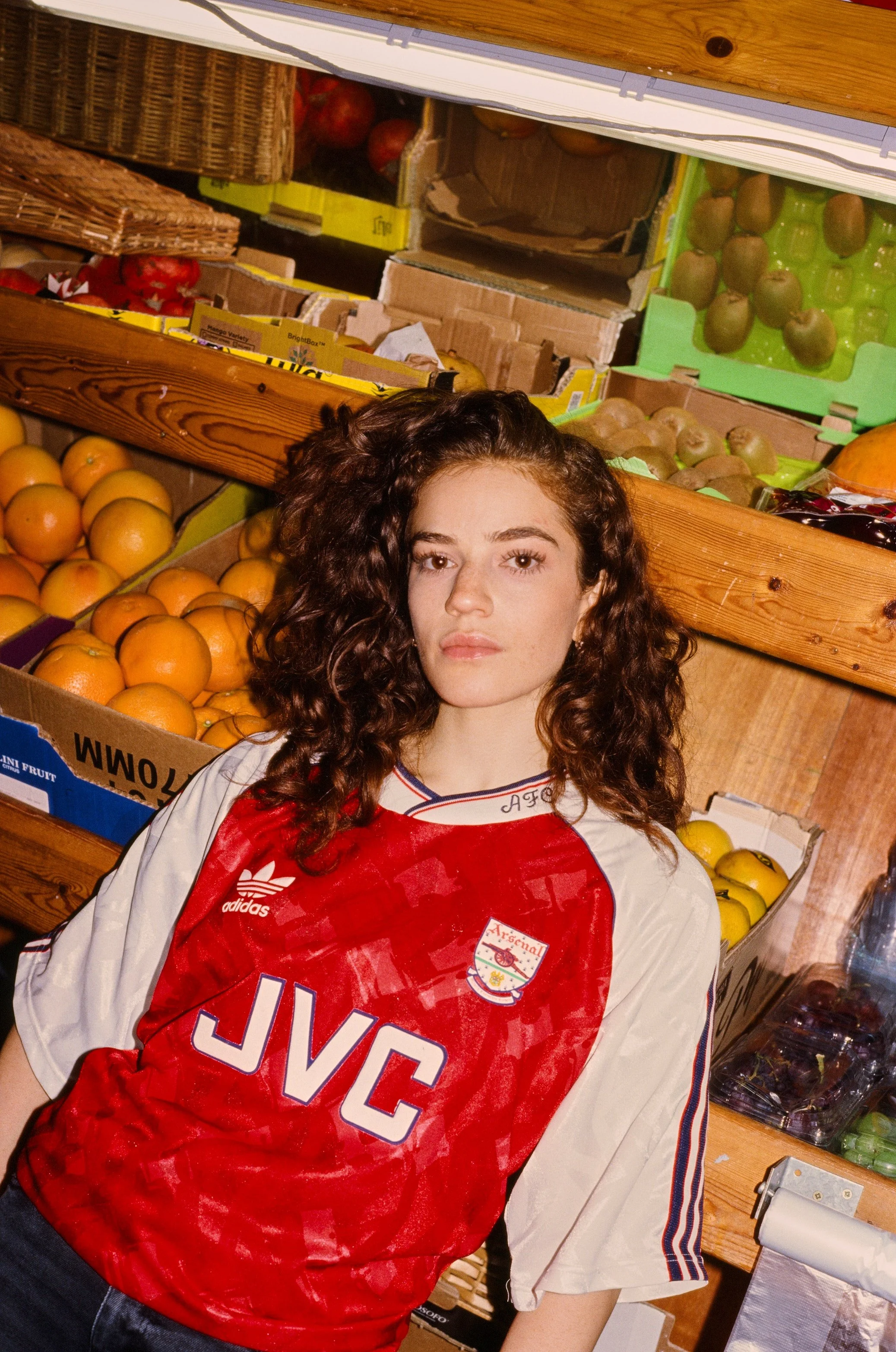
Kane Hulse
